

Why Didn't My Hydrangea Bloom This Year
Written with AI assistance, edited and checked against horticultural sources.
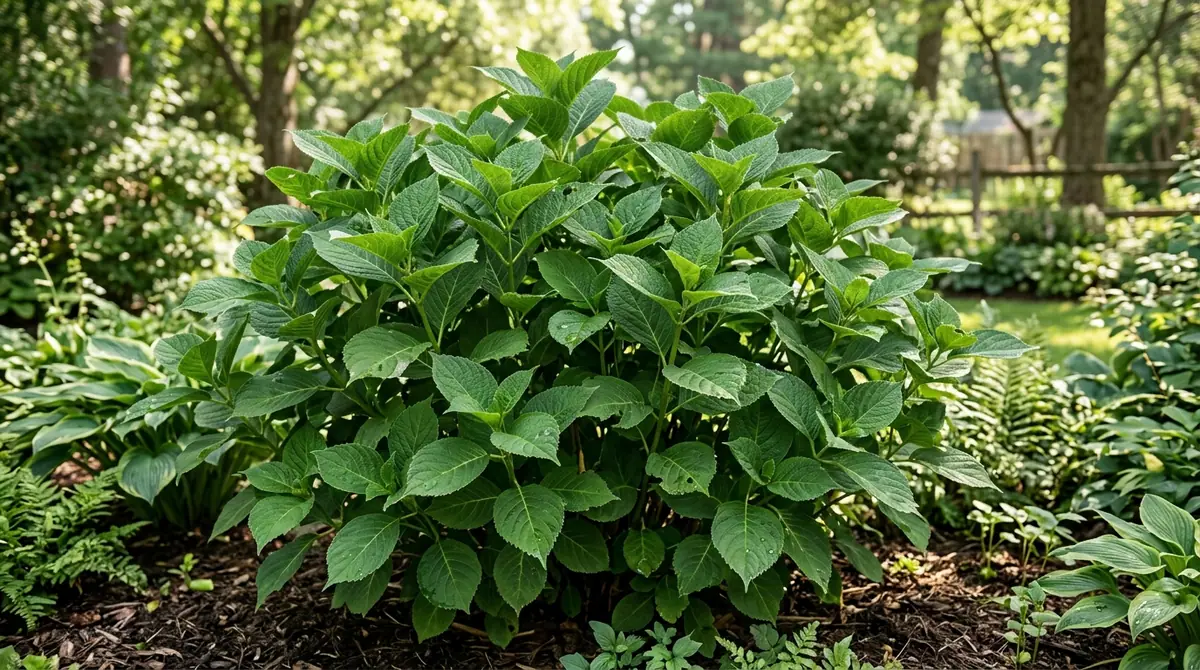
Last June, standing in trial gardens before a sea of lush, emerald foliage that stubbornly refused to show a single puff of pink or blue, I felt that familiar pang of disappointment every gardener knows. My Hydrangea macrophylla 'Endless Summer' looked healthier than ever, yet it sat there as a leafy green wall instead of the floral spectacle I had promised growers. That heartbreak is precisely why I get more emails about non-blooming hydrangeas than almost any other gardening topic. Let's dig into the science, biology, and real-world care routines required to fix this issue once and for all.
1. Botanical Overview & Natural Habitat

Understanding why your hydrangea didn't bloom this year requires diving into how these plants form their flower buds. Broadly speaking, hydrangeas fall into two distinct pruning and blooming categories based on bud formation timing:
- Old Wood Bloomers (Hydrangea macrophylla, Hydrangea quercifolia, Hydrangea serrata): These species set their flower buds during the previous summer, typically between July and September (Days 180 to 270 of the year). When gardeners prune these shrubs in autumn, winter, or early spring, they inadvertently snip off the embryonic flower heads. Late spring frosts can also kill these delicate buds, resulting in zero blooms despite healthy foliage.
- New Wood Bloomers (Hydrangea paniculata, Hydrangea arborescens): These species form their flower buds on the current season's growth. They sprout in spring and push out blooms by mid-summer, making them virtually immune to late-season frost damage and winter pruning errors.
For a deeper academic dive into how different species handle environmental triggers, consult the Royal Horticultural Society Hydrangea Guide.
2. Essential Environmental & Care Requirements
Hydrangeas demand precise environmental conditions to translate vegetative growth into reproductive floral displays. If any single parameter falls out of balance, the plant responds by halting bud development or aborting existing buds.
| Parameter | Optimal Condition | Common Mistake | Why It Matters |
|---|---|---|---|
| Light Exposure | Morning sun (2–6 hours) with afternoon shade (temperatures below 85°F / 29°C) | Full scorching afternoon sun or dense, deep shade | Too much sun fries tender buds and leaves; too much shade prevents photosynthesis needed for bud setting. |
| Soil Moisture | Consistently moist, draining well (1 inch / 2.5 cm of water weekly) | Allowing soil to dry past 2 inches (5 cm) deep between waterings | Drought stress triggers severe bud abortion and leaf drop, halting metabolic energy allocation to flowers. |
| Soil pH | 5.2 to 6.2 for blue flowers; 6.5 to 7.2 for pink flowers | Unmonitored extremes or rapid chemical swings | Extreme pH locks out essential micronutrients like aluminum and phosphorus required for cellular development. |
| Fertilization | Balanced, slow-release organic granules applied in early spring | Over-applying high-nitrogen turf fertilizers (e.g., 29-0-4) | Excess nitrogen fuels rampant green leaf growth at the direct expense of flower bud formation. |
💡 Pro-Tip: If your bigleaf hydrangea is planted against a south-facing brick wall, the winter freeze-thaw cycles and extreme radiant heat in early spring will wake the plant up too early, only to freeze tender new buds during a sudden temperature drop. Always site Hydrangea macrophylla on eastern or northern exposures.
3. Step-by-Step Cultivation, Feeding & Propagation
Correcting a non-blooming hydrangea requires a systematic approach to soil amendment, watering protocols, and seasonal pruning adjustments. Follow this step-by-step cultivation sequence to restore blooms:
- Assess and Adjust Soil pH (Days 1 to 7): Collect soil samples from a depth of 6 inches (15 cm) around the root zone. Test the pH using a digital meter or a lab kit. If you want blue blooms on an H. Macrophylla, amend the soil with elemental sulfur to lower the pH to 5.5. If you want pink blooms, apply agricultural limestone to raise the pH to 6.8.
- Establish a Deep Watering Routine (Days 8 to 14): Install a drip irrigation ring or soaker hose 12 inches (30 cm) out from the base. Deliver 1.5 inches (3.8 cm) of water every 7 days during dry spells. Check soil moisture at a depth of 3 inches (7.6 cm) with your finger; it should feel like a wrung-out sponge.
- Correct the Pruning Schedule (Month 2 onwards): Stop all pruning of Hydrangea macrophylla and Hydrangea quercifolia after August 1st (Day 213). For these old wood species, limit pruning strictly to removing dead wood immediately after flowering finishes in late summer. Save structural pruning for new wood species (H. Paniculata and H. Arborescens) in late winter when dormant.
- Apply Targeted Nutrition (Month 3 / Early Spring): Apply a low-nitrogen, high-phosphorus organic fertilizer (such as a 5-10-10 or bone meal blend) at a rate of 1 pound per 100 square feet (450 g per 9 square meters) in early spring. This encourages cellular root strength and floral initiation without pushing excessive foliage.
- Provide Winter Thermal Protection (Month 11 / Late Autumn): In USDA Hardiness Zones 4 through 6 (where winter lows drop below 0°F / -18°C), wrap old-wood hydrangeas in burlap cages stuffed with dry straw or fallen oak leaves up to a height of 24 inches (60 cm) to protect next year's embryonic buds from wind and freezing temperatures.
⚠️ Important Caution: Never use fresh manures or high-nitrogen lawn fertilizers anywhere near your hydrangeas. A single application of a turf-grade nitrogen fertilizer will shut down flower production for up to two full growing seasons, locking your shrub in a vegetative growth cycle.
For gardeners who also enjoy container-grown tropicals, managing precise light and humidity parameters is just as critical; you can apply similar disciplined monitoring techniques when learning how to care for indoor orchids to make them bloom again.
4. Common Problems, Pests & Troubleshooting
Even with perfect care, environmental stressors and opportunistic pests can derail your hydrangea's blooming cycle. Here is how to diagnose and treat the most frequent culprits:
- Late Spring Frost Damage: If temperatures plunge below 28°F (-2.2°C) after your hydrangea has leafed out in spring, embryonic flower buds on old wood will turn black and die. Fix: Drape frost cloth over the shrub whenever late freezes are forecasted.
- Spider Mites (Tetranychus urticae): Thriving in hot, dry summer conditions (above 85°F / 29°C), these microscopic pests puncture leaf cells, causing stippling and early leaf drop that starves the plant of energy. Fix: Spray the undersides of leaves with horticultural oil or insecticidal soap at 7-day intervals for 3 weeks.
- Cercospora Leaf Spot: Caused by the fungus Cercospora hydrangea, this disease manifests as small purple spots that grow into brown circles with purplish borders. Severe defoliation prevents the plant from storing carbohydrates for next year's buds. Fix: Remove and destroy infected leaves; apply a copper-fungicide spray every 10 to 14 days during wet spring weather.
- Root Rot (Phytophthora species): Heavy, waterlogged clay soils suffocate roots, causing wilting despite adequate soil moisture. A struggling root system cannot transport phosphorus and micronutrients to developing buds. Fix: Amend heavy clay with coarse compost and gypsum to improve soil drainage, and pull mulch back 3 inches (7.6 cm) away from the main stems.

5. Frequently Asked Questions
Why is my hydrangea growing huge leaves but zero flowers?
This is almost always caused by excess nitrogen fertilization or incorrect pruning. If you applied a high-nitrogen lawn fertilizer or pruned the shrub in autumn, winter, or early spring (removing old-wood buds), the plant channels all its energy into vegetative green growth instead of reproductive flowering. Switch to a low-nitrogen, high-phosphorus fertilizer and stop pruning old-wood varieties entirely.
Will cutting off dead flower heads make my hydrangea bloom again?
It depends on the cultivar. For reblooming mopheads (Hydrangea macrophylla 'Endless Summer' series), deadheading spent blooms down to the first set of healthy leaves can stimulate a secondary flush of flowers later in the summer. For traditional single-bloom old-wood varieties, deadheading in late summer is fine, but cutting them back in autumn or spring will eliminate next year's flowers.
How do I protect my hydrangea flower buds from winter freeze?
In USDA Zones 4 through 6, build a cylindrical cage of chicken wire 24 inches (60 cm) high around the shrub. Fill the interior loosely with dry oak leaves, pine straw, or clean garden mulch. Secure a layer of burlap over the top to block freezing winter winds and ice, and remove the protection in spring after the final frost date has passed.
Can I change my hydrangea flower color from pink to blue?
Yes, but only for Hydrangea macrophylla and Hydrangea serrata cultivars, and only if the soil chemistry allows. Blue flowers require acidic soil (pH 5.2 to 5.5) combined with available aluminum ions in the soil. To achieve this, apply elemental sulfur to lower the pH and aluminum sulfate to introduce aluminum. If your soil has high native phosphorus, it binds up aluminum, preventing the color change even if the pH is low.
Related Guides
- Why My Hydrangea Doesn't Bloom
- Hydrangea Did Not Bloom
- True Bloom Roses
- How to Care for Indoor Orchids to Make Them Bloom Again
- Hydrangea with Red Stems
📋 Table of Contents ▼ Click to expand
Tags:
Keep reading
🌿 Related Plants You Might Like
PlantSavvyWorld
Editorial team
PlantSavvyWorld is an independent botanical education project. Articles are drafted with AI assistance, then edited and checked against university extension services, botanical garden collections and other published horticultural sources.