
Hydrangea with Red Stems
Written with AI assistance, edited and checked against horticultural sources.
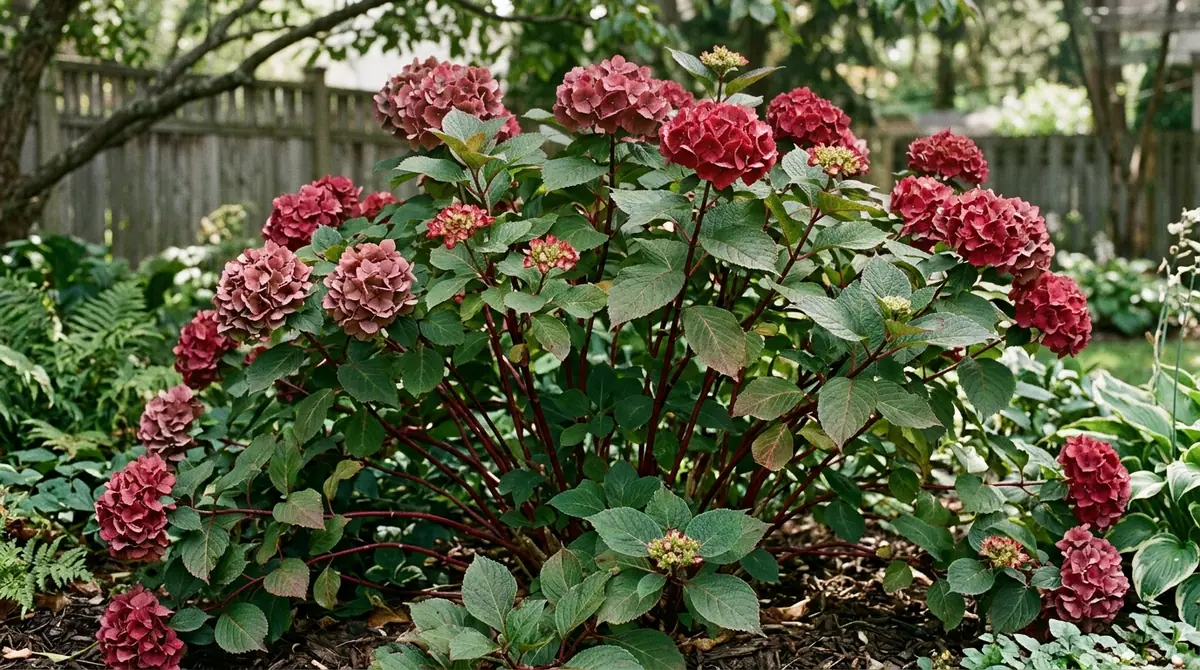
Stepping out into trial gardens on a crisp October morning last year, I noticed the fading sunlight catching a brilliant, wine-red blaze running up the stems of my Hydrangea paniculata 'Limelight'. While most gardeners obsess entirely over the billowing mopheads of summer, those striking crimson and burgundy canes tell a deeper biological story about plant maturity, environmental stress, and cultivar genetics. I often use these structural, colorful stems as a secret weapon to extend interest deep into the dormant season, bridging the visual gap when flowers fade and leaves drop. Whether you are troubleshooting an unexpected color shift or specifically hunting for a cultivar that burns ruby-red from base to tip, understanding the mechanics behind a hydrangea with red stems changes how you design, prune, and nourish your landscape.
1. Botanical Overview & Natural Habitat

When searching for a true hydrangea with red stems, you are usually looking at specific species and cultivars rather than a universal trait across all hydrangeas. Hydrangea paniculata (panicle hydrangea) and Hydrangea arborescens (smooth hydrangea) frequently display deep red to mahogany stems, particularly when exposed to strong sunlight or as the wood matures and hardens off. For instance, cultivars like Hydrangea paniculata 'Pinky Winky' or 'Fire Light' feature exceptionally vivid red-infused stems that contrast sharply against dark green foliage and creamy panicles.
In their native understory habitats, wild hydrangeas receive dappled light, rich organic matter, and consistent moisture. However, the modern cultivars bred for intense stem coloration often perform best in slightly brighter exposures. This increased sunlight triggers the protective pigmentation in the epidermis and cortex layers of the stem, effectively acting as a natural sunscreen. Recognizing this balance between sun exposure and botanical genetics is critical when designing spaces where foliage, bloom, and stem color must harmonize. If you are pairing these structural shrubs with other woodland flora, you might consider contrasting them against weeds with blue flowers identification or tucking them near architectural hardscapes where their winter silhouettes can stand out, much like selecting plants for how to design a terrace garden with tall privacy plants.
2. Essential Environmental & Care Requirements
Growing a vibrant hydrangea with red stems requires dialing in specific environmental parameters. Because stem coloration is heavily tied to light levels, temperature fluctuations, and nutrient availability, managing your microclimate is everything.
Light is your primary catalyst. While traditional Hydrangea macrophylla (bigleaf hydrangeas) scorch in harsh afternoon rays, red-stemmed panicle and smooth hydrangeas thrive in 6 hours of direct morning sun followed by dappled afternoon shade. This balance allows the plant to synthesize the sugars necessary for robust anthocyanin development without burning the foliage.
Soil composition dictates root health and nutrient uptake. Hydrangeas demand a rich, loamy medium with high organic matter, maintaining an optimal pH range between 6.0 and 6.5. While bigleaf hydrangea flower color shifts based on pH (acidic soil yielding blue, alkaline yielding pink), stem redness is far more dependent on sunlight and cultivar genetics than soil acidity, though severely nutrient-deficient soil can stunt stem development entirely.
| Parameter | Optimal Condition | Common Mistake | Why It Matters |
|---|---|---|---|
| Light Exposure | 6 hours of morning sun, afternoon shade | Full, scorching all-day sun | Prevents leaf scorch while maximizing anthocyanin production for red stems. |
| Soil pH | 6.0 to 6.5 (slightly acidic to neutral) | Extreme alkalinity (>7.5) | Ensures iron and phosphorus remain bioavailable for strong cell wall development. |
| Moisture | 1 to 2 inches (2.5 to 5 cm) of water weekly | Allowing soil to dry past 3 inches (7.6 cm) | Drought stress causes premature stem hardening and bark splitting. |
| Mulching | 3 inches (7.6 cm) of shredded hardwood | Piling mulch directly against stems (volcano mulching) | Regulates soil temperature and retains moisture without rotting the crown. |
Temperature plays a major role in how intense those red stems become. As autumn temperatures drop consistently below 50°F (10°C) at night, chlorophyll in the stems degrades faster, allowing the underlying red anthocyanin pigments to dominate visually.
To maintain your garden tools while executing these care routines, having the right gear is essential; I always keep my harvesting shears secured in a best gardening apron with pockets for harvesting tools 2020 so I can deadhead and prune without running back to the shed. For deep botanical dives into plant physiology, consult the Royal Horticultural Society guidelines on woody ornamental care.
💡 Pro-Tip: If your red-stemmed hydrangea is planted in a location that receives heavy, unyielding afternoon sun, the stems may develop a sun-bleached, chalky pale red rather than a rich mahogany. Shift your planting window or erect temporary shade cloth if summer temperatures consistently exceed 90°F (32°C) for consecutive weeks.
3. Step-by-Step Cultivation, Feeding & Propagation
Establishing a thriving red-stemmed hydrangea requires precision planting and seasonal maintenance. Follow this proven protocol to encourage vigorous, healthy canes.
- Site Selection and Soil Preparation: Choose a location with morning sun and afternoon shade. Dig a hole 2 times wider than the root ball and exactly the same depth—typically 12 to 18 inches (30 to 45 cm) deep. Amend the excavated native soil with a 30% volume of well-rotted compost to boost microbial life.
- Planting the Shrub: Gently tease out any circling roots on the nursery container plant. Set the shrub in the hole, ensuring the root flare sits 0.5 inches (1.3 cm) above the surrounding soil grade to prevent crown rot. Backfill halfway, tamp down gently, water thoroughly to settle air pockets, then finish backfilling.
- Applying Moisture Retentive Mulch: Apply a 3-inch (7.6-cm) layer of shredded hardwood or leaf mold across the root zone. Keep the mulch 2 inches (5 cm) away from the actual woody stems to deter fungal pathogens and burrowing rodents.
- Targeted Spring Feeding: As new spring growth emerges when soil temperatures reach 55°F (13°C), apply a balanced, slow-release granular organic fertilizer (such as a 10-10-10 formulation) at a rate of 1 cup per mature shrub, scratching it lightly into the top 1 inch (2.5 cm) of soil.
- Pruning for Stem Vigor: For panicle hydrangeas, prune back by one-third in late winter (February to March) before new buds swell. This heavy structural pruning forces the plant to send out long, vigorous new shoots that display the brightest red coloration by late summer.
- Hardwood Propagation in Winter: Take 6-inch (15-cm) cuttings from dormant, red-stemmed wood in January. Dip the base in rooting hormone powder (0.3% IBA) and insert them 3 inches (7.5 cm) deep into a 50/50 mix of perlite and peat moss. Maintain a bottom heat of 70°F (21°C); roots will typically form within 35 to 45 days.
⚠️ Important Caution: Avoid high-nitrogen synthetic fertilizers after mid-summer. Excessive nitrogen forces rapid, soft green stem growth that fails to lignify properly before the first frost, making the plant highly susceptible to winter dieback and stem Canker.
For additional research-backed insights on soil amendments and microclimate management, refer to the USDA Natural Resources Conservation Service plant database.
4. Common Problems, Pests & Troubleshooting
Even with meticulous care, a hydrangea with red stems can run into physiological or pathological issues. Diagnosing them early saves the structural integrity of the plant.
- Sudden Stem Canker (Botryosphaeria): If you notice your vibrant red stems developing sunken, dark brown to black lesions that eventually girdle and kill the cane, you are dealing with fungal canker. Prune out infected stems 6 inches (15 cm) below the visible lesion using sterilized bypass pruners dipped in a 70% isopropyl alcohol solution between every single cut.
- Chlorosis (Yellowing Leaves with Green Veins): While stems may stay red, if the leaves turn intensely yellow, your soil pH has likely drifted above 7.0, locking out iron. Apply chelated iron drench or elemental sulfur to bring the pH back into the 6.0–6.5 sweet spot.
- Aphids and Spider Mites: Tender, fast-growing red shoots in spring are prime targets for sap-sucking pests. Blast them off with a strong jet of water from your hose early in the day, or apply horticultural neem oil spray during the cool evening hours if infestations persist.
- Winter Sunscald: Bright winter sun hitting frozen red stems can cause the bark to split vertically (southwest injury). Protect young or newly established red-stemmed cultivars by wrapping the main canes in breathable burlap from December through February.

5. Frequently Asked Questions
Why are my hydrangea stems turning red?
Stem reddening is typically a natural response driven by a combination of genetics, bright sunlight exposure, and dropping autumn temperatures. Certain species like Hydrangea paniculata naturally produce high levels of anthocyanin pigments in their bark when exposed to UV light, which acts as a natural sun protection mechanism and intensifies as the wood hardens off toward dormancy.
Does red stem color mean my hydrangea is sick?
Not usually. In many modern cultivars (such as 'Limelight', 'Pinky Winky', or 'Fire Light'), red or mahogany stems are a desirable, genetically programmed trait. However, if the red discoloration is accompanied by wilting leaves, sunken black lesions, or soft, mushy bark at the base, it may indicate a fungal canker or root rot issue requiring immediate pruning and improved drainage.
Can I change the color of my hydrangea stems?
You cannot fundamentally alter the genetic capacity of a variety to produce red stems, but you can maximize or minimize the intensity. Providing adequate morning sunlight will deepen the red pigmentation through increased sugar and anthocyanin production, whereas deep, heavy shade will cause the stems to remain a muted, dull green or brown.
Are all hydrangea species capable of having red stems?
No. While panicle hydrangeas (Hydrangea paniculata) and smooth hydrangeas (Hydrangea arborescens) frequently display striking red or burgundy canes, bigleaf hydrangeas (Hydrangea macrophylla) and oakleaf hydrangeas (Hydrangea quercifolia) generally have green or peeling tan-to-brown bark, though oakleaf petioles and young tips can occasionally show reddish blush tones.
Related Guides
- Why My Hydrangea Doesn't Bloom
- Why Didn't My Hydrangea Bloom This Year
- Curling Leaves on Hydrangea
- Hydrangea Did Not Bloom
📋 Table of Contents ▼ Click to expand
Tags:
Keep reading
🌿 Related Plants You Might Like
PlantSavvyWorld
Editorial team
PlantSavvyWorld is an independent botanical education project. Articles are drafted with AI assistance, then edited and checked against university extension services, botanical garden collections and other published horticultural sources.