

How to Design a Terrace Garden with Tall Privacy Plants
Written with AI assistance, edited and checked against horticultural sources.
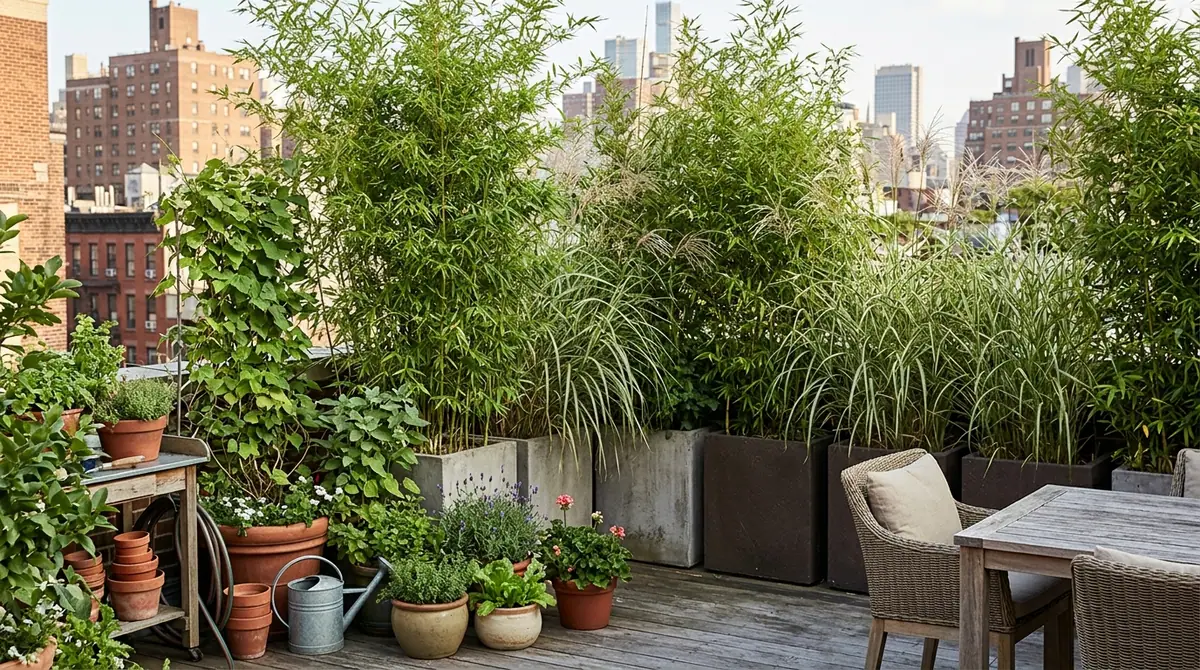
The wind was howling at 35 mph across a concrete slab on the 14th floor of a Chicago high-rise, snapping the delicate stems of growers's newly planted fiddle-leaf figs, when I realized we were approaching urban terrace design completely backward. You cannot simply drag houseplants up to an exposed ledge and expect them to thrive. That afternoon in 2018 taught me that designing a terrace garden with tall privacy plants requires understanding microclimates, structural wind loads, and botanical architecture. Since then, I’ve transformed dozens of barren, overlooked urban balconies into lush, secluded sanctuaries using strategic vertical green walls and towering botanical screens.
1. Botanical Overview & Natural Habitat

The most successful tall privacy plants for high-wind, high-sun terrace locations fall into three distinct botanical categories:
- Clumping Bamboos (Fargesia spp.): Native to the high-elevation, cool mountainous regions of China, these non-invasive bamboos thrive in bright, indirect to direct light and cooler ambient temperatures (50°F to 75°F / 10°C to 24°C). Their hollow culms possess natural flex, allowing them to bend up to 45 degrees in heavy gusts without snapping.
- Columnar Evergreens (Thuja occidentalis and Cupressus sempervirens): Adapted to narrow mountain ridges and Mediterranean hillsides, these conifers require sharp drainage and high solar radiation. Their tight, spire-like growth habit minimizes wind resistance, preventing the "sail effect" that knocks over poorly anchored planters.
- Ornamental Grasses (Miscanthus sinensis and Calamagrostis x acutiflora): Originating from open floodplains and Asian savannas, these perennials launch vibrant green foliage up to 7 feet (2.1 meters) high by mid-summer, dying back gracefully in winter to withstand freezing temperatures down to -20°F (-29°C).
Understanding how these plants interact with sun and wind on an elevated platform dictates your entire layout. For instance, if you are pairing your privacy screen with edible container crops, note that many vertical garden strategies overlap with methods used in our Sweet Potato Companion Plants: 8 Best Garden Friends & 3 Foes to Avoid guide, where dense root systems and trailing vines create complex microclimates. Furthermore, ensuring your structural containers have adequate depth prevents root-bound shock, a principle every grower learns when tackling projects like How to Grow Huge Tomato Plants: Pruning, Trenching & Heavy Yields.
| Parameter | Optimal Condition | Common Mistake | Why It Matters |
|---|---|---|---|
| Container Depth | Minimum 18 inches (45.7 cm) | Using shallow window boxes | Deep soil stabilizes tall plants against wind shear and buffers root temperatures. |
| Wind Loading | Perimeter anchoring/guying | Free-standing tall pots | High-rise winds create leverage that can tip heavy containers over terrace edges. |
| Soil Mix | 50% compost, 30% coir, 20% perlite | Using heavy native garden soil | Native soil compacts in pots, suffocating roots and creating dangerous excess weight. |
| Irrigation | Drip line with moisture sensors | Surface hand-watering | Terraces dry out 3x faster than ground-level gardens due to constant wind exposure. |
2. Essential Environmental & Care Requirements
Managing a terrace ecosystem means dealing with extreme solar radiation, reflected heat from concrete or metal decking, and aggressive wind shear.
Light and Temperature Dynamics: Terraces facing south or west receive intense ultraviolet light amplified by reflective building facades. Tall privacy plants like Italian Cypress (Cupressus sempervirens) love this blazing sun, requiring at least 6 to 8 hours of direct light daily. Conversely, shade-tolerant privacy options like certain ferns or Fargesia bamboos will experience leaf scorch if not shielded from the harsh 2:00 PM summer sun. Maintain ambient temperatures between 60°F and 85°F (15°C to 29°C) during the active growing season, and insulate pots with thermal wrap when winter drops below 25°F (-4°C) to prevent root freeze.
Watering and Hydration Protocols: Wind acts as a giant desiccant, sucking moisture from plant leaves faster than roots can draw it up. During peak summer months (temperatures consistently above 85°F / 29°C), large privacy planters require deep watering every 24 to 48 hours. Install an automated drip irrigation system equipped with a rain sensor. For a deeper dive into managing specialized plant hydration across different seasons—including indoor-outdoor transitions—consult our Holiday Plants Care Guide: How to Force Poinsettias to Rebloom & Holiday Cacti ID.
💡 Pro-Tip: Never rely on the "finger test" for terrace planters. Wind dries the top 3 inches (7.6 cm) of soil within hours while the root ball below remains soaked. Invest in a long-probe tensiometer or digital moisture meter to check soil moisture at a depth of 10 inches (25.4 cm) before every watering.
3. Step-by-Step Cultivation, Feeding & Propagation
Designing and planting a structural privacy screen on a terrace requires engineering precision. Follow this exact 7-step sequence to establish a secure, flourishing privacy wall.
- Calculate Structural Weight Limits: Consult your building’s structural engineer to verify your terrace load rating—typically ranging from 50 to 100 lbs per square foot (244 to 488 kg per square meter). Select lightweight fiberglass or UV-resistant polyethylene containers rather than heavy stone or terra cotta.
- Prepare Drainage and Anchoring: Drill multiple 1-inch (2.5 cm) drainage holes in your containers. Place a 2-inch (5 cm) layer of expanded clay pebbles at the base, followed by a sheet of geo-textile landscape fabric to prevent soil washout. If your plants will exceed 6 feet (1.8 meters) in height, secure internal eye-bolts to the container frame to guy-wire the plants against high-altitude gusts.
- Mix the Ideal Soil Media: Blend a custom, lightweight soil matrix: 40% high-grade organic compost, 30% coco coir (for moisture retention without heavy compaction), and 30% coarse perlite or pumice (for vital root aeration).
- Position and Transplant: Unpot your tall privacy specimens (e.g., Fargesia murielae or Miscanthus). Gently tease out the outer 10% of root systems if root-bound. Plant them at the exact same soil grade they experienced in their nursery pots. Fill the container, tamping down gently every 6 inches (15 cm) to eliminate air pockets.
- Install Automated Drip Irrigation: Run a 1/4-inch supply line with pressure-compensating emitters (1 to 2 gallons per hour) directly to the base of each plant. Test the system for 15 minutes to ensure uniform saturation across all planters.
- Apply Mulch and Wind Buffers: Top-dress the containers with a 2-inch (5 cm) layer of shredded hardwood bark or pine straw to suppress evaporation. If your terrace is exceptionally windy, erect temporary wind-break netting around the perimeter for the first 30 days while roots establish.
- Initiate Feeding Regimen: Wait 21 days after transplanting to avoid fertilizer burn. Then, apply a balanced, slow-release granular organic fertilizer (such as a 10-10-10 formula) every 45 days throughout the active growing season (April through September).
⚠️ Important Caution: Never exceed your terrace's certified weight load limit. A single saturated 30-inch (76 cm) concrete planter filled with damp soil and mature bamboo can easily weigh over 400 lbs (181 kg), posing severe structural and safety hazards.
For authoritative guidelines on urban balcony safety and container weight loads, consult the Structural Engineers Association of New York resources. To explore broader urban horticulture research and resilient plant selections, review the publications provided by the Royal Horticultural Society.
4. Common Problems, Pests & Troubleshooting
Even the best-designed terrace gardens encounter stress due to the artificial nature of high-rise environments.
- Leaf Tip Burn (Brown, crispy leaf margins): Caused by intense wind desiccation, low humidity, or excessive salt buildup from chemical fertilizers. The Fix: Flush the soil thoroughly with plain water every 30 days to leach out mineral salts, and switch to an organic, seaweed-based liquid kelp fertilizer to enhance cellular wall strength.
- Spider Mites (Tetranychus urticae): These microscopic pests thrive in the warm, dry air currents found on elevated urban balconies, spinning fine webs across the underside of leaves. The Fix: Introduce predatory mites (Phytoseiulus persimilis) as a biological control, or spray foliage aggressively with horticultural insecticidal soap every 7 days for 3 weeks.
- Chlorosis (Yellowing leaves with green veins): Typically triggered by iron or nitrogen deficiency resulting from alkaline tap water locking out nutrients in the soil. The Fix: Test soil pH (aim for an optimal 6.0 to 6.5) and apply chelated iron alongside a balanced micro-nutrient drench.

5. Frequently Asked Questions
What are the best tall privacy plants that won't blow over in high-wind terrace conditions?
Clumping bamboos (Fargesia species) and ornamental grasses like feather reed grass (Calamagrostis x acutiflora) are top tier choices. Their flexible stems and narrow profiles deflect wind instead of catching it like a sail. Pair them with heavy, wide-based fiberglass containers to maintain a low center of gravity.
How do I stop my terrace privacy plants from drying out on hot summer days?
Install an automated drip irrigation system connected to a smart timer. Combine this with a 2-inch layer of organic bark mulch to insulate the soil surface and slash evaporation rates by up to 70%. Ensure your containers feature adequate soil depth (at least 18 inches / 45.7 cm) so roots have a deep moisture buffer.
Can I grow privacy plants on a rental balcony without drilling into the structure?
Yes. Use heavy, freestanding modular planter boxes or long rectangular troughs placed end-to-end along the railing. To add extra height safely without drilling, utilize freestanding wooden trellises secured securely inside the base of the heavy planter boxes rather than anchoring them to the building walls.
How do I protect potted privacy plants from freezing during winter?
When temperatures drop consistently below 25°F (-4°C), protect vulnerable container roots by wrapping the exterior of your pots with layers of burlap or bubble wrap. Grouping containers tightly together in a sheltered corner of the terrace also creates a localized microclimate that significantly reduces root-zone freeze damage.
Related Guides
- How to Design a Drought Tolerant Mediterranean Garden
- How to Keep Worms Alive Red Wriggler Earthworm Raising Guide
- Monstera Seeds
📋 Table of Contents ▼ Click to expand
Tags:
🌿 Related Plants You Might Like



PlantSavvyWorld
Editorial team
PlantSavvyWorld is an independent botanical education project. Articles are drafted with AI assistance, then edited and checked against university extension services, botanical garden collections and other published horticultural sources.