

Hydrangea Did Not Bloom
Written with AI assistance, edited and checked against horticultural sources.
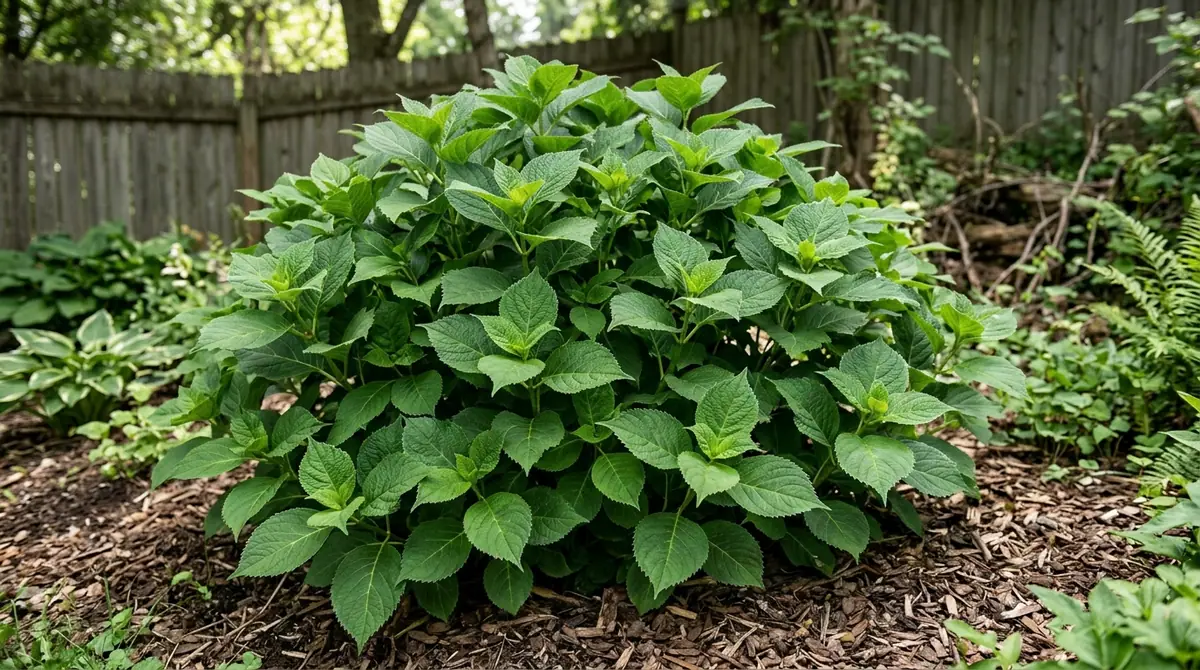
A massive, lush shrub of Hydrangea macrophylla (commonly known as the bigleaf hydrangea) can be entirely devoid of flowers despite having deep, glossy green foliage unfurling happily across a six-foot span and zero mophead blooms crowning the branches.

1. Botanical Overview & Natural Habitat
Hydrangeas belong to the genus Hydrangea, comprising roughly 75 to 80 species of flowering plants native primarily to eastern and southern Asia (Japan, China, Korea) and the Americas. In their native understory habitats, these deciduous or evergreen shrubs grow beneath the dappled shade of tall forest canopies. They thrive in humus-rich, constantly moist soils derived from decaying forest leaf litter, which explains their natural aversion to baking midday sun and bone-dry substrate.
Understanding why your hydrangea did not bloom starts with recognizing its specific classification, because different species initiate flower buds on entirely different timelines. The genus is broadly split into two categories based on bud formation:
- Old Wood (Buds set in late summer): Species like Hydrangea macrophylla (mopheads and lacecaps) and Hydrangea quercifolia (oakleaf hydrangea) set their floral buds for the following year during the late summer months of July and August. If you prune these shrubs in autumn, winter, or early spring, you are literally cutting off next year’s flowers.
- New Wood (Buds set on current season's growth): Species like Hydrangea paniculata (panicle hydrangea) and Hydrangea arborescens (smooth hydrangea, such as 'Annabelle') emerge from winter dormancy and produce new shoots in spring. These shoots terminate in flower buds, meaning you can prune them aggressively in late winter without sacrificing a single bloom.
There are also remontant cultivars—often marketed as "Endless Summer" or reblooming hydrangeas—which bloom on both old wood (from the previous year) and new wood (growth produced in the current season). However, even these resilient varieties can fail to bloom if severe late frosts kill the developing buds or if cultural conditions stunt their growth.
2. Essential Environmental & Care Requirements
If your hydrangea is refusing to flower, the culprit is almost always an environmental stressor or a mismatch between the plant's natural requirements and its current microclimate. Let us examine the parameters that dictate whether a hydrangea produces buds or merely leaves.
| Parameter | Optimal Condition | Common Mistake | Why It Matters |
|---|---|---|---|
| Light Exposure | Morning sun (3–6 hours) with afternoon shade (15°F to 25°F cooler during peak heat) | Full scorching afternoon sun or dense, dark shade | Deep shade prevents bud set entirely; intense afternoon sun scorches leaves and dehydrates developing floral tissue. |
| Soil Moisture | Consistently damp, rich loam; 1 inch (2.5 cm) of water per week | Allowing soil to drop below 40% moisture capacity | Water stress causes the plant to abort developing flower buds to conserve energy for basic survival. |
| Fertilization | Balanced, slow-release organic fertilizer applied in early spring only | Heavy applications of high-nitrogen turf fertilizers | Excess nitrogen triggers explosive foliage growth ("all green, no bloom") and delays winter dormancy hardening. |
| Winter Protection | Insulated bud crowns against rapid temperature swings below 0°F (-18°C) | Unprotected exposure to harsh winter winds and freezing rain | Sub-zero temperatures or late spring frosts kill vulnerable flower buds set on old wood. |
For a deeper dive into managing environmental stress and watering schedules, the Royal Horticultural Society Hydrangea Guide provides excellent scientific resources on regional microclimates. Additionally, maintaining optimal soil health mirrors the principles we use when troubleshooting indoor specimens, much like nurturing delicate tropicals as outlined in this guide on how to care for indoor orchids to make them bloom again.
3. Step-side-Step Cultivation, Feeding & Propagation
Correcting a non-blooming hydrangea requires a systematic approach to resetting its growing environment. Follow this strict protocol to transition your plant from vegetative dormancy to prolific flowering.
- Assess Light and Relocate if Necessary: Evaluate your plant's sunlight exposure. If it receives less than 2 hours of direct sun, or bakes in 8 hours of blistering afternoon sun, transplant it during its dormant window (late November or early March) to a location with 4 to 6 hours of gentle morning sun and afternoon shade. Dig a root ball circle at least 24 inches (60 cm) in diameter and 12 inches (30 cm) deep to protect the root architecture.
- Adjust the Watering Regime: Hydrangeas derive their name from hydro (water) and angeion (vessel) for a reason. Provide a baseline of 1 inch (2.5 cm) of water per week via deep, infrequent soaking rather than daily shallow sprinkling. Apply a 3-inch (7.6 cm) layer of organic compost or shredded bark mulch around the root zone, keeping mulch 2 inches (5 cm) away from the main stems to prevent rot.
- Calibrate Soil Chemistry and Nutrition: Test your soil pH. Bigleaf hydrangeas (Hydrangea macrophylla) require a soil pH between 5.2 and 5.5 to produce blue flowers, while a pH of 6.0 to 6.2 yields pink flowers. Apply a balanced, slow-release granular fertilizer with an N-P-K ratio like 10-10-10 or an organic alternative formulated for acid-loving shrubs strictly in early spring (around April 1st in USDA Hardiness Zones 6). Never fertilize past July 1st.
- Implement Correct Pruning Windows: Identify your specific hydrangea species before picking up shears. For old wood bloomers (H. Macrophylla and H. Quercifolia), prune only immediately after flowering finishes—typically by late July—by snipping dead wood down to the first healthy pair of swollen buds. For new wood bloomers (H. Paniculata and H. Arborescens), prune in late winter (February or March) when the plant is fully dormant, cutting stems back by one-third to encourage robust new flowering shoots.
- Provide Winter Thermal Protection (For Old Wood Species): In regions where winter temperatures drop below 0°F (-18°C), construct a circular cylinder of wire fencing around the shrub 18 inches (45 cm) wider than the canopy in November. Fill this cage completely with dry oak leaves or straw to insulate the fragile old-wood buds from catastrophic freeze damage. Remove the insulation gradually in April once the frost danger has passed.
💡 Pro-Tip: If your bigleaf hydrangea refuses to bloom year after year despite proper care, do not despair. Cut the entire shrub back to 6 inches (15 cm) above ground level in early spring. While you will sacrifice blooms for the current season on old wood, this hard reset forces the plant to push out vigorous, healthy new growth that will establish a resilient architectural framework for future years.
4. Common Problems, Pests & Troubleshooting
When a hydrangea fails to bloom, the issue is rarely a pest infestation, but environmental and cultural imbalances can weaken the plant and indirectly suppress flowering.
- The "All Green, No Flowers" Syndrome: This is almost universally caused by excessive nitrogen fertilization or improper pruning. If you feed your lawn with high-nitrogen fertilizer and the runoff reaches your hydrangeas, the plant redirects all metabolic energy into building lush, dark green leaves at the expense of floral hormone production. Stop all nitrogen applications immediately and leach the soil with deep watering cycles.
- Late Spring Frost Damage: In USDA Zones 5 and 6, an unseasonally warm March can trick the plant into pushing out tender green shoots prematurely. When a sudden hard freeze drops temperatures below 28°F (-2°C) in April, those emerging buds are instantly killed. The plant will survive and grow new leaves, but the flowering cycle for that year is entirely destroyed. Cover plants with breathable frost cloth whenever a late freeze is predicted.
- Improper Microclimate and Competition: Planting hydrangeas directly beneath the root canopy of mature maple or pine trees forces them into a desperate, losing battle for soil moisture and nutrients. Tree roots aggressively rob the hydrangea of water. If your hydrangea is struggling near large trees, install a physical root barrier or transplant it to a dedicated garden bed with unimpeded root zones.
- Pest Pressures (Aphids and Spider Mites): While sap-sucking pests like aphids and two-spotted spider mites rarely stop a hydrangea from blooming outright, severe infestations sap plant vigor, causing leaves to curl and stunt overall development. Blast undersides of leaves with a forceful jet of water, or apply horticultural soap spray in the cool evening hours if populations explode. For comprehensive pest management frameworks, consult the Clemson University Cooperative Extension Hydrangea Guide.
⚠️ Important Caution: Never use commercial weed-and-feed products anywhere near your hydrangeas. These herbicides contain systemic pre-emergent chemicals and high-nitrogen concentrations that can severely damage hydrangea root systems, cause sudden leaf chlorosis, and suppress blooming for multiple consecutive seasons.

5. Frequently Asked Questions
Why did my hydrangea bloom last year but not this year?
This is almost always caused by one of two factors: unseasonal weather or improper pruning. If you pruned the shrub in late autumn, winter, or early spring, you accidentally snipped off the flower buds that formed the previous summer. Alternatively, a harsh winter freeze or a late spring frost may have killed the dormant buds before they could open.
Should I cut off dead hydrangea stems in the spring?
It depends entirely on the species. If you have a panicle hydrangea (H. Paniculata) or a smooth hydrangea (H. Arborescens), you can safely prune dead stems in early spring. However, if you have a bigleaf hydrangea (H. Macrophylla) or an oakleaf hydrangea (H. Quercifolia), cutting back dead-looking stems in spring might destroy living flower buds. Wait until late spring to see where new leaves emerge before cutting away any truly dead wood.
How do I know if my hydrangea is old wood or new wood?
Observe when your plant produces its flower buds and flowers. Plants that bloom early in the summer (June) on stems that grew the previous year are old wood bloomers. Plants that produce blooms later in the summer (July through September) on long, flexible shoots that grew that exact spring are new wood bloomers.
Can I force my hydrangea to bloom by adding specific fertilizers?
You cannot force blooms using quick-fix chemical boosters. Hydrangeas require a balanced, steady supply of nutrients and proper sunlight exposure to flower. Avoid high-nitrogen fertilizers entirely. Instead, apply a slow-release, balanced organic fertilizer in early spring and ensure your soil pH matches the color goals you have set for your specific cultivar.
Related Guides
- Why My Hydrangea Doesn't Bloom
- Why Didn't My Hydrangea Bloom This Year
- True Bloom Roses
- How to Care for Indoor Orchids to Make Them Bloom Again
- Hydrangea with Red Stems
📋 Table of Contents ▼ Click to expand
Tags:
Keep reading
🌿 Related Plants You Might Like



PlantSavvyWorld
Editorial team
PlantSavvyWorld is an independent botanical education project. Articles are drafted with AI assistance, then edited and checked against university extension services, botanical garden collections and other published horticultural sources.