Written with AI assistance, edited and checked against horticultural sources.
When a Nigerian Dwarf goat bypasses a buffet of sweet clover to strip every green leaf and immature fruit off staked 'Cherokee Purple' tomato vines, nightshade cultivation requires acting fast because these plants present distinct management challenges regarding livestock safety.
If you are asking "can goats eat tomato plants," you need a definitive, science-backed answer before your livestock get into your vegetable patch. Here is everything you need to know about goats, nightshades, and keeping your herd safe.
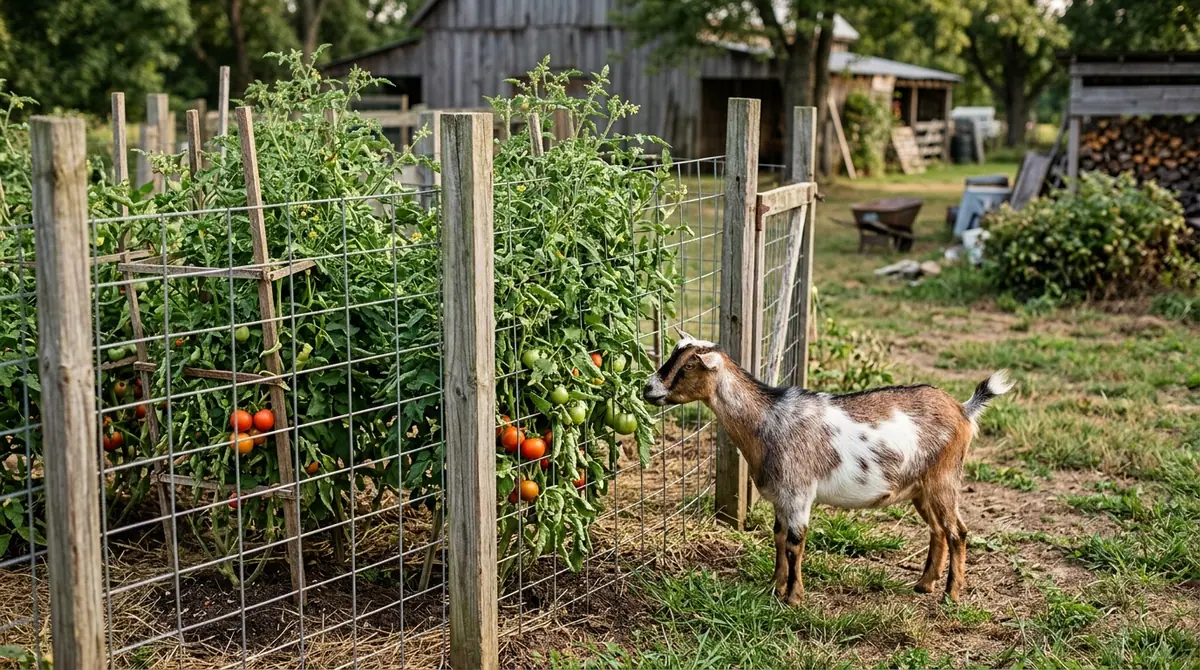
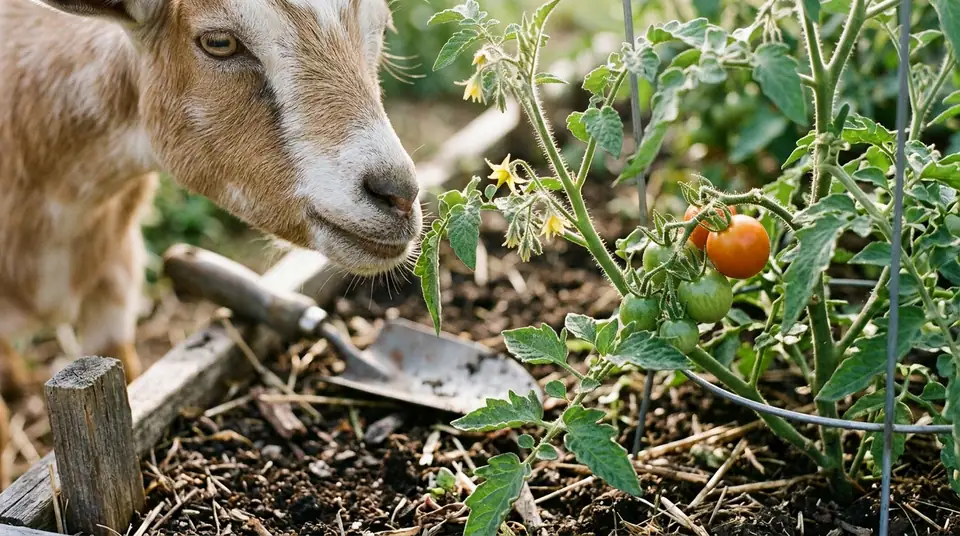
Brown goat sniffing a tomato plant with green and red fruits in a garden bed
1. Botanical Overview & Natural Habitat
To understand why tomato plants pose a risk to livestock, we have to look at the plant's native origins and chemical defense mechanisms. Solanum lycopersicum, commonly known as the cultivated tomato, is a perennial herbaceous vine native to the Andean region of western South America, spanning parts of Peru, Ecuador, Bolivia, Chile, and Colombia. In their native high-altitude and scrubland habitats, ancestral tomatoes evolved under intense grazing pressure from wild camelids and rodents. To survive, the Solanaceae (nightshade) family developed powerful biochemical deterrents.
Tomato plants produce secondary metabolites called glycoalkaloids—primarily tomatine and solanine—along with variable amounts of nicotine. These compounds are concentrated in the green, vegetative parts of the plant: the leaves, stems, vines, and green, unripened fruit. In the wild, these toxins disrupt the cell membranes and neurological signaling of herbivores, discouraging them from stripping the plant bare.
While humans have selectively bred modern cultivars for high fruit yields, rich flavor, and lower toxicity in the red, ripe berries, the foliage retains its chemical arsenal. Understanding this evolutionary biology explains why a goat might happily munch a red tomato while getting severely ill from chewing on the support stake vines. For more details on crop development timelines, refer to our guide on How Long Does It Take for Tomatoes to Grow Tomato Growing and Harvesting Guide.
2. Essential Environmental & Care Requirements
Growing healthy tomatoes safely away from curious ruminants requires precise environmental management. Whether you are planning your layout to keep plants out of reach or scheduling your seasonal planting, meeting these biological thresholds ensures vigorous growth without inviting animal poisonings.
Tomatoes are warm-season crops that demand full sun and well-draining soil rich in organic matter. If you are starting seeds indoors or mapping out regional planting dates, consulting resources like the University of California Agriculture and Natural Resources can help you time your frost-free windows accurately. For gardeners on the East Coast figuring out regional schedules, review our resource on What Zone is Virginia for Plants.
Parameter
Optimal Condition
Common Mistake
Why It Matters
Soil Temperature
70°F to 85°F (21°C to 29°C) for germination
Planting in soil below 60°F (15°C)
Cold soil stunts root development and invites fungal pathogens.
Air Temperature
65°F to 85°F (18°C to 29°C) daytime
Exposing plants to sustained nights below 55°F (13°C)
Temperatures outside this range disrupt pollination and fruit set.
Soil Depth & Spacing
Planted 18 to 24 inches (45 to 60 cm) deep/apart
Overcrowding vines in tight beds
Poor airflow increases blight risks and creates easy access for browsing livestock.
Protecting your herd means establishing strict physical boundaries and properly disposing of garden waste. When managing a homestead with both tomatoes and goats, follow this rigorous protocol to prevent accidental poisonings.
Install secure, goat-proof perimeter fencing. Use no-climb wire or cattle panels standing at least 5 feet (1.5 meters) high. Goats are notorious for testing barriers, and standard garden twine or flimsy chicken wire will not stop a determined ruminant from reaching nightshade foliage.
Elevate composting bins. Never toss pulled tomato vines, suckers, or pruned leaves onto low, accessible compost piles. Place all garden waste in heavy-duty, tumbling composters or bins secured behind solid wood or wire fencing maintained at a minimum height of 4 feet (1.2 meters).
Time your indoor seed propagation correctly. If you are timing your indoor sowing, check out When to Start Tomato Seeds Indoors Zone 6 to ensure your seedlings reach transplant size safely in protected indoor environments before moving outdoors.
Prune and dispose of lower leaves safely. As indeterminate vines grow, trim the lower 12 inches (30 cm) of foliage to improve airflow and prevent soil-borne splashing. Immediately bag or wheel away these trimmings rather than letting them drop to the base of the cage where a goat might reach through the bars.
Monitor livestock post-pruning. If you accidentally drop a stem while harvesting, remove it immediately. For companion planting strategies that minimize pest pressures without mixing risky plants into your livestock's traffic paths, consult Zucchini Companion Plants Good Bad.
💡 Pro-Tip: If you are practicing intensive urban or small-space farming where livestock and vegetables share a tight yard, use heavy-duty livestock panels anchored with T-posts, and plant your tomatoes in raised beds built at least 32 inches (81 cm) tall. This height differential prevents goats from browsing the toxic foliage even if they manage to lean against the outer perimeter.
4. Common Problems, Pests & Troubleshooting
When managing tomato plants alongside livestock, several unique challenges arise. Recognizing the signs of trouble early saves your harvest and protects your animals.
Accidental Nightshade Ingestion (Tomatine Poisoning): If a goat breaks into your garden and consumes large quantities of green tomato vines, stems, or leaves, watch for clinical signs within 6 to 12 hours. Symptoms include excessive drooling, loss of appetite, bloating, severe colic, lethargy, and diarrhea. If you suspect poisoning, contact a livestock veterinarian immediately and withhold all other feed temporarily.
The Myth of Ripe Fruit Safety: Many homesteaders wonder if ripe red tomatoes are safe to toss to goats as treats. While fully ripe red fruits contain dramatically lower concentrations of tomatine compared to green vegetation, goats generally dislike the acidic, watery texture of tomatoes. Feeding them in large amounts can still cause rumen acidosis or digestive upset due to the high sugar and acid content. It is best to avoid feeding them to your herd entirely.
Pest Cross-Contamination: Pests like hornworms (Manduca quinquemaculata) can defoliate your tomato patch rapidly. Do not feed pest-infested tomato foliage to your goats as a form of natural cleanup. The combination of insect frass, fungal spores, and high concentrations of leaf alkaloids can trigger severe digestive distress in caprine digestive tracts. For related management tips on handling garden crops, see our guide on When to Top Pepper Plants.
⚠️ Important Caution: Never assume that because a wild animal or a neighbor's livestock nibbled a plant without dying, it is entirely safe for your specific herd. Caprine tolerances vary based on age, weight, pregnancy status, and rumen health. When dealing with members of the Solanaceae family, zero-tolerance fencing is the only responsible management strategy.
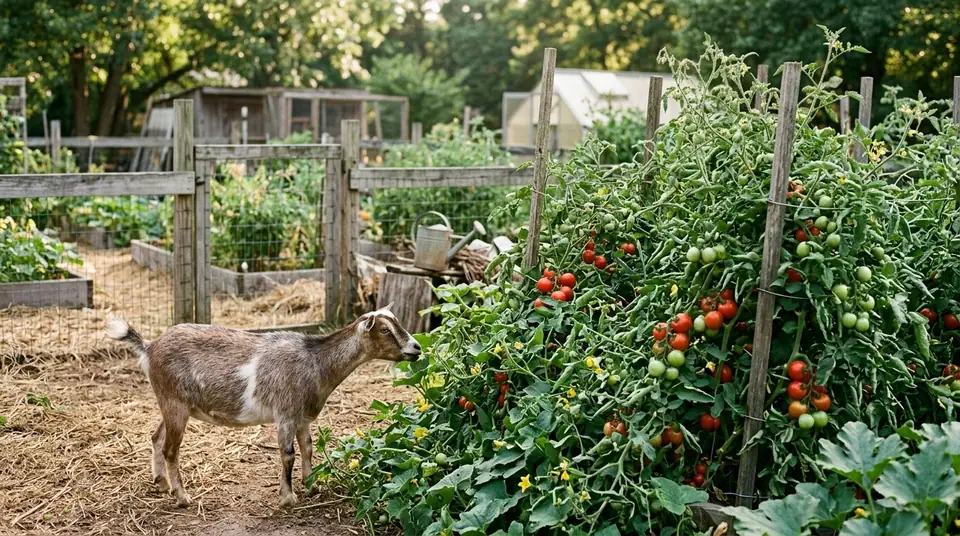
A brown and white goat standing in a garden next to a lush tomato plant with red and green fruits
5. Frequently Asked Questions
Can goats eat tomato leaves and vines?
No. Tomato leaves, stems, and vines contain high levels of the glycoalkaloid tomatine, which acts as a natural defense toxin. Ingesting these green parts can cause severe gastrointestinal distress, neurological slowing, and colic in goats.
Are red, ripe tomatoes safe for goats to eat?
While fully ripe red tomatoes have significantly lower alkaloid levels than the green vines, most goats will turn their noses up at them. If a goat does manage to eat a few ripe tomatoes, it is rarely fatal, but the high acid and sugar content can cause mild stomach upset or diarrhea.
What should I do if my goat eats a tomato plant?
Monitor the animal closely for clinical signs such as bloating, drooling, lethargy, or lack of coordination over the next 12 to 24 hours. Remove the goat from the source immediately, provide clean water and fresh grass hay, and contact a large animal veterinarian if moderate to severe symptoms appear. For authoritative veterinary toxicology guidelines, you can cross-reference resources provided by the ASPCA Animal Poison Control Center.
Can I feed leftover tomato plants to my chickens if my goats won't eat them?
No. Just like goats, poultry and other backyard livestock are susceptible to solanine and tomatine toxicity. All tomato prunings, dead vines, and green unripened fruits should be placed directly into secure compost bins or municipal green waste bags rather than fed to farm animals.
PlantSavvyWorld is an independent botanical education project. Articles are drafted with AI assistance, then edited and checked against university extension services, botanical garden collections and other published horticultural sources.