

Whiskey Barrel Planter Ideas
Written with AI assistance, edited and checked against horticultural sources.
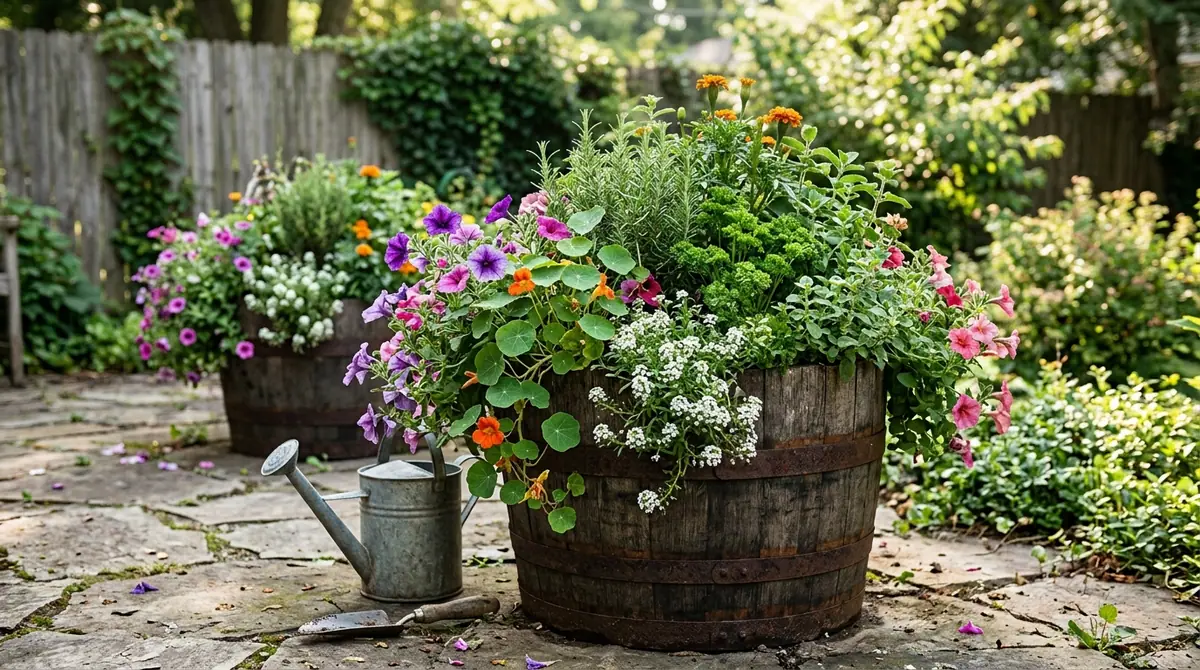
Whiskey barrel planters are living architectural ecosystems that punish poor preparation and reward rigorous structural respect. When you commandeer a 55-gallon charred white oak vessel designed to mature Kentucky bourbon and place it directly on damp clay soil for extended periods, the staves can crumble and spill a rich, mycorrhizal-laced black loam, proving that these containers are uncompromising biological mediums.

1. Botanical Overview & Natural Habitat
To design successfully within a whiskey barrel, you must first understand the timber. Authentic whiskey barrels are constructed from American white oak (Quercus alba), selected specifically for its tyloses—bubble-like cellular growths that plug the wood's pores, making it naturally watertight. When repurposed as a planter, this dense, 1.5-inch (3.8 cm) thick hardwood offers unprecedented thermal insulation for root zones compared to thin plastic or terra cotta.
However, the interior is heavily charred, usually to a depth of 1/8 inch (0.3 cm) to create an active carbon layer that once filtered impurities from aging whiskey. For your plants, this carbon acts as a natural buffer, though it initially shifts the immediate root-zone pH slightly downward. Because a standard full-size barrel measures roughly 24 inches (61 cm) across the top, 21 inches (53 cm) at the base, and 35 inches (89 cm) in height with a volume of approximately 50 gallons (189 liters), it mimics a deep woodland edge or prairie pocket.
Plants selected for these vessels must thrive in a restricted, high-volume root zone. Deep-rooted perennials, cascading annuals, and dwarf woody shrubs succeed because the 35-inch (89 cm) depth accommodates taproots that would suffocate in standard 12-inch (30 cm) pots. When planning your design, think in vertical tiers: a structural anchor in the center, mounding fillers in the middle ring, and spilling trailers over the heavy galvanized steel hoops.
2. Essential Environmental & Care Requirements
Managing a whiskey barrel planter requires tracking specific environmental parameters because of the massive volume of soil involved. Unlike small pots that dry out in hours, a full barrel holds hundreds of pounds of damp earth, creating a microclimate with distinct thermodynamic properties.
| Parameter | Optimal Condition | Common Mistake | Why It Matters |
|---|---|---|---|
| Soil pH | 6.2 – 6.8 for general use; 4.8 – 5.5 for ericaceous plants | Using straight topsoil or unamended garden dirt | Heavy clay compacts inside deep wood, suffocating root hairs and preventing drainage. |
| Drainage Hole Area | Minimum 5% of total base surface area (e.g., eight 1-inch holes) | Drilling only one or two center holes | Water pools in the curved bottom staves, causing anaerobic rot and splitting the wood. |
| Moisture Level | Consistent dampness at 6 inches (15 cm) depth; let top 2 inches (5 cm) dry | Allowing complete dry-down followed by total saturation | Extremely dry white oak acts as a wick, pulling moisture directly out of the root ball. |
| Sun Exposure | 6 to 8 hours of direct daily sunlight (for sun-loving designs) | Placing dark-colored wood against south-facing brick walls | Radiated heat can push root zone temperatures 15°F (8°C) above ambient air, cooking feeder roots. |
💡 Pro-Tip: Line the interior walls of your wooden barrel with heavy-duty 6-mil polyethylene sheeting, but make sure to slash the plastic thoroughly at the bottom drainage holes. This prevents the wet oak staves from constantly rotting against your soil mix while still allowing essential gas exchange through the unlined bottom and top.
Temperature fluctuations are your primary environmental hurdle. In hardiness zones 5 through 8, a whiskey barrel safely overwinters perennial shrubs like dwarf conifers or boxwoods because the thick oak insulates against sudden freezes. However, if ambient winter temperatures drop below 10°F (-12°C) for consecutive weeks, unprotected roots on the perimeter can suffer fatal freeze-thaw damage. Conversely, in peak summer when ambient temperatures hit 90°F (32°C), the dark wood absorbs solar radiation, raising soil temps to dangerous levels if moisture management slips.
3. Step-by-Step Cultivation, Feeding & Propagation
Executing a professional whiskey barrel installation requires a methodical approach. Follow this sequential protocol to ensure structural longevity and botanical success.
- Structural Preparation: Inspect the steel hoops. If they are loose, tap them down toward the wider part of the barrel using a rubber mallet and a flathead screwdriver. Drill a minimum of eight 1-inch (2.5 cm) drainage holes through the bottom staves, concentrating them around the lower perimeter rather than just the dead center.
- Elevation: Elevate the finished barrel at least 2 inches (5 cm) off the ground using terra cotta pot feet, bricks, or heavy-duty plant caddies. Never let the bottom wood sit flush against wet soil, concrete, or grass; this invites subterranean termites and accelerates fungal decay.
- The Drainage Layer: Skip the traditional layer of broken pottery or gravel. Soil physics proves that perched water tables form above coarse gravel layers. Instead, fill the bottom 6 inches (15 cm) with inverted plastic nursery pots or empty, capped plastic bottles to reduce overall weight and material costs without compromising aeration.
- Soil Formulation: Fill the barrel with a high-porosity, professionally blended container medium composed of 50% professional peat/coir-based potting mix, 20% composted bark for structure, 20% coarse perlite or horticultural pumice, and 10% aged worm castings. Avoid heavy garden soil completely.
- Botanical Installation: Plant your anchor specimen—such as a 'Little Gem' magnolia or a standard-grafted rose—in the exact center. Arrange cascading trailers like Lysimachia nummularia (Creeping Jenny) or Calibrachoa around the outer rim so they spill gracefully over the metal bands.
- Initial Watering & Settling: Water thoroughly until runoff flows freely from the base drainage holes. Add more potting mix if the soil level drops more than 2 inches (5 cm) as air pockets collapse. Apply a 2-inch (5 cm) layer of shredded hardwood mulch across the top, keeping it 1 inch (2.5 cm) away from plant stems.
- Feeding Schedule: Begin a bi-weekly liquid feeding regimen 30 days post-planting using a balanced, water-soluble organic fertilizer (such as a 10-10-10 formulation with added micronutrients) diluted to half strength. Shift to a low-nitrogen, high-potassium formula in late summer to harden off new growth before autumn dormancy.
For authoritative guidance on container soil biology and physical parameters, consult the University of Maryland Extension Container Gardening Guide.
4. Common Problems, Pests & Troubleshooting
Even with meticulous planning, large wooden containers present unique pathology and maintenance challenges.
- Stave Separation and Leaking: As seasons alternate between wet springs and dry summers, the oak staves shrink and expand, causing the metal hoops to slip and water to stream out of the sides rather than the bottom. Correction: Tighten the hoops by driving small stainless steel screws just beneath the metal bands into the wood staves to lock them in place, or wrap the interior securely with heavy liner material.
- Fungus Gnats (Sciaridae): The rich organic matter and consistent moisture inside a deep barrel make an ideal breeding ground for fungus gnats. Their larvae feed on fine root hairs, stunting young plants. Correction: Allow the top 3 inches (8 cm) of soil to dry out completely between waterings, and apply a surface drench of Bacillus thuringiensis israelensis (Bti) every 7 days for three cycles.
- Chlorosis and Nutrient Lockout: If your upper leaves turn yellow while veins remain green, your container's pH has likely drifted too high or salt buildup from synthetic fertilizers has locked out iron and magnesium. Correction: Flush the soil thoroughly with clean, unfertilized water at a volume equal to three times the container capacity (roughly 150 gallons total, applied slowly over several hours) to leach out accumulated salts.
⚠️ Important Caution: Never treat the exterior of a whiskey barrel planter with used motor oil, creosote, or toxic chemical wood preservatives. These compounds leach directly into the root zone, poisoning beneficial soil microbes and potentially absorbing into edible crops or ornamentals. If you must treat the wood, use a food-grade linseed oil or a natural tung oil formulation.

5. Frequently Asked Questions
How long does a whiskey barrel planter actually last before rotting out?
An authentic white oak whiskey barrel typically lasts between 5 to 8 years when placed directly on soil, and up to 12 years if properly elevated on feet and lined with protective polyethylene sheeting. Regular applications of natural drying oils to the exterior will further extend the structural lifespan of the wood.
Do I need to empty the soil out of a whiskey barrel every winter?
No, for hardy perennials, shrubs, and small trees, you can leave the soil intact year-round. However, for annual-only displays, scrape out the spent root balls in late autumn, amend the top layer with fresh compost, and plant cold-hardy winter greens or spring bulbs to keep the biological activity in the soil alive through freezing weather.
How do I stop a whiskey barrel from staining my patio or deck?
Staining occurs when trapped tannins and organic acids leach out of the wet oak wood onto porous stone or composite decking. To prevent this, always elevate your barrel at least 2 inches (5 cm) off the ground using heavy-duty pot risers to allow rapid airflow and quick evaporation beneath the base.
What are the best small trees or shrubs to grow in a whiskey barrel?
Look for dwarf, slow-growing cultivars with non-aggressive root systems. Excellent options include 'Dwarf Alberta Spruce' (Picea glauca 'Conica'), 'Compacta' Japanese holly (Ilex crenata), dwarf Hinoki cypress (Chamaecyparis obtusa), or dwarf fruit trees grafted onto miniature rootstocks like 'Miniature Blue' plum or patio apple varieties.
Related Guides
- Diy Strawberry Planter Ideas Plans
- Texas Landscaping Ideas
- Florida Backyard Landscape Ideas
- Easy Succulent Garden Ideas for Beginners Indoors
- Downspout Drainage Ideas
- Diy Insect Hotel Ideas for Garden Biodiversity
- Christmas Fairy Garden Ideas
📋 Table of Contents ▼ Click to expand
Tags:
Keep reading
🌿 Related Plants You Might Like






PlantSavvyWorld
Editorial team
PlantSavvyWorld is an independent botanical education project. Articles are drafted with AI assistance, then edited and checked against university extension services, botanical garden collections and other published horticultural sources.