

Diy Strawberry Planter Ideas Plans
Written with AI assistance, edited and checked against horticultural sources.
1. Botanical Overview & Natural Habitat
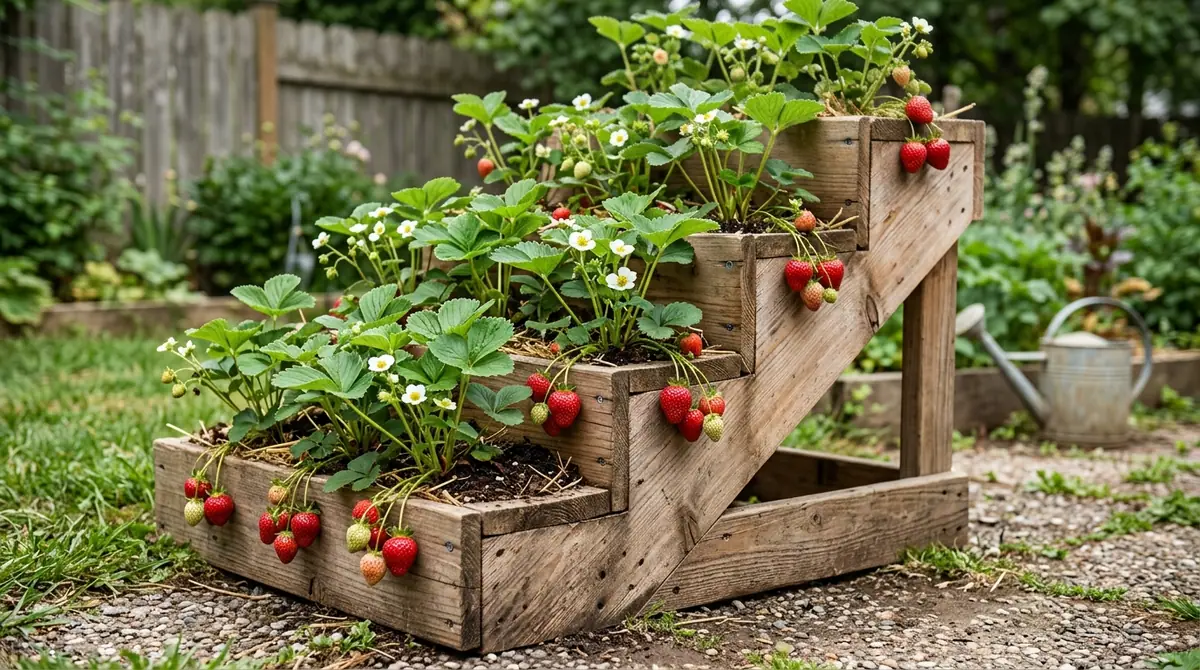
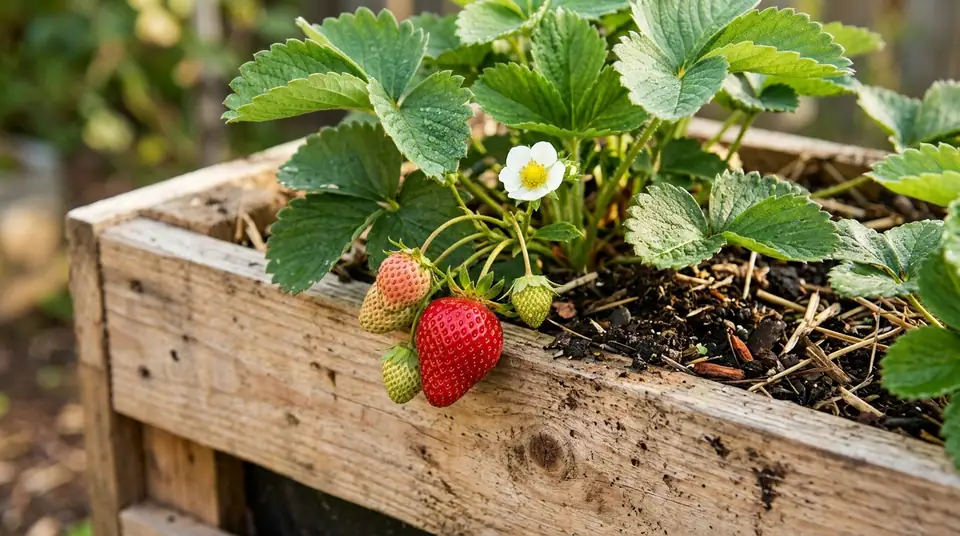
Strawberries belong to the Rosaceae family and exhibit a unique growth habit known as a crown-based perennial structure. Botanically speaking, the "fruit" is an enlarged receptacle holding dry, seed-like fruits called achenes on its exterior surface.
In their native woodland and meadow habitats, wild strawberries (Fragaria vesca and related species) creep along the ground via stolons, rooting in loose, highly organic leaf litter where moisture remains consistent but standing water is nonexistent. They thrive in dappled light to full sun, taking advantage of cool spring temperatures to establish robust root systems before summer heat triggers fruit production.
When translating this natural habitat into DIY planter designs, understanding root depth is paramount. The active root zone of a domestic strawberry sits primarily in the top 6 to 8 inches (15 to 20 cm) of soil, though anchor roots can reach down 12 inches (30 cm). Planters that are too shallow—anything under 6 inches (15 cm)—expose the root ball to rapid thermal fluctuations and moisture stress.
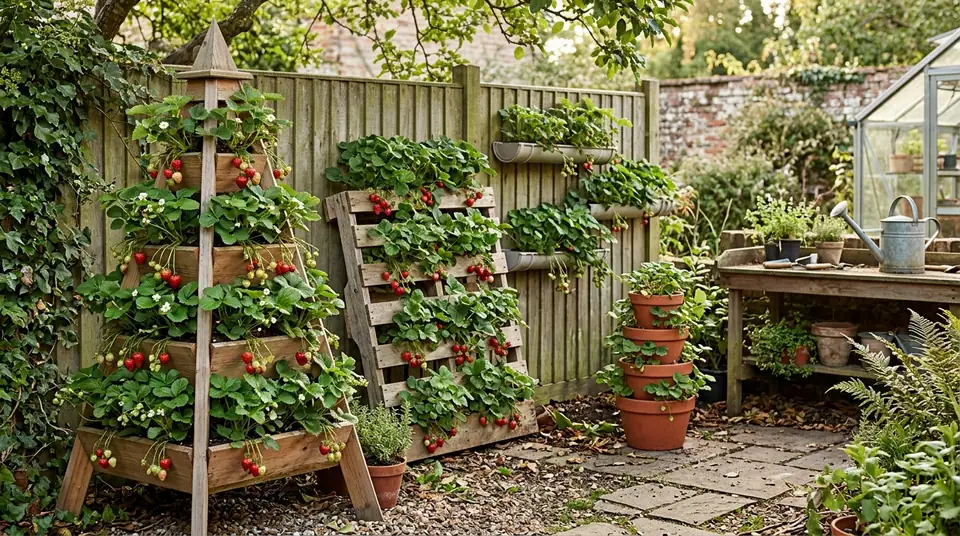
Furthermore, because strawberries produce runners (stolons), your DIY plans must account for horizontal spread or vertical cascading. Whether you are building a vertical PVC pipe tower, a tiered wooden pyramid, or repurposing hanging gutters, every design must balance root volume, structural drainage, and air circulation around the crown to prevent fungal rot.
2. Essential Environmental & Care Requirements
Growing strawberries successfully in handmade structures requires precise environmental management. Because containers isolate plants from the thermal mass of the earth, temperatures swing more dramatically in DIY planters.
| Parameter | Optimal Condition | Common Mistake | Why It Matters |
|---|---|---|---|
| Temperature | 60°F to 80°F (15°C to 27°C) | Exposing roots to sub-20°F (-6°C) uninsulated containers | Extreme cold kills crown tissue; excessive heat stalls fruit set and stresses foliage. |
| Sunlight | 6 to 8 hours of direct daily sun | Placing planters in deep shade or northern exposures | Insufficient light drastically reduces sugar accumulation in the fruit and invites powdery mildew. |
| Soil pH | 5.5 to 6.8 | Using heavy, unamended garden clay | Slightly acidic, highly porous soil is required for optimal nutrient uptake, particularly iron and manganese. |
| Moisture | Evenly moist; dry down 1 inch (2.5 cm) between waterings | Waterlogging or letting soil dry completely bone-dry | Saturated soils cause Phytophthora root rot; dry spells cause blossom drop and misshapen fruit. |
| Drainage | 0.25-inch to 0.5-inch (0.6 to 1.3 cm) holes spaced every 4 inches (10 cm) | Relying solely on gravel layers without exit holes | Perched water tables form above gravel layers, actually increasing water retention in the root zone. |
💡 Pro-Tip: When building wooden or metal DIY planters, paint exterior surfaces white or light pastel if you live in a warm climate (USDA Zones 8-10). Dark containers absorb solar radiation, heating up root zones past 95°F (35°C), which effectively shuts down nutrient absorption and cooks the delicate feeder roots.
For those interested in expanding their growing season indoors or optimizing limited spaces, consult this detailed resource on How to Grow Strawberries Indoors: From Fruit Seeds to Sweet Berries.
3. Step-by-Step Cultivation, Feeding & Propagation
Constructing your own strawberry planter and establishing a healthy crop requires a methodical approach. Follow this proven sequence to build, plant, and maintain your custom strawberry system.
- Planter Construction and Material Prep: Build your chosen DIY planter (such as a tiered cedar box or vertical gutter system) using untreated lumber or food-safe plastics. Drill drainage holes every 4 inches (10 cm) along the lowest points of the structure to prevent any pooling of water.
- Soil Amending: Mix a custom soil blend consisting of 50% high-quality organic compost, 30% aged coco coir or peat moss, and 20% perlite or pumice for aeration. This achieves the ideal loamy texture with a target pH of 6.0.
- Layering the Base: Line the bottom of larger wooden or trough planters with landscape fabric to keep soil inside while letting excess water escape. Never use gravel at the bottom; physics dictates that water hangs above fine-to-coarse interfaces, creating a perched water table.
- Planting the Crowns: Fill the planter until the soil surface sits 2 inches (5 cm) below the rim. Dig small holes and insert your bare-root or potted strawberry plants. Crucial rule: The crown (where the stem meets the roots) must sit exactly at the soil line. Burying the crown causes it to rot; exposing the roots causes them to dry out and die.
- Initial Watering and Mulching: Water thoroughly until moisture runs freely from the drainage holes. Apply a 1-inch (2.5 cm) layer of clean straw, pine needles, or rice hulls around the base of each plant to keep developing berries off wet soil and suppress weeds.
- Fertilization Schedule: Feed your container-grown strawberries every 14 days during the active growing season (spring through mid-summer) using a balanced, water-soluble organic fertilizer rich in potassium and phosphorus, which promotes robust fruit development over excessive leaf growth.
- Propagation via Runners: In late summer, pin active runners from your mother plants into small pots filled with potting mix placed adjacent to the main planter. Once roots establish after 21 to 28 days, snip the connecting stolon to create independent new plants for expanding your DIY system next season.
⚠️ Important Caution: Never use pressure-treated lumber containing chemical preservatives (such as alkaline copper quaternary or historically creosote) for DIY planters that will house edible crops. Toxic chemicals can leach into the acidic soil and be absorbed by the strawberry root system, rendering the fruit unsafe for consumption. Stick to naturally rot-resistant untreated woods like cedar, redwood, or food-grade plastics.
4. Common Problems, Pests & Troubleshooting
Container growing concentrates both success and failure. When problems arise in DIY planters, they usually stem from moisture imbalances or pest access.
- Gray Mold (Botrytis cinerea): This fungal pathogen attacks ripening fruit, covering berries in a fuzzy gray powder. It thrives in stagnant air and wet conditions. Remedy this by increasing spacing in your planter design, removing rotting fruit immediately, and ensuring morning sun hits the foliage to dry dew quickly. For comprehensive disease management strategies, reference the RHS guide to fruit pests and diseases.
- Spider Mites (Tetranychus urticae): Common in warm, dry weather or enclosed DIY setups, these tiny pests cause stippling, yellowing leaves and fine webbing on leaf undersides. Blast them with a strong jet of cold water every 3 days for 9 days, or introduce predatory mites (Phytoseiulus persimilis).
- Slugs and Snails: These nocturnal mollusk visitors chew jagged holes in leaves and hollow out ripe berries. Because DIY planters lift plants off the ground, you have a distinct advantage. Apply a band of copper tape around the perimeter of wooden planters, or use iron phosphate-based bait safe for organic gardening.
- Chlorosis (Yellowing Leaves with Green Veins): If new leaves emerge yellow while veins stay green, your container soil pH has likely drifted too high (above 7.0), locking out iron. Lower the pH by applying elemental sulfur or watering with a dilute chelated iron solution as outlined by the University of California Agriculture and Natural Resources.
Pyramid, pallet, and stacked pot planters filled with strawberry plants in a garden
5. Frequently Asked Questions
What type of DIY strawberry planter is best for small balconies?
Vertical pocket planters made from heavy-duty felt or stacked PVC pipe towers are ideal for small balconies. They maximize vertical space, allowing you to grow 10 to 15 plants in a footprint that normally accommodates only one traditional pot.
Should I choose June-bearing, everbearing, or day-neutral strawberries for my DIY project?
For continuous harvesting throughout the spring, summer, and fall, day-neutral varieties like 'Albion' or 'Seascape' are best suited for DIY containers. June-bearing varieties produce one massive crop for 3 weeks in late spring, which can overwhelm smaller custom planters all at once.
How do I protect DIY strawberry planters from freezing winter temperatures?
In USDA Zones 5 and colder, perennial strawberry crowns in planters can freeze and die because containers lack the insulation of the earth. Move portable DIY planters into an unheated garage, shed, or cold frame when temperatures drop consistently below 20°F (-6°C). Alternatively, wrap large wooden planters heavily in layers of burlap and bubble wrap.
Why are my container strawberries producing lots of runners but no fruit?
Excessive runner production paired with low fruit yields is almost always caused by over-fertilization with nitrogen. Nitrogen stimulates lush, vegetative leaf growth at the expense of flowers and fruit. Switch to a low-nitrogen, high-phosphorus fertilizer and prune away excess runners to redirect plant energy back into fruit production.
Related Guides
- Whiskey Barrel Planter Ideas
- How to Grow Strawberries from a Strawberry Indoors
- Texas Landscaping Ideas
- Florida Backyard Landscape Ideas
- Easy Succulent Garden Ideas for Beginners Indoors
📋 Table of Contents ▼ Click to expand
Tags:
Keep reading
🌿 Related Plants You Might Like



PlantSavvyWorld
Editorial team
PlantSavvyWorld is an independent botanical education project. Articles are drafted with AI assistance, then edited and checked against university extension services, botanical garden collections and other published horticultural sources.