

When to Start Bean Seeds Indoors
Written with AI assistance, edited and checked against horticultural sources.
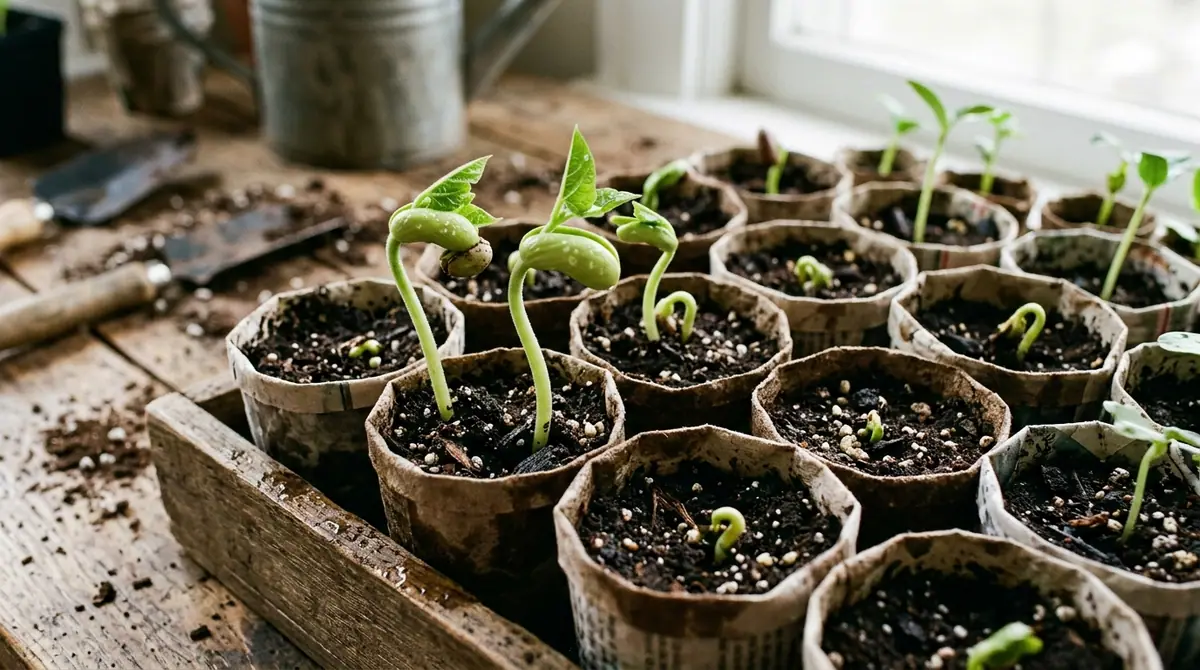
Starting bush bean seeds indoors four weeks too early in tiny peat pots leads to stunted, root-bound casualties that are leggy, curled, and unable to support their own weight. Beans teach a humbling lesson early on: they despise being rushed, they detest having their roots disturbed, and they thrive when sown directly into warm earth at precisely the right moment. When wondering when to start bean seeds indoors, the short botanical answer is usually that you shouldn't—unless you live in an exceptionally short-season climate and take precise precautions to protect their fragile root systems.
1. Botanical Overview & Natural Habitat

Unlike cool-season crops that shrug off chilly spring dampness, beans are exquisitely sensitive to cold and moisture stress. Their large, starch-rich cotyledons require soil temperatures consistently above 60°F (15.5°C) to trigger rapid enzymatic breakdown and germination. When planted in cold, wet soil below 50°F (10°C), bean seeds do not gently wait for warmth; they rot within days, inviting soil-borne pathogens like Pythium and Rhizoctonia.
Botanically, beans are classified as either bush types (growing in compact, self-supporting 12 to 24-inch or 30 to 60-cm mounds) or pole types (climbing vines requiring substantial vertical trellising). Both forms produce taproots that rapidly descend into the soil profile, accompanied by lateral feeder roots that host symbiotic Rhizobium bacteria. These remarkable microbes fix atmospheric nitrogen into bioavailable ammonium, enriching the surrounding soil. This delicate underground architecture makes transplanting an inherently stressful event. Just as you must carefully manage root disturbance when learning when to transplant cucumber seed seedlings, beans leave very little margin for error if their delicate roots are fractured or compressed during early handling.
2. Essential Environmental & Care Requirements
Meeting the precise environmental thresholds of Phaseolus vulgaris dictates whether you harvest pounds of crisp pods or watch your plants languish from physiological stress. Because beans are sensitive to photoperiods and thermal shocks, every variable from soil composition to light duration matters immensely.
| Parameter | Optimal Condition | Common Mistake | Why It Matters |
|---|---|---|---|
| Soil Temperature | 65°F to 85°F (18°C to 29°C) | Planting in cold soil below 50°F (10°C) | Cold, wet substrate causes seeds to rot before germination can occur. |
| Soil pH | 6.0 to 7.0 | Extremely acidic or alkaline media (<5.5 or >7.5) | Locks out essential micronutrients and inhibits nitrogen-fixing bacteria. |
| Light Exposure | 6 to 8 hours of direct sun daily | Low-indoor window light without supplemental LEDs | Causes leggy stems, weak cell walls, and eventual lodging. |
| Watering Depth | Keep evenly moist; 1 inch (2.5 cm) per week | Over-saturating or letting pots dry out completely | Waterlogged media suffocates roots; drought halts pod development. |
To achieve success when starting plants indoors or outdoors, consult reliable agricultural benchmarks such as the Oregon State University Extension Service for regional planting dates. When managing indoor setups, maintain ambient room temperatures between 70°F and 75°F (21°C to 24°C) during germination, dropping slightly to 65°F (18°C) once cotyledons unfurl.
💡 Pro-Tip: If you must start beans indoors because your frost-free date arrives late in July, always use biodegradable pulp or paper pots that can be planted directly into the garden without stripping away the container. This prevents catastrophic root shock to the primary taproot.
3. Step-by-Step Cultivation, Feeding & Propagation
Because direct-sowing is the gold standard for beans, indoor starting should only occur 2 to 3 weeks before your last expected spring frost date. Starting them any earlier results in overgrown, root-bound vines that fail to establish outdoors. Follow this strict protocol to maximize your success rate:
- Select Biodegradable Containers: Fill 3-inch (7.5-cm) peat pots or cow pots with a sterile, well-draining seed-starting mix composed of peat moss, perlite, and vermiculite. Avoid heavy garden soil, which compacts easily indoors.
- Sow at the Correct Depth: Poke holes in the center of each pot exactly 1 inch (2.5 cm) deep. Drop two seeds per pot to ensure at least one vigorous sprout, covering them loosely with soil and pressing down gently to ensure seed-to-soil contact.
- Provide Gentle Heat: Mist the soil surface thoroughly with lukewarm water. Place the pots on a seedling heat mat set to 75°F (24°C) to accelerate germination, which typically occurs within 7 to 10 days.
- Introduce Immediate Light: The exact moment green loops break the soil surface, remove the heat mat and place the containers directly under full-spectrum LED grow lights positioned 2 to 3 inches (5 to 7.5 cm) above the foliage. Run the lights for 14 to 16 hours daily.
- Thin and Fertilize Sparingly: Once true leaves appear alongside the cotyledons, snip the weaker seedling at the soil line with sharp snips rather than pulling it, which disturbs the remaining root system. Feed once with a half-strength, balanced organic liquid fertilizer if growth stalls, though beans require very little added nitrogen due to their fixative properties.
- Harden Off Gradually: Over a 7 to 10-day period, introduce the indoor seedlings to outdoor conditions by placing them in a sheltered, shady spot for a few hours daily, slowly increasing exposure to direct sun and wind.
- Transplant Out: Plant the entire biodegradable pot directly into garden soil once nighttime temperatures consistently remain above 55°F (13°C). Space bush varieties 3 to 4 inches (7.5 to 10 cm) apart in rows spaced 18 to 24 inches (45 to 60 cm) apart.
For gardeners expanding their indoor propagation repertoire, mastering delicate root systems is a recurring theme. Similar techniques for balancing warmth and moisture apply whether you are learning how to manage delicate starts or exploring how to germinate eggplant seeds fast: heat, moisture & 7-day protocol.
4. Common Problems, Pests & Troubleshooting
Indoor-started bean seedlings are uniquely vulnerable to physiological disorders and sap-sucking insects before they ever touch garden soil. Recognizing these distress signals early saves your crop from total failure.
- Leggy, Weak Stems: If your seedlings stretch toward windows or thin out, they lack adequate light intensity. Move them closer to your grow lights immediately; beans cannot recover stretched hypocotyls, but you can bury the stem slightly deeper during transplanting if using biodegradable pots.
- Damping-Off Disease: Caused by soil-borne fungi (Fusarium or Pythium) thriving in cold, stagnant, overwatered media, this pathogen pinches stems at the soil line, causing sudden collapse. Prevent this by ensuring high airflow with a small oscillating fan and letting the top surface of the soil dry slightly between waterings.
- Aphid Infestations: Tender indoor bean foliage frequently attracts green peach aphids. Inspect the undersides of leaves weekly and wash them off with a gentle stream of castile soap spray if populations appear.
- Transplant Shock: If seedlings droop, drop leaves, or turn pale yellow after moving outdoors, they were either hardened off too quickly or experienced root disturbance. Protect newly planted specimens with floating row covers for their first week outdoors to buffer wind and intense UV radiation.
⚠️ Important Caution: Never soak bean seeds in water for more than 4 to 6 hours prior to planting. Unlike harder-coated seeds, bean seed coats split easily, and prolonged soaking invites anaerobic bacteria to enter the cotyledon, causing the seed to turn mushy and rot before it can ever sprout.

5. Frequently Asked Questions
Can I start bean seeds indoors in standard plastic cell trays?
You can, but it is rarely recommended. Standard plastic cell trays restrict root development rapidly, and when you invert the cell to slide the plant out, the fragile taproot often snaps or the soil ball crumbles. If you must use plastic cells, choose large 4-inch (10-cm) pots and transplant with extreme care before roots circle the bottom.
Why are my indoor bean seedlings turning yellow?
Yellowing leaves typically indicate overwatering, a lack of nitrogen, or root compaction. Check your drainage holes first. If the soil is waterlogged, withhold water and increase airflow. If the soil is well-drained and the plants are more than three weeks old, a single application of a balanced organic fertilizer should restore green coloration.
How long do bean seeds remain viable in storage?
Bean seeds maintain high germination rates for 3 to 4 years when stored in a cool, dark, and dry environment. Keep them in airtight glass jars or paper envelopes within a temperature range of 32°F to 50°F (0°C to 10°C). Always perform a quick germination test on older seeds by dampening ten seeds in a paper towel for a week to check your baseline viability percentage.
Is it better to direct sow or start beans indoors?
Direct sowing is overwhelmingly superior for beans in almost all climate zones. Because they mature rapidly (typically 50 to 70 days from seed to harvest) and resent root disturbance, direct-sowing into warm garden soil produces healthier, more resilient plants that outgrow indoor-started counterparts within a month. Save indoor starting strictly for very short-season northern climates where spring warmth arrives late and fleetingly. For deeper insight into botanical timing guidelines across different regions, consult resources provided by the Royal Botanic Gardens, Kew.
Related Guides
- When to Start Tomatoes Indoors Zone 6
- When to Start Tomato Seeds Indoors Zone 6
- When to Start Strawberries Indoors
- When to Start Stock Seeds Indoors
- When to Start Squash Seeds Indoors
📋 Table of Contents ▼ Click to expand
Tags:
Keep reading
🌿 Related Plants You Might Like

PlantSavvyWorld
Editorial team
PlantSavvyWorld is an independent botanical education project. Articles are drafted with AI assistance, then edited and checked against university extension services, botanical garden collections and other published horticultural sources.