

When to Plant Strawberries in Seattle
Written with AI assistance, edited and checked against horticultural sources.
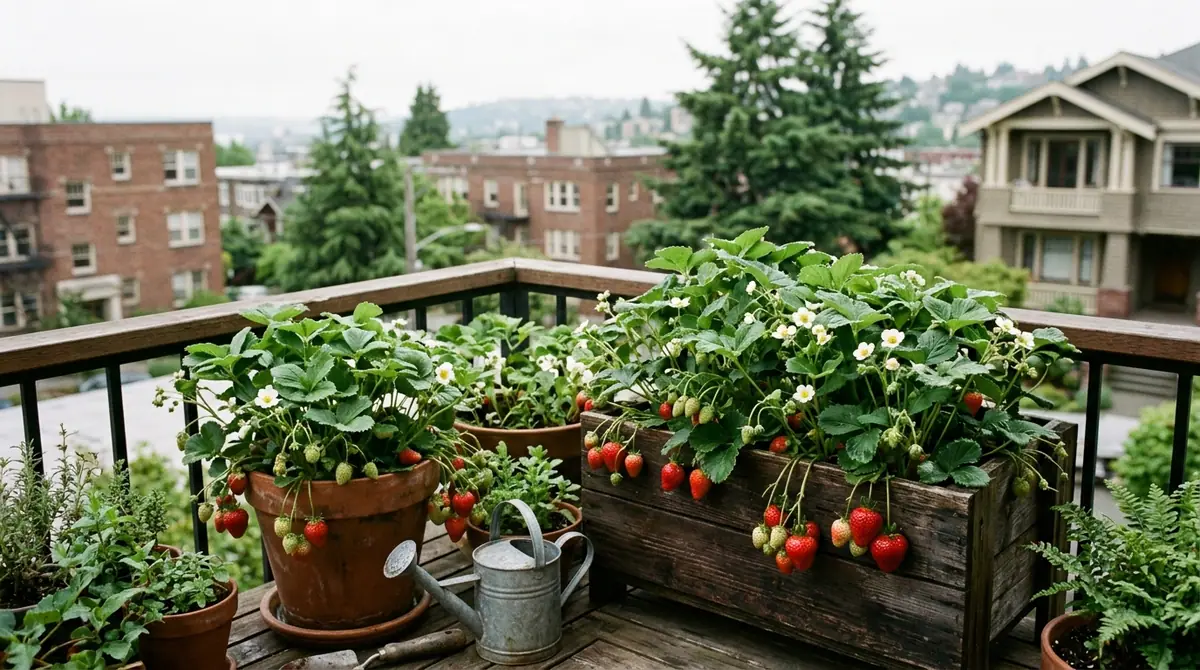

1. Botanical Overview & Natural Habitat
Cultivated strawberries belong to the genus Fragaria within the rose family (Rosaceae). Modern garden strawberries are predominantly hybrids of Fragaria × ananassa, derived from crossing the North American Fragaria virginiana with the large-fruited Chilean Fragaria chiloensis. Native forest-edge dwellers, wild strawberries evolved under the dappled shade of deciduous canopies in rich, organic, slightly acidic soil.
Understanding this woodland ancestry dictates how they behave in the maritime microclimate of Seattle. In their native understory habitat, wild strawberries experience cool, wet winters and mild, moisture-retentive summers. Seattle’s USDA Hardiness Zone 8b—characterized by winter lows averaging 15°F to 20°F (-9.4°C to -6.6°C) and dry, temperate summers—mirrors these ancestral conditions remarkably well, provided we manage our persistent spring rains and clay-heavy glacial till.
Depending on the cultivar you select, growth habits split into three main categories:
- June-bearing varieties initiate flower buds during the short, cool days of autumn and fruit in a massive, concentrated harvest over a 3-week window in June.
- Everbearing varieties produce two primary flushes of fruit (late spring and late summer), though our cooler Seattle summers can sometimes stretch this into a continuous trickle.
- Day-neutral varieties flower and fruit independently of day length, pumping out steady harvests from June straight through the first autumn frost in November, making them exceptional performers in Pacific Northwest urban raised beds.
For those interested in expanding their edible indoor footprint during our long, dark winters, you can also explore indoor techniques detailed in this guide on How to Grow Strawberries Indoors: From Fruit Seeds to Sweet Berries.
2. Essential Environmental & Care Requirements
To maximize yields in Seattle, you must align your garden management with our specific regional constraints. Western Washington skies are often overcast through "Junuary," meaning your strawberry patch needs every scrap of direct sunlight it can get.
- Sunlight: Aim for a minimum of 6 to 8 hours of direct sun daily. Shady spots under Douglas firs or maples will result in lush, fungal-prone foliage and meager, sour fruit.
- Soil Composition: Strawberries demand well-draining soil with a pH between 5.5 and 6.8. Seattle’s native soil is frequently heavy glacial till or compacted clay that suffocates roots. Amend heavily with well-rotted compost, aged manure, and coarse horticultural sand or perlite to improve aeration.
- Moisture Management: While they require consistent moisture (about 1 to 1.5 inches or 2.5 to 3.8 cm of water per week during fruiting), soggy, waterlogged soil causes crown rot (Phytophthora). Raised beds are the gold standard in Western Washington for this exact reason.
| Parameter | Optimal Condition | Common Mistake | Why It Matters |
|---|---|---|---|
| Soil pH | 5.5 – 6.8 | Planting in alkaline or unamended heavy clay | Nutrient lock-out (especially iron and manganese) stunts growth and chlorosis. |
| Planting Depth | Crown level with soil surface | Burying the crown or leaving roots exposed | Buried crowns rot; exposed roots dry out and die. |
| Spacing | 12 to 18 inches (30–45 cm) apart | Crowding plants too tightly | Traps moisture, inviting grey mold (Botrytis cinerea) and slugs. |
| Watering | 1–2 inches (2.5–5 cm) weekly, morning overhead | Evening sprinkler irrigation | Wet foliage overnight triggers fungal outbreaks in Seattle's humid air. |
For deep-root comparisons with other popular garden crops in your landscape plan, look at How Deep Do Pepper Plant Roots Go? Pot Size & Substrate Depth Guide.
3. Step-by-Step Cultivation, Feeding & Propagation
The single most common question I get from Pacific Northwest gardeners is: When do I actually put these in the ground? In Seattle (Zone 8b), the ideal window to plant bare-root strawberries is early to mid-March, as soon as the soil can be worked without clumping into mud. Container-grown starts can go in from March through May.
Here is the exact step-by-step planting protocol I use:
- Site Preparation: Clear the planting bed of perennial weeds like buttercup and quackgrass. Incorporate a 3-inch (7.6 cm) layer of aged compost and a balanced organic fertilizer into the top 8 inches (20 cm) of soil.
- Hydrate the Roots: If planting bare-root runners, soak them in a bucket of tepid water for 20 to 30 minutes before planting to plump up the dehydrated root systems.
- Trim Roots: Snip off any broken or excessively long roots down to about 4 to 6 inches (10 to 15 cm) to encourage branching feeder roots.
- Dig the Hole: Dig a vertical hole deep and wide enough to accommodate the roots fully spread out without bending or bunching.
- Set the Crown Height: Position the plant so the midpoint of the crown sits precisely level with the soil surface. Never bury the crown.
- Backfill and Firm: Fill the hole gently with native amended soil, pressing firmly around the roots to eliminate air pockets. Water thoroughly with 1 inch (2.5 cm) of water to settle the soil.
- Mulch: Apply a 2-inch (5 cm) layer of clean straw, pine needles, or shredded leaves around the plants to suppress weeds and keep developing fruit clean of Seattle mud.
For broader regional context on adjusting these timelines for vastly different climates, you can review this regional guide on When to Plant Strawberries in Kansas: Zone 6a/6b Seasonal Calendar.
💡 Pro-Tip: For June-bearing varieties planted in your first year, pinch off all the flower blossoms for the first 6 to 8 weeks. It feels painful, but redirecting that energy into root and runner development will double your harvest the following season.
4. Common Problems, Pests & Troubleshooting
Seattle’s damp, temperate climate creates a paradise not just for gardeners, but for pests and pathogens. Anticipating these issues prevents crop failure.
- Slugs and Snails: Our wet spring weather activates these nocturnal mollusks, which will hollow out ripening berries overnight. Manage them using iron phosphate-based bait, copper tape around raised beds, and keeping the mulch layer thin directly around the plant crowns.
- Grey Mold (Botrytis cinerea): This fungal disease turns fruit into a fuzzy gray mass during rainy spells. Prevent it by ensuring proper 12-to-18-inch (30-45 cm) spacing, utilizing straw mulch to keep fruit off wet soil, and harvesting ripe berries immediately. For official university-backed management strategies, consult the Washington State University Extension Publications library.
- Spotted Wing Drosophila (SWD): Unlike traditional fruit flies that target rotting fruit, SWD attacks sound, ripening berries by slicing the skin to lay eggs. Protect your harvest by draping fine insect netting (mesh size under 1 mm) over hoops as soon as petals drop.
- Spider Mites: During dry spells in July and August, two-spotted spider mites can multiply on the undersides of leaves, causing stippling and webbing. Blast them off with a sharp jet of water early in the day.
⚠️ Important Caution: Never use synthetic high-nitrogen fertilizers on strawberries to force growth. Excess nitrogen produces a flush of soft, succulent green foliage that attracts aphids and spider mites while making the plant highly susceptible to frost damage and fungal rot. Stick to slow-release organic fertilizers rich in phosphorus and potassium.

5. Frequently Asked Questions
Can I plant strawberries in the fall in Seattle?
Yes, absolutely. September and early October are fantastic times to plant bare-root or potted strawberries in Seattle. Soil temperatures are still warm from summer, which encourages robust root growth before winter dormancy kicks in. Fall-planted strawberries will establish deep root systems and yield a substantial harvest the following spring.
Do strawberries survive Seattle winters?
They are exceptionally hardy. Modern garden strawberries are fully perennial down to Zone 3 or 4, meaning Seattle's mild Zone 8b winters (where temperatures rarely dip below 15°F / -9.4°C) are easily tolerated. The foliage may look a bit weathered and beaten by January rain, but the crowns remain dormant and alive, pushing out vigorous new growth by late February.
How do I protect my strawberry patch from Seattle's heavy spring rains?
The best defense is planting in raised beds or sloped containers to ensure rapid drainage. Applying a thick layer of clean straw or clean pine needles beneath the plants prevents rain from splashing soil-borne fungal spores onto the developing fruit. For persistent downpours during peak ripening, installing low tunnels with clear agricultural plastic film keeps rain off the fruit while allowing adequate airflow.
How often should I replace my strawberry plants?
Strawberry plants experience peak fruit production in their second and third years. By year four or five, yields drop significantly, and viral loads within the plants tend to increase. To maintain high productivity, let your favorite mother plants send out healthy runners in late summer, root them into small pots, and replace your old bed with these vigorous daughters every three to four years. For more horticultural insights on plant lifecycles and botanical research, visit the Royal Horticultural Society.
Related Guides
- What Zone is Seattle in for Planting
- When to Start Strawberries Indoors
- When to Plant Strawberries Zone 6
- When to Plant Strawberries in Zone 6b
- When to Plant Strawberries in Zone 6
📋 Table of Contents ▼ Click to expand
Tags:
Keep reading
🌿 Related Plants You Might Like




PlantSavvyWorld
Editorial team
PlantSavvyWorld is an independent botanical education project. Articles are drafted with AI assistance, then edited and checked against university extension services, botanical garden collections and other published horticultural sources.