

When to Plant Strawberries in Massachusetts
Written with AI assistance, edited and checked against horticultural sources.
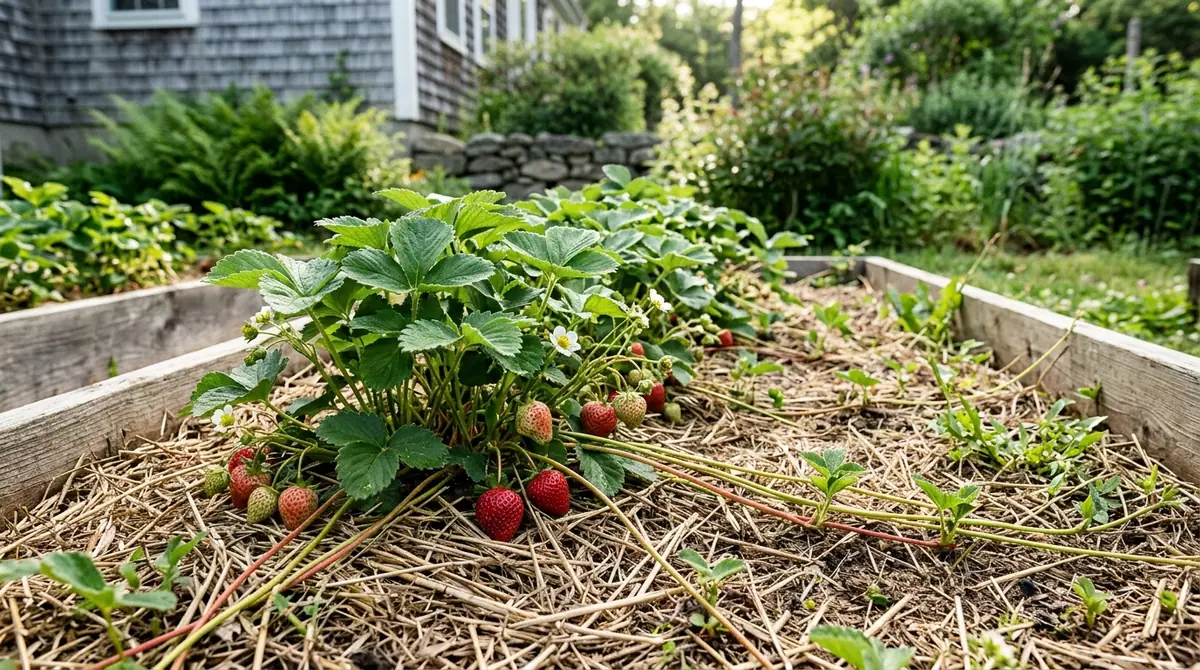

1. Botanical Overview & Natural Habitat
Strawberries belong to the genus Fragaria within the rose family (Rosaceae). Botanically speaking, what we call a strawberry fruit is not a berry at all, but an aggregate accessory fruit—the fleshy red tissue is actually the enlarged receptacle holding the true fruits, known as achenes (the tiny "seeds" on the surface).
Wild strawberries, such as the native Virginia strawberry (Fragaria virginiana), adapted to open woodlands, forest margins, and clearings across North America. They thrive in temperate climates characterized by cold winters, which trigger a necessary period of dormancy, followed by warm, sunny summers that concentrate sugars in the fruit.
In Massachusetts, successful cultivation relies on understanding the three primary habit types:
- June-bearing cultivars: Produce one massive, high-yield harvest over a 3-to-4-week window in June. They initiate flower buds in the short days and cool temperatures of late autumn.
- Everbearing cultivars: Produce two distinct harvests—one in early summer and another in late summer or early fall—though their total yield is lower than June-bearers.
- Day-neutral cultivars: Insensitive to day length, producing fruit continuously from early summer through the first hard autumn frost, provided temperatures stay below 85°F (29.4°C).
If you enjoy experimenting with unconventional fruiting timelines or indoor production setups, you can adapt many of these propagation principles, much like learning how to grow strawberries indoors: from fruit seeds to sweet berries. For growers migrating from other regions with different soil types and milder winters, adjusting your timeline from a calendar like when to plant strawberries in Kansas: zone 6a/6b seasonal calendar is essential, as Massachusetts springs remain wetter and colder much later into April.
2. Essential Environmental & Care Requirements
To maximize yields in Massachusetts, you must mimic the woodland edge habitat where strawberries evolved, optimizing light, moisture, and soil chemistry.
- Sunlight: Strawberries demand full sun—a minimum of 6 to 8 hours of direct sunlight daily. Shady locations reduce fruit set and increase susceptibility to fungal pathogens like powdery mildew and gray mold (Botrytis cinerea).
- Soil Composition & pH: They thrive in loamy, well-draining soils rich in organic matter. The ideal soil pH ranges between 5.5 and 6.8. Massachusetts soils tend to be naturally acidic, so amend with agricultural limestone if your soil test drops below 5.5.
- Moisture & Drainage: Strawberries possess shallow root systems, with 90% of active roots residing in the top 6 inches (15 cm) of soil. They require consistent moisture—about 1 to 1.5 inches (2.5 to 3.8 cm) of water per week—yet cannot tolerate sitting in waterlogged mud. For gardeners managing heavy clay soils or elevated garden layouts, understanding root depth dynamics similar to how deep do pepper plant roots go? Pot size & substrate depth guide helps prevent the crown rot that plagues poorly drained New England garden beds.
- Temperature Thresholds: Bare-root plants tolerate frosts down to 25°F (-3.9°C), but active spring blossoms suffer severe damage at 30°F (-1.1°C).
| Parameter | Optimal Condition | Common Mistake | Why It Matters |
|---|---|---|---|
| Soil pH | 5.5 to 6.8 | Planting in unamended acidic native soil ($<5.0$) | Low pH locks out essential macronutrients like phosphorus and calcium, causing stunted leaf growth. |
| Planting Depth | Crown flush with soil surface | Burying the crown too deep or leaving roots exposed | Deeply buried crowns rot; exposed roots dry out and die before establishing. |
| Spacing | 18–24 inches (45–60 cm) apart | Crowding plants closer than 12 inches (30 cm) | Dense spacing restricts airflow, trapping moisture and inviting fungal diseases. |
| Irrigation | 1 inch (2.5 cm) weekly via drip line | Overhead sprinkler irrigation late in the evening | Wet foliage overnight triggers rapid spore germination of gray mold and leaf spot. |
💡 Pro-Tip: When designing raised beds in Massachusetts, incorporate aged leaf mold or composted pine bark into the top 8 inches (20 cm) of soil. This buffers moisture fluctuations during dry July spells and naturally maintains the slight acidity strawberries adore without requiring synthetic sulfur additives.
3. Step-by-Step Cultivation, Feeding & Propagation
Timing your planting in Massachusetts depends on your spring thaw. The ideal window runs from late April to mid-May when the soil can be easily worked and daytime temperatures consistently reach 50°F to 60°F (10°C to 15.6°C).
Step 1: Site Selection and Soil Preparation
Select a flat or gently sloping site that avoids low frost pockets. Clear all perennial weeds like quackgrass and dandelion. Till or broadfork the soil to a depth of 10 inches (25 cm), incorporating 2 to 3 inches (5 to 7.5 cm) of well-rotted compost.
Step 2: Sourcing and Conditioning Bare-Root Plants
Purchase certified virus-free dormant bare-root plants from a reputable supplier or local nursery. Soak the bundle roots in tepid water for 30 to 60 minutes prior to planting to rehydrate the tissue. Trim root lengths back to 4 to 5 inches (10 to 12.5 cm) to encourage lateral branching.
Step 3: Digging and Positioning
Dig a vertical hole or trench deep enough to accommodate the roots without bending them. Position the plant so the midpoint of the crown sits precisely level with the soil surface.
- Critical check: If the crown is buried below the soil, it will suffocate and rot. If roots are exposed to the air, they will desiccate.
Step 4: Backfilling and Firming
Fill the soil gently around the roots, pressing firmly with your hands to eliminate air pockets. Water the entire bed immediately with 1 inch (2.5 cm) of water to settle the soil around the root zone.
Step 5: Blossom Management (First Season)
For June-bearing varieties, pinch off all flower clusters during the first growing season. This redirects the plant's metabolic energy into establishing a robust root system and vigorous runner production rather than premature fruit production. For day-neutral and everbearing varieties, pinch blossoms for the first 6 weeks only, allowing later flowers to set a modest late-summer harvest.
Step 6: Mulching for Winter Protection
By late November in Massachusetts—after several hard freezes have hardened off the plants—apply a 3-to-4-inch (7.5 to 10 cm) layer of clean wheat or straw over the entire bed. This insulates the crowns against extreme sub-zero winter wind chill and prevents the damaging cycle of soil heaving.
To explore regional extension guidelines and frost charts, consult the UMass Extension Fruit Program for localized pest monitoring advisories. For broader perennial fruit integration, reference the Royal Horticultural Society (RHS) Strawberry Cultivation Guide.
4. Common Problems, Pests & Troubleshooting
Even with pristine timing, New England weather patterns create distinct challenges for strawberry growers.
- Gray Mold (Botrytis cinerea): Thrives during wet, humid Massachusetts springs. Prevent outbreaks by spacing plants correctly, avoiding overhead watering, and applying a thick straw mulch to keep ripening berries from touching damp soil.
- Tarnished Plant Bug (Lygus lineolaris): These small, bronze-brown insects feed on developing flower buds, causing "cat-facing"—deformed, scarred fruit. Control weeds surrounding the patch where adults overwinter, and use floating row covers early in the season until pollination is required.
- Strawberry Slugs & Snails: Chew irregular holes in leaves and hollow out ripening fruit during rainy spells. Hand-pick at dusk or apply organic iron phosphate bait around the bed perimeter.
- Root Rots (Phytophthora and Verticillium): Caused by heavy, poorly draining soils or planting in sites previously occupied by solanaceous crops (tomatoes, potatoes, eggplants) which harbor Verticillium wilt. Rotate planting beds every 3 to 4 years.
⚠️ Important Caution: Never plant strawberries in soil where tomatoes, peppers, potatoes, or eggplants have grown within the past four years. These crops share susceptibility to Verticillium wilt, a soil-borne fungus that remains viable in Massachusetts soils for decades and will devastate a new strawberry patch.

5. Frequently Asked Questions
Can I plant strawberries in the fall in Massachusetts?
Yes, late summer to early fall (late August through September) is an excellent secondary planting window in Massachusetts. Planting during this cooler period allows root systems to establish extensively before the ground freezes, resulting in a significantly larger fruit harvest the following June compared to spring-planted stock.
How do I protect my strawberry blossoms from late spring frosts in Massachusetts?
When overnight temperatures are forecasted to drop below 32°F (0°C) after your plants have broken dormancy, cover the beds with floating row covers, burlap, or old cotton bedsheets. Secure the edges tightly with stones or soil. Remove the covers during the day to allow insect pollination.
Should I choose June-bearing or day-neutral strawberries for a backyard garden in New England?
It depends on your harvest goals. If you want a massive crop for freezing, jam-making, and fresh eating all at once, choose June-bearing varieties like 'Jewel' or 'Sparkle'. If you prefer a steady, manageable trickle of fresh fruit from July through October, select day-neutral cultivars like 'Albion' or 'Seascape'.
How often do I need to replant a strawberry patch in Massachusetts?
June-bearing matted rows peak in productivity during their second and third fruiting seasons. By year four, yields decline due to overcrowding, weed competition, and disease accumulation. Plan to establish a fresh bed in a new location every three to four years, terminating the old patch once production drops.
Related Guides
- When to Start Strawberries Indoors
- When to Plant Strawberries Zone 6
- When to Plant Strawberries in Zone 6b
- When to Plant Strawberries in Zone 6
- When to Plant Strawberries in Washington State
📋 Table of Contents ▼ Click to expand
Tags:
Keep reading
🌿 Related Plants You Might Like






PlantSavvyWorld
Editorial team
PlantSavvyWorld is an independent botanical education project. Articles are drafted with AI assistance, then edited and checked against university extension services, botanical garden collections and other published horticultural sources.