

When to Plant Strawberries in Kentucky
Written with AI assistance, edited and checked against horticultural sources.
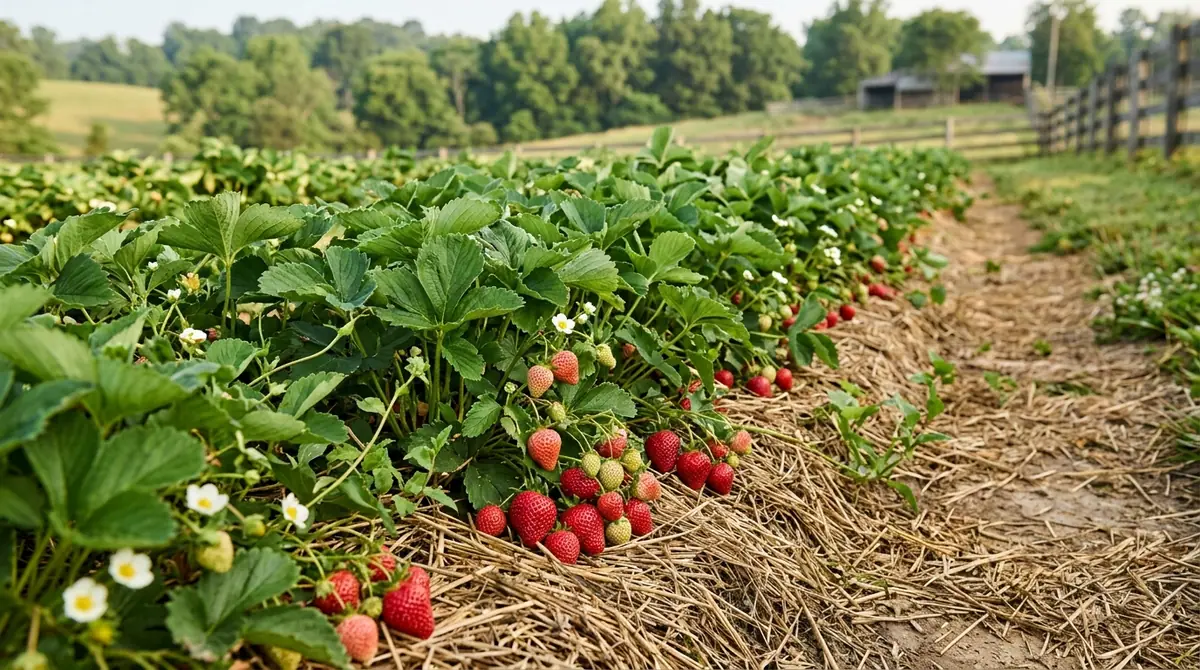
I am standing in a muddy experimental plot outside Lexington, holding a bundle of bare-root 'Chandler' strawberry crowns that smell faintly of damp cellar earth and promise. It is late March, the thermometer reads 38°F (3.3°C), and a cold spring drizzle is plastering my hair to my forehead. Every horticultural instinct honed over twenty years before Kentucky's volatile spring weather shifts into high gear. If I wait until May, when the dogwoods drop their blossoms and the air turns humid, these plants will wither under heat stress before their root systems can establish. Timing is everything in the Bluegrass State, where our distinct USDA Zones 6a through 7b demand precision, patience, and a deep understanding of local microclimates.
1. Botanical Overview & Natural Habitat

Understanding when to plant strawberries in Kentucky starts with recognizing their ancestral habitat. Wild strawberry species evolved as woodland margin and meadow edge perennials. They are adapted to temperate climates with cold winters that trigger dormancy, and cool, moist springs that favor vegetative growth and runner production. In Kentucky, this dynamic translates to a unique seasonal rhythm. Our winters provide the necessary chilling hours (typically 300 to 500 hours below 45°F or 7.2°C depending on the cultivar), while our spring transition offers the ideal thermal window to kickstart metabolic activity.
When comparing regional growing timelines, note that timing shifts depending on latitude and elevation. For instance, northern neighbors face shorter frost-free windows, much like the schedules detailed in our When to Plant Strawberries in Kansas: Zone 6a/6b Seasonal Calendar guide. Conversely, container growers or indoor enthusiasts managing controlled environments must mimic these natural photoperiods and chilling periods, strategies we explore in How to Grow Strawberries Indoors: From Fruit Seeds to Sweet Berries.
2. Essential Environmental & Care Requirements
Strawberry plants are notoriously honest indicators of their environment. If they do not receive what they need, they will refuse to fruit, declining into sparse, chlorotic rosettes.
Sunlight is your primary limiting factor. Strawberries demand a minimum of 6 to 8 hours of direct, unfiltered sunlight daily. In Kentucky, selecting a south- or east-facing slope prevents late-spring frost pooling while maximizing photosynthetic output during the crucial fruit-fill stage in May and June.
Soil composition dictates root longevity. Strawberries thrive in rich, well-draining loams with a soil pH between 5.5 and 6.8. Heavy clay soils, common in the outer Bluegrass and Knobs regions, suffocate fine feeder roots and harbor Phytophthora root rot pathogens. Conversely, overly sandy soils leach nutrients too rapidly.
| Parameter | Optimal Condition | Common Mistake | Why It Matters |
|---|---|---|---|
| Soil pH | 5.5 to 6.8 | Planting in alkaline clay (>7.0) | Locks out iron and manganese, causing severe chlorosis and stunted growth. |
| Planting Depth | Crown level with soil surface | Burying the crown too deep or leaving roots exposed | Deep burial rots the central bud; shallow exposure dehydrates the root system. |
| Watering Volume | 1 to 1.5 inches (2.5 to 3.8 cm) per week | Frequent, shallow surface sprinkling | Encourages shallow rooting, making plants vulnerable to summer drought. |
| Spacing | 12 to 18 inches (30 to 45 cm) apart | Overcrowding in matted rows | Restricts airflow, inviting gray mold (Botrytis cinerea) and powdery mildew. |
💡 Pro-Tip: Before planting in Kentucky’s native clay, incorporate 3 to 4 inches (7.6 to 10 cm) of well-rotted leaf mold or aged compost into the top 8 inches (20 cm) of your bed. This breaks up compaction without altering the native acidity too drastically, keeping your strawberry roots happy and well-oxygenated.
For a deeper dive into managing root depth and soil volume—principles that apply directly to setting up robust perennial beds—consult our comprehensive guide on How Deep Do Pepper Plant Roots Go? Pot Size & Substrate Depth Guide.
3. Step-by-Step Cultivation, Feeding & Propagation
The single most critical window for planting bare-root strawberries in Kentucky is early spring (mid-March through mid-April) when daytime air temperatures hover between 50°F and 65°F (10°C to 18°C), and the soil is workable but still cool. Fall planting (September through October) is also viable in USDA Zones 7a and 7b (such as around Paducah or Bowling Green), provided plants have 6 weeks to establish roots before hard freezes.
Follow this exact botanical sequence to establish your Kentucky strawberry patch:
- Site Preparation and Weed Eradication: Clear the bed of all perennial weeds like nutsedge and Bermuda grass at least one month prior. Apply a balanced organic fertilizer (such as a 5-10-5 blend) at a rate of 2 pounds per 100 square feet (1 kg per 9 square meters) and work it thoroughly into the top 6 inches (15 cm) of soil.
- Root Pruning and Hydration: Soak your bare-root strawberry crowns in a bucket of tepid water for 30 minutes before planting. Trim long, straggling roots back to roughly 4 to 6 inches (10 to 15 cm) to stimulate branching root development.
- Excavating the Planting Hole: Dig a vertical hole deep and wide enough to accommodate the root system without bending or bunching the roots.
- Setting the Crown Height (The Most Critical Step): Position the plant so the midpoint of the crown is exactly level with the surrounding soil surface. If the crown is buried, it will rot; if it is exposed above ground, the roots will dry out and die.
- Firming and Watering In: Backfill the soil gently around the roots, pressing firmly with your hands to eliminate air pockets. Water immediately with 1 inch (2.5 cm) of water, settling the soil tightly around the root zone.
- Blossom Removal (First Year): For June-bearing varieties planted in spring, pinch off all flower clusters for the first 6 weeks. This redirects plant energy away from fruit production and into runner and root establishment, ensuring a massive harvest the following year. Day-neutral and everbearing varieties can be allowed to fruit by late summer.
To source certified virus-free planting stock and regional variety trials tailored specifically to our state, consult the University of Kentucky College of Agriculture, Food and Environment Extension Service.
4. Common Problems, Pests & Troubleshooting
Kentucky’s humid spring climate and sudden late-frost events can challenge even experienced gardeners. Recognizing symptoms early prevents total crop failure.
Late Spring Frosts: A sudden drop below 32°F (0°C) in late April can blacken open strawberry blossoms, instantly destroying that flower's ability to set fruit. Keep floating row covers (weight rating: 1.5 oz/sq yd) on hand to drape over your beds the moment a frost warning is issued.
Gray Mold (Botrytis cinerea): This fungal pathogen thrives during rainy Kentucky springs, turning ripening berries into fuzzy, gray masses. Prevent it by applying a 2-inch (5 cm) layer of clean wheat straw or pine needle mulch beneath the foliage to keep developing fruit off damp soil. Maintain proper spacing to maximize wind drying.
Tarnished Plant Bug (Lygus lineolaris): These small, bronze insects feed on developing achenes, causing "cat-facing"—deformed, hard-tipped berries. Handpick them in the cool morning hours when they are sluggish, or apply insecticidal soap if populations spike before bloom.
⚠️ Important Caution: Never use high-nitrogen synthetic lawn fertilizers on your strawberry beds to boost growth. Excessive nitrogen produces an abundance of soft, succulent foliage that attracts aphids and spider mites while making the fruit watery, tasteless, and highly susceptible to rot.

5. Frequently Asked Questions
Can I plant strawberries in Kentucky during the fall?
Yes, fall planting (September to mid-October) is successful in Kentucky, particularly in USDA Zones 7a and 7b. Fall-planted crowns establish extensive root systems over winter and yield a moderate harvest the following spring. However, in colder Zone 6a regions like northern Kentucky, spring planting remains the gold standard because it avoids winter heaving caused by repetitive freeze-thaw cycles.
Which strawberry varieties perform best in Kentucky's climate?
June-bearing varieties like 'Chandler', 'Cardinal', and 'Earliglow' perform exceptionally well, offering large, sweet fruit and strong disease resistance tailored to our regional fungal pressures. For continuous harvesting, day-neutral varieties such as 'Albion' or 'Seascape' produce fruit from late spring through frost, though they require consistent summer irrigation and afternoon shade during peak July heatwaves.
How do I protect my strawberry plants from winter damage in Kentucky?
Apply a 3- to 4-inch (7.5 to 10 cm) blanket of clean straw, pine straw, or chopped leaves over the entire bed in late November or early December, once nighttime temperatures drop consistently into the low 20s°F (-5°C to -6°C) and plants are fully dormant. Rake the mulch back off the crowns and into the aisles in early spring (late March) just as new green shoots begin to push upward.
How often should I replace my strawberry bed for maximum fruit yield?
Commercial and home strawberry beds experience a natural decline in productivity and an increase in viral loads after three fruiting seasons. Plan to establish a brand-new bed in a different section of your garden every three to four years, utilizing healthy runner tips from your current patch or purchasing certified disease-free bare-root stock to maintain high yields and vigorous fruit production.
Related Guides
- When to Start Strawberries Indoors
- When to Plant Strawberries Zone 6
- When to Plant Strawberries in Zone 6b
- When to Plant Strawberries in Zone 6
- When to Plant Strawberries in Washington State
📋 Table of Contents ▼ Click to expand
Tags:
Keep reading
🌿 Related Plants You Might Like




PlantSavvyWorld
Editorial team
PlantSavvyWorld is an independent botanical education project. Articles are drafted with AI assistance, then edited and checked against university extension services, botanical garden collections and other published horticultural sources.