

When Can You Plant Spinach
Written with AI assistance, edited and checked against horticultural sources.
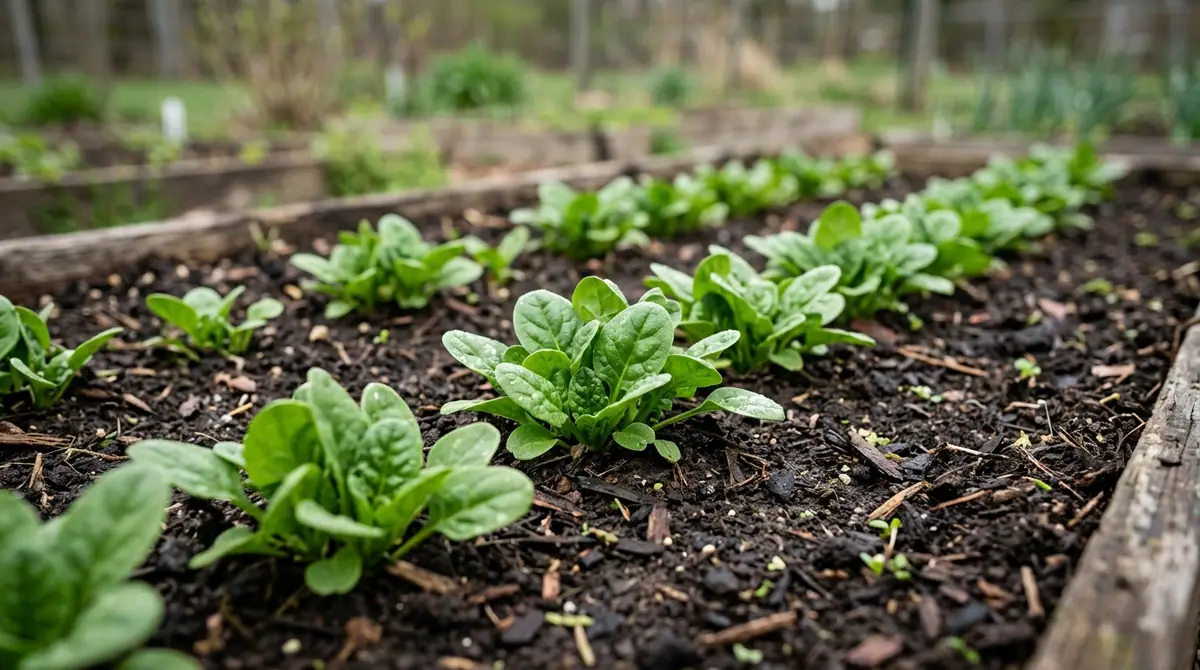
I stepped out into the crisp, biting air of an early April morning, my gardening boots sinking slightly into the thawing, damp clay of my Zone 6 plot. It was far too early for tomatoes or peppers, but there I was, pressing small, papery Spinacia oleracea seeds into the dark earth. My hands were gloveless, aching slightly from the chill, yet I knew this precise moment was the secret weapon of any serious cool-season grower. Wait too long, let the spring slide into warm May afternoons, and your spinach turns bitter, bolting straight to seed before you can harvest a single salad. Timing is everything with this crop. If you have ever wondered when can you plant spinach, the answer lies in understanding its resilience to frost and its aversion to heat. I am going to walk you through the exact science, timing, and protocols required to harvest lush, tender spinach leaves all season long.
1. Botanical Overview & Natural Habitat

Botanically, spinach forms a basal rosette of leaves that vary widely depending on the cultivar. Smooth-leaf varieties feature flat, unwrinkled foliage that washes clean easily, making them popular for commercial processing. Savory or crinkled-leaf varieties (often called savoy) possess puckered, deeply textured leaves with incredible cold hardiness, developed through cellular adaptations that prevent ice crystal damage during sub-freezing nights. Semi-savoy cultivars offer a middle ground, retaining some crinkling while remaining upright and easier to clean.
Unlike many heat-loving crops that you might manage similarly to how you approach timing when planning When to Start Tomatoes Indoors Zone 6, spinach is a classic long-day plant triggered by lengthening daylight hours and climbing temperatures. When the days stretch beyond 14 hours and soil temperatures exceed 75°F (24°C), the plant receives a hormonal signal to transition from its vegetative rosette stage to its reproductive flowering stage, a process known as bolting. Once bolting begins, leaves become bitter, stringy, and unpalatable as energy shifts entirely to producing a central seed stalk. Understanding this evolutionary trigger is the key to timing your plantings for spring and autumn harvests.
2. Essential Environmental & Care Requirements
To achieve maximum yields of succulent, dark-green foliage, you must match spinach's preferred environmental parameters. Because it is a cool-season crop, getting the light, soil, and moisture balance right dictates whether your crop thrives or struggles.
Spinach demands full sun during early spring and late autumn, requiring at least 6 hours of direct sunlight daily to power photosynthesis. However, as summer approaches, providing partial afternoon shade can extend your harvest window by keeping soil temperatures cool. The optimal soil temperature for seed germination ranges between 45°F and 68°F (7°C to 20°C). While seeds can germinate in soil as cold as 35°F (2°C), emergence will be significantly delayed, taking up to 3 weeks compared to just 7 to 10 days at ideal temperatures.
The root system of Spinacia oleracea features a dominant taproot that can descend up to 3 or 4 feet (90 to 120 cm) into the soil if conditions permit, though most feeder roots occupy the top 6 inches (15 cm). Because of this taproot structure, spinach despises being root-bound and does not transplant well once established, an attribute you must keep in mind if you are accustomed to handling delicate seedlings like those discussed in guides on When to Transplant Flower Seedlings or When to Transplant Snapdragon Seedlings.
Soil chemistry is equally critical. Spinach prefers a fertile, loamy soil rich in organic matter with a neutral pH between 6.5 and 7.0. In acidic soils below pH 6.0, plants suffer from stunted growth and nutrient lock-up, particularly magnesium and calcium deficiencies which manifest as interveinal chlorosis. Moisture must be consistent; erratic watering stresses the plant, triggering premature bolting. Aim for 1 inch (2.5 cm) of water per week from rainfall or irrigation, ensuring the top 2 inches (5 cm) of soil remain evenly moist but never waterlogged.
| Parameter | Optimal Condition | Common Mistake | Why It Matters |
|---|---|---|---|
| Soil Temperature | 45°F–68°F (7°C–20°C) | Planting too late in summer heat | High soil temp inhibits germination and triggers early bolting. |
| Soil pH | 6.5–7.0 | Planting in acidic soil (< 6.0) | Low pH locks out vital nutrients, causing stunted, yellow leaves. |
| Watering | 1 inch (2.5 cm) weekly | Inconsistent moisture fluctuations | Drought stress signals the plant to bolt and makes leaves bitter. |
| Sunlight | 6+ hours daily | Total shade or intense summer sun | Too little sun reduces growth; too much heat ruins leaf flavor. |
3. Step-by-Step Cultivation, Feeding & Propagation
Growing exceptional spinach requires precision timing and careful soil preparation. Because spinach is direct-sown rather than started indoors—unlike the methods detailed in When to Start Tomato Seeds Indoors Zone 6—you must prepare your garden beds meticulously before dropping a single seed.
💡 Pro-Tip: To speed up sluggish early-spring germination when soil temperatures hover near 40°F (4°C), pre-soak your spinach seeds in tepid water for 12 hours before planting. This softens the hard seed coat and cuts emergence time down by nearly half.
Follow this step-by-step protocol for a successful direct-sown crop:
- Site Selection and Bed Preparation: Clear the planting bed of all debris. Incorporate a 2-inch (5 cm) layer of fully composted organic matter into the top 6 inches (15 cm) of soil to improve drainage and nutrient retention. Check the pH to ensure it falls within the 6.5 to 7.0 range, amending with agricultural lime if necessary.
- Timing Your Sowing: For a spring crop, sow seeds 4 to 6 weeks before your region's last average spring frost date, as soon as the ground can be worked. For a fall crop, sow seeds 6 to 8 weeks before your first average autumn frost.
- Sowing the Seeds: Create shallow furrows spaced 12 inches (30 cm) apart. Press individual seeds into the soil at a depth of 0.5 inches (1.3 cm), spacing them approximately 1 inch (2.5 cm) apart along the row.
- Covering and Firming: Cover the seeds gently with soil and tamp down lightly with the back of a rake to ensure good seed-to-soil contact. Water the bed gently using a fine-mist nozzle to avoid displacing the seeds.
- Managing Moisture During Germination: Keep the seedbed consistently moist until emergence occurs, which typically takes 7 to 14 days depending on soil warmth.
- Thinning the Seedlings: Once seedlings reach 2 inches (5 cm) in height, thin them to a spacing of 3 to 4 inches (7.5 to 10 cm) apart for baby leaf production, or 6 inches (15 cm) apart if you want to harvest large, mature rosette heads. Snip rejected seedlings at the soil line with scissors rather than pulling them out to avoid disturbing the delicate roots of neighboring plants.
- Feeding: Side-dress the rows with a balanced, slow-release organic fertilizer or rich compost when plants are 4 weeks old to fuel rapid leaf expansion. For more targeted feeding strategies when managing herbs alongside your greens, consult resources like When to Transplant Cilantro Seedlings.
To deepen your understanding of cool-season crop management and soil science, reference the guidance provided by the University of Minnesota Extension Service on vegetable gardening best practices.
4. Common Problems, Pests & Troubleshooting
Even with pristine timing, spinach growers occasionally encounter environmental hurdles and biological pests. Recognizing symptoms early allows you to intervene before your crop is compromised.
Bolting is the single most frequent physiological issue. If your spinach plants develop elongated, thick central stems with sparse, triangular leaves, high temperatures or long day-lengths have triggered reproductive maturity. While non-toxic, these leaves are unpleasantly bitter. You cannot reverse bolting; your best recourse is to pull the plants and replace them with heat-tolerant greens like Swiss chard or Malabar spinach.
⚠️ Important Caution: Never use high-nitrogen synthetic fertilizers to force stalled spinach growth during cold weather. Excessive nitrogen soft-grows the plant tissues, making them exceptionally attractive to aphids and highly susceptible to fungal pathogens like downy mildew.
Fungal diseases, particularly downy mildew (Peronospora farinosa), pose a significant threat in damp, humid conditions. It manifests as yellow patches on the upper surface of leaves, accompanied by a gray, fuzzy mold underneath. Prevent mildew by ensuring wide plant spacing for adequate air circulation, watering the soil directly rather than overhead splashing, and selecting resistant cultivars.
Insect pests include aphids, leaf miners, and flea beetles. Aphids cluster on the undersides of leaves, sucking plant sap and excreting sticky honeydew that fosters sooty mold. Control them with strong blasts of water from a hose or applications of insecticidal soap. Leaf miners tunnel inside the leaf tissue, leaving unsightly white serpentine trails; crush the larvae inside the leaves manually or prune away heavily infested foliage immediately. Flea beetles chew tiny, "shot-hole" punctures in young leaves; protect emerging seedlings instantly by floating row covers over your beds until plants are robust enough to withstand minor feeding.

5. Frequently Asked Questions
Can I plant spinach in the summer?
Traditional spinach varieties will not thrive in the heat of mid-summer because high temperatures and long daylight hours cause them to bolt immediately. If you want leafy greens during July and August, substitute standard spinach with heat-tolerant alternatives such as New Zealand spinach (Tetragonia tetragonioides) or Malabar spinach (Basella alba), which actually flourish in hot weather.
How do I know when my spinach is ready to harvest?
You can harvest spinach at two distinct stages. For baby spinach, pick the outer leaves when they reach 3 to 4 inches (7.5 to 10 cm) in length, typically 30 days after sowing. For mature plants, harvest the entire rosette by cutting it off just below the soil line with a sharp knife once leaves reach full size, usually 45 to 60 days after planting. Always harvest in the morning when leaves are fully turgid and packed with sugars.
Will spinach survive a hard winter freeze?
Yes, spinach is exceptionally cold-hardy. Established plants can easily survive temperatures dropping down to 15°F (-9°C) without protection, and savoy varieties can tolerate dips below 0°F (-18°C) under a protective blanket of snow or low row covers. In USDA Zones 7 and warmer, seeds planted in late autumn will overwinter in a semi-dormant state and burst into vigorous growth as soon as daylight increases in late winter.
Can I grow spinach in containers on a balcony?
Spinach is an exceptional candidate for container gardening because its root system is relatively shallow compared to larger fruiting crops. Choose a container at least 8 inches (20 cm) deep and wide, filled with a high-quality potting mix enriched with compost. Ensure the container drains freely, place it in a sunny spot receiving at least 6 hours of light, and keep the soil evenly moist to harvest fresh greens right outside your door.
Related Guides
📋 Table of Contents ▼ Click to expand
Tags:
Keep reading
🌿 Related Plants You Might Like




PlantSavvyWorld
Editorial team
PlantSavvyWorld is an independent botanical education project. Articles are drafted with AI assistance, then edited and checked against university extension services, botanical garden collections and other published horticultural sources.