

Using Well Water in the Garden a Good Idea
Written with AI assistance, edited and checked against horticultural sources.
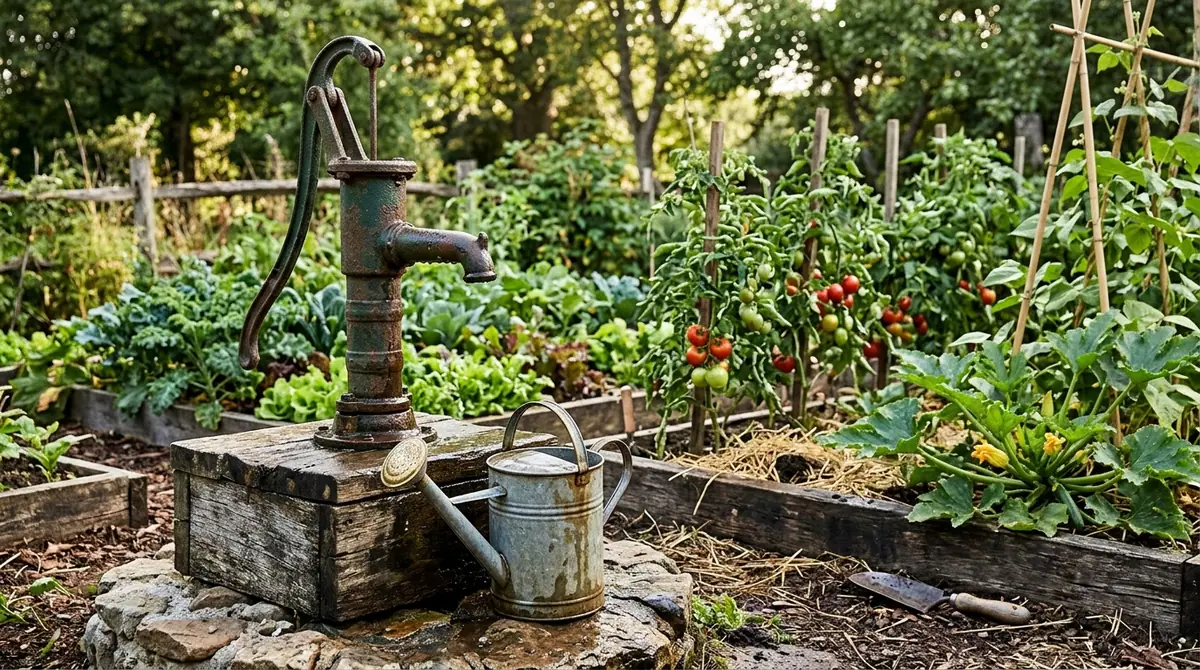
During a blistering dry spell with daytime temperatures hovering at 98°F (36.7°C) for fourteen consecutive days, heirloom Brandywine tomatoes can begin dropping their blossoms at an alarming rate. When municipal water restrictions are in full effect, reliance on a newly installed 180-foot (54.8-meter) deep residential well becomes necessary. Before pouring water onto prized cucurbits, testing with a digital EC meter and test kits is essential. Balancing the life of a garden against unknown deep chemistry is a challenge every well-owning gardener faces. Using well water in the garden can be an agronomic blessing or a chemical disaster, depending entirely on what lies beneath the soil.
1. Botanical Overview & Natural Habitat

Groundwater chemistry varies wildly based on your geographic location and local geology. Wells tap into two primary sources: unconfined water table aquifers, which sit closer to the surface and fluctuate rapidly with seasonal rainfall, and deeper confined artesian aquifers, which are heavily filtered by dense geological layers but often accumulate high concentrations of dissolved minerals.
From a botanical perspective, plants absorb water primarily through osmosis via root hairs. The chemical composition of well water—specifically its pH, electrical conductivity (EC), and total dissolved solids (TDS)—directly dictates how efficiently a plant can uptake moisture and vital macro- and micronutrients. For instance, water pumped from limestone-heavy regions contains high levels of calcium and magnesium carbonates, creating a hard water profile that can gradually drive soil pH upward. Conversely, wells drilled into granite shields or acidic sandstone formations yield soft, low-mineral water that requires careful monitoring to prevent soil leaching. Understanding this dynamic is the first step toward optimizing your garden's irrigation strategy.
2. Essential Environmental & Care Requirements
Managing well water for horticultural use requires matching its physical and chemical properties to the specific tolerance thresholds of your cultivated plants. The following matrix outlines the critical parameters you must measure and manage.
| Parameter | Optimal Condition | Common Mistake | Why It Matters |
|---|---|---|---|
| Water pH | 6.0 to 7.0 for most ornamentals and vegetables | Assuming well water is neutral without testing | Extreme pH locks out essential nutrients like iron and phosphorus at the root level. |
| Total Dissolved Solids (TDS) | Below 500 ppm for sensitive species | Ignoring high mineral buildup over time | Excess salts cause osmotic stress, burning root tips and causing marginal leaf scorch. |
| Iron Concentration | Below 0.3 ppm | Using untreated high-iron water overhead | Iron precipitates coat foliage in orange rust and stain garden hardscapes. |
| Water Temperature | 55°F to 65°F (12.7°C to 18.3°C) | Pumping ice-cold water directly onto roots | Thermal shock halts root elongation and stunts plant metabolism during peak growth. |
💡 Pro-Tip: Never run well water directly from the spigot onto heat-stressed plants during midday July afternoons. The combination of cold subterranean water (often sitting around 55°F or 12.7°C) and baked soil creates severe thermal shock, instantly fracturing delicate root hairs and causing immediate wilting. Instead, pump well water into an intermediate storage tank or rain barrel to allow it to acclimate to ambient outdoor temperatures and off-gas any volatile sulfur compounds.
3. Step-by-Step Cultivation, Feeding & Propagation
Integrating well water into your garden infrastructure requires a methodical approach to testing, treatment, and delivery. Follow this precise sequence to protect your soil microbiome and plant health.
- Conduct a Comprehensive Water Test: Take a water sample directly from your wellhead before any filtration systems. Send it to a certified agricultural laboratory—such as your local university extension service—to test for pH, alkalinity, hardness, heavy metals, and sodium adsorption ratio (SAR).
- Install Appropriate Filtration: Based on your lab results, install necessary filtration units. A sediment filter is mandatory for catching fine sand and silt, while an iron filter or water softener may be required if mineral levels exceed safe agricultural thresholds.
- Establish a Storage and Settling System: Route your well water into a 250-gallon (946-liter) or 500-gallon (1892-liter) polyethylene holding tank. This allows trapped gases like hydrogen sulfide to dissipate and warms the water closer to ambient air temperatures over a 24- to 48-hour period.
- Calibrate Irrigation Delivery: Set up drip irrigation lines or soaker hoses rather than overhead sprinklers. Delivering well water directly to the soil surface prevents mineral deposits from baking onto foliage and minimizes the risk of foliar diseases.
- Monitor Soil and Runoff Salinity: Every 30 to 45 days during the active growing season, test your garden soil's electrical conductivity. If TDS levels begin to climb, flush the beds deeply with rainwater or low-mineral municipal water to leach accumulated salts below the root zone.
4. Common Problems, Pests & Troubleshooting
Using untreated well water introduces unique pathological and chemical challenges that differ significantly from municipal water supplies.
The most frequent issue is iron bacteria, a harmless yet aggressive organism that feeds on dissolved iron in well water. If present, it creates a slimy, reddish-brown gelatinous sludge that coats the interior of drip emitters, clogging 0.5-gph emitters within 14 days and starving plants of water. Combat this by installing an automated hydrogen peroxide injection system or a shock chlorination protocol for your well casing.
Another common hurdle is sodium toxicity. Wells located near coastal regions or agricultural runoff zones often pull up high levels of sodium and chloride. When applied continuously, sodium breaks down soil aggregation, destroying soil structure and creating a tight, impermeable clay pan within 60 days of heavy irrigation. If your well water shows a high sodium adsorption ratio, you must amend your soil annually with agricultural gypsum (calcium sulfate) at a rate of 5 lbs per 100 square feet (2.4 kg per 9.3 square meters) to displace sodium ions and restore soil porosity.
⚠️ Important Caution: Never use well water that has been treated with a standard sodium-based residential water softener for your garden beds. The ion-exchange process replaces calcium and magnesium with high levels of sodium, which will rapidly salt-burn your plants, destroy soil microbiology, and render your garden beds sterile over a single growing season. Always tap your irrigation line before the household water softener.

5. Frequently Asked Questions
Can I use well water directly on seedlings and indoor starts?
Seedlings and young vegetative starts grown in sterile seed-starting mixes are exceptionally sensitive to high total dissolved solids and fluctuating pH levels. Because well water often contains high mineral loads or swings in alkalinity, it can easily burn delicate cotyledons and stunt root development. It is best to use rainwater or filtered reverse-osmosis water for seedlings until they develop at least three sets of true leaves and are transplanted into rich garden soil.
How do I know if my well water has too much iron for my plants?
Visible indicators include an orange, powdery rust residue coating your garden hoses, soil surface, and plant leaves, alongside slimy orange deposits in irrigation emitters. Agronomically, iron concentrations above 3.0 ppm can begin to cause direct toxicity and leaf spotting, while lower levels can still alter soil chemistry and lock out other trace elements like manganese and zinc. A professional lab test is the only definitive way to measure exact parts per million.
Is well water safe for organic vegetable gardens?
Well water is generally safe and often superior to chlorinated municipal water for organic gardens because it lacks harsh chemical disinfectants that can harm beneficial soil bacteria and mycorrhizal fungi. However, safety depends entirely on your water source. If your well is located near agricultural fields, septic systems, or industrial sites, you must test regularly for heavy metals, nitrates, and coliform bacteria to ensure contaminants are not accumulating in edible root crops and leafy greens.
Why is my well water turning my soil white or crusty?
A white, powdery crust forming on the soil surface around your plants is a classic symptom of mineral salt accumulation, commonly referred to as hard water scaling. When well water rich in calcium, magnesium, and sodium evaporates from the soil surface, it leaves behind solid mineral deposits. Over time, these salts increase soil osmotic pressure, making it difficult for plant roots to absorb water even when the soil feels damp. Combat this by regularly flushing beds with natural rainwater and applying a 2-inch (5-cm) layer of organic compost mulch to buffer soil salinity.
Related Guides
- Benefits of Using Mulch in Organic Vegetable Gardening
- Can Cannas Grow in Water
- Water Hibiscus Plant
- When to Water After Granular Fertilizer
- Low Water Pressure in Sprinklers
📋 Table of Contents ▼ Click to expand
Tags:
Keep reading
🌿 Related Plants You Might Like


PlantSavvyWorld
Editorial team
PlantSavvyWorld is an independent botanical education project. Articles are drafted with AI assistance, then edited and checked against university extension services, botanical garden collections and other published horticultural sources.