Written with AI assistance, edited and checked against horticultural sources.
When a Canna indica rhizome slips below the water line into a heavy silt-clay bog, instead of rotting away like almost every standard perennial left in a saturated anaerobic slump, its white, oxygen-hungry roots branch aggressively into the standing water and pump out fresh green shoots. These tropical beauties are not just garden plants that tolerate moisture; they are functionally wetland champions. For anyone wondering "can cannas grow in water," the short answer is an emphatic yes, and they often thrive better with their feet permanently submerged than they do in standard garden soil.
1. Botanical Overview & Natural Habitat
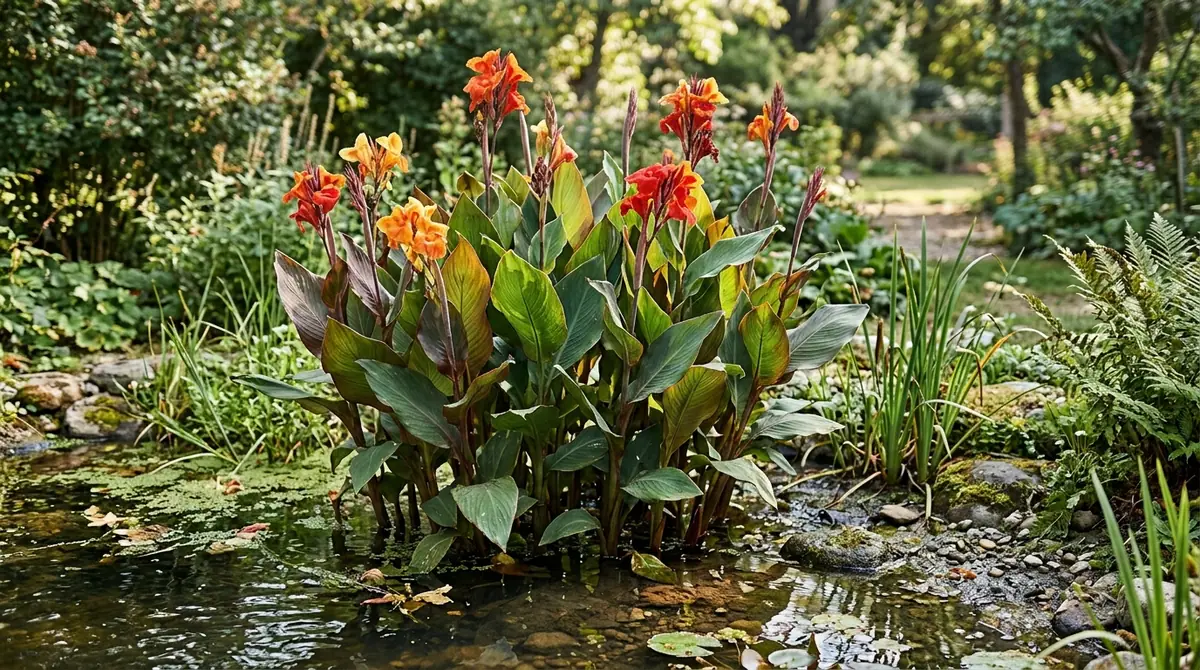
To understand why cannas tolerate and even prefer aquatic environments, we have to look at their evolutionary origins. Native to the tropical and subtropical regions of the Americas—stretching from the southern United States down through Argentina—canna lilies naturally inhabit damp margins of tropical forests, swamp edges, riverbanks, and marshy meadows.
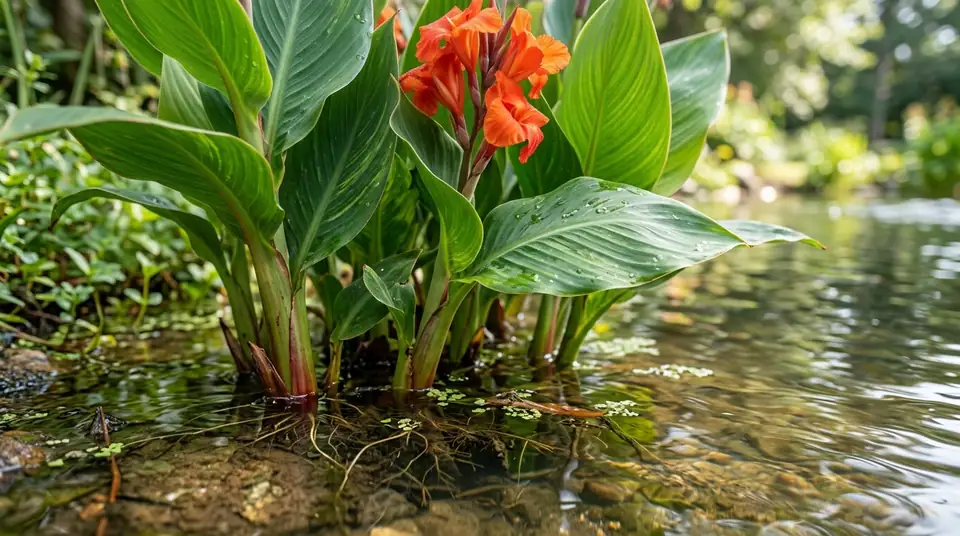
Canna lily growing at the water's edge with visible roots submerged in the shallow pond
Botanically, cannas are herbaceous perennials growing from fleshy underground rhizomes. Unlike true aquatic plants that require a submersed existence to complete their life cycle, cannas are emergent marginals. This means their root systems and lower stems are adapted to live permanently underwater or in saturated muck, while their lush, paddle-shaped foliage and vivid blooms tower above the surface.
In a natural wetland setting, water fluctuations are normal. Cannas handle this through a specialized internal tissue called aerenchyma. This spongy plant tissue contains air spaces that run from the broad leaves down through the stems and into the rhizomes. This specialized plumbing system transports atmospheric oxygen directly down to the roots in oxygen-depleted, waterlogged soils, preventing suffocation and root rot.
Whether you are designing a high-end bioretention basin, setting up a backyard water feature, or looking for bold architectural statements for a lined decorative pond, cannas serve a critical functional role. They act as biological filters, taking up excess nitrates and phosphates from the water column—a capability I often leverage when consulting on sustainable runoff management systems, much like the integrative thinking required when designing a How to Grow a Wild Food Forest Self Sufficiency Garden. Their ability to handle aquatic or semi-aquatic conditions makes them remarkably versatile landscape assets.
2. Essential Environmental & Care Requirements
Growing cannas successfully in water requires mimicking their native tropical wetland niches. While they are famously adaptable, managing the variables of depth, temperature, and nutrition is vital for keeping their foliage vibrant and their blooms continuous throughout the growing season.
Temperature is the primary driver of their growth rate. Cannas are tropical and subtropical plants; their rhizomes will not break dormancy until soil and water temperatures consistently stay above 65°F (18°C). The optimal air temperature range for vigorous vegetative growth and blooming is 75°F to 95°F (24°C to 35°C). When transitioning cannas to an aquatic environment, water temperature should be monitored, especially in spring. Cold, stagnant water below 55°F (13°C) combined with wet rhizomes can shock the plant and invite fungal pathogens.
Parameter
Optimal Condition
Common Mistake
Why It Matters
Water Depth
2 to 6 inches (5 to 15 cm) above the rhizome
Submerging the entire foliage crown >12 inches (30 cm) deep
Deep water starves the leaves of oxygen and causes the main stem to rot.
Sunlight
6 to 8+ hours of direct daily sun
Planting in heavy shade near deep water
Insufficient light halts blooming and causes weak, leggy stems.
Water Quality
Clean, slow-moving or static fresh water (pH 6.0–7.5)
Using water with heavy chemical run-off or unbuffered well water
Moderate to high (organic rich silt or controlled aquatic fertilizer)
Placing in sterile, nutrient-free gravel ponds without amendments
Cannas are heavy feeders; without nutrients, growth stalls and leaves turn chlorotic.
Nutrient management in water gardens differs vastly from traditional soil beds. In a lined pond, water lacks the decomposing organic matter found in natural riverbanks. Therefore, aquatic cannas require targeted feeding. If your pond water has low fertility, you must supplement with slow-release aquatic plant fertilizers embedded deep within planting media to avoid polluting the water column and triggering algae blooms.
💡 Pro-Tip: When planting cannas in a water garden or koi pond, avoid standard potting soils containing synthetic wetting agents or high-nitrogen chemical fertilizers. Instead, use a heavy, unamended topsoil or native clay mixed with well-rotted compost. Heavy clay keeps the rhizome anchored against koi activity and prevents the soil from muddying your water feature.
Transitioning or planting cannas directly into an aquatic or semi-aquatic environment is a straightforward process, but precision matters when dealing with water pressure and buoyant rhizomes. Follow this step-by-step sequence to establish a thriving aquatic display.
Select and Prepare the Rhizome: Choose a firm, disease-free canna rhizome with at least two distinct, swollen "eyes" or growing points. Inspect it for softness, and trim away any dead or dried root tissue using sterilized pruning shears.
Choose the Right Container: Opt for a heavy-duty, mesh-sided aquatic planting basket or a solid plastic container measuring at least 12 inches (30 cm) across and 10 inches (25 cm) deep. Mesh baskets allow water movement and oxygen exchange around the root zone.
Mix the Substrate: Fill the bottom third of the container with a heavy planting medium composed of 70% garden loam or clay and 30% coarse sand. Avoid lightweight potting mixes that will float away the moment the container touches water.
Position the Rhizome: Lay the rhizome horizontally across the soil surface with the growing eyes pointed upward. Press it down gently so it is half-embedded in the heavy clay substrate, leaving the eyes exposed to the air.
Add Slow-Release Fertilizer: Push a high-phosphorus aquatic fertilizer tablet (formulated for water lilies or marginal plants) deep into the soil pocket away from the direct surface of the rhizome to encourage robust root and bloom development.
Top with Gravel: Cover the exposed soil with a 1-inch (2.5 cm) layer of washed pea gravel or river rocks. This stops fish (like koi) from digging up the soil and keeps the substrate anchored when submerged.
Submerge Gradually: Lower the planted container into your water feature so that the top of the rhizome sits no more than 2 to 4 inches (5 to 10 cm) below the water's surface. Over a period of 14 to 21 days, as the stems elongate, you can adjust the depth slightly if needed, but never submerge the crown of the plant completely.
Propagation of aquatic cannas is identical to their land-dwelling counterparts. In early spring, lift the established container out of the water, wash away the heavy clay to reveal the root system, and use a sharp, clean knife to divide the rhizome network. Ensure each division contains at least one strong, viable growing eye and a robust section of roots. Replant immediately into fresh aquatic baskets following the steps above. For comprehensive botanical insights on managing plant ecosystems and specialized propagation techniques, reference guidelines from the Royal Horticultural Society (RHS).
4. Common Problems, Pests & Troubleshooting
Even though cannas grown in water are buffered against drought stress, they encounter a distinct suite of challenges tied to aquatic and damp microclimates. Recognizing these issues early saves the plant from structural failure.
Rhizome Rot (Pythium and Phytophthora): This is the single most common killer of water-grown cannas. It occurs when water temperatures drop below 50°F (10°C) while the rhizome is completely submerged, or if the growing crown is buried too deep under the water line (exceeding 12 inches / 30 cm). The stems become mushy at the base and emit a foul odor. To fix this, lift the plant, cut away all infected soft brown tissue with a sterile blade until you hit crisp, white flesh, dust the cut with powdered sulfur or cinnamon, and replant at a shallower depth (2 inches / 5 cm).
Canna Leaf Roller (Calpodes ethlius): These pale green caterpillars web the young, unfurling leaves shut and feed from within, destroying the structural integrity of the foliage. While water-grown cannas are vigorous, heavy defoliation stresses the rhizome. Hand-picking caterpillars, encouraging predatory birds, or applying Bacillus thuringiensis (Bt) directly to the unfolding leaves offers effective, environmentally safe control.
Iron Chlorosis: If your pond water has an elevated pH (above 7.5), iron becomes chemically locked up and unavailable to the plant. You will notice the young leaves emerging bright yellow with striking green veins. Correct this by adjusting the water chemistry or applying a chelated iron drench specifically formulated for aquatic environments.
Japanese Beetles and Slugs: Slugs thrive in the high-humidity microclimate surrounding water features, chewing ragged holes in the lower leaves. Hand-pick them at dusk or establish biological controls like beneficial nematodes in the surrounding landscape zones.
⚠️ Important Caution: Never use systemic insecticides or copper-based algaecides in or around cannas that are planted directly into natural ponds or decorative water features populated by fish, frogs, or beneficial aquatic wildlife. Copper sulfate and synthetic neonicotinoids are highly toxic to aquatic vertebrates and amphibians. Always check product labels for safety compliance in water gardens.
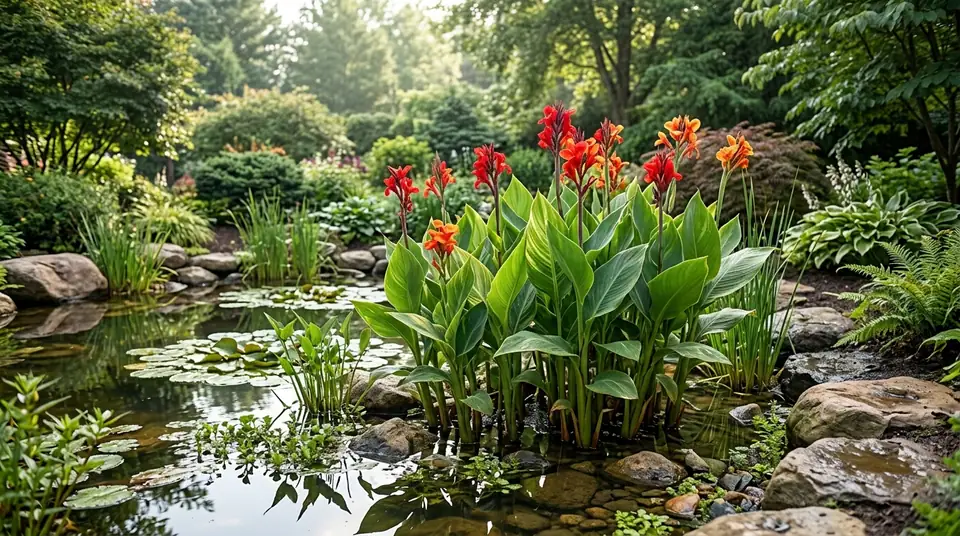
Vibrant canna lilies with red and orange flowers growing directly in a garden pond
5. Frequently Asked Questions
Can I put regular garden cannas straight into my koi pond?
Yes, you can transition standard garden cannas into a koi pond, but you must do so gradually. Do not drop a bare-root soil-grown canna directly into deep water, as the sudden shift will shock the plant and suffocate the roots. Wash away the loose garden soil, pot the rhizome securely in a heavy clay-based substrate inside an aquatic planting basket, and submerge it so that only the base and lower roots are underwater. For broader guidance on selecting and cultivating resilient climate-adapted species, consult the Missouri Botanical Garden Plant Finder.
Will cannas survive the winter if left in the water?
This depends entirely on your USDA Hardiness Zone. In zones 7 through 10, canna rhizomes left in water bodies that do not freeze completely solid will often survive the winter dormant period. However, if the water freezes solid to the bottom of the container, ice expansion will crush the rhizome. In zones 6 and colder, you must lift the containers from the water before the first hard freeze, trim the foliage back to 6 inches (15 cm), clean off the mud, and store the rhizomes indoors in dry peat moss or sawdust at a steady 45°F to 55°F (7°C to 13°C) until spring.
Do water-grown cannas need fertilizer?
Yes, they require regular feeding. While natural ponds with heavy fish loads supply some nitrates, lined decorative water features are essentially sterile environments. Cannas are aggressive heavy feeders. Without supplemental nutrients, their growth will stall, leaves will pale, and flower production will cease entirely. Feed them every 4 to 6 weeks during the active summer growing season using slow-release aquatic plant tabs pressed deep into the root basket.
Why are the leaves on my aquatic canna turning yellow?
Yellowing leaves typically point to one of three issues: iron chlorosis caused by high water pH, a lack of nitrogen in the aquatic substrate, or early stages of rhizome rot due to excessive water depth. Test your pond water pH first; if it reads above 7.5, apply chelated iron. If the pH is neutral, check the root basket and add a balanced slow-release aquatic fertilizer tablet. If the base of the stem feels soft and smells bad, pull the plant up immediately to trim away rotting tissue and reset it at a shallower depth.
PlantSavvyWorld is an independent botanical education project. Articles are drafted with AI assistance, then edited and checked against university extension services, botanical garden collections and other published horticultural sources.