

Low Water Pressure in Sprinklers
Written with AI assistance, edited and checked against horticultural sources.
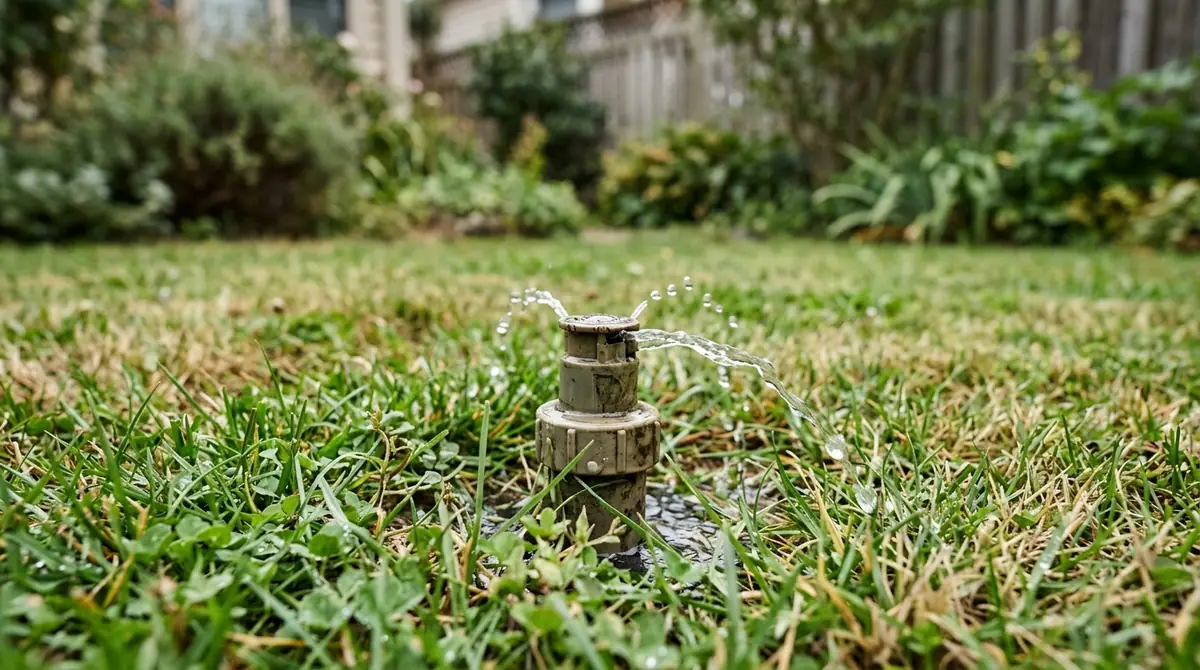
On a 1,500-square-foot Kentucky bluegrass lawn in 95°F (35°C) heat, an irrigation system might lazily dribble water a mere 2 inches (5 cm) from the heads instead of throwing the required 15-foot (4.5 m) arc. The turf turns a crispy, slate-gray hue, and a soil moisture meter reads a low 4% volumetric water content down at the crucial 6-inch (15 cm) root depth. That chronic drop in head pressure isn't just an annoyance; it’s an existential crisis for a landscape’s vascular infrastructure. Expensive plantings often suffer because water simply lacks the hydraulic muscle to reach its destination. Diagnosing and fixing a system's pressure drop systematically resolves this issue.
1. Botanical Overview & Natural Habitat

When your irrigation system suffers from low pressure, the water distribution pattern becomes uneven. High-pressure rings form right next to the clogged or starved sprinkler heads, drowning the surface, while the outer edges of the pattern receive zero precipitation. This creates severe physiological stress. Turfgrass roots shrink from a robust 8-inch (20 cm) depth up to a shallow 2-inch (5 cm) mat, making them hyper-susceptible to wind scorch and high soil temperatures exceeding 85°F (29°C). Ornamental shrubs like Hydrangea macrophylla or delicate perennials suffer from localized drought stress even while standing ten feet away from a running sprinkler head that lacks the mechanical energy to throw a uniform droplet curtain across the bed.
2. Essential Environmental & Care Requirements
Maintaining optimal hydraulic performance in your irrigation layout is just as important as monitoring soil pH or ambient temperature. Sprinkler heads are engineered to operate within specific Pounds per Square Inch (PSI) windows—typically 30 to 45 PSI (2 to 3 bar) for standard spray heads and 45 to 55 PSI (3 to 3.8 bar) for rotary nozzles. When your system drops below these thresholds, water droplet size increases, wind drift accelerates, and distribution uniformity (measured by Catch Can tests) plummets below the acceptable 70% threshold.
| Parameter | Optimal Condition | Common Mistake | Why It Matters |
|---|---|---|---|
| Operating Pressure | 30–50 PSI (2.1–3.4 bar) | Running too many heads per zone | Low pressure causes "donut" watering patterns and dry spots |
| Flow Rate (GPM) | Within 80% of backflow capacity | Ignoring total gallon-per-minute limits | Exceeding source capacity starves lateral lines of pressure |
| Filtration Mesh | Clean 40 to 80 mesh screens | Failing to flush debris after pipe repairs | Trapped sediment clogs nozzles and chokes off flow |
| Precipitation Rate | 1 inch (2.5 cm) per 2 hours | Mixing rotor and spray heads on one zone | Causes severe over-watering in some areas and drought in others |
💡 Pro-Tip: Always install pressure-regulating stems (PRS) inside your sprinkler bodies if your static municipal supply exceeds 65 PSI (4.5 bar). While counterintuitive, high pressure causes misting and fogging, which wind carries away before it hits the soil, trickling down your effective operating pressure at the root zone.
3. Step-by-Step Cultivation, Feeding & Propagation
Restoring hydraulic integrity to a starved irrigation system requires a methodical, diagnostic approach. Think of this as performing minor surgery on your landscape's circulatory system. Follow this exact sequence to isolate the bottleneck and restore proper throw distance and precipitation rates.
- Perform a Static Pressure Test: Attach a pressure gauge to an exterior hose bib nearest your main water supply. Record the static reading with all home water usage turned off. A reading below 40 PSI (2.8 bar) indicates a municipal supply or main line restriction, while anything above 80 PSI (5.5 bar) requires a functional pressure-reducing valve (PRV).
- Isolate and Test Individual Zones: Run each irrigation zone independently. Walk the circuit and note if the pressure drop affects just one specific head, an entire lateral line, or the whole property. If only one head is weak, unscrew the nozzle and inspect it for grit, sand, or root intrusion.
- Inspect and Clean Filter Screens: Turn off the zone valve, pop up the sprinkler riser, and pull out the internal filter screen using needle-nose pliers. Rinse the screen under a separate faucet to remove mineral deposits and iron bacteria sludge.
- Check for Underground Line Leaks: Look for unexplained soggy patches, unusually lush green tufts of turf, or depressions in the lawn while the system is off. A fractured PVC or poly pipe bleeds off critical operating pressure before water ever reaches the heads.
- Evaluate Head Spacing and Layout: Measure the distance between your sprinkler heads. Heads should be spaced head-to-head (100% overlap). If a previous installer spaced them too far apart, the system will appear to have low pressure because the throw radius cannot bridge the physical gap.
- Audit Zone Valve Diaphragms: Unscrew the top of the electric anti-siphon or in-line valve box. Check the internal rubber diaphragm for tears, stretching, or trapped debris that prevents the valve from opening 100%.
⚠️ Important Caution: Never use metal tools to pry open buried PVC swing joints or plastic valve boxes without first locating your main water shut-off valve. A sudden rupture in an unpressurized main line can instantly flood a trench and undermine nearby structural footings or utility lines. For comprehensive municipal guidelines on water efficiency and backflow prevention, consult the EPA WaterSense Program.
4. Common Problems, Pests & Troubleshooting
When low pressure persists despite clean filters and open valves, the culprit is usually systemic friction loss or mechanical wear.
If your pressure drops gradually over a period of 30 to 90 days, you are likely dealing with mineral scale buildup inside galvanized steel nipples or hard water scaling clogging the orifices of pop-up nozzles. Soak removable nozzles in a 50/50 water and white vinegar solution for 60 minutes to dissolve calcium carbonate crusts.

5. Frequently Asked Questions
Why does my sprinkler pressure drop when I turn on the kitchen faucet?
When interior and exterior fixtures tap into the same undersized main water service line (typically 0.75 inches or 1.9 cm in older homes), simultaneous use creates extreme hydraulic competition. The indoor fixture offers a path of least resistance, starving the outdoor irrigation backflow preventer of volume and causing your sprinkler throw radius to collapse. Upgrading your home's main service line to 1 inch (2.5 cm) or scheduling irrigation cycles exclusively between midnight and 4:00 AM completely resolves this conflict.
How do I know if my backflow preventer is causing low sprinkler pressure?
The backflow preventer (such as a Pressure Vacuum Breaker or Double Check valve) contains internal spring-loaded check valves and disks that naturally restrict flow. If these internal components become fouled with mineral scale or the bonnet assembly is partially closed, it creates a massive pressure drop across the device. Attach a pressure gauge immediately upstream and downstream of the backflow unit while the system runs; a pressure differential greater than 10 PSI (0.7 bar) indicates the device requires rebuilding or replacement.
Can tree roots cause low water pressure in underground sprinkler pipes?
Yes. Aggressive feeder roots from trees like maples and willows actively seek out microscopic moisture leaks at pipe joints and fittings. As roots wrap around or puncture poly and PVC lines, they restrict the interior cross-sectional diameter of the pipe while also creating a chronic leak. This dual failure starves downstream sprinkler heads of both volume and pressure, requiring you to excavate, cut out the damaged section, and repair the line with slip couplings.
Will switching to rotary nozzles fix low pressure issues?
Rotary nozzles (such as multi-stream, multi-trajectory rotors) operate efficiently at higher pressures (35 to 45 PSI), but because they use significantly less Gallons Per Minute (GPM) than traditional spray nozzles—often 50% less—they can actually rescue a system suffering from volume starvation. By lowering the total flow demand on your lateral line, the remaining water can maintain adequate working pressure across all heads, preventing the pressure drop caused by over-taxed zone valves.
Related Guides
- Best High Pressure Hose Nozzle Garden
- Can Cannas Grow in Water
- Water Hibiscus Plant
- When to Water After Granular Fertilizer
- Using Well Water in the Garden a Good Idea
📋 Table of Contents ▼ Click to expand
Tags:
Keep reading
🌿 Related Plants You Might Like






PlantSavvyWorld
Editorial team
PlantSavvyWorld is an independent botanical education project. Articles are drafted with AI assistance, then edited and checked against university extension services, botanical garden collections and other published horticultural sources.