

Topsoil and Compost Mix
Written with AI assistance, edited and checked against horticultural sources.
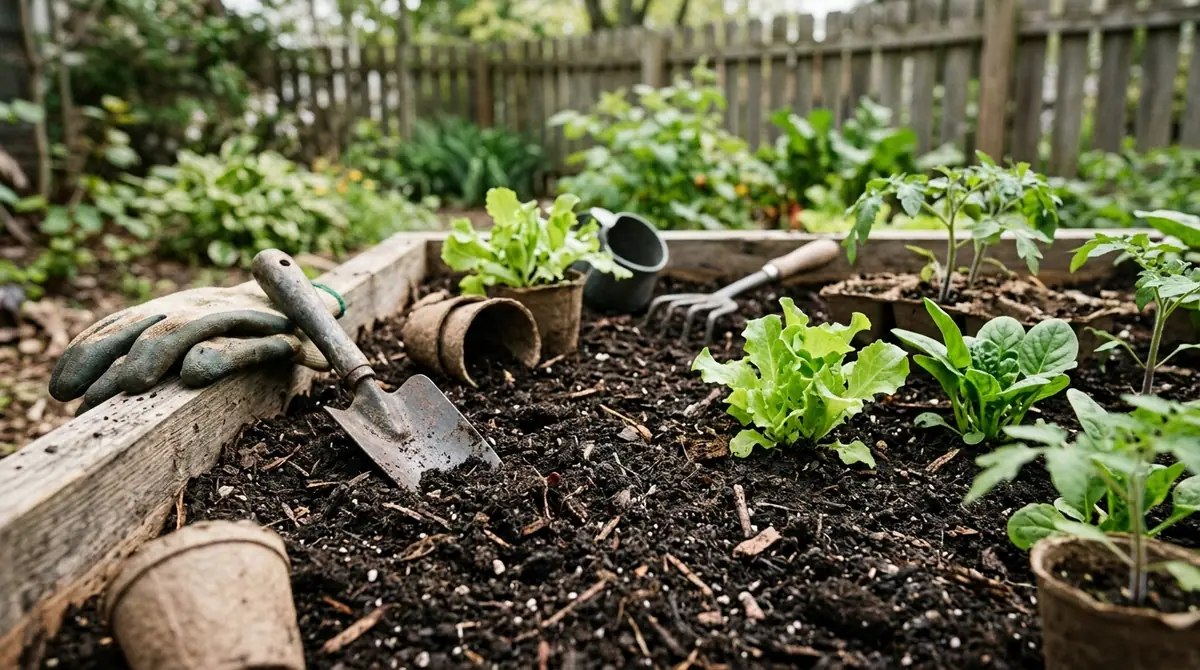
Last spring, while standing ankle-deep in heavy Carolina clay that felt more like structural masonry than garden soil, I watched a freshly planted heirloom tomato wilt within forty-eight hours. The native earth was devoid of organic porosity, choking the root system before it could establish. It was a stark reminder of why straight topsoil or straight compost alone rarely solves a gardener's structural woes. The fix wasn't a chemical fertilizer or an expensive soil test; it was a precise 70/30 mechanical blend of mineral topsoil and finished organic compost. That exact topsoil and compost mix transformed my brick-hard clay into a biological sponge, and it remains the single most reliable foundation I use in landscape design today.
1. Botanical Overview & Natural Habitat

Topsoil represents the uppermost layer of the earth's crust, typically extending from 2 to 8 inches (5 to 20 cm) down. It is mineral-heavy, providing the physical anchorage, structural framework, and foundational macro-elements that plants require. However, raw topsoil often lacks the biological density and microbial diversity necessary for optimal nutrient cycling.
Compost is the biological accelerator. It is the end-product of aerobic decomposition, where soil food web organisms break down organic residues. When you pair mineral topsoil with nutrient-dense organic amendments, you replicate the rich, crumbly, humus-rich A-horizon found in nature's most productive biomes. This dynamic partnership improves cation exchange capacity (CEC), allowing plant roots to efficiently lock onto and absorb positively charged ions like calcium, magnesium, and potassium.
For those looking to generate their own rich amendments before blending, learning How to Make Organic Compost for Vegetable Gardens at Home ensures a steady supply of microbial life, and upgrading your setup with advice from The Best Compost Bin Only Costs About 40 will drastically improve your efficiency. If you find yourself managing tough woody garden debris to feed your piles, investing in a tool reviewed in our Best Compost Shredder guide will accelerate your decomposition timelines.
2. Essential Environmental & Care Requirements
Creating the ultimate topsoil and compost mix requires attention to physical parameters, biological activity, and environmental conditions. If you mix the components incorrectly, you can inadvertently suffocate plant roots or create a waterlogged soup.
| Parameter | Optimal Condition | Common Mistake | Why It Matters |
|---|---|---|---|
| Mixing Ratio | 60% to 70% topsoil, 30% to 40% compost by volume | Using 100% straight compost as a planting medium | Pure compost is too rich, retains excessive moisture, and can burn tender roots as it breaks down. |
| pH Range | 6.2 to 6.8 for general plantings | Ignoring native soil pH before blending | Extreme acidity or alkalinity locks out essential micronutrients regardless of organic content. |
| Moisture Level | 40% to 60% water holding capacity (damp, like a wrung-out sponge) | Saturated, anaerobic conditions (80%+ moisture) | Excess water drives out oxygen, killing beneficial aerobic bacteria and inducing root rot. |
| Organic Matter | 5% to 8% total organic matter in the final blended bed | Exceeding 12% organic matter in surface top-dressing | Too much organic matter can cause excessive settling and nitrogen drawdown as microbes consume soil nitrogen. |
Temperature also plays a critical role in how your topsoil and compost mix performs. Soil biology slows down significantly when soil temperatures drop below 45°F (7°C) and thrives when soil temperatures reach 65°F to 85°F (18°C to 29°C). When applying your mix as a top-dressing or raised bed fill, ensure ambient air temperatures support active root growth rather than forcing plants into cold-induced dormancy.
💡 Pro-Tip: Always run your bulk topsoil through a 0.5-inch (1.3 cm) hardware cloth screen before blending it with your compost. Removing stones, weed roots, and large clay clods guarantees a uniform texture that makes seed germination and root penetration effortless.
3. Step-by-Step Cultivation, Feeding & Propagation
Applying a topsoil and compost mix is not merely dumping materials into a garden bed; it is an engineered approach to soil rehabilitation. Whether you are building new raised beds, repairing a patchy lawn, or planting delicate perennials, follow this precise operational sequence.
- Assess and Clear the Site: Remove all perennial weeds, debris, and surface compaction down to a depth of 6 inches (15 cm). If working with heavy clay, broadfork the base layer to shatter subsurface pan layers without inverting the soil horizons.
- Calculate Your Volume Requirements: Measure your target area in square feet, multiply by your desired depth in inches, and divide by 324 to determine total cubic yards needed. For a standard 4-inch (10 cm) top-dressing layer over a 100 sq ft bed, you will need approximately 1.23 cubic yards of blended material.
- Source High-Quality Components: Procure screened, loamy mineral topsoil (ideally a 40% sand, 40% silt, 20% clay split) and fully finished, dark, earthy-smelling compost that has finished its thermophilic heating phase and sits at an ambient temperature.
- Execute the Blend: Combine 7 parts topsoil to 3 parts compost on a clean tarp or hard surface. Shovel the materials over one another at least three distinct times to ensure complete homogenization. Avoid mixing when materials are soaking wet, as this destroys soil aggregates and creates dense mud balls.
- Install and Settle: Distribute the mix evenly across your planting zone to a depth of 4 to 8 inches (10 to 20 cm). Water the bed thoroughly with a fine-spray nozzle to settle the air pockets, allowing the mix to drop naturally over 48 to 72 hours before planting.
- Plant and Mulch: Dig planting holes directly into the newly established topsoil and compost mix. Water your specimens in with a dilute seaweed extract to stimulate root hair development, and top-dress the surrounding bare soil with a 2-inch (5 cm) layer of shredded hardwood mulch to preserve soil moisture.
For authoritative academic guidance on soil chemistry and amendments, consult the USDA Natural Resources Conservation Service Soils Portal, which offers extensive insights into soil health management.
4. Common Problems, Pests & Troubleshooting
Even with a meticulously crafted topsoil and compost mix, environmental stressors and biological imbalances can occur. Recognizing early warning signs prevents widespread crop failure.
Compacting and Crust Formation
If your topsoil and compost mix develops a hard, impenetrable crust on the surface after heavy rain, your topsoil component likely contained too much high-plasticity clay relative to your sand content.
- The Fix: Break up the crust mechanically with a hand cultivator and immediately apply a 1-inch (2.5 cm) layer of coarse organic mulch or leaf mold to cushion future rainfall impact and protect soil aggregates.
Nutrient Lockout and Yellowing Leaves (Chlorosis)
If plants installed in your new mix exhibit interveinal chlorosis (yellow leaves with green veins), your mix may have an overly high pH or temporary nitrogen immobilization. When immature compost with a high carbon-to-nitrogen ratio is used, soil microbes consume available nitrogen to break down carbon compounds.
- The Fix: Apply a balanced liquid fish hydrolysate or feather meal tea to provide an immediate, accessible nitrogen boost while the microbial population stabilizes. For regional guidance on diagnosing persistent nutrient deficiencies, review resources from the Royal Horticultural Society Soil Management Guide.
Water Repellency (Hydrophobic Top Layers)
During prolonged drought, high-organic mixes can dry out completely and repel water, causing irrigation to bead up and run off the surface rather than soaking into the root zone.
- The Fix: Implement a slow, soaking drip irrigation cycle over 3 to 4 hours, or hand-water with a natural yucca-derived wetting agent to break surface tension and rehydrate the humic compounds.
⚠️ Important Caution: Never use uncomposted animal manures or hot, active compost directly in your topsoil blend. High ammonia concentrations and unmitigated pathogen loads can chemically burn plant roots, stunt growth, and introduce persistent weed seeds into your landscape.

5. Frequently Asked Questions
Can I plant directly into a 100% topsoil and compost mix?
Yes, absolutely. A 70/30 or 60/40 blend of topsoil and compost provides an exceptional, nutrient-rich growing medium that is ideal for raised beds, container gardening, and garden bed renovations. Unlike pure compost, which is too concentrated, cutting it with mineral topsoil ensures proper structural support, moisture retention, and aeration for long-term plant health.
How deep should I apply a topsoil and compost mix over existing lawn?
For lawn leveling and top-dressing, apply no more than 0.5 to 0.75 inches (1.3 to 1.9 cm) of a finely screened topsoil and compost mix at one time. Applying a thicker layer will smother the turfgrass blades, cutting off vital sunlight and causing the underlying grass to rot. Repeat the application seasonally if deeper grading corrections are required.
Does a topsoil and compost mix expire or lose its nutrients?
Soil is a living biological ecosystem rather than a packaged food product, meaning it does not technically expire. However, plants consume available macro and micronutrients over time. To maintain fertility in your mix, replenish the organic matter annually by top-dressing with a 1-inch (2.5 cm) layer of fresh compost every spring.
Will buying cheap topsoil ruin my compost mix?
Cheap, unvetted topsoil often contains excessive clay, construction debris, weed seeds, or chemical contaminants. Because topsoil forms the 60% to 70% structural backbone of your mix, investing in certified screened loam or sandy loam ensures your final blend drains properly and remains free of persistent perennial weeds.
Related Guides
- Compost As Topsoil
- Compost for Topsoil
- Can You Compost Pistachio Shells
- The Best Compost Bin Only Costs About 40
- Maggots in Compost
- Best Compost Shredder
📋 Table of Contents ▼ Click to expand
Tags:
Keep reading
🌿 Related Plants You Might Like


PlantSavvyWorld
Editorial team
PlantSavvyWorld is an independent botanical education project. Articles are drafted with AI assistance, then edited and checked against university extension services, botanical garden collections and other published horticultural sources.