

Compost As Topsoil
Written with AI assistance, edited and checked against horticultural sources.
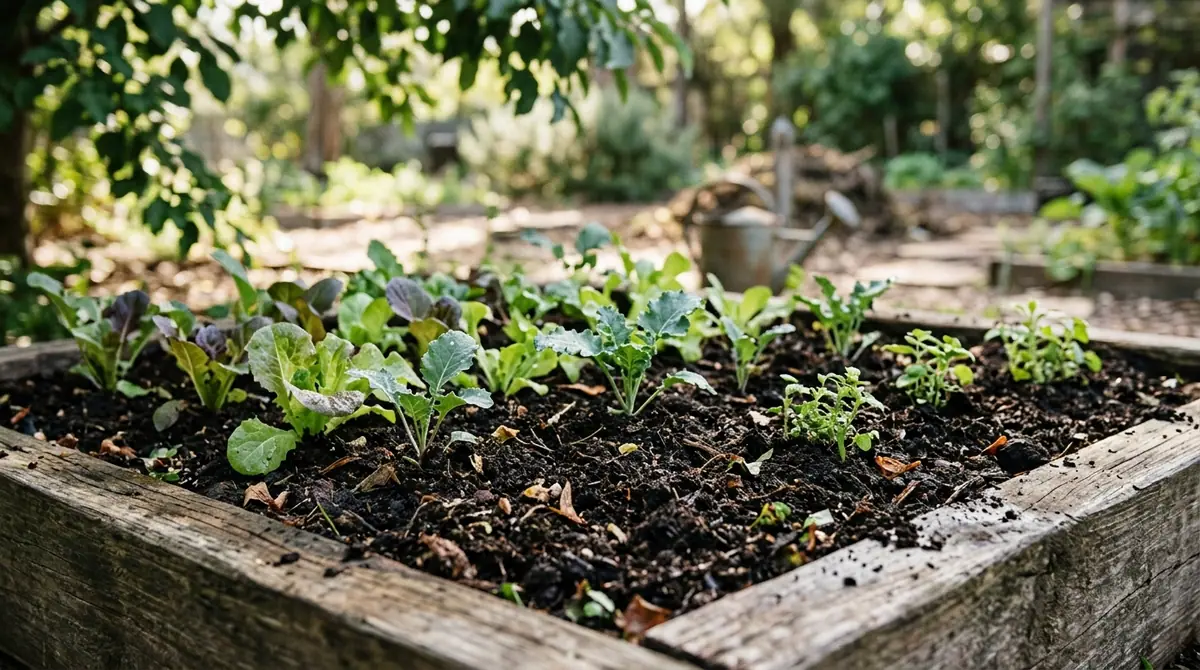
Dumping pure, unadulterated compost straight onto a landscape as a 1:1 substitute for topsoil is one of the fastest ways to suffocate plant roots, burn tender seedlings with excess nitrogen, and create a water-repellent crust that sheds summer rains. Compost is a magnificent soil amendment, but treating it as standalone topsoil requires understanding its biology, chemistry, and how it differs fundamentally from mineral-based dirt.
1. Botanical Overview & Natural Habitat
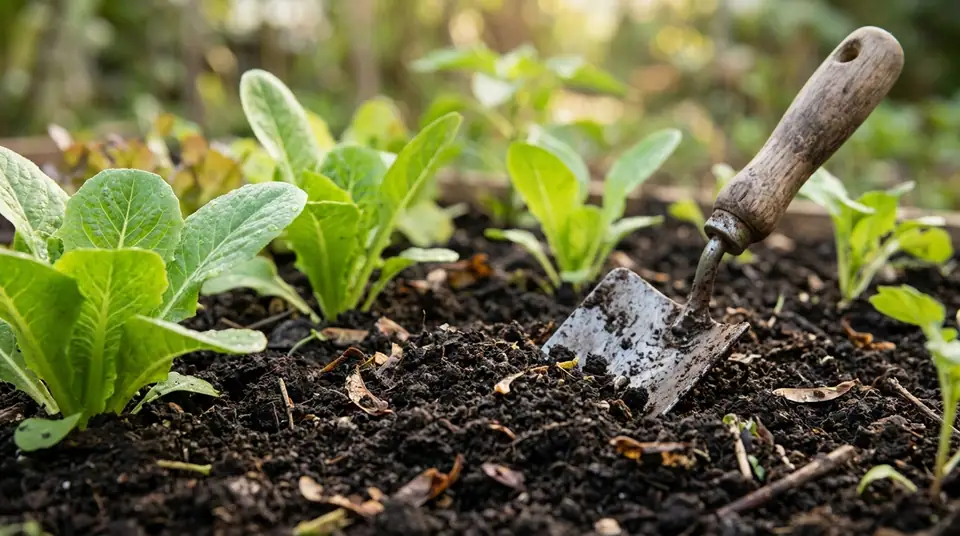
True topsoil is the upper, outermost layer of soil—usually the top 2 to 8 inches (5 to 20 cm)—consisting of approximately 45% mineral particles (sand, silt, and clay), 25% air, 25% water, and only 2% to 5% organic matter. This mineral matrix provides structural stability, anchorage for perennial root systems, and a permanent framework that holds moisture without collapsing.
Compost, by contrast, is the product of accelerated aerobic decomposition of organic residues. Whether you learned How to Make Organic Compost for Vegetable Gardens at Home or invested in The Best Compost Bin Only Costs About 40, the resulting material is essentially 100% organic matter. It is a biological powerhouse teeming with millions of bacteria, fungi, actinomycetes, and protozoa. In nature, this material exists only as the thin, dynamic "O horizon" (organic layer) on top of the forest floor, where fallen leaves and twigs decompose slowly over 90 to 180 days.
When you use compost as topsoil, you are taking a forest-floor mulch layer and asking it to act as a deep, structural mineral soil. Plants evolved to anchor their roots in mineral soil while drawing nutrients from the decaying organic layer above. Disrupting this balance alters root zone aeration, capillary water movement, and nutrient availability. For a deeper scientific dive into soil horizons, consult the USDA Natural Resources Conservation Service Soil Science Division.
2. Essential Environmental & Care Requirements
Because compost has a vastly different physical and chemical composition than topsoil, managing it requires strict adherence to specific moisture, depth, and aeration parameters. If you apply compost as a topdressing or surface layer, you must respect its unique environmental thresholds.
| Parameter | Optimal Condition | Common Mistake | Why It Matters |
|---|---|---|---|
| Application Depth | 0.25 to 0.5 inches (0.6 to 1.3 cm) | Dumping 2 to 4 inches (5 to 10 cm) raw | Thick layers compact, block oxygen exchange, and suffocate root crowns. |
| Moisture Content | 40% to 60% field capacity | Allowing it to dry out completely | Bone-dry compost becomes hydrophobic, repelling water like a thatched roof. |
| Carbon-to-Nitrogen (C:N) | Finished ratio of 15:1 to 20:1 | Using immature compost (30:1+) | Immature material robs the soil of ambient nitrogen, yellowing plant leaves. |
| pH Range | 6.0 to 7.0 for general horticulture | Ignoring extreme acidity or alkalinity | Extreme pH locks out essential micronutrients like iron and manganese. |
When managing organic layers, keeping an eye out for opportunistic organisms is vital. If your organic amendment is too wet, you might encounter issues similar to dealing with Maggots in Compost, which indicate anaerobic conditions and improper carbon-to-nitrogen balancing. Furthermore, if you are processing your own yard waste to create amendments for topdressing, utilizing equipment from our guide on the Best Compost Shredder ensures particle sizes remain uniform, preventing the matting that suffocates root systems.
💡 Pro-Tip: Never let a layer of pure compost dry out entirely under a blazing summer sun. Once organic matter drops below 30% moisture content, humic acids form a hard, wax-like crust that forces irrigation water to bead up and run off rather than soaking into the root zone.
3. Step-by-Step Cultivation, Feeding & Propagation
If you have acquired a large pile of dark, nutrient-dense compost and want to use it to revitalize your landscape, you must deploy it strategically rather than dumping it wholesale. Here is the exact field-tested protocol for safely integrating compost into existing beds and new garden installations.
- Test the Maturity: Verify that your compost is completely finished. Grab a handful, squeeze it tightly, and smell it. It should smell like a rich, damp temperate forest floor after a spring rain, registering a stable temperature between 60°F and 80°F (15°C to 27°C) internally. If it smells like ammonia or sulfur, or feels warm, do not use it on plants.
- Calculate the Volume: Measure your garden bed area in square feet. For a standard topdressing application, limit your rate to 1/2 cubic yard per 1,000 square feet (93 square meters), which yields a safe layer thickness of roughly 1/4 inch (0.6 cm).
- Blend with Mineral Soil (If Planting): If you are establishing a new planting bed, never fill the hole or bed with 100% compost. Create a 50/50 or 70/30 blend of native mineral topsoil and finished compost. This provides the structural skeleton of sand, silt, and clay that roots need for physical anchorage.
- Broadcast and Rake: For established perennial beds or lawns, broadcast the screened compost evenly across the surface using a flat-backed landscape rake or a rolling compost spreader. Work the material down past the grass blades or foliage so it rests directly against the soil surface.
- Incorporate Micro-Tillage (Optional): For vegetable gardens preparing for a new season, gently scratch the top 1 to 2 inches (2.5 to 5 cm) of compost into the native soil using a hand cultivator. Avoid deep tilling (anything past 4 inches / 10 cm), which destroys beneficial fungal hyphal networks and brings dormant weed seeds to the surface.
- Water in Thoroughly: Apply 0.5 inches (1.3 cm) of gentle irrigation immediately following application to settle the fine organic particles and jump-start microbial integration with the native soil microbiome.
⚠️ Important Caution: Never apply a thick layer of fine compost directly over the root flares of trees or woody shrubs. Piling organic matter against tree trunks traps moisture against the bark, inviting collar rot, fungal pathogens, and wood-boring insects that can girdle and kill mature specimens within 12 to 24 months.
For authoritative guidelines on soil preparation and organic amendment management, refer to the Royal Horticultural Society (RHS) Soil Improvement Guide.
4. Common Problems, Pests & Troubleshooting
Using compost incorrectly triggers a predictable cascade of botanical distress signals. Recognizing these symptoms early saves plants from irreversible damage.
- Symptom: Rapid chlorosis (yellowing) of lower leaves on annuals and perennials shortly after application.
- Diagnosis: Nitrogen lock-up. If the compost was not fully mature, soil microbes consumed available nitrogen to break down residual carbon molecules.
- Correction: Apply a fast-acting organic nitrogen source, such as blood meal or liquid fish hydrolysate, at a rate of 1 pound of actual nitrogen per 1,000 square feet.
- Symptom: Seedlings dying off at the soil line with constricted, water-soaked stems.
- Diagnosis: Damping-off disease caused by Pythium or Rhizoctonia fungi thriving in poorly aerated, waterlogged, 100% compost germination trays.
- Correction: Scrape away the dense organic layer, dust the soil surface with horticultural cornmeal or cinnamon as a natural antifungal, and let the top 1 inch (2.5 cm) dry out entirely between waterings.
- Symptom: Heavy weed infestation (dandelions, crabgrass, and bittercress) erupting across the garden bed.
- Diagnosis: The compost pile did not reach thermophilic temperatures (130°F to 160°F / 54°C to 71°C) long enough to kill weed seeds and rhizomes during the curing process.
- Correction: Hand-pull weeds immediately while young, then apply a 2-inch (5 cm) layer of clean, weed-seed-free arborist wood chips on top of the compost to block light and suppress further germination.
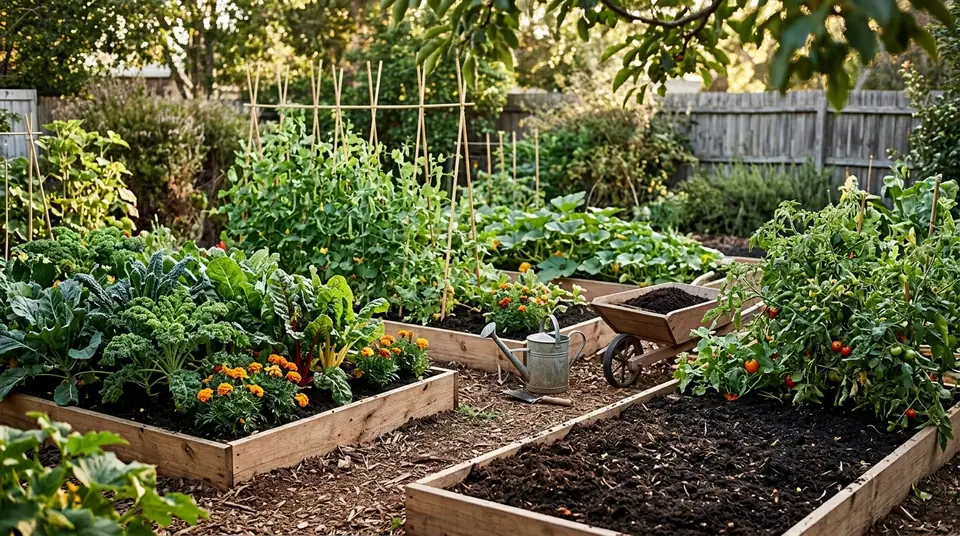
Raised garden beds filled with dark compost and lush green vegetables
5. Frequently Asked Questions
Can I plant directly into 100% compost?
No. While certain aggressive species like squash or tomatoes might survive temporarily, planting directly into 100% compost is generally a bad idea. Pure compost holds too much water, packs down too tightly around delicate root systems, and lacks the structural mineral framework (sand, silt, clay) that plants need for long-term physical stability. Always blend compost with native mineral soil at a maximum ratio of 30% to 50% organic matter by volume.
Will compost kill my grass if I use it as topsoil?
Compost will not kill your grass if applied correctly as a thin topdressing (1/4 inch or 0.6 cm). However, if you dump a 2-inch (5 cm) layer of pure compost directly onto a lawn, it will suffocate the turfgrass blades, block all sunlight, and kill the lawn within 14 to 21 days. Lawns love compost for its nutrients, but they need to breathe through the organic layer.
Why is water running off my compost topdressing instead of soaking in?
When organic matter dries out completely below 30% moisture content, its humic and fulvic acids undergo a chemical transformation that creates a hydrophobic, wax-like coating. To fix this, break the surface tension by applying a gentle, slow-release irrigation cycle, or mix a few drops of organic horticultural yucca extract (a natural wetting agent) into your watering can to help the moisture penetrate the dry matrix.
How often should I add compost to my garden beds?
For established perennial beds and vegetable gardens, topdress with a 1/2-inch (1.3 cm) layer of finished compost once or twice a year—typically in early spring before active growth begins, and again in autumn as a protective blanket. This replenishes microbial life and soil organic matter that naturally oxidizes and degrades over the course of the growing season.
Related Guides
- Topsoil and Compost Mix
- Compost for Topsoil
- Can You Compost Pistachio Shells
- The Best Compost Bin Only Costs About 40
- Maggots in Compost
- Best Compost Shredder
📋 Table of Contents ▼ Click to expand
Tags:
Keep reading
🌿 Related Plants You Might Like






PlantSavvyWorld
Editorial team
PlantSavvyWorld is an independent botanical education project. Articles are drafted with AI assistance, then edited and checked against university extension services, botanical garden collections and other published horticultural sources.