

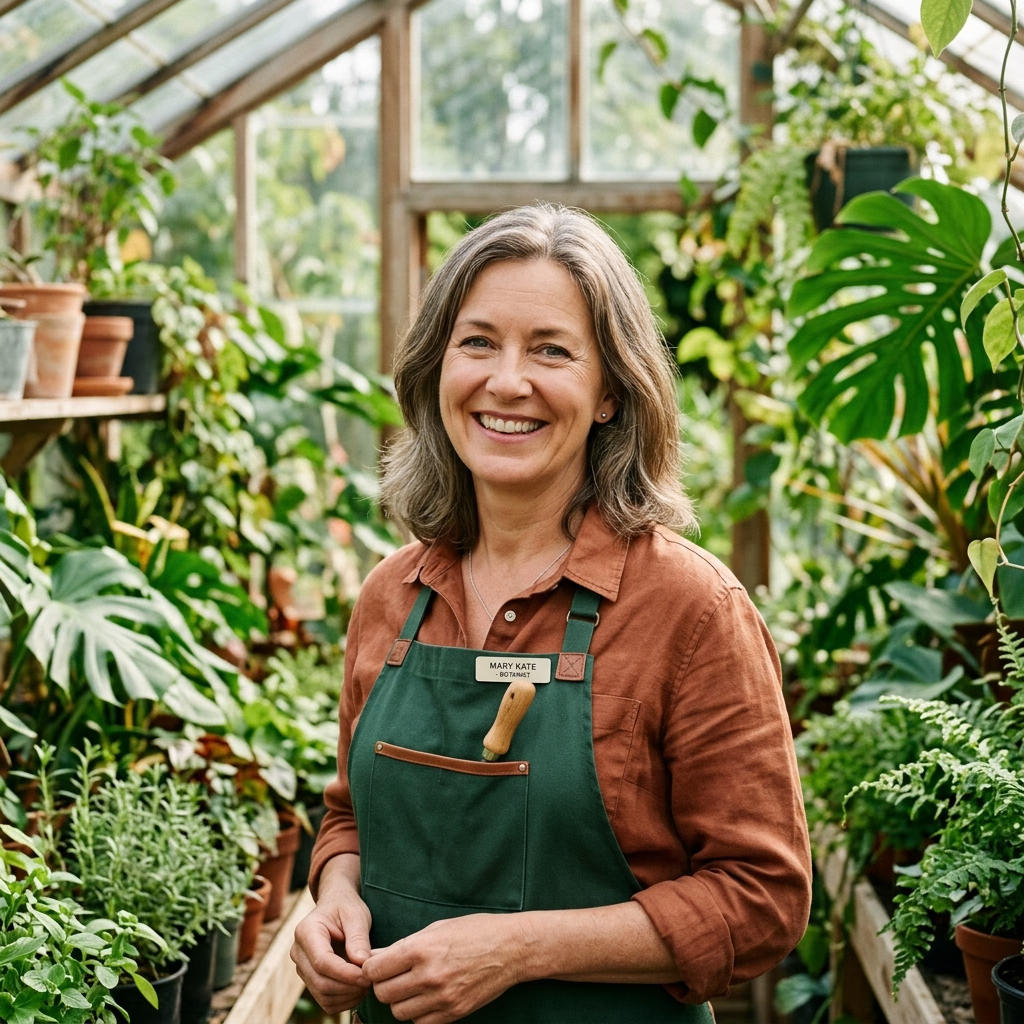
 Mary Kate
I stood knee-deep in a client's newly excavated perennial border last April, staring down at a ruined bed of direct-sown carrot and parsnip seed. A sudden, unseasonal freeze had crusted the topsoil just as the delicate radicles were pushing downward, while a week of heavy spring downpours had simultaneously washed away half my painstakingly leveled seed rows. That failure cost me three weeks of rework and taught me a lesson I’ve carried through two decades of landscape design: guessing when to start seeds outdoors based solely on a calendar date is an expensive gamble. Soil physics, ground temperatures, and natural habitat cues matter infinitely more than an arbitrary day in April.
Welcome to the definitive guide for getting your outdoor seed sowing right the first time. Whether you are mapping out a kitchen garden or scaling up your landscape palette, timing is everything. For more specialized regional advice, you can also consult this guide on When to Plant Strawberries in Kansas: Zone 6a/6b Seasonal Calendar or check out our southern strategies for When to Plant Onions in Southern California (Zone 9 & 10 Planting Calendar).

1. Botanical Overview & Natural Habitat
In nature, seeds do not rely on a farmer's almanac. They drop from parent plants in late summer and autumn, settling onto the duff of the forest floor or into prairie soil. Their built-in evolutionary mechanisms dictate germination. Some seeds require cold stratification—prolonged exposure to cold, wet conditions—to break internal dormancy inhibitors like abscisic acid. Others rely on scarification, meaning their hard seed coats must be worn down by microbial action, freezing-and-thawing cycles, or the digestive tracts of wildlife before water can penetrate the embryo.
When we talk about direct-sowing seeds outdoors, we are attempting to replicate these natural ecological cues safely, avoiding the extreme volatility of mid-winter while capitalizing on the rising moisture and solar radiation of spring. Annuals complete their entire life cycle in a single year, rushing to flower and set seed before frost; biennials spend their first year establishing vegetative root systems; and perennials build deep, resilient underground storage organs.
Understanding these native habits tells us why cool-season crops like peas (Pisum sativum) and spinach (Spinacia oleracea) thrive when sown into cold, damp earth as early as 4 weeks before the last frost, while warm-season tropicals like squash and beans will swiftly rot if placed in soil below 60°F (15.5°C). For detailed tactics on accelerating germination speeds for stubborn varieties, review our technical breakdown on How to Germinate Parsley Seeds Fast: Hot Water Soak & 7-Day Trick.
2. Essential Environmental & Care Requirements
Successful outdoor seed starting relies on the convergence of four critical environmental parameters: soil temperature, moisture consistency, ambient air flow, and light spectrum availability. You cannot cheat biology with a calendar.
Soil temperature dictates enzymatic activity inside the seed. If the soil is too cold, metabolic processes stall, leaving the seed vulnerable to soil-borne fungi like Pythium and Rhizoctonia. Moisture must be maintained as a capillary film around the seed coat; a single cycle of complete drying out during the radicle emergence phase will kill the embryonic root instantly.
| Parameter | Optimal Condition | Common Mistake | Why It Matters |
|---|---|---|---|
| Soil Temperature | 60°F–75°F (15.5°C–23.9°C) for warm crops; 45°F–65°F (7.2°C–18.3°C) for cool crops | Sowing warm-season seeds into cold spring soil | Cold soil stalls germination, allowing soil pathogens to rot the seed before emergence. |
| Sowing Depth | 2 to 3 times the diameter of the seed (typically 0.25 to 0.5 inches / 0.6 to 1.3 cm) | Burying tiny seeds too deep or leaving large seeds on the surface | Excess depth exhausts the endosperm energy reserves before the shoot reaches light. |
| Soil Moisture | Uniformly moist, like a wrung-out sponge, without puddling | Allowing the top layer to crust over in the wind | Dry crusts prevent hypocotyl hook extension and trap emerging cotyledons. |
| Seed-to-Soil Contact | Firmly tamped soil to eliminate air pockets around the seed | Dropping seeds into loose, cloddy soil without pressing down | Air pockets isolate the seed from capillary water movement, halting hydration. |
For a deeper dive into the specific soil and moisture dynamics required when moving delicate starts into broader garden systems, refer to our manual on When to Transplant Cucumber Seedlings: Stop Root Shock & Boost Growth.
💡 Dr. Mary Kate's Pro-Tip: Never rely on air temperature to decide when to plant outdoors. Buy a digital soil thermometer with a 5-inch (12.7 cm) stainless steel probe. Stick it 4 inches (10 cm) deep into your garden bed at 9:00 AM for three consecutive mornings. If that average does not match your crop's biological minimum, keep your seed packets in the drawer.
3. Step-by-Step Cultivation, Feeding & Propagation
Direct sowing requires precision site preparation. When you bypass indoor seed trays, you surrender absolute climate control, making your initial site preparation your most powerful tool.
Follow this sequential protocol to maximize your outdoor germination rates:
- Site Selection and Debris Removal: Clear the planting bed of all perennial weeds, stones larger than 0.5 inches (1.3 cm), and large crop residues. Smooth the surface using a rake to eliminate low spots where water can pool.
- Amend and Pre-Moisten: Work 1 to 2 inches (2.5 to 5 cm) of finished, screened compost into the top 4 inches (10 cm) of soil. Water the bed thoroughly 24 hours before planting so the soil profile reaches a uniform, sponge-like moisture level.
- Establish Furrows and Spacing: Using a trowel handle or a wooden stake, press shallow trenches (furrows) into the soil at the depth recommended on your seed packet—generally 2 to 3 times the width of the seed. For instance, tiny lettuce seeds require a depth of just 0.125 inches (0.3 cm), while large bean seeds need 1 inch (2.5 cm).
- Sow at Precise Intervals: Drop seeds along the furrow at twice the density you ultimately want, anticipating that not every seed will survive. If you want plants spaced 6 inches (15 cm) apart, sow a seed every 3 inches (7.5 cm).
- Cover and Tamp: Gently pull native soil back over the furrows. Press down firmly with the flat back of a rake or your hands to guarantee direct seed-to-soil contact.
- Apply Gentle Irrigation: Use a fine-mist nozzle or a watering can with a rose attachment to wet the topsoil without displacing the seeds. Avoid high-pressure garden hoses that can wash seeds away or pile them into corners.
- Protect and Monitor: Lay floating row covers or bird netting over the bed if pests or heavy rains threaten. Keep the surface consistently moist by misting daily until cotyledons fully emerge.
⚠️ Important Caution: Never walk directly on newly seeded beds. Compaction crushes the delicate capillary channels in the soil, suffocating microscopic soil life and creating an impenetrable crust that germinating seedlings cannot break through. Always work from a wooden board placed across the bed if you need to reach the center.
For indoor counterparts to outdoor direct sowing, especially when dealing with high-maintenance crops that demand strict temperature controls, explore our specialized insights on How to Germinate Eggplant Seeds Fast: Heat, Moisture & 7-Day Protocol.
4. Common Problems, Pests & Troubleshooting
When outdoor seed sowing goes sideways, the symptoms usually point directly to environmental stress or biological opportunists.
If your seeds fail to emerge entirely after twice the normal germination window (consult trusted botanical references like the Royal Horticultural Society for species-specific timelines), dig gently into the soil with a toothpick. If the seed is mushy and smells sour, you are dealing with damping-off fungi (Pythium or Phytophthora), caused by cold, waterlogged soil and poor air circulation. If the seed is hollowed out, look for wireworms, seed corn maggots, or foraging rodents.
Leggy or weak seedlings that collapse at the soil line immediately after sprouting are another common issue. This is almost always caused by overcrowding or insufficient light. When seedlings compete for scarce light, they stretch their hypocotyls thin, exhausting their cellular energy reserves before true leaves can form. Thin your rows aggressively once the first set of true leaves appears, snipping unwanted seedlings at the soil line with sharp scissors rather than pulling them, which disturbs the root zones of your keepers.
For comprehensive resources on managing regional pest pressures and soil health dynamics, the USDA National Agricultural Library offers exceptional science-backed guidance for growers at any scale.

5. Frequently Asked Questions
Can I plant all seeds directly outdoors, or do some have to be started indoors?
You can technically direct-sow almost anything, but long-season warm crops like tomatoes, peppers, and eggplants require a frost-free growing window of 120 to 150 days. In many temperate zones, the outdoor growing season simply isn't long enough or warm enough early on. These crops must be started indoors 6 to 8 weeks before your last frost date to produce fruit before autumn temperatures drop. Fast-maturing crops like radishes, beans, squash, and root vegetables almost always prefer direct outdoor sowing because their taproots resent transplant shock.
How do I know if my soil is warm enough to plant seeds outside?
Forget touch—human skin is a terrible thermometer. Purchase a digital soil thermometer and test your garden beds at a depth of 4 inches (10 cm) every morning for three consecutive days. Cool-season crops (spinach, peas, kale) require a stable soil temperature of 45°F (7.2°C) or higher. Warm-season crops (beans, corn, cucumbers) demand a minimum soil temperature of 60°F (15.5°C). If your thermometer reads below these thresholds, delay planting or warm the soil artificially by laying black plastic sheeting over the beds for two weeks prior to sowing.
What causes my outdoor seeds to wash away during watering?
Seeds wash away when they are either planted too shallowly or irrigated with too much pressure. Always use a fine-mist nozzle or a watering can with a rose attachment rather than an open hose end or high-pressure sprinkler. If you live in an area prone to heavy spring downpours, cover your newly sown beds with a lightweight floating row cover or burlap sheet. This breaks the kinetic energy of raindrops, protects the soil surface from crusting, and still allows light and air to penetrate.
Should I fertilize the soil right when I direct-sow my seeds?
No. Fresh seeds contain all the endosperm energy reserves they need to germinate and push their first cotyledons above ground. Introducing high concentrations of synthetic fertilizers or raw, hot manures right next to the seed creates a high-salt environment that draws moisture out of the seed through osmosis—a process known as fertilizer burn. Wait until your seedlings have developed their second set of true leaves before applying a weak, balanced organic liquid fertilizer at quarter-strength.
Related Guides
- When to Start Planting Seeds Outdoors
- When to Start Fertilizing Seedlings
- How to Start Hostas from Seed
- When to Start Tomatoes Indoors Zone 6
- When to Start Tomato Seeds Indoors Zone 6
📋 Table of Contents ▼ Click to expand
Tags:
🌿 Related Plants You Might Like

Mary Kate
Botanist & Founder
With over 10 years of experience researching sustainable horticulture and landscape architecture, I am on a mission to strengthen the bond between humans and nature.