

When to Plant Watermelons in Texas
Written with AI assistance, edited and checked against horticultural sources.

1. Botanical Overview & Natural Habitat
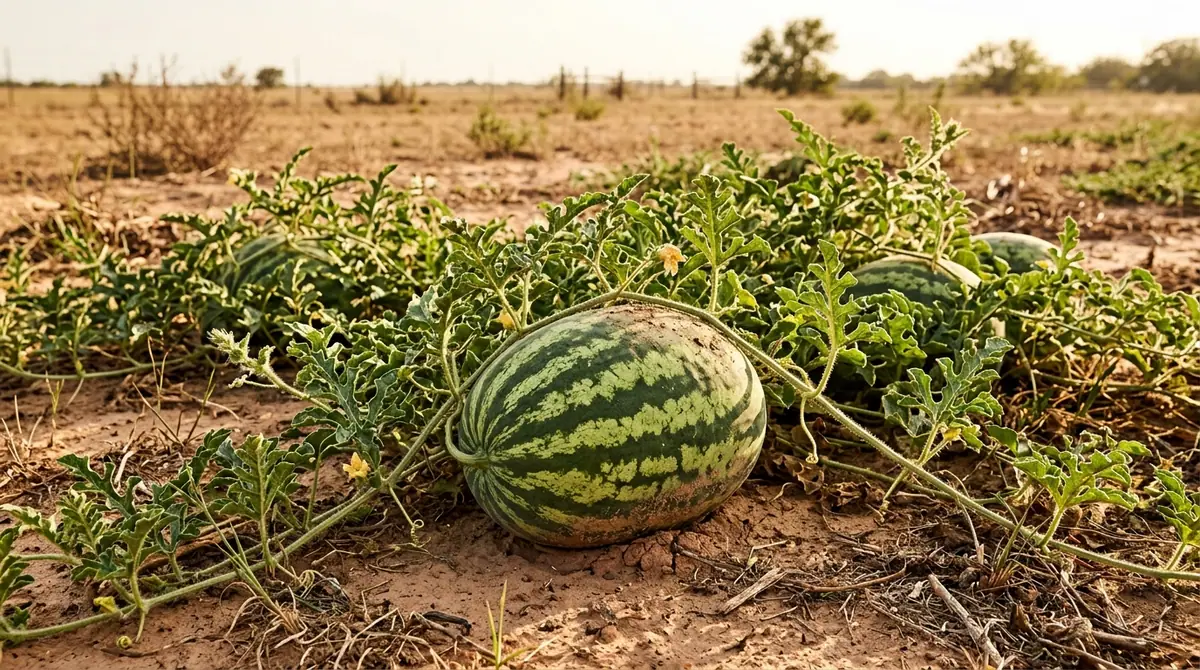
The watermelon (Citrullus lanatus) is a trailing, tendril-bearing annual vine belonging to the Cucurbitaceae family, sharing taxonomic kinship with cucumbers, squash, and pumpkins. Botanically adapted to the semi-arid grasslands and savannahs of sub-Saharan Africa, the plant evolved an innate resilience to searing heat and erratic rainfall. Understanding this ancestral habitat explains why watermelons thrive in the intense Texas sun, provided their deep-reaching root systems get the exact soil conditions they crave.
Morphologically, Citrullus lanatus produces deeply lobed, coarse-textured leaves and produces separate staminate (male) and pistillate (female) flowers on the same vine, requiring reliable pollinator activity for fruit set. The root architecture is expansive, featuring a dominant taproot that can plunge 3 to 4 feet (91 to 122 cm) deep into the soil profile to scavenge subsurface moisture, flanked by a wide network of lateral feeder roots spreading 6 feet (183 cm) or more in all directions.
This expansive root structure means watermelons despise root restriction—a trait you must account for whether direct-sowing or working with transplants. If you are transitioning delicate seedlings from indoor starting trays, timing is critical to prevent woody stem stunting, a challenge akin to the precision required When to Transplant Cucumber Seedlings: Stop Root Shock & Boost Growth. Furthermore, while we focus heavily on edible crop systems here, managing warm-season annuals shares structural principles with maintaining vigorous ornamental displays, such as those found in The Complete Guide to Coleus Plants: 50+ Varieties, Care, Propagation & Landscaping.
2. Essential Environmental & Care Requirements
Texas spans USDA Hardiness Zones 6a through 9b, encompassing microclimates that range from subtropical coastal plains to high desert plateaus. Because of this vast climatic diversity, standardizing planting by calendar months fails. Instead, growers must anchor their planting schedule to specific environmental thresholds.
Watermelon seeds will remain dormant or rot if planted in cold earth. The absolute baseline threshold for direct sowing is a consistent morning soil temperature of 70°F (21.1°C) at a depth of 4 inches (10 cm). Air temperatures should reliably hover between 75°F and 95°F (23.9°C to 35°C).
| Parameter | Optimal Condition | Common Mistake | Why It Matters |
|---|---|---|---|
| Soil Temperature | 70°F–85°F (21.1°C–29.4°C) | Planting when air feels warm but soil is cold (<65°F / 18.3°C) | Cold soil causes seeds to rot and stunts early seedling root development. |
| Soil pH | 6.0 to 6.8 (Slightly acidic) | Ignoring native alkaline caliche soils (pH > 7.5) | High pH locks out essential micronutrients like iron and phosphorus. |
| Sunlight | Full sun (8–10+ hours direct exposure) | Shading by taller companion plants or fences | Insufficient solar radiation reduces sugar accumulation in the fruit. |
| Watering Depth | 1 to 2 inches (2.5 to 5 cm) per week | Frequent, shallow daily sprinklers | Shallow watering encourages surface rooting, making vines vulnerable to drought. |
Soil texture is equally critical. Watermelons demand sandy loam or well-amended loamy soils with exceptional drainage. Heavy Texas vertisols (black gumbo clay) hold excessive moisture, suffocating the roots and inviting fungal pathogens like Fusarium oxysporum. If you are gardening in heavy clay, create raised beds amended generously with expanded shale and compost to improve aeration and drainage profiles.
For regional agricultural guidelines tailored specifically to local frost dates and extension recommendations, consult the Texas A&M AgriLife Extension Service, which provides invaluable, science-based planting calendars for every county in the state.
3. Step-by-Step Cultivation, Feeding & Propagation
Mastering when to plant watermelons in Texas means dividing the state into regional windows. In South Texas (Zones 8b–9b, such as the Rio Grande Valley and San Antonio), you can safely direct sow as early as mid-March. Central and East Texas (Zone 8a, including Austin and Dallas) typically hit optimal soil temperatures by early to mid-April. North and West Texas (Zones 6b–7b, such as Amarillo and Lubbock) must wait until late April or even early May to clear the threat of late-season frost.
Here is the precise, step-by-step protocol for establishing a thriving watermelon patch:
- Site Selection and Soil Preparation: Choose a wide-open, full-sun location. Till or broadfork the soil to a depth of at least 12 inches (30 cm), incorporating a 3-inch (7.6 cm) layer of aged organic compost and well-rotted manure to boost fertility and structure.
- Thermal Tuning (Optional): Lay black polyethylene plastic mulch over your rows two weeks before planting. This warms the soil profile by 5°F to 10°F (-15°C to -12°C), accelerating early root growth significantly in North and Central Texas.
- Sowing the Seed: Plant seeds 1 inch (2.5 cm) deep. If direct sowing, place 3 to 4 seeds per hill, spacing hills 4 to 6 feet (1.2 to 1.8 m) apart in rows that are spaced 6 to 8 feet (1.8 to 2.4 m) apart.
- Thinning the Stand: Once seedlings reach 3 inches (7.6 cm) tall and exhibit their first true leaves, use clean snips to thin each hill down to the single strongest, most vigorous seedling. Never pull the extras out, as doing so will tear and damage the delicate roots of the remaining plant.
- Fertilization and Early Feeding: Apply a balanced, slow-release organic fertilizer high in phosphorus when planting to encourage robust root establishment. Transition to a low-nitrogen, high-potassium fertilizer once the vines begin to run and flower to promote fruit sugar development over excessive foliage.
- Irrigation Management: Deliver deep, infrequent waterings via drip tape or soaker hoses placed beneath the mulch. Keep the foliage as dry as possible to prevent foliar diseases.
💡 Pro-Tip: If you choose to start seeds indoors in peat pots to gain a three-week head start on the Texas growing season, do so no more than 21 days before your target outdoor planting date. Watermelon roots are notoriously sensitive to transplant shock; planting them out after they become root-bound in trays will stall their growth for weeks.
4. Common Problems, Pests & Troubleshooting
Even with perfect timing, Texas weather and endemic pests will test your resolve. Anticipating these challenges is the difference between a bumper harvest and withered vines.
- Powdery and Downy Mildew: Caused by high humidity coupled with warm temperatures—common across East and Coastal Texas. Prevent this by ensuring proper plant spacing for maximum air circulation. Treat early outbreaks with copper fungicide or potassium bicarbonate sprays.
- Vine Borers and Cucumber Beetles: These chewing insects can devastate young seedlings overnight. Protect young plants with floating row covers immediately after seeding, removing them only when female flowers appear to allow for insect pollination.
- Blossom-End Rot: Sunken, leathery black patches on the bottom of developing melons. This physiological disorder is caused by erratic calcium uptake, usually triggered by inconsistent soil moisture swings during extreme Texas dry spells. Maintain steady, even soil moisture rather than letting beds swing from bone-dry to soaked.
- Fruit Splitting: When a mature watermelon splits open on the vine, it is almost always the result of a torrential Texas rainstorm following a prolonged dry period. The sudden surge of water causes the internal flesh to expand faster than the rind can stretch.
⚠️ Important Caution: Never use high-nitrogen synthetic lawn fertilizers near your watermelon patch. Excessive nitrogen triggers massive vegetative vine growth at the complete expense of blossoms and fruit, leaving you with a lush, green jungle that produces zero watermelons.

5. Frequently Asked Questions
Can I grow watermelons in containers on a Texas patio?
Yes, but you must select dwarf or "icebox" varieties such as 'Sugar Baby' or 'Mini Love'. You will need a container holding at least 15 to 20 gallons (57 to 76 liters) of high-quality potting mix with excellent drainage. Ensure the container receives at least 8 hours of direct sun daily and expect to water daily during peak July heat, as containers dry out exponentially faster than in-ground beds.
How do I know precisely when to harvest a Texas watermelon?
Look for three definitive visual cues: First, check the ground spot (where the melon rests on the soil)—it should transition from a pale white to a rich, creamy butter-yellow. Second, examine the tendril nearest the fruit's attachment point on the vine; when it turns completely brown and shrivels up, the melon is ripe. Third, give the melon a gentle thump with your knuckles—a ripe watermelon produces a dull, muffled thud rather than a sharp, hollow ring.
What are the best watermelon varieties for the intense Texas heat?
For disease resistance and proven performance in Texas soils, plant 'Crimson Sweet' (classic striped, high sugar content), 'Charleston Gray' (exceptional tolerance to sunscald and Fusarium wilt), or 'Black Diamond' (massive yields suited for deep South and Central Texas clays). If you have a short growing season in the panhandle, opt for early-maturing icebox types like 'Sugar Baby' that mature in under 80 days.
Why are my watermelon vines flowering profusely, but no fruit is setting?
This is entirely normal during the early stages of vine development. Watermelon plants produce male flowers exclusively for the first 7 to 10 days before any female flowers (distinguished by a tiny, miniature watermelon bulb at the base of the petals) appear. If flowers are present later in the season without fruit set, you may be experiencing a lack of native pollinators; hand-pollination using a soft artist's paintbrush can easily solve this issue.
For further reading on cucurbit cultivation standards and pest management frameworks across the American South, reference the comprehensive resources provided by the Lady Bird Johnson Wildflower Center, which offers exceptional guidance on native plant integration and sustainable regional gardening practices.
Related Guides
- Cherry Trees in Texas
- Lavender Plant Texas
- Japanese Maple in Texas
- Do Peonies Grow in Texas
- Can Cherry Trees Grow in Texas
📋 Table of Contents ▼ Click to expand
Tags:
Keep reading
🌿 Related Plants You Might Like






PlantSavvyWorld
Editorial team
PlantSavvyWorld is an independent botanical education project. Articles are drafted with AI assistance, then edited and checked against university extension services, botanical garden collections and other published horticultural sources.