

When to Plant Tomatoes in Mississippi
Written with AI assistance, edited and checked against horticultural sources.
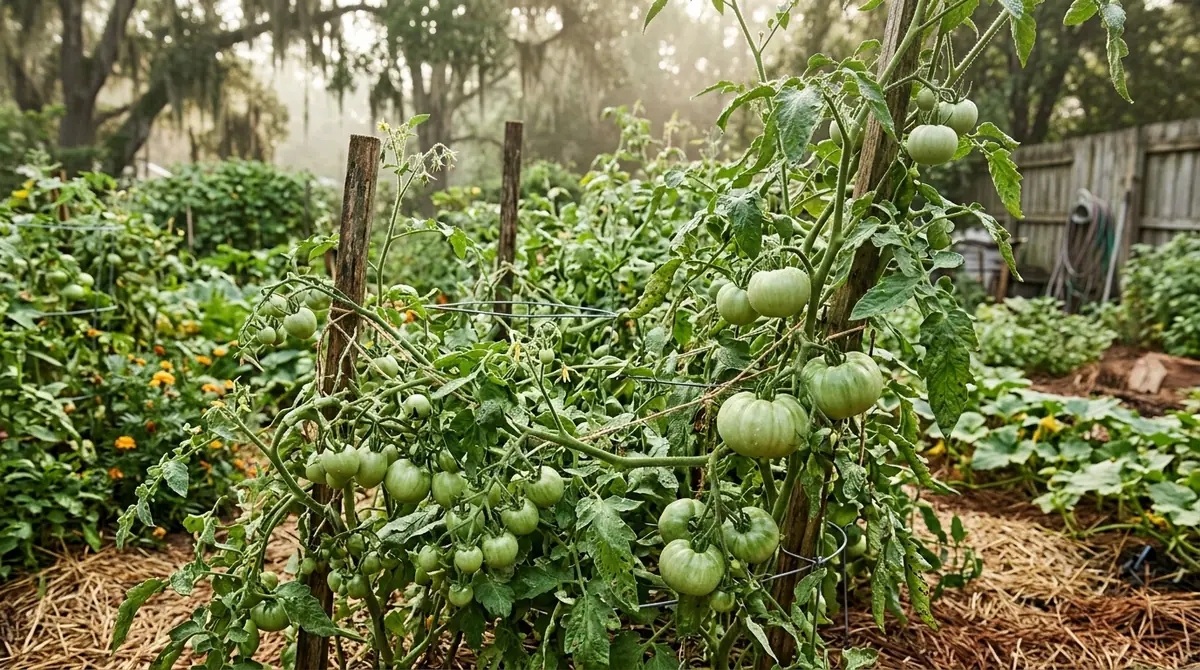
Across Mississippi's distinct USDA Hardiness Zones—ranging from 7a in the northern hills to 9b along the Gulf Coast—setting out heirloom Cherokee Purple tomato starts requires precise timing, as sudden squalls can drop temperatures from 75°F (24°C) to 42°F (6°C). Planting too early risks a late-winter frost stunting vascular systems, while waiting too long causes July heat to drop blossoms before pollination, making correct scheduling essential for a heavy, blemish-free harvest in both sandy coastal soils and dense loess silt.
1. Botanical Overview & Natural Habitat

Unlike shade-loving understory specimens like the Lipstick Plant (Aeschynanthus Radicans) Complete Care & Bloom Guide, tomatoes are absolute sun-worshippers requiring high light intensity to fuel photosynthesis and fruit production. They feature a remarkably aggressive root architecture that can extend 3 to 5 feet (91 to 152 cm) deep into uncompacted soil, a structural habit similar to what you must accommodate when managing How Deep Do Pepper Plant Roots Go? Pot Size & Substrate Depth Guide. The stems are herbaceous, covered in glandular trichomes that release that unmistakable, pungent aromatic oil when brushed. The leaves are pinnately compound, and the flowers are actinomorphic, featuring bright yellow corollas that rely heavily on buzz pollination—primarily by bumblebees—to shake pollen loose from the anther cones.
| Parameter | Optimal Condition | Common Mistake | Why It Matters |
|---|---|---|---|
| Soil Temperature | 65°F to 85°F (18°C to 29°C) | Planting when soil is below 60°F (15°C) | Cold soil halts phosphorus uptake, causing severe stunting and purpling of stems. |
| Air Temperature | 70°F–85°F day / 60°F–70°F night | Exceeding 90°F (32°C) consistently | Pollen becomes sterile at high temperatures, preventing fruit set. |
| Planting Depth | Buried 6 to 8 inches (15 to 20 cm) deep | Planting at the nursery container level | Shallow planting limits root mass; deep planting triggers adventitious rooting along the buried stem. |
| Soil pH | 6.2 to 6.8 | Neglecting pH adjustments in acidic pine soils | Highly acidic soils lock up calcium, directly triggering blossom end rot. |
2. Essential Environmental & Care Requirements
To successfully cultivate tomatoes in Mississippi, you must orchestrate your planting calendar around the state's bifurcated growing seasons. Because Mississippi experiences two distinct windows of agreeable weather—spring and fall—knowing when to plant is just as crucial as knowing how.
For North and Central Mississippi (Zones 7a through 8b), the spring target for planting hardened-off transplants outdoors is typically between mid-March and early April, provided the last average frost date has passed and soil temperatures consistently hold above 60°F (15°C) at a 4-inch (10 cm) depth. Along the Gulf Coast (Zones 9a and 9b), you can push this window forward to late February or early March. However, because Mississippi summers are notoriously punishing—with daytime highs regularly exceeding 95°F (35°C) and nighttime lows refusing to drop below 75°F (24°C) by July—you must also master the fall planting window. For a successful autumn harvest, seeds should be started indoors in June, and transplants must go into the garden by late July to mid-August. This allows the plants to establish before the heavy autumn fruit set, mirroring the precision timing required for crops like those detailed in When to Plant Onions in Southern California (Zone 9 & 10 Planting Calendar).
Sunlight is non-negotiable. Tomatoes demand a minimum of 8 to 10 hours of direct, unhindered solar radiation daily. If you plant them in partial shade, you will invite leggy, etiolated growth and drastically reduce your total yield. Water management is equally critical in Mississippi's high-humidity climate. Overhead watering is the fastest way to invite fungal pathogens like Alternaria solani (early blight) and Septoria lycopersici. Always utilize drip irrigation or soaker hoses, delivering roughly 1 to 2 inches (2.5 to 5 cm) of water weekly, adjusted upward during peak summer droughts. For comprehensive regional guidelines backed by agricultural science, consult the Mississippi State University Extension Service, which provides invaluable localized frost-date maps and soil testing resources.
3. Step-by-Step Cultivation, Feeding & Propagation
Growing high-yielding tomatoes in Mississippi requires meticulous site preparation, especially given our native heavy clay soils. Follow this rigorous step-by-step protocol to set your garden up for success:
- Conduct a Soil Test: Four weeks prior to planting, pull samples from your garden bed and submit them to your local extension office. Amend your soil to achieve a pH between 6.2 and 6.8. If your soil is heavy clay, incorporate 3 inches (7.6 cm) of aged compost and organic matter to improve drainage and structural aeration.
- Select Disease-Resistant Varieties: Choose cultivars bred to withstand southeastern humidity and disease pressures. Look for labels indicating resistance to Verticillium wilt, Fusarium wilt, nematodes, and Tomato Yellow Leaf Curl Virus (e.g., 'Celebrity', 'Mountain Merit', or heirloom types like 'Big Beef').
- Harden Off Transplants: If you started seeds indoors, begin hardening them off 10 to 14 days before your target planting date. Expose them gradually to outdoor conditions, starting with 2 hours of dappled shade on day one and working up to full, all-day sun by day ten.
- Trench or Deep Plant: Dig a trench or deep vertical hole so that you can bury 60 to 70 percent of the stem. Pinch off the lower sets of leaves. Burying the stem allows the fine hairs (trichomes) to transform into a massive network of adventitious roots, drastically increasing water and nutrient uptake capacity.
- Install Support Structures: Immediately install heavy-gauge stakes, Florida weave systems, or sturdy wire cages (at least 5 feet / 1.5 meters tall) at planting time. Waiting until the plant is established will damage the root system.
- Apply Organic Mulch: Spread a 3-inch (7.6 cm) layer of clean wheat straw, shredded hardwood, or pine straw around the base of the plant. This creates a physical barrier that prevents soil-borne fungal spores from splashing up onto the lower foliage during heavy Mississippi rainstorms.
- Establish a Feeding Schedule: Feed plants at planting with a balanced, slow-release organic fertilizer rich in phosphorus. Once the first clusters of fruit set, side-dress with a low-nitrogen, high-potassium fertilizer every 14 days to encourage fruit development over excessive vegetative vine growth.
💡 Pro-Tip: When transplanting leggy tomato seedlings, do not panic. Lay the root ball and stripped stem horizontally in a trench angled slightly upward toward the sun. The stem will naturally correct itself and grow vertically within 48 hours, while developing a vastly superior root system along the entire buried length.
4. Common Problems, Pests & Troubleshooting
Mississippi's unique climate creates a pressure cooker for pests and diseases. Understanding early symptomology is the only way to save your crop.
Blossom End Rot (BER) is the most frequent heartbreaker growers face here. It manifests as a sunken, leathery, black patch on the blossom end of the fruit. This is rarely a lack of calcium in the soil; rather, it is caused by erratic soil moisture fluctuations. When the soil swings wildly between bone dry and soaking wet, the plant cannot transpire calcium effectively to the distal end of the developing fruit. Maintain consistent moisture levels and mulch heavily to mitigate this.
⚠️ Important Caution: Never handle tomato plants when the foliage is wet from morning dew or rain. The microscopic spores of bacterial spot (Xanthomonas vesicatoria) and early blight are easily spread from plant to plant on your hands, clothing, and pruning shears when moisture acts as a transport medium.

5. Frequently Asked Questions
What is the exact last frost date for planting tomatoes in Mississippi?
The last average spring frost date varies drastically by region. In North Mississippi (Zone 7a), it typically occurs around April 5th to 15th. In Central Mississippi (Zone 8a/8b), it falls between March 20th and April 1st. Along the Gulf Coast (Zone 9a/9b), the threat of frost usually passes by mid-to-late February. Always check local forecasts and ensure soil temperatures are above 60°F (15°C) before setting plants out permanently.
Can I grow tomatoes in containers during Mississippi's intense summer?
Yes, container gardening is an excellent strategy in Mississippi because it allows you to move pots into partial shade during peak afternoon heatwaves (temperatures exceeding 95°F / 35°C). Use a container that holds at least 5 to 10 gallons (19 to 38 liters) of a high-quality, well-draining potting mix per plant. Ensure the pot has ample drainage holes to prevent root rot during tropical downpours.
Why are my tomato flowers falling off without producing fruit?
Blossom drop is nearly always triggered by environmental stress. In Mississippi, this usually happens when nighttime temperatures remain above 75°F (24°C) or daytime temperatures exceed 90°F (32°C), causing tomato pollen to become sterile. It can also be caused by excessive high-nitrogen fertilizer, which forces the plant to push green vine growth rather than fruit reproduction.
How do I manage heavy clay soil when planting tomatoes in Mississippi?
Native Mississippi clay holds onto water tightly and compacts easily, which suffocates tomato roots. To remediate this, never work the soil when it is wet. Amend your planting beds by incorporating 3 to 4 inches (7.6 to 10 cm) of aged organic compost and coarse agricultural gypsum to break up the tight clay matrix. Alternatively, build raised beds 8 to 12 inches (20 to 30 cm) high filled with a balanced mix of topsoil, compost, and coarse sand for optimal drainage.
Related Guides
- Epsom Salt for Peppers and Tomatoes
- Cluster Tomatoes
- When to Transplant Tomatoes
- When is Too Late to Plant Tomatoes
- When Do You Plant Tomatoes in Texas
📋 Table of Contents ▼ Click to expand
Tags:
Keep reading
🌿 Related Plants You Might Like






PlantSavvyWorld
Editorial team
PlantSavvyWorld is an independent botanical education project. Articles are drafted with AI assistance, then edited and checked against university extension services, botanical garden collections and other published horticultural sources.