

When to Plant Tomatoes California
Written with AI assistance, edited and checked against horticultural sources.
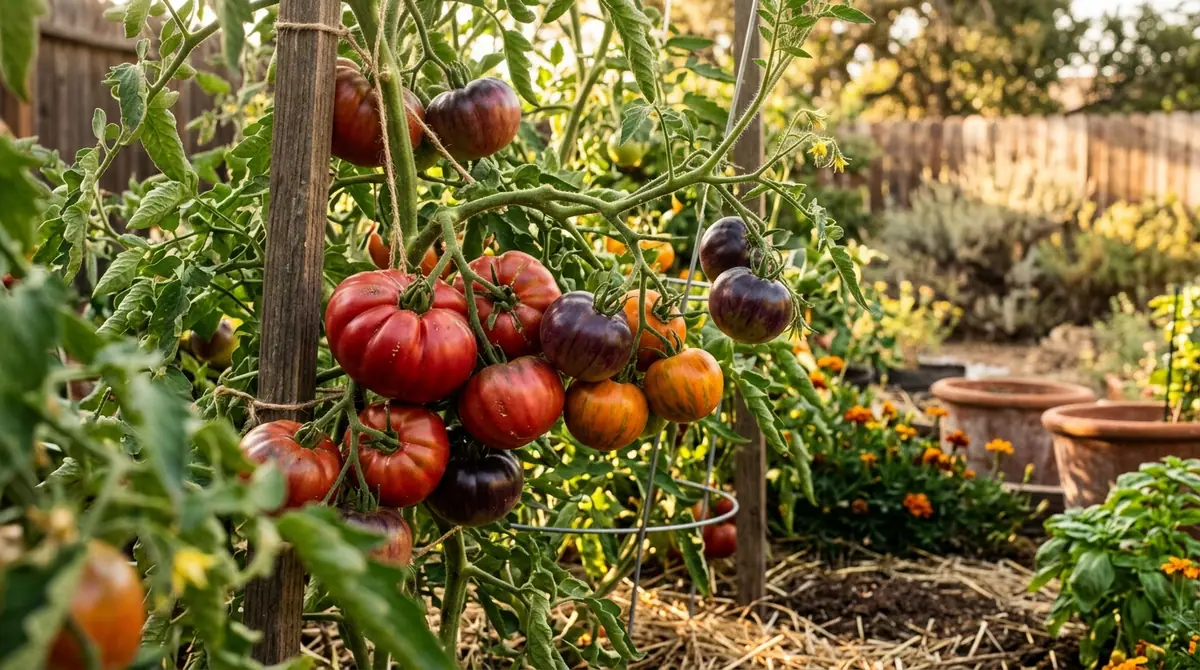
I stood in trial gardens in Davis last March, shivering in a thin cardigan while staring at a flat of leggy Brandywine tomato seedlings. The morning air was a crisp 42°F (5.5°C), and a thick valley fog still blanketed the soil. My hands were practically itching to dig them into the ground, but my head—and twenty years of plant science—knew better. If I dropped those tender starts into the California earth right then, the lingering chill would stunt their roots, stall their uptake of phosphorus, and set my harvest back by a month.

1. Botanical Overview & Natural Habitat
Tomatoes (Solanum lycopersicum) belong to the Solanaceae nightshade family and trace their evolutionary roots to the high-elevation, arid-to-sub-humid western slopes of the Andes mountain range, stretching through Peru, Ecuador, and Chile. In their native habitat, they evolved as short-lived, warm-season perennials growing in well-drained, nutrient-rich volcanic soils under intense, unfiltered equatorial sunlight.
Because of this ancestry, tomatoes possess physiological mechanisms finely tuned to warmth and high light intensity. They are warm-season herbaceous annuals (though treated as perennials in true frost-free zones) that lack cold tolerance across all life stages. Their root systems are remarkably aggressive, capable of plunging down to 3 to 5 feet (90 to 150 cm) into the soil profile if structural barriers like hardpans or compaction layers do not interfere—a root habit similar to what we see when optimizing substrate depth for pepper crops, as detailed in our How Deep Do Pepper Plant Roots Go? Pot Size & Substrate Depth Guide.
From a landscaping and structural standpoint, tomatoes generally split into two distinct growth habits: determinate (bush types that stop growing at 3 to 4 feet/90 to 120 cm and set all fruit at once) and indeterminate (vining types that grow continuously up to 8 feet/2.4 m or more until frost kills them). Understanding this distinction helps you integrate them into edible landscape designs. While you might plant cool-season root crops earlier in the year—much like timing your alliums using the When to Plant Onions in Southern California (Zone 9 & 10 Planting Calendar guide—tomatoes must wait until the thermal inertia of the soil catches up with lengthening spring days.
2. Essential Environmental & Care Requirements
To successfully cultivate tomatoes in California, you must manage four primary environmental variables: temperature, light, water, and soil composition.
Temperature is the ultimate governor of your planting calendar. Tomato seeds require a soil temperature between 70°F and 85°F (21°C to 29°C) for rapid, uniform germination. Once transplanted, plants stall when ambient temperatures drop below 50°F (10°C) at night, and pollen sterility occurs when daytime temperatures consistently exceed 90°F (32°C) or nighttime temperatures stay above 75°F (24°C).
Light is equally critical. Tomatoes demand a minimum of 6 to 8 hours of direct, unfiltered sunlight daily. In California's interior valleys (like the Central Valley or Inland Empire), afternoon shade can actually prevent sunscald on developing fruit, whereas coastal growers must maximize every ray of direct light to compensate for marine layer overcast mornings.
Watering must be deep and consistent to prevent physiological disorders like blossom-end rot (caused by calcium fluctuations driven by irregular soil moisture) and fruit cracking. Aim for 1 to 2 inches (2.5 to 5 cm) of water per week, delivered via drip irrigation or soaker hoses to keep foliage dry and minimize fungal pathogens like Alternaria solani (early blight).
| Parameter | Optimal Condition | Common Mistake | Why It Matters |
|---|---|---|---|
| Soil Temperature | 60°F–70°F (15°C–21°C) at a 4-inch (10 cm) depth | Planting when air feels warm while soil is still cold | Cold soil locks up phosphorus, stunts root elongation, and invites root rot. |
| Sunlight Exposure | 8+ hours of direct sun daily | Placing plants in afternoon shade in coastal zones | Insufficient light reduces photosynthetic yield and delays sugar accumulation in fruit. |
| Soil pH | 6.0 to 6.8 slightly acidic | Ignoring extreme alkaline soils in Southern California | Nutrient availability (especially iron and micronutrients) drops sharply outside this pH range. |
| Spacing | 24 to 36 inches (60 to 90 cm) apart | Overcrowding plants for high-density yield | Poor air circulation traps humidity, triggering fungal blights and reducing fruit set. |
💡 Pro-Tip: If you live in Coastal California (Zones 9–10) where marine layers delay morning warm-ups, lay down black plastic mulch two weeks before planting. It absorbs solar radiation, raising your daytime soil temperature by 5°F to 10°F (-15°C to -12°C relative difference) and giving your root systems a vital head start.
3. Step-by-Step Cultivation, Feeding & Propagation
When timing your tomato planting in California, calendar dates matter less than regional microclimates.
- Southern California & Desert Regions (Zones 9b–11): Plant early spring crops from March to April, and take advantage of the mild autumn for a second planting in July to August.
- Central Valley & Interior Valleys (Zones 8b–9a): Plant out your hardened-off starts between April 1 and May 1, safely past the average last frost date.
- Northern California Coast & San Francisco Bay (Zones 9a–10a): Wait until mid-to-late April or early May, when soil temperatures stabilize above 60°F (15°C) and the coastal fog patterns begin to recede.
- Mountain & Foothill Regions (Zones 5–8a): Hold off until late May or early June, ensuring overnight lows reliably stay above 50°F (10°C).
For deeper botanical insights on managing young starts and preventing stress during transitional phases, review authoritative guidelines from the UC Master Gardener Program.
Here is your exact step-by-step field protocol for planting tomato starts:
- Harden off your transplants: Over 7 to 10 days, gradually introduce indoor- or nursery-grown seedlings to outdoor conditions, starting with 2 hours of dappled shade and working up to full, unfiltered sun.
- Prepare the planting bed: Amend your garden soil or raised bed with 3 inches (7.5 cm) of well-aged compost and a balanced organic slow-release fertilizer rich in phosphorus and calcium.
- Trench or deep-plant: Strip away the lower two-thirds of the leaves from your tomato seedling. Dig a vertical hole (or a horizontal trench if the stem is exceptionally leggy) deep enough to bury the stem up to its top remaining set of leaves.
- Bury for adventitious roots: Fill the soil back in and gently press down. The buried stem will sprout a dense network of adventitious roots along its length within 10 to 14 days, anchoring the plant securely and drastically increasing its nutrient-uptake surface area.
- Water deeply and mulch: Saturate the root zone immediately with 1 gallon (3.8 liters) of water per plant to settle the soil and eliminate air pockets. Apply a 2-inch (5 cm) layer of clean straw or shredded bark mulch around the base to retain moisture and suppress weeds.
- Install structural support: Immediately insert tomato cages, stakes, or Florida weave trellises while the plants are small to avoid damaging mature root systems later in the season.
⚠️ Important Caution: Never handle or prune tomato plants when the foliage is wet from dew, fog, or overhead watering. Moisture transmits bacterial spores (such as Pseudomonas syringae) and fungal pathogens effortlessly from leaf to leaf through your hands and tools.
4. Common Problems, Pests & Troubleshooting
Even with perfect timing, California growers face unique regional pressures.
Blossom-End Rot: Appearing as a sunken, leathery black patch on the distal end of the fruit, this is rarely a lack of calcium in the soil itself. Rather, it is erratic watering that disrupts the plant's ability to transpire and transport calcium up to the developing fruit tissue. Maintain steady, even soil moisture and avoid heavy dry-to-wet watering cycles.
Tomato Hornworms (Manduca quinquemaculata): These massive green caterpillars can strip a mature tomato vine of its foliage and green fruit in a matter of days. Hand-pick them at dusk or dawn. If you spot white silken cocoons on a hornworm’s back, leave it be—those are parasitic braconid wasp larvae, which act as your natural biological control squad.

5. Frequently Asked Questions
Can I plant tomatoes in February in California?
Only if you live in the lowest desert elevations of Southern California (Zone 10b or 11, such as the Coachella or Imperial Valleys) where frost is virtually non-existent. For the vast majority of California—including the Central Valley, Bay Area, and coastal regions—February soil temperatures are far too cold, hovering between 45°F and 52°F (7°C to 11°C). Planting in February in these zones will cause the roots to stall, rendering the plant vulnerable to damping-off fungi and root rots.
What happens if I plant tomatoes before the last frost date?
If unexpected frost hits, ice crystals will rupture the cellular walls of the plant, turning the foliage translucent, black, and limp overnight, which is typically fatal for young starts. Even without a hard freeze, prolonged exposure to soil and air temperatures below 50°F (10°C) triggers physiological stunting. The plant will turn a purplish color due to phosphorus lockout and may take weeks to recover once genuine warmth finally arrives.
Do California tomatoes need different watering schedules than other regions?
Yes, due to California’s distinct Mediterranean climate featuring intense, dry summer heat and little to no rainfall from May through October, reliance on natural precipitation is impossible. Drip irrigation or soaker hoses running deep, infrequent cycles (2 to 3 times per week, depending on soil type and temperatures) encourage deep root penetration. Gardeners in coastal fog belts must monitor soil moisture carefully to avoid overwatering, as cool marine air slows down evapotranspiration rates.
How do I know when my soil is warm enough to plant tomatoes?
Do not guess—use a digital soil thermometer inserted 4 inches (10 cm) deep into the garden bed around 9:00 AM. If the reading registers consistently at 60°F (15°C) or higher over five consecutive days, your soil is thermally ready to support active root growth and nutrient uptake. For regional benchmarks and localized pest updates, consult resources provided by the California Department of Food and Agriculture.
Related Guides
- When to Plant Tomatoes Southern California
- When to Plant Tomatoes in Southern California
- When to Plant Tomatoes in California
- When to Plant Pumpkins in Southern California
- When to Plant Tomato Plants in California
📋 Table of Contents ▼ Click to expand
Tags:
Keep reading
🌿 Related Plants You Might Like




PlantSavvyWorld
Editorial team
PlantSavvyWorld is an independent botanical education project. Articles are drafted with AI assistance, then edited and checked against university extension services, botanical garden collections and other published horticultural sources.