

When Are Peas Ready to Be Picked
Written with AI assistance, edited and checked against horticultural sources.

1. Botanical Overview & Natural Habitat
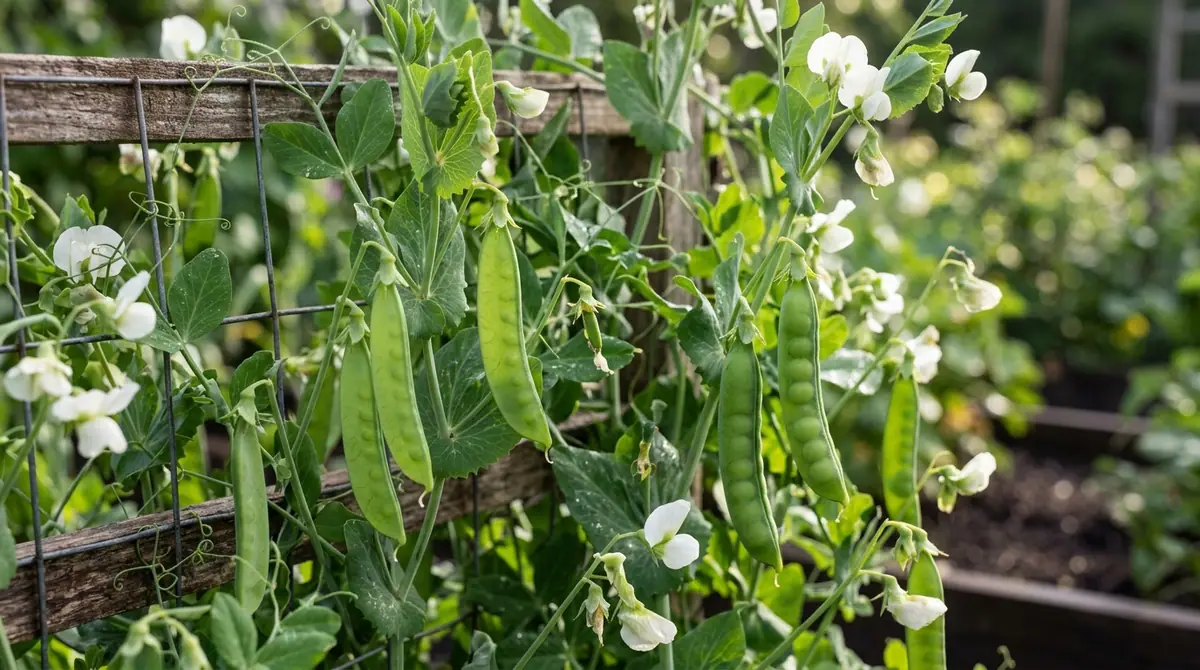
The garden pea, Pisum sativum, is a cool-season annual legume belonging to the Fabaceae family. Native to the Mediterranean basin and the Middle East, this vining herbaceous plant evolved to complete its reproductive cycle during the damp, temperate windows of early spring before the onset of scorching summer droughts.
Morphologically, Pisum sativum is characterized by its hollow stems, pinnately compound leaves terminating in tendrils that wrap around supports, and papery stipules. The root system features a taproot that can descend up to 2 to 3 feet (60 to 90 cm) into the soil profile, heavily colonized by Rhizobium leguminosarum bacteria in a classic mutualistic nitrogen-fixing symbiosis.
Cultivated varieties generally fall into three distinct architectural and culinary categories:
- Garden or English Peas (Pisum sativum convar. medullare): Grown primarily for their starchy, sweet seeds (shelled peas). The pods are fibrous and inedible.
- Snow Peas (Pisum sativum var. saccharatum): Grown for their flat, edible pods containing underdeveloped seeds. They possess minimal internal parchment layers.
- Sugar Snap Peas (Pisum sativum var. macrocarpon): A mutation featuring thick, fleshy, sweet walls and fully rounded edible pods enclosing plump seeds.
Understanding these variations is critical because harvest readiness criteria change entirely depending on whether you are eating the shell, the pod, or both. As you plan your broader edible landscape, keep in mind how cool-season timing dictates success with other crops, much like timing your When to Plant Strawberries in Kansas: Zone 6a/6b Seasonal Calendar.
2. Essential Environmental & Care Requirements
Peas are metabolically adapted to thrive when ambient temperatures remain moderate. Exposing them to persistent heat shuts down pollination, reduces pod fill, and triggers premature senescence.
| Parameter | Optimal Condition | Common Mistake | Why It Matters |
|---|---|---|---|
| Ambient Temperature | 55°F to 65°F (13°C to 18°C) | Planting too late in spring | Temperatures above 85°F (29°C) cause blossom drop and bitter pods. |
| Soil pH | 6.0 to 7.5 | Allowing soil to become acidic (< 5.5) | Low pH locks out calcium and inhibits the nitrogen-fixing bacteria. |
| Moisture / Irrigation | 1 inch (2.5 cm) of water weekly | Shallow, frequent splashing | Dry spells cause flowers to abort and pods to turn stringy and tough. |
| Sunlight Exposure | 6 to 8 hours of direct sun | Deep shade or heavy afternoon bake | Insufficient light stunts vine vigor; intense unshaded heat accelerates maturity. |
To dive deeper into optimizing soil biology and crop rotations for cool-season legumes, consult the Oregon State University Extension Service guidelines on vegetable production.
3. Step-by-Step Cultivation, Feeding & Propagation
Growing exceptional peas requires careful attention to soil preparation, structural support, and meticulous harvesting technique. Follow this step-by-step protocol to maximize yield and flavor profiles.
- Site Selection and Soil Preparation: Select a bed with well-draining loam. Work in aged compost to a depth of 6 to 8 inches (15 to 20 cm). Avoid adding high-nitrogen synthetic fertilizers, as peas fix their own atmospheric nitrogen; excess nitrogen results in lush, succulent foliage at the expense of blossoms and pods.
- Inoculation and Sowing: Coat seeds in a commercial Rhizobium inoculant right before planting. Sow seeds 1 to 1.5 inches (2.5 to 3.8 cm) deep, spacing them 2 inches (5 cm) apart in double rows spaced 6 inches (15 cm) apart. In mild winter climates, you can plant alongside your winter crops, similar to timing When to Plant Onions in Southern California (Zone 9 & 10 Planting Calendar).
- Erecting Support Infrastructure: Install trellises, netting, or branching brush when seedlings reach 4 inches (10 cm) tall. Climbing varieties easily reach 5 to 6 feet (1.5 to 1.8 meters) and require sturdy vertical anchors to prevent wind-lodging and fungal stagnation.
- Moisture Management and Mulch: Apply a 2-inch (5 cm) layer of straw or shredded bark mulch around the base of the stems to conserve moisture and suppress weeds. Keep soil consistently moist, watering deeply at the base to keep foliage dry.
- The Harvest Protocol: Inspect your vines daily starting 60 to 70 days from sowing. Hold the vine gently with one hand and snap or snip the stem above the calyx with the other. Never yank or pull pods downward, as this tears the hollow, fragile stems and can tear down entire sections of the vine.
💡 Pro-Tip: Harvest your snap and English peas during the cool morning hours before the sun hits the garden. Plant cells are fully turgid with water and peak natural sugars at dawn, yielding that quintessential crisp snap and superior sweetness. If you harvest at 3:00 PM on a warm afternoon, the pods will be dehydrated and noticeably less sweet.
4. Common Problems, Pests & Troubleshooting
Even with meticulous care, peas face several persistent challenges that can compromise both plant health and harvest quality.
Powdery Mildew (Erysiphe pisi)
This fungal pathogen appears as a white, powdery dust on leaves and stems during late spring when warm days and cool, dewy nights coincide.
- Prevention: Plant resistant cultivars like 'Sugar Ann' or 'Quantum', ensure wide plant spacing for airflow, and water exclusively at the base of the plant.
- Remediation: Remove heavily infected foliage immediately. Spray with a preventative solution of potassium bicarbonate or a 0.5% solution of horticultural oil mixed with water.
Pea Aphids (Acyrthosiphon pisum)
These tiny, soft-bodied green insects cluster on tender growing tips and undersides of leaves, sucking plant sap and transmitting viral diseases like pea enation mosaic virus.
- Prevention: Encourage beneficial predatory insects such as lady beetles, lacewings, and parasitic wasps by planting companion flowers like alyssum nearby.
- Remediation: Blast minor infestations off with a strong, sharp stream of water from the hose. For severe outbreaks, apply organic insecticidal soap or neem oil, ensuring thorough coverage of leaf undersides.
⚠️ Important Caution: Never apply copper-based fungicides or heavy synthetic pesticides when bees and other pollinators are actively visiting pea blossoms. While peas are primarily self-pollinating, local pollinators frequently visit the flowers, and careless chemical application can decimate beneficial populations.

5. Frequently Asked Questions
How do I know when English shell peas are ready to pick?
English peas are ready when the pods turn bright, plump green and feel firm to the touch. Gently squeeze a pod; if the individual peas feel distinct, rounded, and fill the entire cavity without crowding each other into hard, square shapes, they are ready to shell. If the pods look pale green, yellowish, or show a white webbing pattern on the exterior, they have passed their peak and will be starchy.
Can you pick snow peas when the pods are plump?
No. Snow peas should be harvested when the pods have reached their full mature length, but before the internal seeds begin to swell significantly. If individual seeds bulge prominently against the pod wall like a row of marbles, the pod has become fibrous and stringy. The ideal snow pea pod is flat, crisp, and translucent when held up to the light.
What happens if you leave peas on the vine too long?
When peas are left on the vine past their prime harvesting window, the plant's biological programming shifts from reproduction via tender seed dispersal to seed maturation. Sugar levels inside the peas rapidly convert into complex starches, the pod walls develop tough lignin and cellulose fibers, and the entire vine begins to turn yellow and die back. Once a plant experiences heavy over-maturation, it ceases flower production entirely.
How often should I harvest my pea plants once they start producing?
During peak production, you should inspect and harvest your pea vines every single day, or at least every 48 hours. Peas mature with astonishing speed in warm spring weather. Harvesting frequently signals the plant to continue diverting energy into flower and pod production rather than seed set, significantly extending your overall harvest window.
For further botanical insights into the physiology of cool-season food crops, visit the Royal Horticultural Society (RHS) vegetable cultivation database.
Related Guides
- When Are Peas Ready to Pick
- When Are Peas Ready to Harvest
- When to Plant Purple Hull Peas
- When to Pick Snap Peas
- When to Pick Peas
📋 Table of Contents ▼ Click to expand
Tags:
Keep reading
🌿 Related Plants You Might Like
PlantSavvyWorld
Editorial team
PlantSavvyWorld is an independent botanical education project. Articles are drafted with AI assistance, then edited and checked against university extension services, botanical garden collections and other published horticultural sources.