

How to Get Rid of Aphids in Vegetable Garden Naturally
Written with AI assistance, edited and checked against horticultural sources.
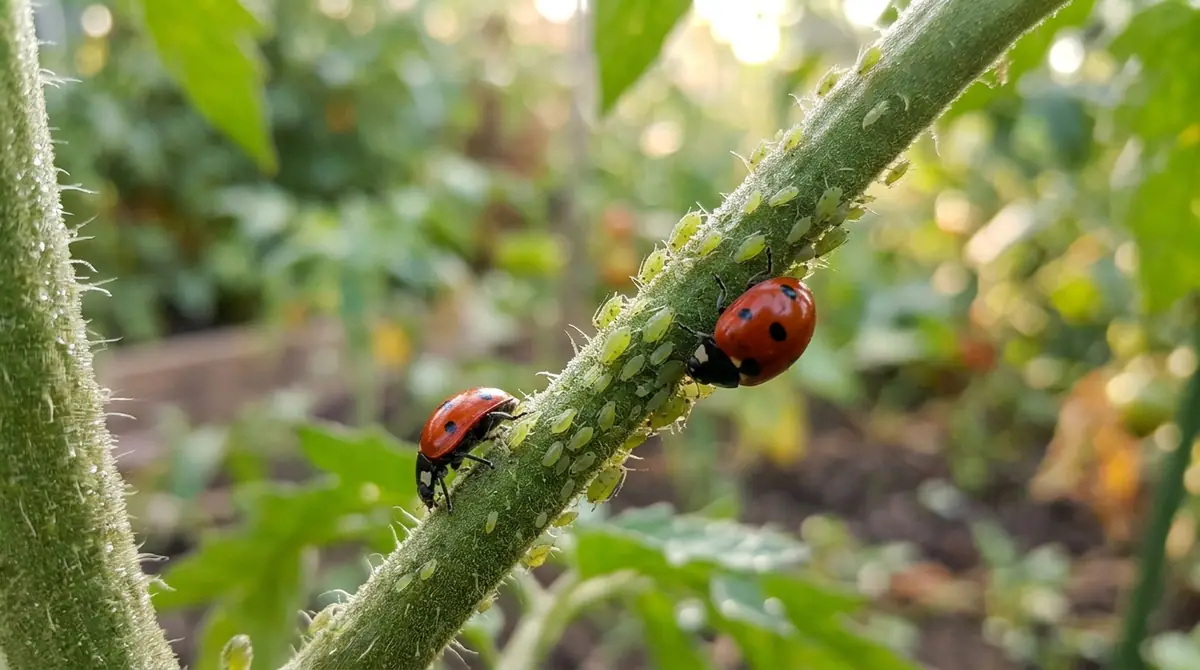
1. Botanical Overview & Natural Habitat

What makes aphids uniquely formidable in a vegetable garden is their explosive reproductive strategy. During spring and summer, most aphid populations consist entirely of asexual, live-bearing females. A single female can produce up to 80 offspring in just 7 to 10 days without ever mating. Furthermore, some individuals are born with wings, allowing them to migrate to new host plants the moment their current food source becomes overcrowded or stressed.
Their natural habitat spans temperate and subtropical zones worldwide, heavily favoring succulent new growth on crops in the Asteraceae, Brassicaceae, Cucurbitaceae, and Solanaceae families. They overwinter as glossy black eggs deposited on perennial weeds or woody plant stems, hatching precisely when spring temperatures consistently exceed 55°F (13°C).
2. Essential Environmental & Care Requirements
Preventing severe aphid infestations starts with managing the environmental conditions of your vegetable garden. Stressed, over-fertilized plants emit chemical signals that act like an open invitation to foraging winged females.
You must balance nitrogen availability, soil moisture, and garden layout. Excessive synthetic nitrogen fertilizers cause a flush of soft, watery plant tissues that aphid stylets can easily penetrate. Conversely, maintaining balanced soil biology ensures your crops build thick, resilient cell walls.
| Parameter | Optimal Condition | Common Mistake | Why It Matters |
|---|---|---|---|
| Soil Nitrogen | Moderate, balanced via organic compost | Over-applying high-nitrogen chemical fertilizers | Excess nitrogen creates soft, succulent growth that accelerates aphid reproduction rates. |
| Watering Depth | Deep watering to 8 inches (20 cm) weekly | Shallow, daily surface watering | Drought-stressed plants concentrate sugars in their sap, becoming primary aphid targets. |
| Plant Spacing | 18 to 24 inches (45 to 60 cm) apart | Overcrowding plants in dense blocks | Restricted airflow prevents beneficial predators from patrolling and traps pest humidity. |
| Sun Exposure | 6 to 8 hours of direct sunlight daily | Deep, prolonged shade | Shaded plants grow leggy and weak, lowering their natural defensive secondary metabolites. |
💡 Pro-Tip: Interplant strong-smelling herbs like rosemary, thyme, and basil directly between your brassicas and tomatoes. Their volatile aromatic oils disorient foraging aphids by masking the scent of your desirable vegetable crops.
3. Step-by-Step Cultivation, Feeding & Propagation
When an infestation strikes, you need an escalating, multi-tiered organic management plan that eradicates the pests without harming pollinators or disrupting soil health. Follow this proven protocol to regain control of your vegetable beds:
- Perform a high-pressure water blast. Hook your garden hose up to a nozzle set on a strong, direct stream. Spray the undersides of all infested leaves every morning for 3 consecutive days to physically knock nymphs off their feeding sites. Most dislodged aphids lack the strength to crawl back up the stem.
- Apply organic insecticidal soaps. If physical removal falls short, spray plants with potassium salts of fatty acids (insecticidal soap). Mix 2.5 tablespoons of pure liquid castile soap per 1 gallon (3.8 liters) of soft water. Coat all leaf surfaces thoroughly, ensuring direct contact with the pests. The soap disrupts their cellular membranes and suffocates them within 15 minutes of application.
- Deploy horticultural oils for severe outbreaks. For woody or hardy stems experiencing heavy infestations, coat the plants with a refined horticultural oil diluted to a 1% to 2% solution in water. This smothers any remaining overwintering eggs and lingering adults.
- Introduce biological control agents. Order beneficial insects such as ladybeetles (Hippodamia convergens) or green lacewing larvae (Chrysoperla carnea). Release them at dusk near heavy feeding zones. A single lacewing larva can consume up to 200 aphids per week.
- Establish persistent cultural follow-up. Prune away heavily damaged leaves where curling tissue shields pests from sprays. Monitor your plants weekly using a 10x jeweler's loupe to inspect for the appearance of new wingless colonies.
⚠️ Important Caution: Never apply insecticidal soaps or horticultural oils when ambient temperatures exceed 85°F (29°C) or in direct midday sun. The combination of oil, soap, and high heat will rapidly fry plant leaves, causing severe phytotoxic burn and defoliation.
For authoritative guidance on biological controls and university-tested pest management thresholds, consult the University of California Integrated Pest Management Program.
4. Common Problems, Pests & Troubleshooting
Even experienced gardeners run into roadblocks when treating aphids naturally. Here is how to diagnose and solve the most frequent hiccups:
- The Ant Farming Problem: You notice ants constantly marching up and down your pepper stems. Look closely: the ants are "milking" the aphids for their sugary excrement, known as honeydew. In return, the ants aggressively protect the aphids from ladybugs and parasitic wasps. Solution: Wrap the base of your plant stems in sticky barrier tape to block the ants, leaving the aphids completely undefended against natural predators.
- Sooty Mold Development: The leaves of your squash plants look like they were dusted in black soot. This is a fungal growth feeding directly on the sugary honeydew dropped by high populations of feeding aphids. Solution: Wash the honeydew off with insecticidal soap, and treat the underlying aphid colony immediately to cut off the fungus's food supply.
- Beneficial Insect Die-Off: You sprayed a natural remedy, but the pest population bounced back stronger while all the predatory ladybugs disappeared. Solution: Avoid broad-spectrum organic remedies like raw pyrethrins or Spinosad during peak pollinator hours, as these can decimate beneficial populations just as effectively as synthetic chemicals. Stick strictly to targeted insecticidal soaps.

5. Frequently Asked Questions
What is the absolute fastest way to kill aphids naturally?
The fastest mechanical method is a high-pressure water spray to knock them off the plant, immediately followed by a direct spray of potassium salt-based insecticidal soap. This dual approach kills active adults instantly while disrupting any remaining soft-bodied nymphs within minutes.
Does dish soap hurt vegetable plants?
Yes, standard household dish detergents are harsh on plants. They strip away the natural waxy cuticles on leaves, leading to dehydration and chemical burn. Always use pure horticultural insecticidal soap or mild, potassium-based castile soap formulated specifically for gardening applications.
Why do aphids suddenly appear in large numbers in the garden?
Aphids reproduce rapidly when temperatures sit between 65°F and 80°F (18°C and 27°C) and plants receive high amounts of nitrogen fertilizer. Additionally, if you lack biodiversity in your garden, local populations of beneficial predators like ladybugs, hoverflies, and parasitic wasps won't be present to keep the aphid numbers naturally checked.
Will companion planting really stop aphids from attacking my vegetables?
Companion planting will not eradicate an existing severe infestation, but it acts as a powerful deterrent and recruitment tool. Planting strong-scented herbs disrupts aphid navigation, while growing umbelliferous flowers like dill, fennel, and yarrow attracts predatory beneficial insects that hunt the aphids down.
Related Guides
- Total Guide to Moringa Why You Should Grow the Miracle Tree or Drumstick Vegetable
- How to Make Organic Compost for Vegetable Gardens at Home
- How to Attract Beneficial Insects to your Vegetable Garden
- Complete Guide to Winter Vegetable Harvesting for Beginners
- Best Vegetable Gardening Books for Beginners
- Best Soil Thermometer for a Head Start in your Vegetable Garden
📋 Table of Contents ▼ Click to expand
Tags:
Keep reading
🌿 Related Plants You Might Like



PlantSavvyWorld
Editorial team
PlantSavvyWorld is an independent botanical education project. Articles are drafted with AI assistance, then edited and checked against university extension services, botanical garden collections and other published horticultural sources.