

How to Dechlorinate Tap Water for Free at Home
Written with AI assistance, edited and checked against horticultural sources.
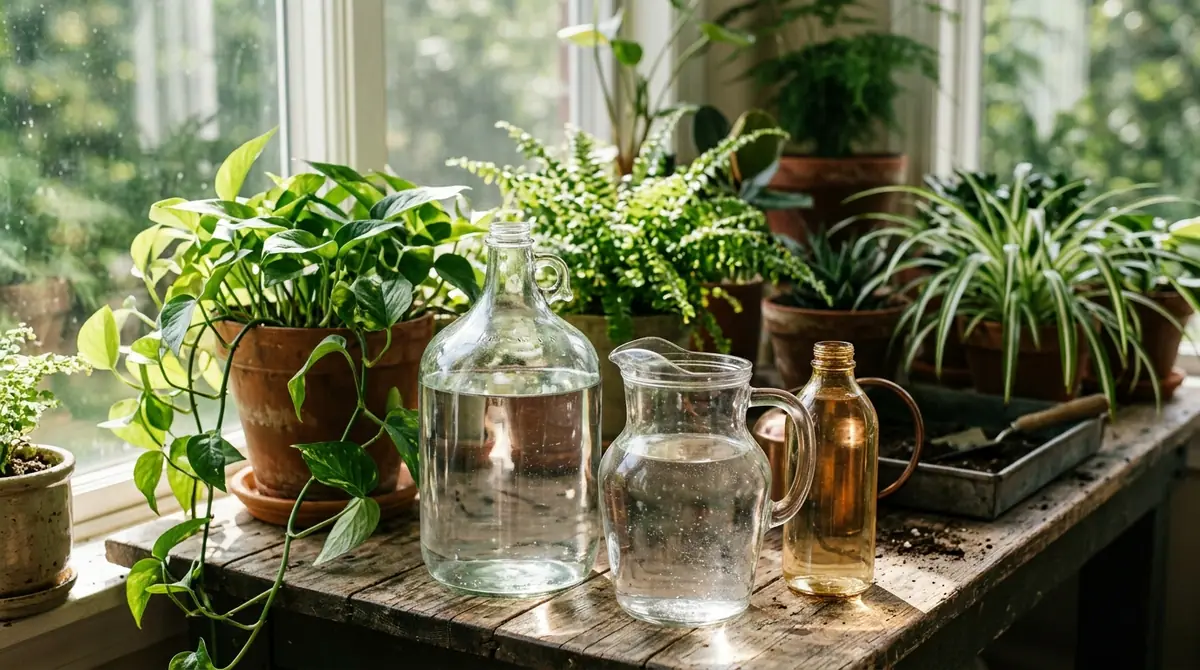
I stood in my conservatory three winters ago, watching a cluster of prize Calathea orbifolia leaves curl their edges into tight, brown scrolls despite sitting in a room dialed to 72°F (22°C) and 65% humidity. I tested the soil pH, checked for spider mites, and finally traced the slow decline to my watering can. Straight from the municipal tap, the water carried a heavy load of chlorine and chloramines that were systematically burning the sensitive root tips of my collection and locking out vital micronutrients. I needed a reliable way to purify dozens of gallons weekly without spending a single dollar on chemical drops or reverse-osmosis rigs.
1. Botanical Overview & Natural Habitat

When chlorine contacts delicate root hairs, it causes immediate cellular oxidation, destroying the fine root tips responsible for water and nutrient uptake. Chloramines—compounds of chlorine and ammonia—are even more chemically stable and destructive because they do not easily evaporate on their own, lingering in container soils to slowly degrade root health over weeks of watering. Understanding how water chemistry impacts plant physiology is just as critical to horticulture as mastering light or soil structure.
To bridge the gap between harsh tap water and the pristine moisture requirements of sensitive flora, we must look at how water interacts with soil microbes, root membranes, and nutrient availability. The chemical profile of your irrigation water dictates the biological health of your rhizosphere.
| Parameter | Optimal Condition | Common Mistake | Why It Matters |
|---|---|---|---|
| Water pH | 5.5 – 6.5 (slightly acidic) | Using highly alkaline tap water (>7.8) | Locks out iron, manganese, and phosphorus, causing chlorosis. |
| Chlorine Content | 0.0 ppm (completely dissipated) | Using immediate tap water on ferns and calatheas | Burns delicate root tips and stunts cellular elongation. |
| Water Temperature | 68°F – 72°F (20°C – 22°C) | Using ice-cold water straight from the tap | Shocks root systems, causing sudden wilting and leaf drop. |
| Dissolved Minerals | < 100 ppm total dissolved solids (TDS) | Ignoring high hard-water mineral deposits | Builds up salt crusts that dehydrate roots through osmotic pressure. |
2. Essential Environmental & Care Requirements
Managing water quality requires understanding the physical and chemical behavior of sanitizing agents in domestic water systems. Municipalities typically use two distinct compounds: free chlorine gas or sodium hypochlorite, and chloramines (created by adding ammonia to chlorine).
Free chlorine is a volatile gas. When exposed to atmospheric pressure and oxygen, it naturally off-gasses into the air within a predictable timeframe. Chloramines, however, are stable covalent bonds. They will not leave water simply by sitting out in a bucket overnight; they require alternative intervention, such as biological filtration, ultraviolet degradation, or carbon absorption, though heavy aeration can break them down over extended periods.
Temperature and surface area dictate the speed of gas exchange. A wide-mouthed vessel exposes significantly more water surface area to the air than a narrow jug, accelerating the physical off-gassing of volatile compounds. Furthermore, matching the temperature of your irrigation water to the ambient temperature of your growing space—ideally between 68°F and 72°F (20°C and 22°C)—prevents thermal shock. Cold water causes fine root hairs to contract, temporarily halting nutrient uptake and inviting root-rot pathogens like Pythium into weakened tissues.
For deep-dive academic reading on water quality parameters in agricultural and horticultural settings, consult the comprehensive guides provided by the University of Florida IFAS Extension.
3. Step-by-Step Cultivation, Feeding & Propagation
Dechlorinating water at home for free relies on harnessing natural physical and biological processes. Below is the field-tested protocol I use across my design projects and home greenhouse to prepare safe irrigation water without purchasing commercial conditioners.
- Select Food-Safe Vessels: Gather wide-mouthed buckets, food-grade storage containers, or large glass carboys. Ensure they have been thoroughly washed with hot water and free of soap residue.
- Fill and Measure Temperature: Fill your containers with tap water, letting the stream splash vigorously to introduce initial oxygen and kickstart the off-gassing process. Check that the water temperature reads between 68°F and 72°F (20°C and 22°C).
- Maximize Surface Area: Leave the containers completely uncovered. Never seal them with tight lids, as trapped gases must escape into the atmosphere. A container depth of 6 to 8 inches (15 to 20 cm) provides an ideal balance of volume and surface exposure.
- Deploy Passive Aeration (Optional but Recommended): If your municipality uses chloramines, or if you need water quickly, place an aquarium air stone connected to a small pump at the bottom of the vessel. The rising bubbles dramatically accelerate gas exchange.
- Set the Timer: Allow free-chlorine water to sit undisturbed for a minimum of 24 to 48 hours. If your municipal system uses chloramines, extend this off-gassing period to 5 days, or utilize a biological medium like an established piece of pothos vine or a pinch of garden compost to break down the chloramine bonds naturally.
- Test and Apply: Before watering your collection, verify that the water smells neutral (lacking any swimming-pool chlorine odor) and is at room temperature. Pour gently around the base of your plants until moisture runs freely from the drainage holes.
💡 Pro-Tip: Drop a clean, unrooted stem of Epipremnum aureum (golden pothos) into your resting water bucket. The living plant tissue and its associated beneficial microbes rapidly consume and break down residual chloramines and trace pollutants within 48 hours, cutting your passive wait time in half while enriching the water with trace organic stimulants.
4. Common Problems, Pests & Troubleshooting
Even with careful water preparation, amateur growers frequently run into issues related to water chemistry and storage. Recognizing the early warning signs of water toxicity saves plants from irreversible damage.
- Symptom: Leaf tip necrosis and brown margins on ferns, dracaenas, and prayer plants.
- Cause: Residual chlorine, fluoride, or salt accumulation in the root zone.
- Solution: Switch immediately to the 48-hour open-air aging method. Flush the potting mix thoroughly with distilled or rain water once a month to leach out built-up mineral salts.
- Symptom: Algae growth forming a green film inside your storage buckets.
- Cause: Leaving open water containers in direct, intense sunlight.
- Solution: Move your resting water buckets to a shaded, well-ventilated indoor spot out of direct solar radiation. Scrub and rinse containers weekly with a hydrogen peroxide solution.
- Symptom: White, powdery crust forming on the soil surface and container rims.
- Cause: High levels of calcium and magnesium carbonates (hard water) evaporating from the soil.
- Solution: Scrape away the top 0.5 inches (1.3 cm) of contaminated soil and replace it with fresh, pH-balanced potting medium. Consider blending your aged tap water 1:1 with collected rainwater to lower overall mineral hardness.
⚠️ Important Caution: Never boil tap water with the assumption that it removes chloramines or heavy mineral salts. Boiling only concentrates mineral solutes and pushes dissolved oxygen out of the water, creating an anaerobic, suffocating fluid that causes rapid root stress upon application.

5. Frequently Asked Questions
How long does it take for chlorine to evaporate from tap water naturally?
Free chlorine typically evaporates completely from an open container of tap water within 24 hours when kept at room temperature (68°F–72°F / 20°C–22°C) with a wide surface area exposed to the air. To ensure complete safety for sensitive tropicals, letting the water sit undisturbed for a full 48 hours is standard practice.
Does boiling tap water remove chlorine and chloramines?
Boiling water will drive off free chlorine quickly, but it does not effectively remove chloramines because their chemical bond with ammonia is much more stable. Furthermore, boiling concentrates dissolved minerals and removes vital dissolved oxygen, making it counterproductive for healthy plant irrigation.
Will leaving tap water out overnight remove chloramines?
No. Simple off-gassing will not remove chloramines within 24 hours. Because chloramines are formulated using chlorine bound to ammonia, they require extended aeration over 4 to 5 days, biological breakdown via living plant roots or bacteria, or specialized filtration to neutralize safely.
Can I use softened water on my houseplants?
Most home water softeners replace calcium and magnesium ions with sodium ions through an ion-exchange process. High levels of sodium are toxic to almost all potted plants, causing severe leaf scorch, root burn, and cellular collapse. It is far better to use unsoftened tap water that has been properly aged to remove chlorine.
Related Guides
- How to Water and Maintain Carnivorous Plants at Home
- How to Start a Hydroponic Gardening System at Home
- How to Sharpen Garden Tools Properly at Home
- How to Make Organic Compost for Vegetable Gardens at Home
- Can Cannas Grow in Water
📋 Table of Contents ▼ Click to expand
Tags:
Keep reading
🌿 Related Plants You Might Like






PlantSavvyWorld
Editorial team
PlantSavvyWorld is an independent botanical education project. Articles are drafted with AI assistance, then edited and checked against university extension services, botanical garden collections and other published horticultural sources.