

Does Clematis Grow in the Shade
Written with AI assistance, edited and checked against horticultural sources.
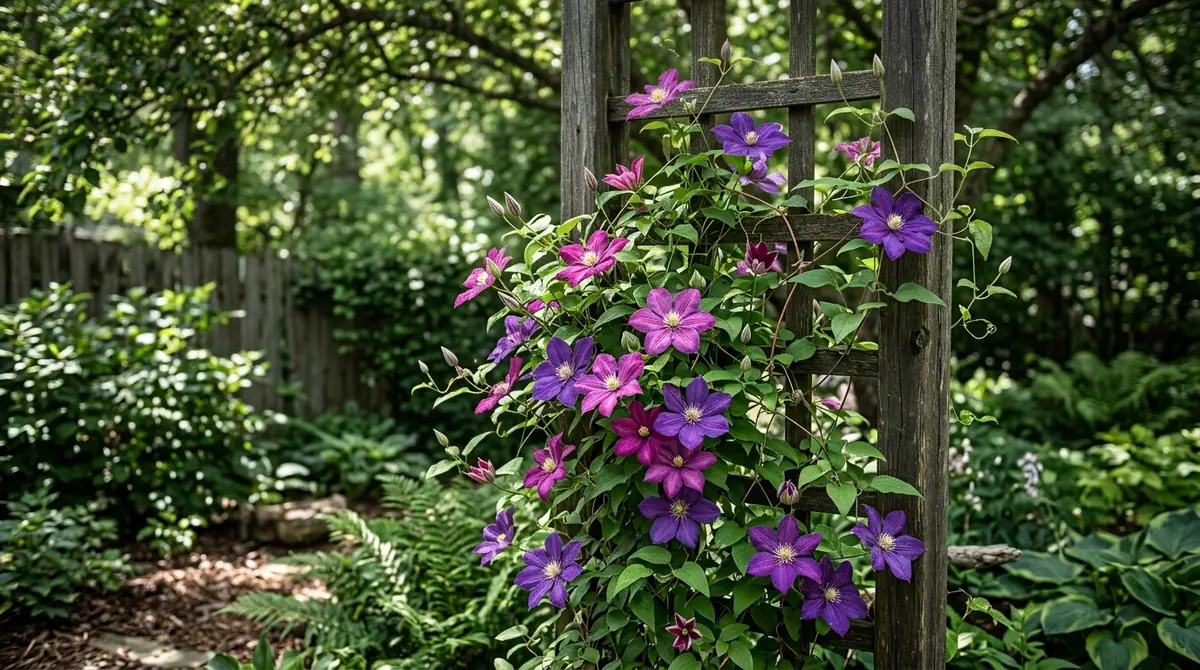
Stepping into trial gardens one cool April morning, I found myself staring down a stubborn north-facing brick wall where three struggling Clematis 'Jackmanii' vines had produced exactly two pathetic purple blooms. For years, conventional gardening wisdom insisted that clematis needs baking sunshine on its leaves while keeping its roots cool. But that morning, after digging up a failing specimen and examining its starving, pale root system blocked by deep shadow and compacted clay, I realized the old adage needed a severe botanical reality check. If you want to know whether clematis grows in the shade, the short answer is yes—but only if you match the right species to the exact light profile of your landscape. I have spent the last fifteen years testing shade-tolerant climbers across northern and southern exposures, and I am here to share the exact science behind making them thrive out of the glaring sun.
1. Botanical Overview & Natural Habitat
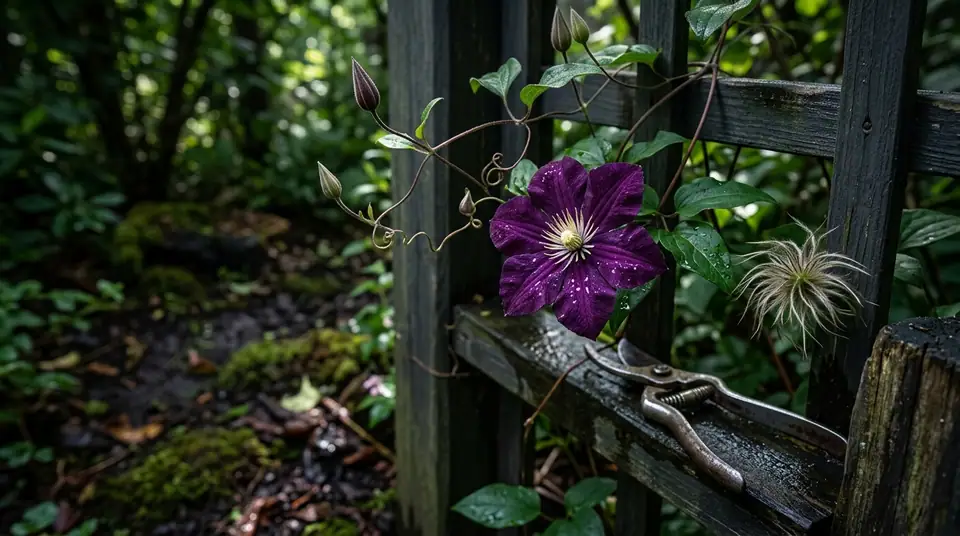
This evolutionary background explains why clematis has a famous dichotomy: "heads in the sun, feet in the shade." However, true woodland species like Clematis macropetala and Clematis alpina are adapted to partial shade (receiving 3 to 4 hours of direct sunlight or bright dappled light all day) and will actually scorch and fade if subjected to the blistering rays of a full sun exposure in USDA Zones 7 through 9. Conversely, large-flowered garden hybrids like 'The President' or 'Nelly Moser' require a minimum of 6 hours of direct sunlight to initiate heavy floral bud sets. Plant them in deep shade, and they will survive purely as vegetative ground cover, producing long, leggy vines with few to zero flowers.
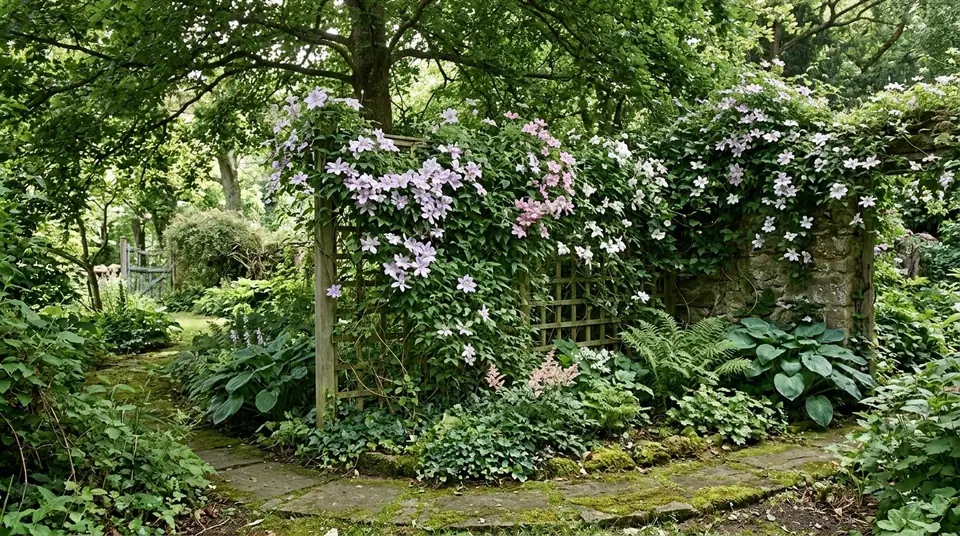
When designing a landscape, distinguishing between shade types is vital. Deep shade (under dense evergreens or beneath a north-facing wall with under 2 hours of sky exposure) will starve most clematis of energy. Dappled shade under high-canopied deciduous trees (such as honey locusts or birches) or eastern exposures offering 3 to 5 hours of morning sun are entirely viable zones for shade-tolerant cultivars. Understanding this spectrum prevents the heartbreak of planting a sun-loving hybrid on a dark porch pillar where it is destined to wither.
2. Essential Environmental & Care Requirements
Growing clematis successfully in lower-light conditions requires tightening up every other environmental variable. Because shade-grown vines process less solar energy through photosynthesis, their margin for error regarding soil chemistry, moisture management, and root protection narrows significantly.
Light levels for shade-tolerant clematis (Clematis alpina, Clematis macropetala, and Clematis montana) should average 3 to 4 hours of direct sunlight, preferably in the gentler morning hours, or bright, all-day indirect ambient light. Temperatures should remain within their comfort zone of 60°F to 75°F (15°C to 24°C) during active growth phases in spring. When summer temperatures spike above 85°F (29°C), shaded roots become even more critical to prevent heat stress and vascular collapse.
Soil must be exceptionally rich in organic matter, featuring a neutral to slightly alkaline pH between 6.5 and 7.0. Heavy clay or pure sand will stunt root development. Drainage is non-negotiable; while clematis demands consistently moist soil, it will rot within 7 to 10 days if left sitting in stagnant water.
| Parameter | Optimal Condition | Common Mistake | Why It Matters |
|---|---|---|---|
| Light Exposure | 3–4 hours morning sun or bright dappled shade | Planting large-flowered hybrids in deep north shade | Prevents total lack of blooms and leggy, disease-prone stems. |
| Soil pH | 6.5 to 7.0 (Neutral to slightly alkaline) | Allowing soil to drop below 6.0 | Acidic soils lock up vital nutrients and encourage fungal pathogens. |
| Root Mulching | 3 inches (7.6 cm) of organic compost plus flat stones | Leaving the root zone bare to bake in afternoon heat | Keeps root temperatures 10°F to 15°F cooler during peak summer. |
| Moisture | 1 inch (2.5 cm) of water per week, evenly applied | Shallow, frequent daily sprinkles | Encourages weak surface roots instead of deep, drought-resilient anchors. |
💡 Pro-Tip: When planting clematis near a shaded wall where soil is notoriously dry and poor, dig your planting hole 18 inches (45.7 cm) away from the wall foundation. Wall runoff creates a dry rain shadow; planting slightly outward ensures your vine catches natural rainfall and stays out of concrete-leached alkaline hot spots.
3. Step-by-Step Cultivation, Feeding & Propagation
Establishing a shade-loving clematis requires precision. Unlike sun-drenched specimens that can muscle through minor planting errors, shade-adapted vines need every advantage at the root zone to compensate for lower light levels.
Follow this step-by-step planting sequence to establish your shade clematis for decades of performance:
- Select and Soak: Purchase a healthy, container-grown clematis with multiple visible buds near the soil line. Submerge the entire nursery pot in a bucket of water for 30 minutes until air bubbles cease rising.
- Excavate Deeply: Dig a planting hole 24 inches (61 cm) wide and 18 inches (45.7 cm) deep. This extra depth allows you to bury the root ball 2 to 3 inches (5 to 7.6 cm) deeper than it sat in the nursery pot, which stimulates dormant buds along the stem to send out underground shoots.
- Amend the Backfill: Blend excavated soil with 40% aged compost and a half-cup of bonemeal to boost phosphorus levels for root development. Avoid high-nitrogen chemical fertilizers, which burn tender new roots.
- Position the Vine: Set the root ball gently into the hole. If planting a deciduous type, angle the main stems slightly toward your support structure (trellis, wire mesh, or companion shrub).
- Backfill and Settle: Fill the hole halfway, tamp down gently to remove air pockets, water thoroughly with 1 gallon (3.8 liters) of water, then fill the remainder of the hole and water again.
- Protect the Roots: Apply a 3-inch (7.6 cm) layer of shredded hardwood bark across a 2-foot (61 cm) radius around the base. Place two flat limestone pavers or slate tiles directly over the mulch surface to shade the soil permanently and retain ground moisture.
For those interested in branching out their garden design after mastering shade vines, you can easily incorporate perennial crops or explore sustainable systems like learning how to grow a wild food forest self sufficiency garden. If you enjoy testing your hand at tricky or specialized growing environments, you might also look at guides on will kiwi grow in florida for microclimate management tips, or test your propagation patience by timing crops similarly to how long does it take for tomatoes to grow tomato growing and harvesting guide.
4. Common Problems, Pests & Troubleshooting
Shade gardens naturally hold higher relative humidity and lower air circulation, making clematis grown in these areas uniquely vulnerable to specific physiological and pathological disorders.
Clematis Wilt (Phoma clematidina) is the most terrifying enemy of the grower. It is a soil-borne fungus that enters the stem, causing rapid blackening and sudden collapse of the entire vine within 48 to 72 hours. In shady microclimates where foliage stays damp from morning dew longer than in full sun, this fungus thrives. To combat it, ensure your planting hole has immaculate drainage, and immediately prune out any infected stems 2 inches (5 cm) below the soil line. For comprehensive diagnostic frameworks, refer to resources provided by the Royal Horticultural Society.
Powdery Mildew presents as a dusty white coating on leaves and is common when clematis is planted in dense, stagnant shade beneath large trees. Prune away neighboring tree branches to allow a minimum of airflow, and apply a bi-weekly preventative spray of potassium bicarbonate.
⚠️ Important Caution: Never use broad-spectrum synthetic fungicides or heavy copper sprays on shade-stressed clematis without testing a single leaf first. Lower light levels mean foliage is thinner and more susceptible to chemical leaf burn, which can drop a plant's remaining leaves in a single afternoon.
5. Frequently Asked Questions
Can I grow large-flowered hybrid clematis in full shade?
No. Large-flowered hybrids (such as 'Jackmanii' or 'The President') require at least 6 hours of direct sunlight to produce flowers. In full shade, they will survive as sparse, non-flowering vines prone to fungal disease. Stick to species like Clematis montana, C. Alpina, or C. Macropetala for low-light zones.
Why are the lower leaves of my shade clematis turning yellow?
Yellowing lower leaves in shade environments usually point to overwatering coupled with poor soil drainage, or a lack of magnesium. Because shade soils evaporate moisture slowly, reduce your watering frequency to once a week deeply, and ensure your organic mulch isn't piled directly against the woody stems, which causes collar rot.
How do I protect clematis roots in deep shade where grass or weeds compete?
Clear a 2-foot (61 cm) circle around the base of the vine, removing all turfgrass and weeds that steal moisture and nutrients. Apply a thick layer of organic compost topped with coarse bark mulch and flat stones. This mimics the cool, protected humus layer of their native woodland floor habitats.
When is the best time to prune shade-tolerant clematis?
Pruning timing depends entirely on your clematis group. Group 1 varieties (early bloomers like C. Alpina that flower on old wood) should be pruned immediately after flowering finishes in late spring. Pruning them in autumn or early spring will result in zero flowers that season because you will snip away the dormant flower buds.
Related Guides
- Why Do People Use Shade Sails
- Hydrangeas for Part Shade
- Best Shade Loving Plants for Indoor Planters and Dark Rooms
📋 Table of Contents ▼ Click to expand
Tags:
Keep reading
🌿 Related Plants You Might Like

PlantSavvyWorld
Editorial team
PlantSavvyWorld is an independent botanical education project. Articles are drafted with AI assistance, then edited and checked against university extension services, botanical garden collections and other published horticultural sources.