

Why Do People Use Shade Sails
Written with AI assistance, edited and checked against horticultural sources.
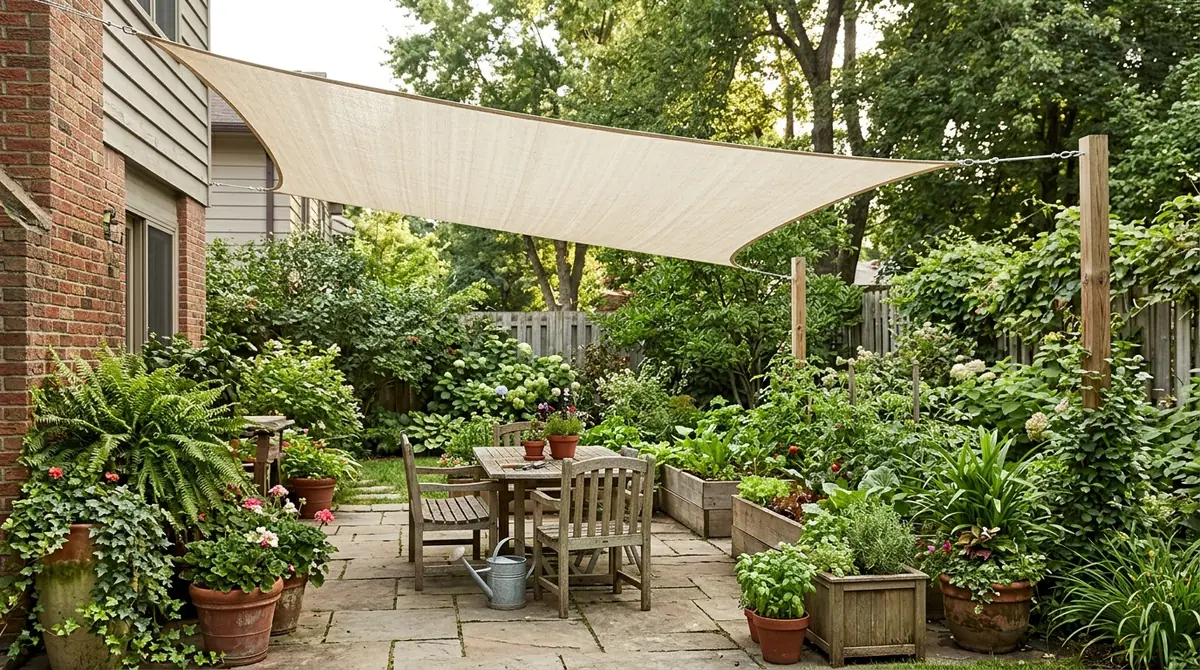
Sweat was dripping off my nose and pooling right in the center of my clipboard as I stood on a scorched South Carolina patio measuring leaf scorch on a struggling Acer palmatum. The ambient air temperature hovered at 96°F (35.6°C), but the infrared thermometer pointed at the flagstones read a blistering 132°F (55.5°C). Growers looked at me, exasperated by her fried hostas and bleached hydrangeas, and asked why her landscape looked like a desert when she watered it daily. The problem wasn't a lack of water; it was an excess of merciless, unfiltered radiation. That afternoon, we installed a commercial-grade architectural shade sail, dropping the ambient plant-level temperature by a cool 12°F (6.6°C) within minutes and saving a 15-year-old Japanese maple from certain death. I have watched homeowners struggle with intense solar loading for decades, turning to shade sails not just for aesthetic appeal, but as a critical horticultural tool for environmental management.
1. Botanical Overview & Natural Habitat

In a natural woodland ecosystem, plants experience dappled light or filtered shade, protected by an overstory canopy that blocks intense UV radiation while allowing photosynthetically active radiation (PAR) to filter through. When we transplant these species into an urban or suburban yard devoid of mature trees, we expose them to unmitigated solar radiation. This sudden shift triggers photoinhibition, a process where excessive light damages the plant's photosystem II, leading to chlorosis, leaf necrosis, and severe cellular dehydration.
Shade sails mimic this natural overstory canopy. By interrupting the direct angle of solar rays, they artificially recreate the protective, filtered environment of a forest floor. Scientifically speaking, shade sails do not merely block light; they alter the microclimate of the garden bed. They reduce the vapor pressure deficit (VPD) between the leaf surface and the surrounding air, which drastically slows down transpiration rates. When transpiration drops, plants spend less energy fighting dehydration and more energy on root development and cellular repair. Furthermore, shade sails protect the soil microbiome. Unshaded soils can easily exceed 100°F (37.7°C) in the summer sun, a temperature that kills off beneficial mycorrhizal fungi and earthworms within the top 2 inches (5 cm) of earth. By introducing a shade sail, you drop soil temperatures back down to a biological sweet spot, preserving soil moisture and microbial life. For gardeners looking to cultivate delicate varieties, combining a protective overhead sail with the Best Shade Loving Plants for Indoor Planters and Dark Rooms allows you to create a seamless, cohesive shade ecosystem that bridges your indoor and outdoor living spaces.
| Parameter | Optimal Condition | Common Mistake | Why It Matters |
|---|---|---|---|
| Light Filtration | 30% to 50% block for understory ornamentals | Using a 90% blackout sail over shade-tolerant vegetables | Over-blocking starves plants of the necessary PAR spectrum for growth |
| Installation Height | Minimum 8 feet (2.4 m) at lowest corner | Hanging sails too low over growing plants | Low sails trap rising heat, creating a localized greenhouse effect |
| Soil Temperature | 65°F–75°F (18.3°C–23.8°C) | Leaving soil completely exposed to peak afternoon rays | High soil temps kill beneficial bacteria and rapidly evaporate moisture |
| Air Circulation | Unobstructed lateral airflow | Tenting sails tightly against walls or dense fences | Stagnant air invites fungal pathogens like powdery mildew |
2. Essential Environmental & Care Requirements
While shade sails are inanimate architectural elements rather than living organisms, they directly dictate the environmental and care requirements of everything growing beneath them. Managing a shaded microclimate requires a shift in your horticultural routine.
First, consider watering protocols. Because a quality shade sail reduces evaporation rates by up to 40%, the soil stays damp significantly longer. If you keep watering on your standard, unshaded schedule—say, applying 1 inch (2.5 cm) of water every 3 days—you will quickly saturate the soil, leading to root rot and anaerobic conditions. You must recalibrate your irrigation based on soil moisture checks taken at a depth of 3 inches (7.6 cm).
Second, pay close attention to air movement and humidity. Sails that are installed without proper slope or tension can create stagnant pockets of air. To maintain plant health, ensure your sail is mounted at an angle of at least 15 to 20 degrees. This not only allows rainwater to shed effectively without pooling—which can stretch or tear the fabric—but it also encourages convective air currents to sweep across the planting bed. Good airflow prevents fungal spore germination, keeping foliage dry and disease-free.
Finally, seasonal light adjustments matter. Deciduous trees naturally drop their leaves in winter, allowing maximum sunlight to hit the ground. A fixed shade sail does not adjust seasonally unless you take it down. Therefore, select high-quality knitted high-density polyethylene (HDPE) fabrics that offer a specific percentage of UV block (typically 30% to 50% for general horticulture) rather than solid waterproof vinyl tents, which block vital air exchange and light scattering. For authoritative guidance on managing plant stress during extreme weather events, consult resources provided by the Clemson University Cooperative Extension.
💡 Pro-Tip: When planning your shade sail layout, track the sun's path during the summer solstice. Position the leading edge of the sail to block the brutal 2:00 PM to 5:00 PM western sun, while allowing the gentler morning rays from the east to hit your plants for vital early-day photosynthesis.
3. Step-by-Step Cultivation, Feeding & Propagation
Transforming a scorching, barren patio or garden bed into a thriving, protected oasis using a shade sail requires a deliberate sequence of installation and horticultural setup. Follow this systematic protocol to establish your shaded garden space:
- Site Assessment and Sun Mapping: Observe your garden space over a 48-hour period to identify the exact hours of peak thermal radiation. Mark out the footprint of the area you intend to protect, ensuring it covers at least 20% more ground than your target planting bed to account for the shifting angle of the sun.
- Structural Engineering and Post Installation: Dig post holes to a depth of at least 36 inches (91 cm)—or one-third the total height of the post—to ensure structural stability against wind loads. Pour concrete anchors around galvanized steel posts, allowing a full 7 days for the concrete to cure completely before applying tension.
- Hardware Mounting and Sail Tensioning: Attach marine-grade 316 stainless steel turnbuckles, D-rings, and pad eyes to your posts and structural anchors. Hook the shade sail into place and crank the turnbuckles evenly in a star pattern until the fabric is taut, eliminating any wrinkles that could catch the wind or pool water.
- Soil Amendment and Conditioning: Once the sail is secured and casting its protective canopy, work organic compost into the top 4 inches (10 cm) of soil to restore microbial life that may have been damaged by prior heat exposure. Apply a 2-inch (5 cm) layer of shredded hardwood mulch to lock in the newly stabilized soil moisture.
- Planting Understory Flora: Install your shade-loving plants, ferns, hostas, and perennials. Space them slightly further apart than standard recommendations to compensate for reduced lateral air movement and ensure every specimen receives adequate light filtration.
- Adjusting Irrigation Schedules: Reduce your automated irrigation output by 30% to 50% initially. Monitor soil moisture daily using a soil probe for the first 14 days, adjusting watering run times until the soil maintains a consistent, sponge-like consistency without becoming soggy.
⚠️ Important Caution: Never anchor shade sails to residential fascia boards, gutters, or untrained structural overhangs unless engineered by a professional. The wind load exerted on a tensioned sail can easily rip gutters away from the roofline or compromise structural roof framing during severe summer storms.
4. Common Problems, Pests & Troubleshooting
Even with a carefully installed shade sail, managing a modified microclimate presents unique challenges. Because the environment under a sail is cooler and more humid than the surrounding yard, it can occasionally attract specific pest pressures or cause structural maintenance issues. Here is how to diagnose and resolve them:
- Symptom: Powdery Mildew on Lower Leaves.
- Cause: Reduced airflow and prolonged leaf wetness under the sail canopy.
- Solution: Prune back lower branches of dense understory plants to improve lateral air circulation. Adjust the tension or height of the sail slightly to allow more wind sweep. Apply a preventative bio-fungicide containing Bacillus subtilis if conditions remain humid.
- Symptom: Leggy, Etiolated Growth on Plants.
- Cause: Installing a shade sail that blocks too much light (e.g., an 80% to 90% block commercial parking lot sail instead of a 30% horticultural weave).
- Solution: Remove the high-density sail and replace it with a breathable knitted HDPE fabric rated for 30% to 40% shade. This allows adequate PAR spectrum light to reach the foliage, halting upward stretching.
- Symptom: Fabric Sagging and Water Pooling.
- Cause: Inadequate initial tensioning or stretching of the material over time, combined with insufficient mounting angle slope.
- Solution: Disconnect the turnbuckles and crank them down significantly tighter. Ensure at least one corner of the sail is mounted 18 to 24 inches (45 to 60 cm) lower than the opposing corners to facilitate immediate water run-off during heavy downpours.
- Symptom: Sudden Spider Mite Infestations.
- Cause: Spider mites thrive in warm, dry environments, but if plants under the sail experience localized drought stress due to improper watering adjustments, their cellular walls weaken, making them prime targets.
- Solution: Wash foliage down thoroughly with a strong jet of water in the early morning to disrupt mite webs, and recalibrate your drip irrigation to ensure root zones maintain steady moisture.

5. Frequently Asked Questions
Can shade sails lower the temperature enough to protect plants from frost in the winter?
No, shade sails are engineered primarily to block solar radiation and reduce heat loading, not to trap ambient thermal heat. While a dense sail can offer nominal frost protection of 1°F to 2°F by reducing nocturnal radiation loss, it is not an effective substitute for frost cloth, row covers, or greenhouses during freezing weather.
How do I clean and maintain a knitted HDPE shade sail?
You should clean your shade sail at least once a year at the start of the growing season. Lower the sail, lay it flat on a clean surface, and scrub it gently using a soft-bristled brush, mild dish soap, and lukewarm water. Rinse thoroughly with a garden hose and let it dry completely before reinstalling. Never use harsh chemical bleach or pressure washers, as these will degrade the UV-inhibiting polymers in the fabric.
Will a shade sail kill the grass growing underneath it?
If you install a heavy-duty shade sail (70% to 90% UV block) over a standard turfgrass lawn, the grass will eventually thin out and die because turfgrasses require full, uninhibited sun to thrive. However, if you use a light horticultural sail (30% to 40% block), many cool-season grasses can survive, though they will grow slower. For best results, convert the shaded area beneath a sail into a mulched garden bed featuring shade-tolerant perennials rather than maintaining lawn grass.
How long do architectural shade sails typically last outdoors?
High-quality commercial-grade HDPE shade sails built with UV stabilizers generally last between 10 to 15 years in standard outdoor climates. Budget consumer sails made from cheap woven plastic fabrics typically degrade, fray, or lose their tension within 3 to 5 years under intense sun exposure. Always invest in sails that feature marine-grade stainless steel corner rings and double-stitched reinforced webbing edges for maximum longevity.
Related Guides
- Hydrangeas for Part Shade
- Does Clematis Grow in the Shade
- Best Shade Loving Plants for Indoor Planters and Dark Rooms
📋 Table of Contents ▼ Click to expand
Tags:
Keep reading
🌿 Related Plants You Might Like






PlantSavvyWorld
Editorial team
PlantSavvyWorld is an independent botanical education project. Articles are drafted with AI assistance, then edited and checked against university extension services, botanical garden collections and other published horticultural sources.