


Are you making the #1 mistake that kills store-bought orchids?
 Mary Kate
I remember standing in my indoor plant room a few seasons ago, staring with utter frustration at my struggling collection. Despite following standard textbook advice, my plants were lackluster, their leaf margins were browning, and new shoots were stalling out. That pivotal moment forced me to stop guessing and start observing the intricate biological needs of the root zone. When we take the time to truly observe the biological language of our green companions—how cell turgor responds to morning humidity, how root hairs navigate porous substrate aggregate, and how stomata regulate transpirational cooling—plant care stops being a guessing game and becomes an intuitive, deeply satisfying craft.
If you recently brought home a grocery store or big-box store orchid (most commonly a Phalaenopsis or moth orchid), you might be wondering why its gorgeous blooms are dropping or why its roots are turning a ghostly, mushy gray. The culprit is almost always a hidden physiological crisis happening beneath the surface. Let us dive deep into the botanical mechanics, habitat realities, and precise protocols needed to keep your store-bought orchids thriving for decades rather than weeks.
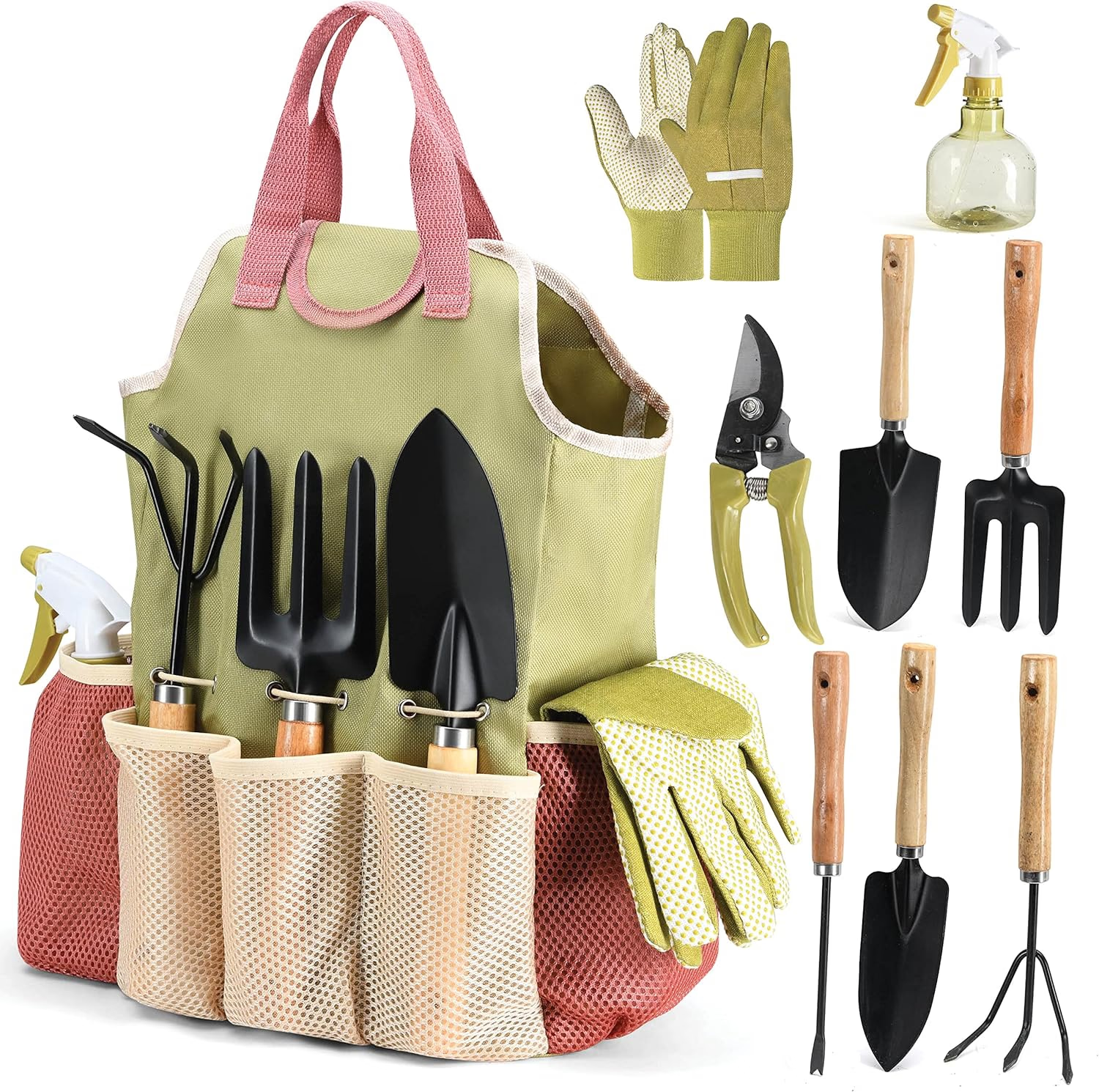
PLAY22 Gardening Tools Set of 10
I absolutely love this kit! The handbag keeps everything organized, and the tools are surprisingly sturdy for everyday repotting and pruning.
View on Amazon ↗1. Botanical Overview & Natural Habitat
To understand why store-bought orchids frequently decline, we must first look at how they evolve in the wild. The vast majority of commercially available orchids are epiphytes—meaning they do not grow in terrestrial dirt. Instead, their sprawling, silvery-green roots cling to the rough bark of high-canopy trees in tropical rainforest settings, stretching across Southeast Asia, Central America, and northern Australia.
In their natural habitat, orchid roots are constantly exposed to ambient air circulation. They experience torrential tropical downpours that drench their tissues, followed by swift, wind-driven drying cycles that clear away excess moisture within 30 to 60 minutes.
Contrast this with the average retail packaging: mass-market growers frequently pack store-bought orchids tightly into compressed sphagnum moss or fine-grade peat plugs, wedged deep inside clear plastic sleeve pots. While this retains moisture during cross-country shipping and retail display, it creates a fatal trap in a typical home environment. At the root zone (rhizosphere), gas exchange is just as critical as moisture. When potting mix becomes dense, muddy, or suffocated by standing drainage water, fine root hairs quickly suffer from hypoxia (oxygen deprivation), leaving the door wide open for opportunistic fungal pathogens like Pythium and Phytophthora. Conversely, an open, biologically active substrate enables robust nutrient uptake and rapid vegetative vigor.
As you adapt your collection, you might find yourself exploring other indoor and outdoor botanical hobbies, such as understanding Mold That Looks Like Spider Web when managing high indoor humidity, or branching out into food production by exploring Homegrown Vegetables That Save the Most Money for your sunny kitchen windowsills.
2. Essential Environmental & Care Requirements
Replicating an epiphytic rainforest canopy inside a modern home requires balancing several critical parameters. When we take a scientific look at lighting, root hydration, and atmospheric humidity, we eliminate the guesswork that leads to dropped buds and rotting crowns.
Successful indoor gardening isn't a game of luck—it is the art of respecting root biology and working in harmony with natural physiological cycles.
To help you audit your growing environment, consult the parameters below, which match the exacting standards outlined by the Royal Horticultural Society for tropical epiphyte cultivation:
Temperature is another crucial variable. Maintain indoor ambient temperatures between 65°F and 80°F (18°C to 27°C) during daylight hours, with a natural nighttime drop of 10°F (-12°C) to 15°F (-9°C). This nocturnal temperature differential is the primary physiological trigger that signals a Phalaenopsis orchid to initiate new flower spikes rather than strictly vegetative leaf growth.
3. Step-by-Step Cultivation, Feeding & Propagation
Here is the proven, systematic protocol I personally follow in my greenhouse and advise to all PlantSavvy members to rescue store-bought orchids from their suffocating retail packaging:
- Perform an Immediate Root Audit: Gently slide the orchid out of its nursery sleeve and unwrap any dense, decaying sphagnum moss from around the core root system. Use sterile shears to snip away any papery, mushy, or completely brown roots.
- Optimize Container Aeration: Repot your inspected orchid into a specialized, slotted transparent pot designed for epiphytes. Amend standard orchid bark with coarse perlite or pumice to ensure maximum airflow around the velamen layer.
- Stabilize Climate & Micro-Environment: Position plants at least 3 feet away from cold winter drafts, air conditioning vents, and forced-air heating registers to prevent sudden humidity shock and bud blast.
- Apply Dilute Organic Nutrients: During active vegetative phases, nourish with a specialized, half-strength balanced orchid liquid feed every 14 days to gently fuel cell division without burning sensitive root tips.
- Implement Visual Water-Timing: Never water on a rigid calendar. Instead, inspect the root color inside your clear pot. Bright green roots mean hydration is optimal; silvery-gray roots indicate an immediate need for a deep soak.
💡 Dr. Mary Kate's Pro-Tip: Always hydrate your orchids by submerging the inner pot in a bowl of room-temperature water for 10 to 15 minutes, allowing the spongy outer root layer (velamen) to fully saturate before letting it drain completely. Never place ice cubes on the potting media, as icy thermal shock damages tender tropical root cells.
⚠️ Important Caution: Never let pots stand in saucer runoff water for more than fifteen minutes. Stagnant moisture creates anaerobic conditions in the lower root zone that rapidly foster fungal decay and root death.
If your indoor gardening journey extends beyond tropical ornamentals to outdoor landscape management, you may also benefit from reviewing techniques on How to Keep Rabbits Out of the Garden 5 Humane Solutions That Work or exploring medicinal and culinary options like Herbs for Bruises 7 Herbs That Will Get Rid of Bruises Fast.
4. Common Problems, Pests & Troubleshooting
Even with careful attention, store-bought orchids can encounter distress signals as they acclimate to indoor home environments. Knowing how to read these symptoms prevents small setbacks from turning into plant loss.
- Bud Blast (Dropped Flower Buds): If unopened buds turn yellow and fall off, your plant has likely experienced environmental shock. This is frequently triggered by sudden temperature fluctuations, proximity to ripening fruit (which releases ethylene gas), or severe drafts. Relocate the plant to a stable spot where temperatures remain consistent.
- Wrinkled, Leathery Leaves: While many assume puckered leaves mean the plant is thirsty, it often indicates that root rot has already destroyed the root system, rendering the plant incapable of taking up water. Unpot the orchid, trim away dead tissue, and treat remaining healthy roots with a fungicide if necessary.
- Mealybugs and Scale Insects: These sap-sucking pests love hiding in the tight crevices where leaves meet the stem. Dab them individually with a cotton swab dipped in 70% isopropyl alcohol to break down their protective waxy coatings, followed by an application of horticultural soap.
For those expanding their indoor or patio plant collections further, studying guides such as 13 Wonderful Herbs That Like Full Sun for Beginners provides excellent foundational knowledge for maximizing light efficiency in bright home exposures. Additional botanical insights and cultivation benchmarks can also be cross-referenced through academic resources provided by the Missouri Botanical Garden.
5. Frequently Asked Questions
When is the best time of year to repot a store-bought orchid?
The ideal window for repotting is immediately after the plant finishes blooming and just as fresh root tips and new green leaves begin to emerge—typically in late spring or early summer. This coincides with the plant's natural surge in metabolic vigor, allowing it to recover quickly from root disturbance.
Why is the nursery medium packed so tightly around my store-bought orchid?
Commercial growers use dense sphagnum moss or fine peat plugs because it holds moisture exceptionally well during long-haul freight shipping and retail store displays where daily watering is impractical. However, this medium is designed for mass-market survival, not long-term home cultivation, and must be replaced with coarse bark.
How quickly will a recovering orchid grow new roots?
When placed in an optimal, highly aerated bark mix with adequate ambient humidity (around 50% to 70%), a recovering orchid typically responds within 14 to 30 days by pushing out active, bright-green root tips and firming up its lower foliage turgor.
Can I use regular houseplant fertilizer on my orchid?
Standard all-purpose houseplant fertilizers contain high concentrations of urea and heavy chemical salts that burn delicate epiphyte roots. Always use a specialized, urea-free orchid fertilizer formulated specifically for epiphytic species, diluted to one-quarter or one-half strength during the growing season.
Have you tried this technique with your own houseplants? Share your results with our global grower community on the Community Forum, explore more expert guides on Plant Tips, or visit our Home Page for comprehensive plant care archives.
📋 Table of Contents ▼ Click to expand
Mary Kate
Botanist & Founder
With over 10 years of experience researching sustainable horticulture and landscape architecture, I am on a mission to strengthen the bond between humans and nature.
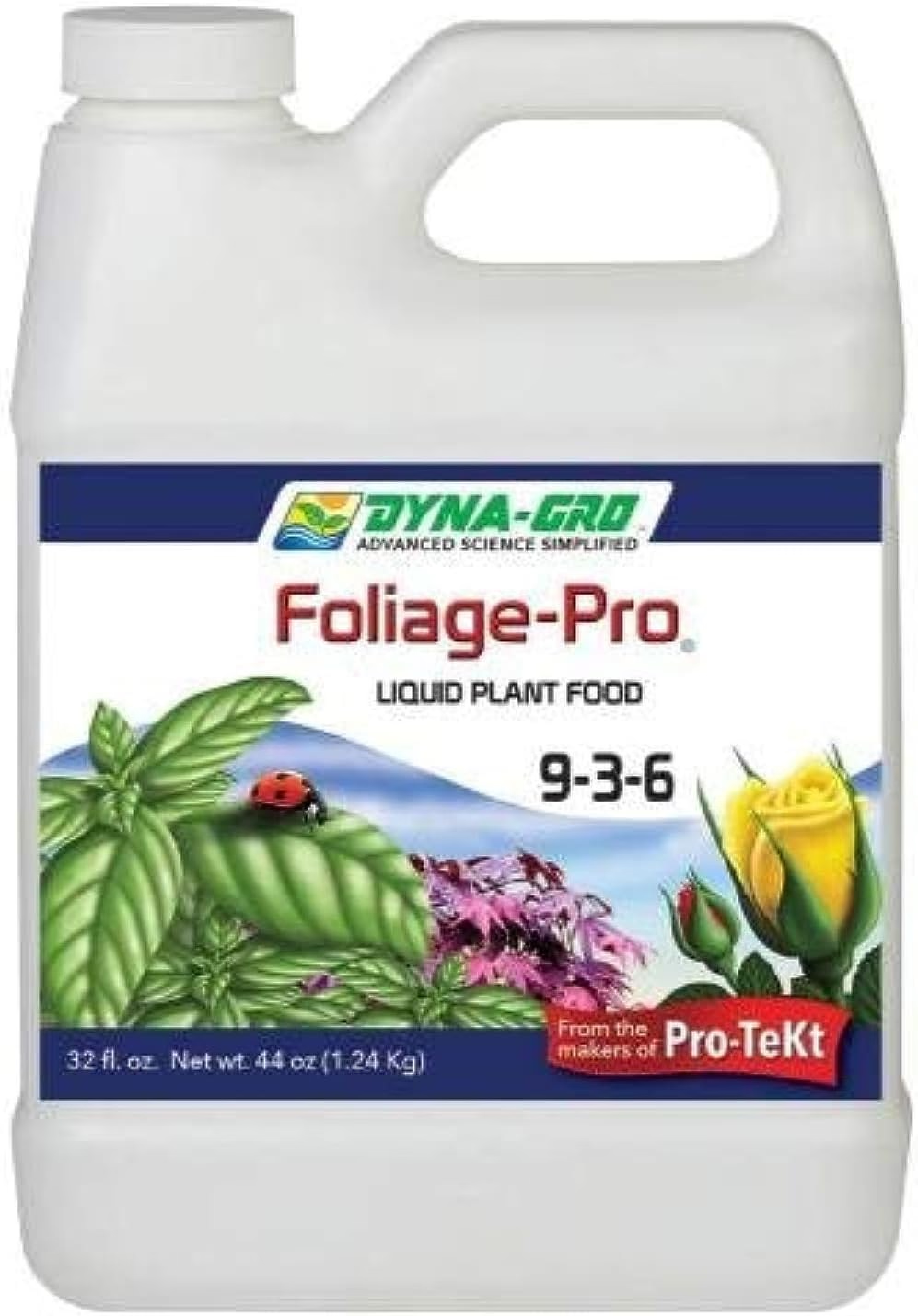
Organic Liquid Plant Food (FoxFarm)
I stopped brewing my own banana tea after finding this. It's pure magic in a bottle—my Monsteras push out huge leaves every time I use it!
View on Amazon ↗
Mary Kate
Botanist & Founder
With over 10 years of experience researching sustainable horticulture and landscape architecture, I am on a mission to strengthen the bond between humans and nature.
💬 Discussion