

Mold That Looks Like Spider Web
Written with AI assistance, edited and checked against horticultural sources.
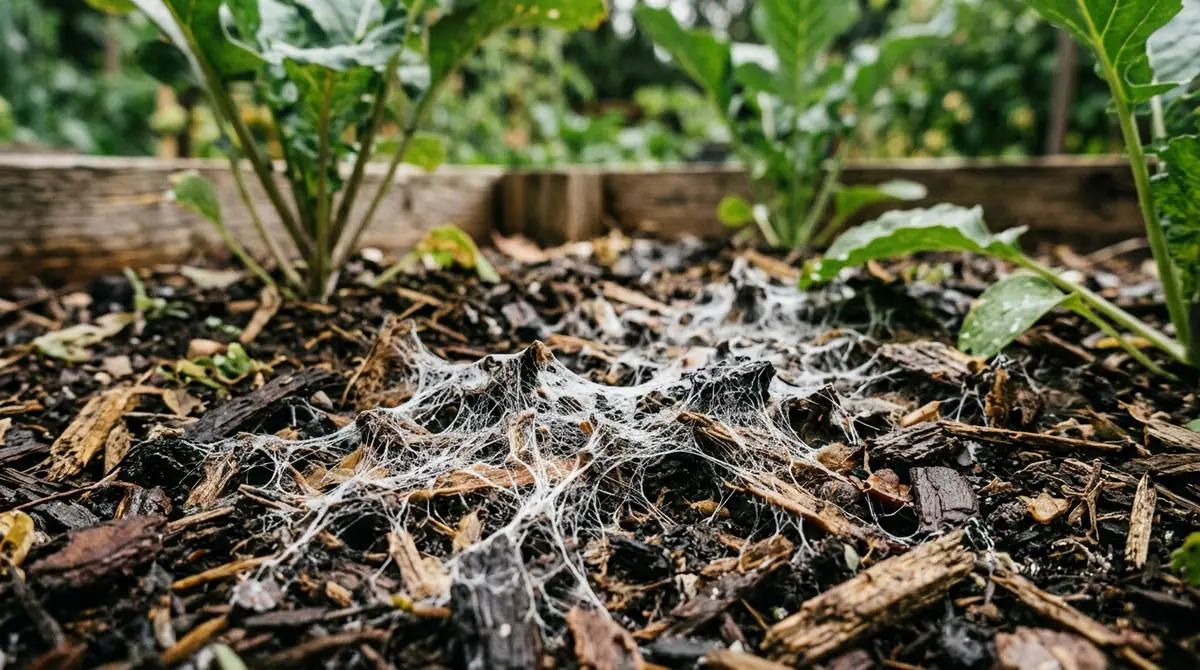
I stepped into a greenhouse one crisp October morning, greeted by a miniature, ghostly landscape draped across my prized monstera cuttings. Fine, silvery threads spanned from the edge of the propagation medium up to the lower leaf stems, glittering under the morning sun. My pulse quickened with a familiar blend of dread and curiosity. For an untrained eye, it looked like a classic spider infestation. But I knew instantly what I was looking at: a prolific outburst of saprophytic colonization, commonly masquerading as a web-spinning arachnid.

1. Botanical Overview & Natural Habitat
To understand the web-like matrix forming on your soil surface or plant tissues, we must first look at the organisms responsible. Fungi are not plants; they belong to their own biological kingdom, driven by networks of microscopic, thread-like structures called hyphae. When these hyphae aggregate visibly, they form a mycelial mat that often mimics the fine architecture of spider silk.
The primary culprits behind this visual phenomenon fall into two distinct ecological categories:
- Saprophytic Fungi (e.g., Leucocoprinus birnbaumii or general Mycorrhizal/Mold molds): These are nature's decomposers. They thrive on dead organic matter within potting soils rich in peat, compost, and un-decomposed bark fines. When indoor humidity spikes and airflow stagnates, these saprophytes push their fine, white, web-like mycelium across the top 0.5 inches (1.27 cm) of soil. They are generally harmless to established plants, acting instead as indicators of high moisture and rich organic breakdown.
- Pathogenic Fungi (Botrytis cinerea or Mycelial Rots): Unlike their harmless soil-dwelling cousins, these fungi actively parasitize living plant tissue. Botrytis forms dense, gray, web-like mycelial mats on wounded stems, overwatered leaves, or dropped petals. Under high humidity conditions (relative humidity exceeding 85%), these webs thicken into powdery spores that devastate soft-tissue ornamentals and vegetable crops alike.
In natural habitats, these fungi act as nutrient recyclers, breaking down forest floor debris. However, inside a controlled domestic environment—or when competing with 13 Wonderful Herbs That Like Full Sun for Beginners planted in poorly ventilated indoor containers—they transform from beneficial decomposers into aesthetic and botanical nuisances.
2. Essential Environmental & Care Requirements
Fungal spores are ubiquitous; they float invisibly through the air in every room and garden. They only manifest as visible "spider web" mold when environmental parameters cross specific thresholds. Managing these parameters is your primary line of defense.
| Parameter | Optimal Condition | Common Mistake | Why It Matters |
|---|---|---|---|
| Ambient Temperature | 65°F – 75°F (18°C – 24°C) | Allowing stagnant heat above 80°F (26°C) paired with dampness | Accelerates spore germination and hyphae elongation exponentially. |
| Relative Humidity (RH) | 40% – 50% indoors | Sustained indoor humidity above 70% | Triggers rapid mycelial surface growth and prevents moisture evaporation from soil. |
| Soil Moisture Retention | Evenly moist, drying in top 2 inches (5 cm) | Keeping the soil constantly soggy ("wet feet") | Depletes soil oxygen and creates a breeding ground for saprophytic mycelium. |
| Air Circulation | Gentle, continuous movement (0.5 m/s) | Placing plants in dead corners with zero cross-ventilation | Allows moisture micro-climates to form directly on soil and leaf surfaces. |
💡 Pro-Tip: Never rely on visual dryness alone to gauge watering needs. Use a stainless steel soil moisture meter or your finger to check down to a depth of 2 inches (5 cm). If the soil is still damp at that depth, holding off on watering for another 48 to 72 hours starves emerging mold colonies of the surface moisture they need to build their web-like structures.
For deeper scientific context on how soilborne pathogens interact with domestic plantings, consult the University of Minnesota Extension Plant Pathology Department. Their research provides invaluable insights into managing fungal dynamics in managed landscapes.
3. Step-by-Step Cultivation, Feeding & Propagation
When dealing with a plant bed or propagation tray overrun by web-like mold, you must intervene systematically without shocking the host plant. Follow this rigorous 5-step protocol to eradicate the fungal bloom and restore microbiological balance:
- Physical Extraction and Scraping: Don a pair of clean gardening gloves. Using a sterile spoon or trowel, gently scrape away the top 0.5 inches (1.27 cm) of the affected potting medium where the dense mycelial web is concentrated. Bag this material immediately and dispose of it in an outdoor trash receptacle to prevent airborne spore dispersal inside your home.
- Inoculate with Beneficial Microflora: Dust the freshly exposed soil surface with a thin layer of agricultural-grade cinnamon or horticultural cornmeal. Cinnamon contains natural cinnamaldehyde, a potent antifungal compound that halts hyphae growth without harming plant roots.
- Deploy Targeted Air Movement: Position a small oscillating desk fan nearby, running it continuously on its lowest speed setting. Ensure air sweeps directly across the surface of the soil and between the lower plant stems, lowering local humidity and disrupting the micro-climates fungi favor.
- Adjust Irrigation Cadence: Transition from frequent, shallow watering to deep, infrequent watering cycles. Allow the soil medium to dry out to a depth of 2 inches (5 cm) between waterings, forcing root systems to chase moisture downward while desiccating surface-dwelling fungal networks.
- Sanitize Surrounding Infrastructure: Wipe down pot rims, saucers, and nearby plant benches with a 10% household bleach solution (1 part sodium hypochlorite to 9 parts water) or a commercial quaternary ammonium disinfectant to kill residual spores resting on non-living surfaces.
Should your gardening efforts extend to outdoor zones plagued by opportunistic wildlife, you may also need to implement solutions outlined in guides like How to Keep Rabbits Out of the Garden 5 Humane Solutions That Work to maintain overall plant vigor.
⚠️ Important Caution: Never use chemical synthetic fungicides indiscriminately on indoor potted plants or edible herbs. Many systemic fungicides are not labeled for indoor residential use and can off-gas toxic residues into living spaces, while also creating resistant strains of fungi.
4. Common Problems, Pests & Troubleshooting
Mistaking harmless mold for dangerous pests—or vice versa—is the most common error gardeners make when dealing with web-like substances on plants. Let us break down the differential diagnosis:
- The Imposter: Spider Mites (Tetranychus urticae)
- Identification: Unlike static soil mold, spider mites are microscopic, mobile arachnids. Their webbing typically appears on the undersides of leaves and along terminal growth tips, accompanied by stippling (tiny yellow or white dots) on the foliage.
- Remedy: Increase humidity temporarily, wipe leaves down with insecticidal soap or neem oil diluted at 1 tablespoon per gallon (3.78 liters) of warm water, and introduce predatory mites (Phytoseiulus persimilis) if dealing with severe greenhouse infestations.
- The Culprit: Slime Mold (Fuligo septica or related species)
- Identification: Appears suddenly overnight as a foamy, web-like, or yellowish-white mass spreading across mulch or rich potting soil.
- Remedy: Completely harmless to living plants. It feeds on bacteria and decaying organic matter in the soil. Simply break up the mass with a garden fork and expose it to direct sunlight; it will dissipate on its own within 48 to 72 hours.
- The Threat: Damping-Off Fungi (Pythium, Rhizoctonia)
- Identification: Attacks seedlings at the soil line, causing them to pinch, water-soak, and collapse overnight, often blanketed by a fine, web-like mycelial fuzz.
- Remedy: Discard infected seedlings immediately. Sterilize propagation trays with a 10% bleach solution and switch to a sterile, well-draining seed-starting mix containing perlite and sphagnum peat moss.

5. Frequently Asked Questions
Is mold that looks like spider web harmful to my houseplants?
Most surface mold found on potting soil (saprophytic fungi) is entirely harmless to healthy, established houseplants. It feeds exclusively on decaying organic matter within the soil mix, such as un-decomposed bark or peat. However, if the webbing extends onto the living stems or leaves of the plant, it indicates a pathogenic infection like Botrytis, which requires immediate pruning of infected tissue and improved air circulation.
How do I tell the difference between spider mites and mold on my plants?
Examine the location and texture of the webbing. Spider mite webbing is silky, tightly spun, and located primarily on the undersides of leaves and leaf joints, frequently accompanied by tiny moving dots (the mites) and speckled leaf damage. Mold webbing looks more cottony, powdery, or fibrous, originates directly from the soil surface or rotting plant tissue, and does not feature moving insects.
Can I just scrape the web mold off the top of the soil?
Yes, scraping away the top 0.5 inches (1.27 cm) of moldy soil is an effective immediate triage step. However, it is only a temporary fix unless you address the underlying environmental root cause: excessive soil moisture, high relative humidity, and poor air movement. Always follow up soil scraping by dusting with cinnamon and increasing ventilation with a small fan.
Will letting the soil dry out completely kill the mold?
Allowing the soil to dry out significantly reduces active fungal growth and halts spore germination. Most saprophytic and pathogenic fungi require sustained high moisture levels to thrive. However, dormant fungal spores can survive dry periods in the soil, meaning the mold may return if the pot is overwatered again in the future. Long-term prevention requires balancing your watering schedule with proper potting medium aeration.
Related Guides
- Black Mold in Yard
- What Does a Verruca Look Like When It is Dying
- What Does a Peony Seed Look Like
- 13 Wonderful Herbs That Like Full Sun for Beginners
📋 Table of Contents ▼ Click to expand
Tags:
Keep reading
🌿 Related Plants You Might Like

PlantSavvyWorld
Editorial team
PlantSavvyWorld is an independent botanical education project. Articles are drafted with AI assistance, then edited and checked against university extension services, botanical garden collections and other published horticultural sources.