Written with AI assistance, edited and checked against horticultural sources.
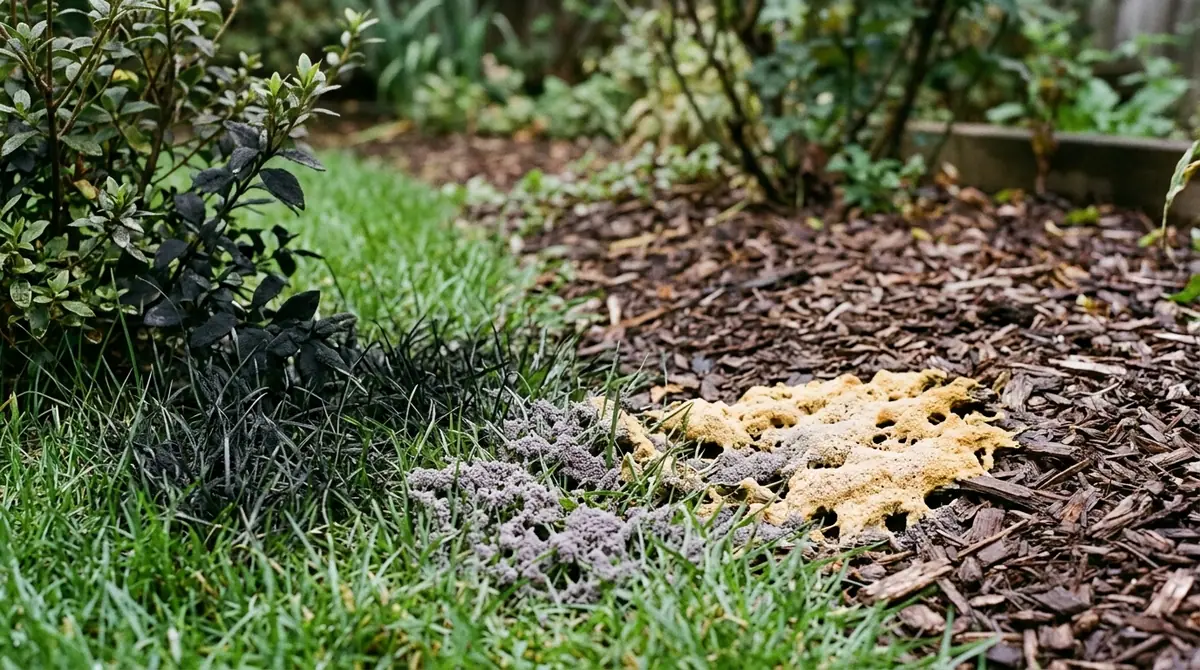
A dark, velvety sludge blanketing wood mulch near a southern boxwood hedge is sometimes mistaken for a deadly indoor mycotoxin colonizing a lawn. Breaking open the crusty, soot-like mass reveals a dense matrix of Stemonitis slime mold spores and saprophytic fungi happily breaking down old shredded hardwood instead of toxic household spores. Mistaking harmless organic decomposers for household hazards is a common panic. When black mold is found in yard spaces, understanding the difference between benign detritivores and aggressive plant pathogens saves your landscape and your peace of mind.
1. Botanical Overview & Natural Habitat
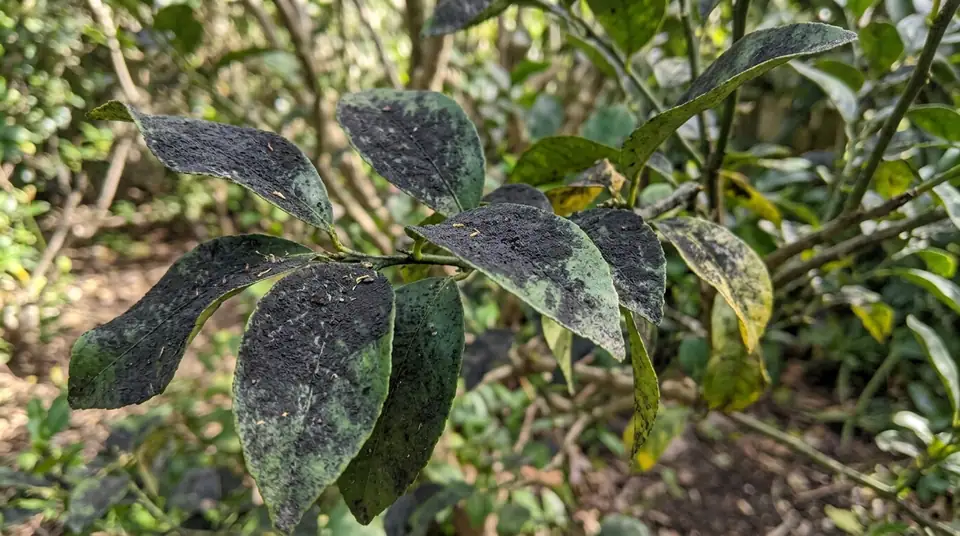
What homeowners casually call "yard mold" is rarely a single monolithic organism. Instead, it is typically a complex ecosystem of saprophytic fungi, slime molds (like Fuligo septica or dog vomit slime mold in its early dark phases), or soot molds (Capnodiaceae) thriving on honeydew secreted by sap-sucking insects.
Black mold covering the green leaves of a garden plant
Scientifically speaking, these organisms are not plants; they belong to the kingdoms Fungi and Protista. They possess no chlorophyll and cannot manufacture their own food via photosynthesis. Instead, they operate as nature’s ultimate recyclers. Their natural habitat is the forest floor, where humidity regularly hovers above 85% and organic debris accumulates in thick, undisturbed layers.
When these organisms appear in a cultivated residential landscape, they signal an imbalance in moisture and organic breakdown. They flourish when ambient temperatures consistently sit between 68°F and 85°F (20°C to 29°C) alongside stagnant air and water-logged soils. While they do not directly parasitize healthy turfgrass or established perennials, their heavy presence indicates that your soil microclimate is trapped in a perpetual state of anaerobic decay. Left unchecked, this environment invites root rots such as Pythium and Rhizoctonia, which will actively destroy your plantings.
Managing this requires looking at the broader picture of yard health. If your landscape is suffering from chronic moisture retention and overgrowth, you may need to consult our Overgrown Yard Cleanup Tips to restore air movement and light penetration across your property lines.
2. Essential Environmental & Care Requirements
Controlling black mold in yard environments is entirely a matter of manipulating environmental variables. Because these organisms require moisture, organic fuel, and low light to proliferate, modifying these three factors forces them into dormancy or eradicates them entirely.
Parameter
Optimal Condition
Common Mistake
Why It Matters
Soil Drainage
Percolation rate of 1.0 to 2.0 inches (2.5 to 5.0 cm) per hour
Allowing standing water after irrigation
Stagnant water creates anaerobic pockets where fungal spores germinate rapidly.
Mulch Depth
Maximum of 2.0 to 3.0 inches (5.0 to 7.5 cm)
Piling mulch 6.0 inches (15.0 cm) deep against plant stems
If your yard sits in a natural bowl that collects runoff, preventing mold outbreaks is nearly impossible without structural water management. I frequently advise gardeners to implement the strategies outlined in our guide on How to Build a Rain Garden to Prevent Yard Flooding to redirect water away from mulch beds and into engineered, absorbent bioswales.
When dealing with black mold in yard beds, our goal is eradication and disruption of the fungal lifecycle, rather than cultivation. Follow this strict five-step remediation protocol to clear the outbreak and prevent its return:
Scrape and Remove Surface Crust: Don heavy leather gardening gloves and a P95 respirator mask to protect against spore inhalation. Use a flat-edge shovel to skim off the top 1.0 inch (2.5 cm) of contaminated mulch or soil crust. Dispose of this material off-site in sealed plastic bags; do not add it to your active home compost pile, as resistant spores will survive and reinoculate later.
Aerate the Root Zone: Insert a garden fork into the underlying soil every 6.0 inches (15.0 cm), rocking it back and forth to fracture compacted layers down to a depth of 4.0 inches (10.0 cm). This breaks up anaerobic pockets and introduces vital oxygen that halts fungal proliferation.
Apply a Natural Bio-Fungicide Drench: Mix 3 tablespoons of raw horticultural cornmeal or a commercial Bacillus subtilis biological fungicide per gallon of water. Drench the affected area at a rate of 1 gallon per 100 square feet (9.3 square meters). The beneficial bacteria will outcompete the saprophytic fungi for carbon sources within 14 days.
Resurface with Coarse Materials: Rake back remaining mulch to expose the soil to the air for 72 hours. Replace the removed mulch layer with a coarse, stringy cypress or cedar bark no deeper than 2.0 inches (5.0 cm). Avoid fine-shredded hardwood or cocoa bean hulls, which retain moisture like a sponge and act as primary food sources for mold.
Adjust Irrigation Cadence: Program your automated irrigation system to water deeply only once every 5 to 7 days between 4:00 AM and 6:00 AM, rather than shallow, daily sprinklers that keep the topsoil surface perpetually wet.
💡 Pro-Tip: If you notice black mold recurring in the exact same shady corner of your landscape every spring, stop fighting the mulch entirely. Excavate the bed down 3.0 inches (7.5 cm) and replace the organic ground cover with drought-tolerant, low-growing perennials or ornamental gravel. Starving the fungi of decaying wood is the only permanent cure.
4. Common Problems, Pests & Troubleshooting
Identifying what you are actually looking at is half the battle when managing yard fungi. Misdiagnosis leads to wasted time and unnecessary chemical applications.
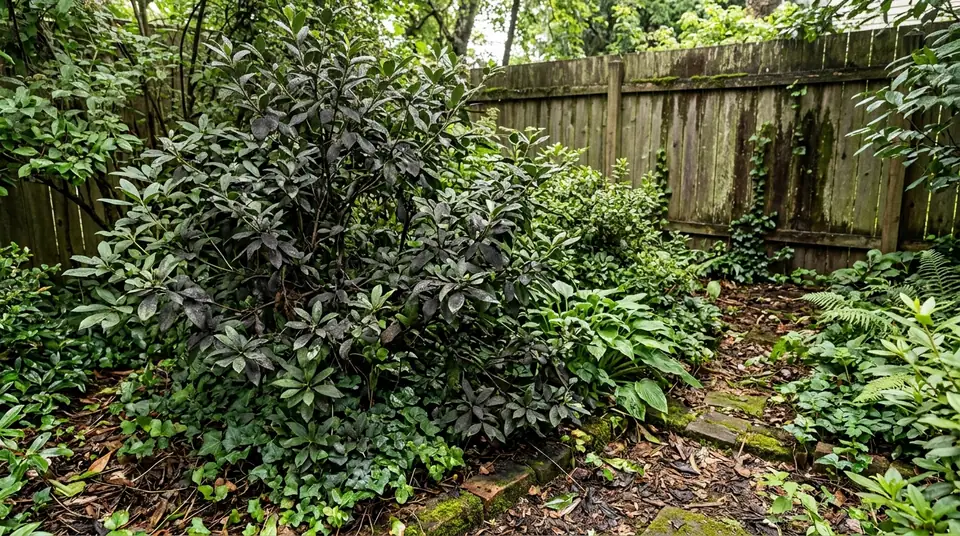
Sooty Mold on Tree Leaves: If your black mold coating is found clinging directly to the leaves of crape myrtles, citrus, or maples, you are dealing with a secondary fungal infection. The mold is feeding exclusively on the sticky honeydew excreted by aphids, scale insects, or whiteflies feeding higher up in the canopy. Troubleshooting: Ignore the mold temporarily and treat the underlying sap-sucking insect infestation with insecticidal soap or horticultural oil. Once the insects are eradicated, the honeydew stops, and the sooty mold will weather away naturally with rainfall.
Slime Mold Manifestations: If the black mass appears overnight, looks slimy or jelly-like, and rapidly changes into a powdery grey or purple dust, you have a harmless slime mold. These organisms actively crawl across mulch to feed on bacteria before fruiting. Troubleshooting: Do not apply harsh chemical fungicides; they are completely ineffective against slime molds. Simply break up the mass with a hard rake on a sunny morning to expose the organisms to drying UV rays.
Artillery Fungus (Sphaerobolus stellatus): Appearing as tiny, sticky black cups containing a central spore peridiole, this fungus blasts microscopic tar-like spots onto siding, fences, and car paint up to 20 feet (6 meters) away. Troubleshooting: This organism specifically targets wood-chip mulches containing fungal fruiting bodies. Hand-pick contaminated mulch immediately, or switch entirely to stone mulches near structures.
For comprehensive botanical health insights, reference the resources provided by the Royal Horticultural Society for plant pathology identification, or consult your local university extension service, such as the University of Florida IFAS Extension, for regional soil-borne pathogen tracking.
⚠️ Important Caution: Never use high-pressure power washers to blast black mold off exterior siding or hardscapes if the source is yard mulch flung by artillery fungus. The pressure will drive the sticky fungal spores deeper into porous concrete and wood grain, permanently staining your property and triggering secondary germination.
Dark mold coating the leaves of a backyard shrub near a wooden fence
5. Frequently Asked Questions
Is black mold in the yard dangerous to dogs and children?
Most outdoor molds and slime molds found in garden beds are non-toxic to humans and pets, but ingestion can cause mild gastrointestinal upset, vomiting, or allergic respiratory irritation due to spore inhalation. If your dog consumes large quantities of moldy mulch, monitor them for lethargy and consult a veterinarian immediately, as mycotoxins or physical blockages can occasionally pose serious health risks.
Why is black mold growing on my mulch?
Mulch provides an ideal carbon-rich food source, coupled with organic moisture and shelter from direct ultraviolet light. When mulch is applied too thickly (exceeding 3.0 inches or 7.5 cm) or kept in a perpetually shaded, damp location, saprophytic fungi colonize the material to break down the lignin and cellulose within the wood fibers.
Will vinegar kill black mold in the garden?
Household white vinegar (5% acetic acid) can temporarily kill surface fungal vegetative structures and alter local pH, but it is rarely a permanent solution for yard mold. Vinegar will not penetrate deep soil mycelium mats, and because it is water-based, it ultimately adds moisture back into the bed, which can encourage new fungal spores to germinate within a matter of days.
How do I stop mold from growing under my lawn turf?
Mold beneath turfgrass—often manifesting as fairy rings, snow mold, or melting-out disease—is caused by excessive thatch buildup, poor soil drainage, and over-fertilization with fast-release nitrogen. Dethatch your lawn mechanically every autumn, core aerate to relieve compaction, and apply a balanced, slow-release organic fertilizer to foster a robust microbial soil web that naturally suppresses pathogenic fungi.
PlantSavvyWorld is an independent botanical education project. Articles are drafted with AI assistance, then edited and checked against university extension services, botanical garden collections and other published horticultural sources.