

Overgrown Yard Cleanup Tips
Written with AI assistance, edited and checked against horticultural sources.
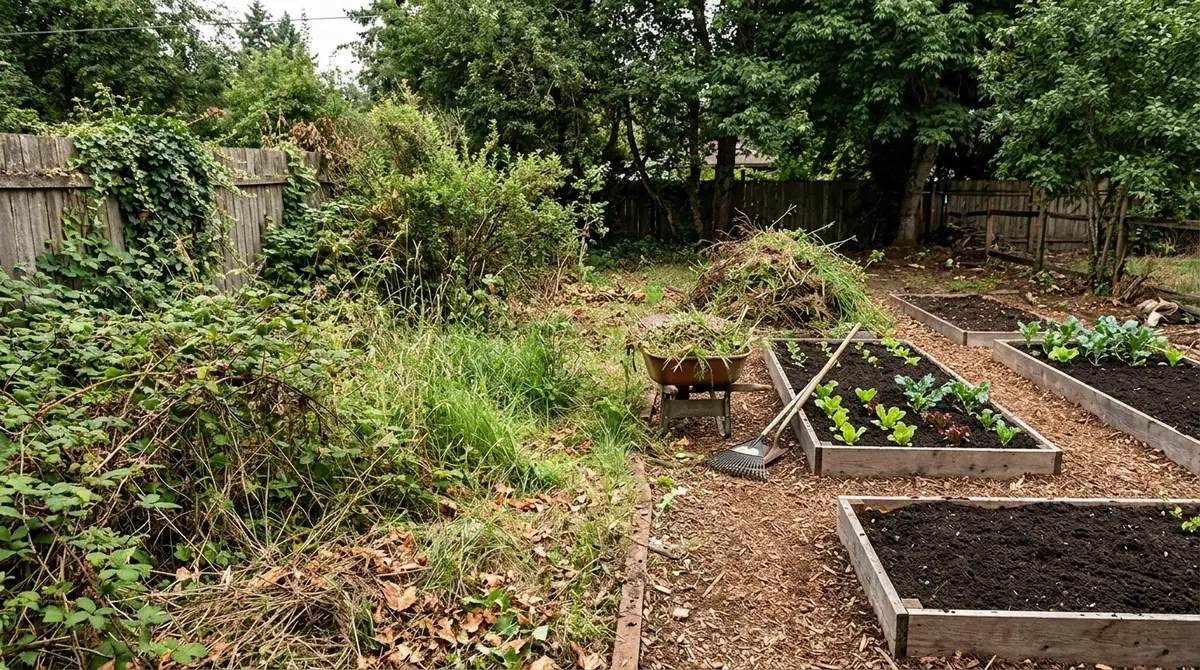
1. Botanical Overview & Natural Habitat
An overgrown yard can become a secondary-succession ecosystem where aggressive pioneer species, structural weeds, and woody invaders—such as porcelain berry (Ampelopsis brevipedunculata) and Japanese honeysuckle (Lonicera japonica) with bases 3 inches (7.6 cm) in diameter—swallow mature conifers like the 15-foot Canadian hemlock (Tsuga canadensis).

To restore order, you must differentiate between structural framework plants (such as mature trees and foundational shrubs) and the invasive biomass choking them. Pioneer weeds thrive in disturbed, nutrient-rich soils with a high compaction rate. By analyzing the dominant species in your tangle—whether it is nitrogen-loving stinging nettle (Urtica dioica) or deep-rooted bindweed (Convolvulus arvensis)—you gain a map of your soil's chemistry and moisture profile before you ever pick up a pair of loppers.
2. Essential Environmental & Care Requirements
Reclaiming an overgrown yard alters the microclimate of the entire landscape. For months or years, the dense canopy of weeds has shielded the soil surface from UV radiation, heavy rainfall, and wind. Suddenly clearing this mass exposes dormant weed seeds to light and leaves the soil vulnerable to erosion.
Managing environmental factors during cleanup requires strict adherence to soil biology, light calibration, and moisture regulation.
| Parameter | Optimal Condition | Common Mistake | Why It Matters |
|---|---|---|---|
| Soil Moisture | 40% to 60% volumetric water content before digging | Attempting root removal in bone-dry or waterlogged clay | Dry soil snaps taproots leaving nodes behind; wet soil compacts into concrete. |
| Light Exposure | Gradual increase (max 20% canopy opening per week) | Clear-cutting all shade-casting brush at once | Sudden, intense UV exposure scorches understory plants and triggers weed seed germination. |
| Tool Hygiene | Sterilized with 70% isopropyl alcohol between cuts | Using unwashed blades across diseased and healthy brush | Prevents systemic pathogens like Verticillium wilt from spreading across your yard. |
| Organic Mulch Depth | 3.0 inches (7.6 cm) applied immediately post-clearance | Piling mulch directly against woody stems ("volcano mulching") | Suppresses newly exposed weed seeds while allowing oxygen exchange at the root collar. |
💡 Pro-Tip: When clearing dense brush, never rely on eye-balling your soil moisture. Push a 6.0-inch (15.2 cm) metal probe or screwdriver into the earth; if it does not slide in smoothly with hand pressure, the soil is too dry for efficient weed extraction and you risk snapping root systems underground.
3. Step-by-Step Cultivation, Feeding & Propagation
Tackling an overgrown yard requires a phased, surgical approach. If you treat the space like a blank slate and bulldoze everything, you risk destroying buried desirable bulbs, compacting the soil with heavy machinery, and inviting an aggressive flush of secondary weeds.
Follow this 5-step restoration protocol to systematically reclaim your landscape while protecting soil health.
- Assess and Map the Infrastructure (Day 1): Walk the property line when temperatures are mild (ideally between 55°F and 70°F / 13°C and 21°C). Identify desirable specimen plants, trees, and perennial bulbs by checking for emerging spring growth or persistent woody stems. Mark these with high-visibility, biodegradable flagging tape. Inspect the perimeter for hardscape hazards like broken paving stones, rusted wire, or old foundations hidden beneath the vegetation.
- Deconstruct Vertical Biomass (Days 2–5): Target the woody vines, brambles, and tall structural weeds using bypass loppers and a folding pruning saw. Cut climbing vines at two points—first at 12 inches (30.5 cm) above the soil line, and second at 48 inches (121.9 cm). Leave the vertical middle section of the vine attached to trees to dry out over 14 days; this allows the dead tissues to shrink and loosen their grip on the bark without tearing the tree's cambium layer during removal.
- Eradicate Invasive Root Systems (Days 6–10): Once top-growth is cleared, target perennial weeds with persistent underground storage structures (rhizomes, tubers, and taproots). Use a sharp, forged-steel garden fork rather than a shovel to pry beneath the root zone. Lift upward while rocking the fork to break suction with the surrounding soil. For deep taproots like dandelion or dock, ensure you extract the root crown located at least 2.0 inches (5.1 cm) below the soil surface.
- Calibrate Soil Nutrition and Amend (Day 11): With the weed mat removed, take soil core samples from 4 distinct zones down to a depth of 6.0 inches (15.2 cm). Send these to a local agricultural testing facility to determine pH and macronutrient deficits. Incorporate organic matter, such as 1.0 inch (2.5 cm) of well-rotted leaf mold or compost, into the top 2.0 inches (5.1 cm) of soil using a broadfork, avoiding inversion tillage that disrupts beneficial fungal networks.
- Establish Protective Ground Cover (Day 12–14): Prevent weed seed germination by laying a heavy, permeable landscape fabric or a thick layer of corrugated cardboard across bare earth, topped with 3.0 inches (7.6 cm) of arborist wood chips. For guidance on selecting regionally appropriate plants to fill these newly cleared beds, consult the Royal Horticultural Society plant selector.
⚠️ Important Caution: Never burn yard waste or dried invasive vines on-site if your material includes poison ivy (Toxicodendron radicans) or poison sumac (Toxicodendron vernix). Urushiol oil vaporizes in smoke and can cause severe pulmonary and systemic allergic reactions if inhaled.
4. Common Problems, Pests & Troubleshooting
An overgrown yard acts as an ecological magnet for pests, plant pathogens, and structural hazards. When you suddenly alter the microclimate by removing dense vegetation, these issues often flare up.
- Problem: Resurgent Woody Suckers and Stubborn Re-sprouting.
- Diagnosis: Cutting woody invasive shrubs like privet (Ligustrum) or buckthorn (Rhamnus) at ground level without treating the cambium triggers an aggressive flush of epicormic shoots from the root crown.
- Solution: Within 15 minutes of making a fresh cut on a woody stump greater than 1.0 inch (2.5 cm) in diameter, paint the exposed outer ring (the phloem and cambium layer) with a concentrated systemic herbicide using a foam brush, or cover the stump tightly with an opaque, heavy-duty black plastic cap secured with a stainless steel clamp to starve it of light for 60 to 90 days.
- Problem: Sudden Soil Erosion and Nutrient Leaching.
- Diagnosis: Heavy spring rains wash away unprotected topsoil on sloped yards after the root matrices of invasive weeds are removed.
- Solution: Immediately broadcast an annual nurse crop of sterile cereal rye (Secale cereale) at a rate of 2 lbs per 1,000 square feet (1 kg per 93 square meters), or install biodegradable jute netting anchored with 6.0-inch (15.2 cm) sod staples across any slope exceeding a 15-degree incline.
- Problem: Fungal Outbreaks on Newly Exposed Foundation Plants.
- Diagnosis: Shrubs that spent years shaded and damp in a thicket are suddenly blasted with hot afternoon sun and circulating air, leading to leaf scorch and powdery mildew (Erysiphe spp.).
- Solution: Prune out dead or crossing branches to improve interior airflow, water deeply at the base (delivering 1.0 inch / 2.5 cm of water per week) rather than via overhead sprinklers, and apply a preventative copper-based fungicide if historical infection rates are high. For comprehensive guidelines on managing regional plant diseases, review resources provided by the University of Minnesota Extension Yard and Garden service.

5. Frequently Asked Questions
What is the fastest way to clear an overgrown yard without using chemical herbicides?
The fastest non-chemical method is the "sheet mulching" or lasagna gardening technique combined with manual extraction of large taproots. First, cut down all tall brush to ground level using a brush cutter or loppers. Next, lay down overlapping layers of heavy, unprinted corrugated cardboard across the entire area, overlapping edges by at least 6.0 inches (15.2 cm) to block all light. Thoroughly saturate the cardboard with water, then top it with 3.0 to 4.0 inches (7.6 to 10.2 cm) of shredded bark mulch. This smothers existing weeds and weed seeds over 60 to 90 days while feeding the soil microbes underneath.
How do I find buried objects or hidden hazards in an overgrown yard?
Before swinging a tool or running a heavy mower through high grass and brush, conduct a systematic grid search using a long-handled metal rake or a sturdy wooden probe held at a 45-degree angle. Walk backward in parallel lines spaced 3 feet (0.9 meters) apart, dragging the probe lightly through the surface debris to catch on hidden obstacles like retaining walls, tree stumps, old fencing, wire, or cistern covers. If you suspect buried utility lines, always contact your local utility notification center (dial 811 in the United States) at least 48 to 72 hours before doing any deep digging or grading.
What should I do with all the organic waste generated from an overgrown yard cleanup?
Sort your debris into three distinct streams. Soft, non-seeding green waste (such as annual weeds without mature seed heads, soft grass, and leafy herbaceous stems) can be added to a hot compost pile if layered with "brown" carbon materials. Woody branches up to 2.0 inches (5.1 cm) in diameter should be run through a gas-powered chipper to produce valuable mulch for your new garden beds. Diseased plant material, invasive vines carrying viable seeds (like porcelain berry or garlic mustard), and toxic plants must be bagged in thick polyethylene yard waste bags and hauled away to a municipal waste facility to prevent re-infestation.
How can I stop weeds from coming back after clearing an overgrown yard?
Weed suppression relies on eliminating light penetration and establishing desirable competition. As soon as you clear a section of soil, plant it densely with competitive ground covers, native perennials, or apply the 3.0-inch (7.6 cm) organic wood mulch barrier mentioned previously. Check the area every 14 days during the active growing season (spring through early fall) to pull any pioneer weed seedlings while their root systems are shallow and easily extracted from the loose, freshly tended soil.
Related Guides
- Black Mold in Yard
- How to Build a Rain Garden to Prevent Yard Flooding
- 10 Best Low Maintenance Front Yard Landscaping Ideas for Small Spaces
📋 Table of Contents ▼ Click to expand
Tags:
Keep reading
🌿 Related Plants You Might Like






PlantSavvyWorld
Editorial team
PlantSavvyWorld is an independent botanical education project. Articles are drafted with AI assistance, then edited and checked against university extension services, botanical garden collections and other published horticultural sources.