

Texas Landscaping Ideas
Written with AI assistance, edited and checked against horticultural sources.
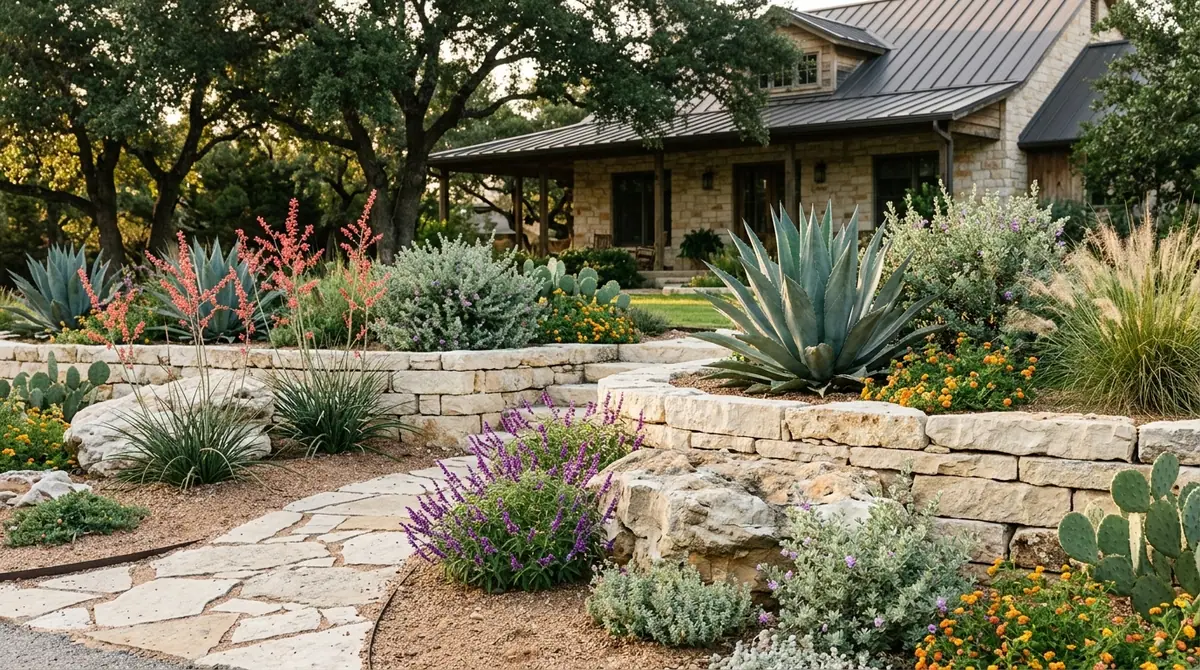
The air in central Texas during August carries a weight that can wither both spirit and foliage, a reality I learned the hard way when I lost three imported Japanese maples during my first Texas summer. The ambient temperature hovered at 102°F (39°C) for forty consecutive days, baking clay soils into concrete and testing the limits of every irrigation line on the property. That trial by fire transformed my approach to landscape design. Designing a resilient, breathtaking landscape across the Lone Star State—whether you are dealing with the alkaline caliche of the Hill Country, the heavy vertisols of the Blackland Prairie, or the sandy, acidic loams of East Texas—requires abandoning thirsty, coastal templates and embracing the fierce, sculptural beauty of plants native to or deeply adapted to this climate.
1. Botanical Overview & Natural Habitat

When we look at successful native plants like Texas Sage (Leucophyllum frutescens), Purple Coneflower (Echinacea purpurea), and Gulf Muhly Grass (Muhlenbergia capillaris), their structural design reflects their survival strategies. Texas Sage features silvery-grey foliage, a physical adaptation of dense trichomes (tiny hairs) that reflect harsh sunlight and drastically reduce transpirational water loss. Gulf Muhly utilizes fine, needle-like blades to minimize surface area exposure to desiccating winds while storing energy in deep, fibrous root masses that can stretch down 36 to 48 inches (91 to 121 cm) into the soil profile.
Designing a sustainable landscape means shifting away from manicured turfgrass monocultures and toward layered, drought-tolerant plant communities. By grouping plants with similar hydro-zones—a practice known as xeriscaping—you create micro-ecosystems that support local pollinators, reduce municipal water dependency, and dramatically lower maintenance overhead.
To help you match your regional ecosystem with the right structural plant families, consult the comprehensive resources provided by the Lady Bird Johnson Wildflower Center.
2. Essential Environmental & Care Requirements
Establishing a thriving landscape in Texas demands a precise understanding of your local soil chemistry, seasonal temperature swings, and water dynamics. Most Texas soils demand amendments that improve aeration rather than pure fertility; native plants are adapted to poor, rocky, or heavy clay matrices.
| Parameter | Optimal Condition | Common Mistake | Why It Matters |
|---|---|---|---|
| Soil pH | 6.5 to 8.2 (Regional variance) | Forcing acid-loving plants into alkaline caliche soils | Extreme pH lockup prevents roots from absorbing iron and micronutrients, causing severe chlorosis. |
| Irrigation Depth | 6 to 8 inches (15 to 20 cm) per cycle | Shallow, daily watering via spray heads | Deep, infrequent soaking encourages roots to drive downward, buffering plants against sudden 100°F+ (38°C+) heatwaves. |
| Mulch Layer | 3 to 4 inches (7 to 10 cm) of shredded hardwood | Piling mulch directly against plant stems ("volcano mulching") | Thick mulch moderates soil temperatures by up to 15°F (-9°C), but trunk contact invites fungal rot and borers. |
| Sun Exposure | 6 to 8+ hours of direct sun for structural accents | Planting shade species in unshielded West-facing exposures | Intense afternoon sun scorches tender foliage and evaporates soil moisture within hours. |
Water management is the single most critical maintenance variable. During establishment years, newly installed trees and shrubs require approximately 1 inch (2.5 cm) of water per week, applied deeply. Once established, native selections like Flame Acanthus (Anisacanthus quadrifidus) or Turk's Cap (Malvaviscus arboreus) can survive on natural rainfall supplemented by deep irrigation once every 14 to 21 days during peak summer droughts.
💡 Pro-Tip: Install a drip irrigation system beneath your 3-inch (7 cm) layer of mulch rather than relying on above-ground sprinkler heads. Above-ground systems lose up to 40% of their water output to immediate evaporation in the Texas wind and sun, while sub-surface drip delivers moisture directly to the root zone where it is utilized.
3. Step-by-Step Cultivation, Feeding & Propagation
Installing a new landscape bed in Texas requires strategic timing. The ideal planting window spans from mid-October through late February. Planting during these cooler months allows root systems to establish deep architectural networks while top growth goes dormant, preventing transplant shock when the scorching summer arrives.
- Site Assessment and Mapping: Mark out your bed lines, noting sun patterns during the harshest afternoon hours (1:00 PM to 5:00 PM). Perform a simple soil ribbon test to determine whether you are working with sandy loam, silt, or heavy clay.
- Bed Preparation: Clear all invasive weeds and Bermuda grass. Broadfork or spade the soil to loosen compaction, but avoid turning the soil over completely, which disrupts the natural soil microbiology. Incorporate a 2-inch (5 cm) layer of finished compost into the top 6 inches (15 cm) of soil to improve biological activity.
- Plant Sizing and Placement: Dig planting holes twice as wide as the nursery container but no deeper than the root ball's top. The root flare—where the trunk widens into the root system—must sit 1 inch (2.5 cm) above the surrounding soil grade to prevent crown rot.
- Initial Watering-in: Fill the planting basin halfway with water, allow it to drain completely, backfill the remaining space, and tamp gently to eliminate large air pockets. Apply a second deep soak immediately.
- Mulching and Finishing: Apply a 3-inch (7 cm) layer of shredded native hardwood mulch across the entire bed, maintaining a 3-inch (7 cm) clear ring around all woody plant stems to ensure proper air circulation.
- Establishment Irrigation: Water deeply every 5 to 7 days for the first 30 days, tapering frequency down as root systems anchor into the native soil profile.
For woody perennials and ornamental grasses, propagation is best achieved through division in early spring or semi-hardwood cuttings taken in late June. To divide grasses like Lindheimer's Muhly, dig up the mature clump after 3 to 4 years of growth, use a sharp spade or serrated knife to slice the root ball into sections containing active green shoots and healthy roots, and immediately replant into pre-wetted soil.
For regional planting lists, historical frost dates, and localized fertilizer guidelines, refer to the Texas A&M AgriLife Extension Service.
4. Common Problems, Pests & Troubleshooting
Texas landscapes experience unique environmental pressures that can swiftly degrade an otherwise healthy installation. Recognizing the early warning signs of stress prevents catastrophic plant loss.
- Iron Chlorosis: Manifests as bright yellow leaves with stark green veins, particularly in alkaline soils where pH exceeds 7.5. This occurs because iron becomes chemically bound and unavailable to the plant. Remedy: Apply chelated iron (Fe-EDDHA) to the soil or foliar spray, and incorporate elemental sulfur or rich compost to gradually lower localized soil pH.
- Spider Mites: Thrive during hot, dry summer periods when ambient temperatures exceed 90°F (32°C). They puncture plant cells, leaving a fine stippling pattern and delicate webbing on the undersides of leaves. Remedy: Blast foliage forcefully with a strong stream of water from a hose every morning for 5 consecutive days to disrupt populations, or apply horticultural oil where infestations are severe.
- Root Rot (Phytophthora and Pythium): Triggered by poorly draining clay soils combined with over-irrigation or heavy autumn rainfall. Stems turn mushy at the soil line, and foliage wilts despite adequate soil moisture. Remedy: Improve site drainage by creating raised beds, reduce irrigation frequency immediately, and apply bio-fungicides containing Bacillus subtilis to protect uninfected roots.
⚠️ Important Caution: Never apply high-nitrogen synthetic fertilizers to stressed plants during a Texas drought or heatwave. High-nitrogen salts draw precious moisture out of plant roots through osmotic pressure, rapidly accelerating leaf burn, wilting, and plant death.

5. Frequently Asked Questions
What are the best drought-tolerant shrubs for full sun in Texas?
Texas Sage (Leucophyllum frutescens), Flame Acanthus (Anisacanthus quadrifidus), and Dwarf Yaupon Holly (Ilex vomitoria 'Nana') are exceptional choices. They tolerate intense, reflected afternoon heat, require minimal supplemental water once established, and resist browsing by local wildlife.
How do I stop my clay soil from cracking in the summer?
Texas vertisol clays naturally shrink and crack as they dry out, tearing fine feeder roots. Prevent this by maintaining a consistent 3-to-4-inch (7 to 10 cm) layer of organic hardwood mulch across all beds and utilizing a drip irrigation system that delivers slow, deep hydration rather than frequent, shallow surface wetting.
When is the best time to prune oak trees in Texas to prevent oak wilt?
Prune oak trees strictly during the dormant season—between July and January—to minimize the risk of infection by the fungal pathogen Ceratocystis fagacearum, which is spread by sap-feeding beetles active in the spring. Always paint every single pruning cut immediately with a latex or wound-sealing paint, regardless of the time of year.
What low-maintenance groundcovers replace turfgrass in shaded Texas yards?
Ponyfoot (Dichondra carolinensis), Horseherb (Calyptocarpus vialis), and Creeping Germander (Teucrium chamaedrys) are phenomenal native or adapted groundcovers. They thrive under the heavy canopies of mature Live Oaks and Pecan trees without demanding the frequent mowing, chemical treatments, and high water volumes required by traditional turfgrasses.
Related Guides
- Creative Landscaping Ideas Around Tree Roots
- 10 Best Low Maintenance Front Yard Landscaping Ideas for Small Spaces
- Planting Landscaping Under Pine Trees
- Best Native Plants for Sustainable Backyard Landscaping
- The Complete Guide to Coleus Plants: 50+ Varieties, Care, Propagation & Landscaping
- Diy Insect Hotel Ideas for Garden Biodiversity
- Christmas Fairy Garden Ideas
📋 Table of Contents ▼ Click to expand
Tags:
🌿 Related Plants You Might Like



PlantSavvyWorld
Editorial team
PlantSavvyWorld is an independent botanical education project. Articles are drafted with AI assistance, then edited and checked against university extension services, botanical garden collections and other published horticultural sources.