

When to Plant Watermelon in Georgia
Written with AI assistance, edited and checked against horticultural sources.
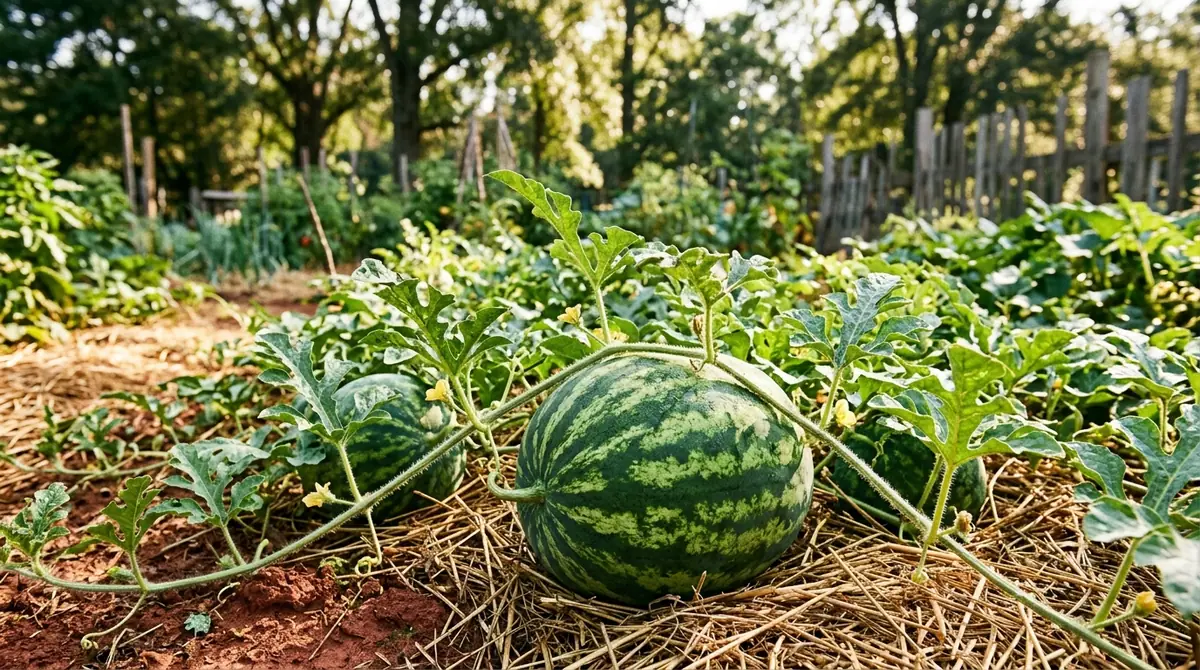
When a soil thermometer reads a deceptive 60°F (15.5°C) at a four-inch depth on a crisp morning in late March, planting tender tropical seedlings will cause them to sit motionless in cold, damp earth while soil-borne pathogens chew their root tips to a crisp. Watermelons do not care about calendars or eagerness for summer; they run strictly on thermal time. If you want a harvest of dripping, sweet crimson flesh from Savannah up to the Blue Ridge mountains, you have to respect the exact thermal thresholds of the Georgia soil.
1. Botanical Overview & Natural Habitat

The root architecture of Citrullus lanatus is sprawling and aggressive. A single plant can send taproots down to a depth of 3 to 4 feet (90 to 120 cm) while spreading its lateral feeder roots up to 6 feet (1.8 meters) in all directions. This extensive root system requires a soil volume and structural profile comparable to what we evaluate when determining How Deep Do Pepper Plant Roots Go? Pot Size & Substrate Depth Guide. The vine leaves are deeply lobed, hairy, and interspersed with both male and female flowers that rely heavily on native bees and honeybees for pollination. Because Georgia's climate shifts dramatically from the coastal plains of Zone 8b to the cooler mountainous pockets of Zone 7a, understanding your local frost-free dates and soil warming rates is the single most important variable in your growing success.
2. Essential Environmental & Care Requirements
To produce high-sugar, structurally sound fruit, watermelons require precise environmental inputs. When managing vegetable layouts in the South, I often cross-reference our regional schedules with resources like the University of Georgia Extension Vegetable Gardening Guide to align microclimates with seed provenance.
| Parameter | Optimal Condition | Common Mistake | Why It Matters |
|---|---|---|---|
| Soil Temperature | 70°F–85°F (21°C–29°C) | Planting when air is warm but soil is below 65°F (18°C) | Cold soil halts root growth and invites Pythium and Fusarium fungal rots. |
| Soil pH | 6.0 to 6.8 | Planting in highly acidic or unamended heavy Georgia clay | Extreme pH locks out micronutrients like calcium, leading to blossom end rot. |
| Sunlight | 8 to 10+ hours of direct, unobstructed sun | Shading out vines with dense companion plantings or structures | Reduced solar radiation drops sugar accumulation (Brix levels) in the fruit. |
| Watering Volume | 1 to 2 inches (2.5 to 5 cm) per week, tapering off near harvest | Inconsistent watering followed by heavy irrigation | Rapid soil moisture shifts cause expanding internal flesh to split the rind. |
Soil texture is particularly critical across Georgia. While our native Piedmont clay holds nutrients well, it compacts easily and drains poorly during heavy spring downpours. Amending your beds with aged compost and coarse organic matter creates the loose, well-aerated matrix that watermelon roots demand. If you are transitioning from cool-season root crops—such as those managed using a When to Plant Onions in Southern California (Zone 9 & 10 Planting Calendar) approach—you must radically reset your thermal expectations, as watermelons operate in a completely different heat tier.
3. Step-by-Step Cultivation, Feeding & Propagation
Getting watermelons from seed to harvest in Georgia requires a strict, sequential protocol. Because our spring soil warms slowly, timing your planting windows according to your USDA hardiness zone is non-negotiable. In South Georgia (Zone 8b/9a), direct seeding can typically begin in late March to early April. In Central and North Georgia (Zones 8a and 7b/7a), you should push your outdoor planting to mid-April or early May, ensuring all danger of frost has passed and soil temperatures have stabilized.
💡 Pro-Tip: Never direct-sow watermelon seeds into bare, unmulched Georgia clay. Lay down black plastic mulch or infrared-transmitting (IRT) plastic two weeks prior to planting. This raises soil temperatures by 5°F to 10°F (3°C to 6°C) in the root zone, accelerating germination and keeping weeds from choking out the slow-growing seedling stage.
Follow this step-by-step framework to establish your patch:
- Site Selection and Soil Preparation: Choose a flat or gently sloping plot with unobstructed southern exposure. Till the top 8 to 12 inches (20 to 30 cm) of soil, incorporating a 2-inch (5 cm) layer of well-rotted compost and a balanced organic fertilizer (such as a 10-10-10 blend) at a rate of 2 pounds per 100 square feet.
- Bed Shaping and Mulching: Form low raised beds spaced 6 to 8 feet (1.8 to 2.4 meters) apart to enhance surface drainage. Apply your plastic mulch or a thick layer of clean wheat straw over the beds to suppress weeds and retain moisture.
- Seed Sowing or Transplanting: If direct sowing, plant 5 to 6 seeds per hill, pushing them 1 inch (2.5 cm) deep. If using container-grown starts—keeping in mind the delicate root sensitivity detailed in guides like When to Transplant Cucumber Seedlings: Stop Root Shock & Boost Growth—set your root balls flush with the soil line, ensuring you do not disturb or tear the taproot.
- Spacing and Thinning: Once direct-sown seedlings reach 3 inches (7.5 cm) tall with two true leaves, thin each hill down to the two strongest, most vigorous vines using clean snips. Do not pull the extras, as disturbing the soil can damage the remaining roots.
- Initial Irrigation: Water the newly planted seeds or transplants deeply with a gentle, soaking spray to settle the soil around the roots. Maintain consistent moisture without waterlogging until runners begin to set.
4. Common Problems, Pests & Troubleshooting
Even with perfect timing, growing watermelons in Georgia's humid, subtropical climate presents distinct challenges. Fungal pathogens thrive in our sticky summer air.
- Fusarium Wilt (Fusarium oxysporum f. Sp. Niveum): This soil-borne fungus enters through the roots, blocking water transport vessels and causing sudden, irreversible wilting of individual runners or the entire plant. Prevention: Rotate your cucurbit crops on a 4-year cycle and purchase certified disease-resistant cultivars such as 'Crimson Sweet' or 'Charleston Gray'.
- Gummy Stem Blight (Stagonosporopsis cucurbitacearum): Manifests as brown-to-black lesions on stems, accompanied by an amber-colored gummy ooze, eventually defoliating the vine. Prevention: Avoid overhead irrigation by utilizing drip tape, and apply preventive copper-based fungicides during prolonged rainy spells.
- Cucumber Beetles and Aphids: Striped and spotted cucumber beetles not only chew foliage but also vector bacterial wilt. Aphids cluster on the undersides of leaves, sucking sap and leaving sticky honeydew. Prevention: Cover young plants with floating row covers until female flowers appear, and introduce beneficial insects like ladybugs and lacewings to your landscape—practices I also recommend when maintaining vibrant ornamental beds like those outlined in The Complete Guide to Coleus Plants: 50+ Varieties, Care, Propagation & Landscaping.
⚠️ Important Caution: Do not use broad-spectrum synthetic insecticides during peak daytime bloom hours. Georgia's native pollinators are essential for fruit set; killing them off results in deformed, unpollinated fruits that abort before reaching golf-ball size. Spray only at dusk if chemical intervention becomes unavoidable.

5. Frequently Asked Questions
What month should I plant watermelon in Georgia?
In South Georgia (Zone 8b-9a), plant in late March to early April. In Central Georgia (Zone 8a), aim for mid-April. In North Georgia (Zone 7a-7b), wait until late April or early May when soil temperatures consistently register above 70°F (21°C) at a 4-inch depth.
Can I plant watermelons in Georgia clay?
Yes, but you must amend the clay with organic matter like compost to improve drainage and aeration. Unamended heavy clay holds too much water, suffocating the deep taproots and inviting root rot diseases.
How do I know when a Georgia watermelon is ripe?
Look for three key visual indicators: the ground spot (where the melon rests on the soil) turns from white to a deep, creamy yellow; the tendril closest to the fruit's attachment point turns completely brown and dry; and the melon produces a dull, hollow thud rather than a sharp ring when thumped.
How many watermelons will I get per vine?
Standard-sized watermelon varieties typically yield 2 to 4 large fruit per healthy vine. Miniature or personal-sized varieties, such as 'Sugar Baby', can produce up to 6 fruit per vine under optimal fertility and sunlight conditions.
Related Guides
- When to Plant Squash in Georgia
- When to Plant Watermelon in Kansas
- When to Plant Watermelon in Az
- When to Plant Watermelon in Arizona
📋 Table of Contents ▼ Click to expand
Tags:
Keep reading
🌿 Related Plants You Might Like






PlantSavvyWorld
Editorial team
PlantSavvyWorld is an independent botanical education project. Articles are drafted with AI assistance, then edited and checked against university extension services, botanical garden collections and other published horticultural sources.