

When to Plant Watermelon in Arizona
Written with AI assistance, edited and checked against horticultural sources.
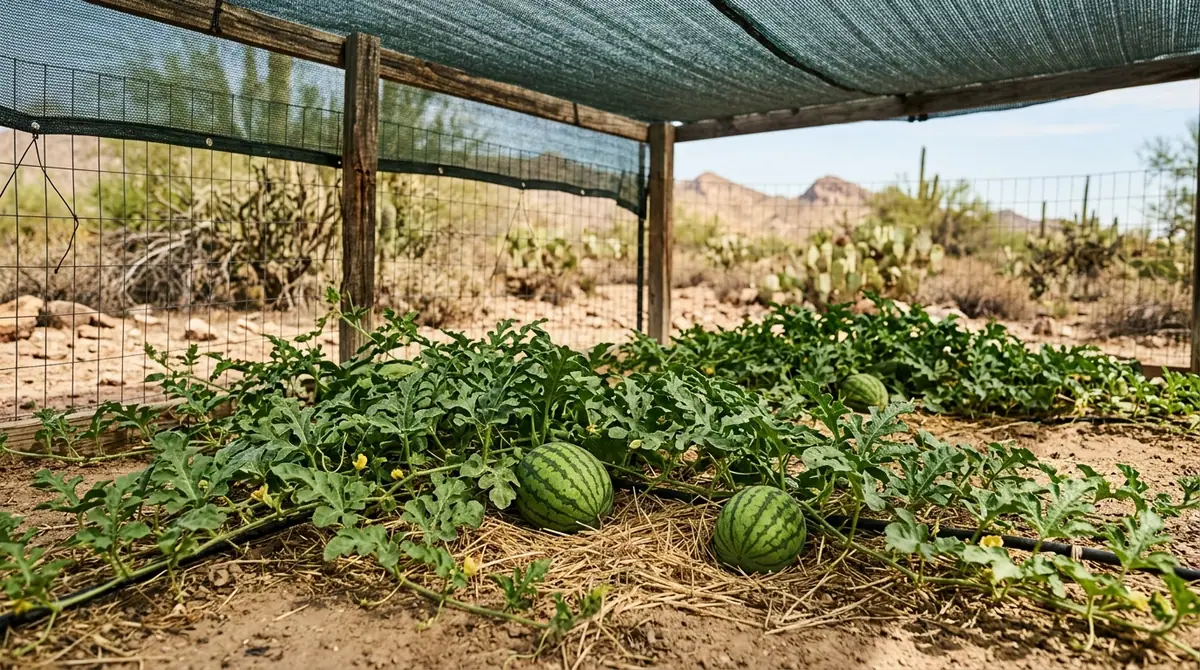
Sweat was already dripping off the brim of my straw hat at 8:00 AM when I walked out to my Phoenix landscape design gardener's raised beds to check on their struggling melon vines. They had planted seeds in early March, listening to a generic national gardening calendar, completely ignoring the reality of our desert spring soil temperatures. The seedlings had emerged, stalled out in the lingering nighttime chill of 45°F (7.2°C), and eventually succumbed to fungal damping-off before June even rolled around. Watermelon (Citrullinated lanatus) is an absolute powerhouse of a crop in the American Southwest, but getting the timing right in Arizona's unique microclimates is the single deciding factor between a sweet, crisp harvest and a rotting, sun-scorched failure.
1. Botanical Overview & Natural Habitat

Understanding their native habitat is the master key to growing them successfully in Arizona. In the wild, these plants adapted to scorching daytime temperatures, intense solar radiation, and erratic rainfall followed by deep, plunging taproots seeking subterranean moisture. When we cultivate them in Arizona—whether you are gardening in the searing lower deserts of Phoenix and Yuma (USDA Zones 9b to 10b) or the cooler, high-elevation mountain basins of Flagstaff and Show Low (USDA Zones 6a to 7b)—we must replicate these specific thermal parameters.
Watermelon vines produce large, deeply lobed, hairy leaves that shade the soil and reduce evaporation, alongside separate male and female yellow flowers that rely heavily on native pollinators like honeybees and squash bees. The root system consists of a dominant taproot that can plunge down 3 to 4 feet (90 to 120 cm) into the substrate, flanked by an extensive lateral network of fibrous feeder roots spreading 6 feet (1.8 meters) or more in all directions. If you want to understand how deep-rooting vegetable dynamics function across different plant families, you can compare this layout to How Deep Do Pepper Plant Roots Go? Pot Size & Substrate Depth Guide, which outlines subterranean growth constraints in arid-adapted crops.
2. Essential Environmental & Care Requirements
Arizona’s climate presents a dual personality: long, punishing summers in the valleys and crisp, short growing seasons in the mountains. To thrive, watermelons require absolute precision regarding soil temperature, sun exposure, and water mechanics.
| Parameter | Optimal Condition | Common Mistake | Why It Matters |
|---|---|---|---|
| Soil Temperature | 70°F to 95°F (21.1°C to 35°C) | Planting when air feels warm but soil is cold (below 65°F / 18.3°C) | Cold soil halts root metabolism, causing seed rot and seedling stall. |
| Sun Exposure | Full sun, 8 to 10+ hours daily | Partial shade or afternoon sun blockage in high elevations | Solar energy drives the sugar accumulation in developing fruits. |
| Soil pH & Texture | 6.0 to 6.8, sandy loam with high organic matter | Heavy, unamended Arizona clay that bakes like concrete | Compacted clay suffocates the deep taproot and prevents lateral spread. |
| Irrigation Volume | 1 to 2 inches (2.5 to 5 cm) of water weekly | Frequent, shallow sprinkling | Deep watering trains the taproot downward; shallow water creates weak surface roots. |
Soil temperature is far more critical than air temperature. Seeds will simply refuse to germinate if the soil is sitting below 70°F (21.1°C), and root growth stalls entirely below 60°F (15.6°C). In the low deserts of Arizona (Phoenix, Tucson), the ideal planting window opens from early April through mid-June, allowing vines to mature before the monsoon humidity spikes or extreme July heat waves disrupt fruit set. For the high country (Flagstaff, Prescott), wait until late May to early June once all danger of frost has definitively passed.
💡 Pro-Tip: If you are eager to jumpstart your low-desert spring garden before soil temperatures naturally hit 70°F (21.1°C), lay black plastic mulch over your planting mounds two weeks prior to sowing seeds. This solarizes and warms the top 6 inches (15 cm) of soil by up to 10°F (-12°C), cutting down germination time from 10 days to a rapid 4 days.
Watering is another area where Arizona growers often stumble. While watermelons are drought-tolerant once mature, they require consistent moisture during the vine-stretching and fruit-setting phases. Uneven watering—such as letting the soil completely dry out and then flooding it—causes the fruit to expand too rapidly, resulting in unsightly splitting or hollow heart. As fruits approach maturity during the final 10 to 14 days, scale back irrigation significantly to concentrate the sugars and maximize sweetness. For further reading on managing precise moisture levels and transplanting delicate cucurbit seedlings without shock, refer to When to Transplant Cucumber Seedlings: Stop Root Shock & Boost Growth.
3. Step-by-Step Cultivation, Feeding & Propagation
Growing show-stopping watermelons in the desert requires a meticulous approach to bed preparation and planting geometry. Because Arizona soils are frequently alkaline and depleted of organic carbon, amending your earth properly sets the foundation for success.
- Site Selection & Soil Prep: Choose a location with full, unobstructed southern exposure. Clear away all weeds and debris. Incorporate a 3-inch (7.5 cm) layer of well-rotted compost and aged steer manure into the top 12 inches (30 cm) of soil to improve drainage and buffer pH.
- Forming Hills or Troughs: In heavy soils or areas prone to sudden summer downpours, construct planting hills roughly 3 feet (90 cm) wide and 6 to 8 inches (15 to 20 cm) high. In extremely dry, sandy desert sites, create shallow basins or irrigation rings that trap water directly around the root zone.
- Sow Seeds to Depth: Plant seeds 1 inch (2.5 cm) deep. Sow 5 to 6 seeds per hill to account for potential non-germination or insect pressure. If you are using nursery-grown transplants, handle the root balls with extreme care to avoid disturbing the sensitive taproot.
- Spacing Parameters: Space your hills or individual transplant sites 4 to 6 feet (1.2 to 1.8 meters) apart in rows that are 6 to 8 feet (1.8 to 2.4 meters) apart. Modern vining varieties need this massive footprint to support their expansive solar arrays.
- Thinning the Herd: Once your seedlings reach 3 inches (7.5 cm) tall and display their first true leaves, use clean snips to thin each hill down to the 2 strongest, most vigorous seedlings. Never pull them out by hand, as this disturbs the delicate root systems of the survivors.
- Nutrient Management: Side-dress the plants with a balanced, slow-release organic fertilizer high in phosphorus and potassium when the vines begin to run. Avoid heavy nitrogen applications once flowering starts, or you will end up with a lush, green jungle of vines and zero fruit.
- Fruit Protection: As melons reach the size of a softball, slip a piece of cardboard, a wooden shingle, or a clean tile underneath each fruit. This elevates the melon off the hot, damp Arizona soil, preventing ground rot and discouraging soil-dwelling pests.
⚠️ Important Caution: Never walk on or step over watermelon vines while they are wet with morning dew or irrigation water. Watermelon foliage is exceptionally susceptible to fungal spores like powdery mildew and gummy stem blight; handling wet vines physically transfers pathogens from leaf to leaf, decimating your harvest overnight.
For comprehensive, localized guidelines on desert vegetable gardening practices backed by agricultural science, consult the University of Arizona Cooperative Extension.
4. Common Problems, Pests & Troubleshooting
Even with perfect timing, Arizona's harsh environment invites a specific suite of challenges that can derail your watermelon crop if left unchecked.
- Blossom End Rot: Appearing as a sunken, leathery black patch on the blossom end of the fruit, this physiological disorder is caused by erratic calcium uptake driven by irregular watering patterns. Maintain steady, even soil moisture rather than letting beds swing from bone-dry to soaked.
- Sunscald: The intense Arizona sun can literally cook the skin of developing watermelons, leaving bleached, blistered white patches that invite secondary bacterial rots. If your vines have sparse foliage, gently drape a breathable shade cloth (rated at 30% to 40% density) over the fruit during peak July heat waves.
- Aphids and Whiteflies: These piercing-sucking insects colonize the undersides of leaves, sucking out sap and excreting sticky honeydew that fosters black sooty mold. Blast them off with a strong jet of water from your garden hose in the early morning, or introduce populations of beneficial ladybugs and green lacewings.
- Cucurbit Vine Borers: While less common in the arid low deserts than in humid climates, these larvae bore into the main stems, causing sudden wilting of entire vine branches. Inspect the base of the stems for entry holes and frass; slit the stem lengthwise to remove the borer, then mound damp soil over the wound to encourage rooting.

5. Frequently Asked Questions
Can I grow watermelons in the Arizona desert during the monsoon season?
Yes, but you must time your planting so that the fruit matures before or right at the start of the monsoon season (typically early July). High humidity combined with scorching desert heat creates a breeding ground for fungal diseases like powdery mildew and downy mildew, which can destroy a mature crop in less than a week.
How do I know when an Arizona watermelon is ripe and ready to harvest?
Check three distinct indicators: First, look at the ground spot (where the melon rests on the soil)—it should turn from white to a rich, creamy butter-yellow. Second, inspect the tendril closest to the fruit stem; when it turns completely brown and dries up, the fruit has stopped taking up nutrients. Third, give the melon a sharp thump with your knuckles—a ripe watermelon produces a dull, muffled thud rather than a hollow ringing sound.
What are the best watermelon varieties for Arizona's extreme heat?
Look for heat-tolerant, disease-resistant cultivars that mature quickly. 'Sugar Baby' (a classic icebox variety taking about 75 days), 'Crimson Sweet' (exceptionally sweet and resilient), and 'Charleston Gray' (which features light green rinds that naturally reflect intense solar radiation and resist sunscald) perform exceptionally well across both desert and mountain zones.
How much water do mature watermelon plants need in peak summer?
Mature vines producing fruit require approximately 1 to 2 inches (2.5 to 5 cm) of water per week, delivered deeply. In the low deserts of Arizona during July and August, this typically translates to deep irrigation 2 to 3 times per week via drip emitters or soaker hoses, ensuring moisture penetrates a full 18 inches (45 cm) deep into the root zone.
Related Guides
- Can Avocado Trees Grow in Arizona
- Arizona Backyard Ideas
- When to Plant Watermelon in Kansas
- When to Plant Watermelon in Georgia
- When to Plant Watermelon in Az
📋 Table of Contents ▼ Click to expand
Tags:
Keep reading
🌿 Related Plants You Might Like






PlantSavvyWorld
Editorial team
PlantSavvyWorld is an independent botanical education project. Articles are drafted with AI assistance, then edited and checked against university extension services, botanical garden collections and other published horticultural sources.