

When to Plant Squash in Georgia
Written with AI assistance, edited and checked against horticultural sources.
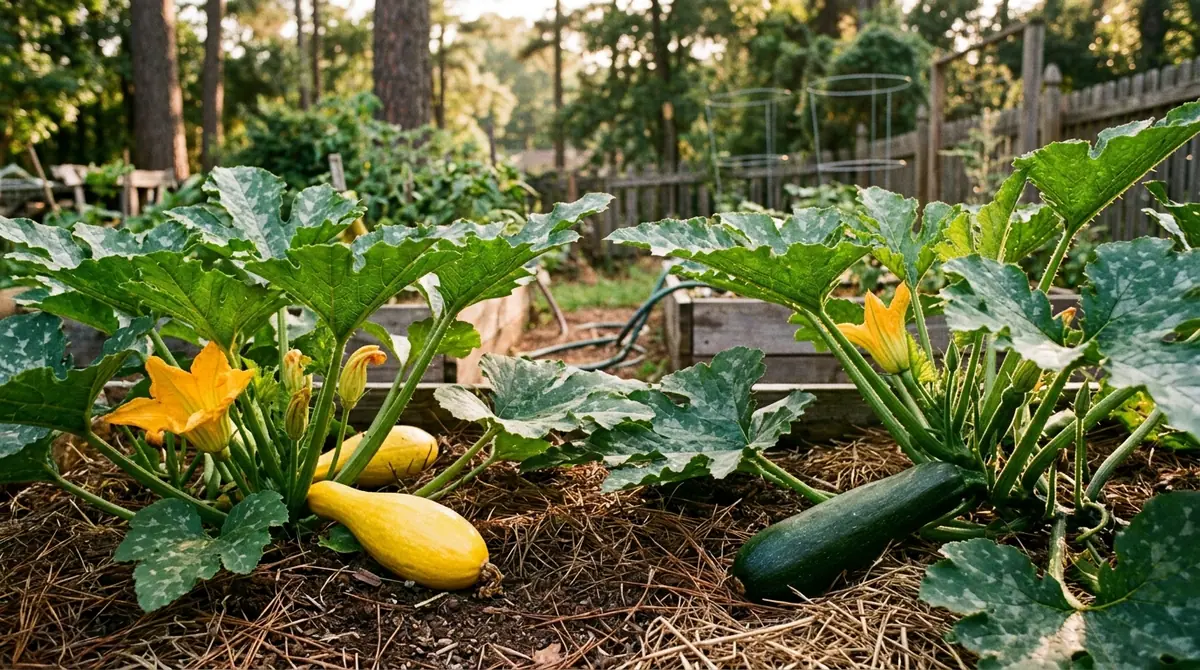
Direct-sowing yellow crookneck squash seeds when the soil feels warm and the air is balmy at 78°F (25.6°C) can be disrupted if an unseasonal cold front plunges overnight lows down to 34°F (1.1°C) three nights later, stalling emerging cotyledons, stunting vascular development, and inviting an early wave of damping-off fungi into the root zone. Squash are tropical-origin cucurbits masquerading as hardy garden staples with zero tolerance for cold, and erratic spring transitions demand precise timing rather than optimistic guesswork.
1. Botanical Overview & Natural Habitat

Understanding their natural habitat helps us replicate those conditions in Georgia’s distinct physiographic regions, from the Blue Ridge mountains down to the Coastal Plain. In the wild, cucurbits thrive in high-light, high-moisture, well-draining alluvial soils with abundant organic matter. Their root system is characterized by a vigorous taproot that can plunge 2 to 3 feet (60 to 90 cm) deep, accompanied by an extensive, lateral network of fibrous feeder roots that occupy the top 12 inches (30 cm) of soil.
For Georgia growers, this dual root architecture requires a distinct approach to soil preparation, much like understanding the subterranean dynamics explored in our How Deep Do Pepper Plant Roots Go? Pot Size & Substrate Depth Guide. Because Georgia soils range from the heavy, compacted Ultisols of the Piedmont to the sandy, leached soils of the Coastal Plain, adapting your planting window to regional frost dates is critical. North Georgia (Zone 7a/7b) typically sees safe spring direct-sowing windows open by mid-to-late April, while Central and South Georgia (Zone 8a through 9a) can safely slide their primary spring window into late March or early April. A second, highly productive fall crop can be established statewide from mid-July through August, dodging the peak of the squash vine borer flight while racing the first autumn frost.
2. Essential Environmental & Care Requirements
Squash are heavy consumers of sunlight, water, and nutrients. To achieve maximum yields in Georgia's humid climate, you must dial in your environmental parameters from day one.
- Sunlight: Full sun is non-negotiable. Plants require a minimum of 6 to 8 hours of direct, unfiltered sunlight daily. Insufficient light reduces photosynthetic efficiency, delays flowering, and creates damp microclimates within the canopy that invite powdery mildew.
- Temperature: Seeds will not germinate in soils below 60°F (15.6°C); the absolute optimum soil temperature for rapid, uniform germination is 70°F to 95°F (21.1°C to 35.0°C). Ambient air temperatures should consistently range between 70°F and 85°F (21.1°C to 29.4°C). Temperatures exceeding 95°F (35.0°C) during flowering can cause pollen sterility and blossom drop.
- Soil and pH: A rich, loamy soil with a pH between 6.0 and 6.8 is ideal. Georgia red clay can support exceptional squash if amended heavily with compost to improve structure and drainage, preventing the root rot that frequently devastates young cucurbits.
💡 Pro-Tip: If you are dealing with constrained urban plots or struggling with heavy, nematode-prone native Georgia soils, you can successfully bypass ground-level limitations by utilizing vertical growing structures, a method detailed in our guide on How to Grow Butternut Squash in Small Spaces: Vertical Trellising Secrets.
| Parameter | Optimal Condition | Common Mistake | Why It Matters |
|---|---|---|---|
| Soil Temperature | 70°F – 95°F (21.1°C – 35.0°C) | Planting when soil is below 60°F (15.6°C) | Cold soil rots seeds and stunts early root establishment. |
| Soil pH | 6.0 to 6.8 | Ignoring soil tests in acidic Georgia clay | Low pH locks up phosphorus and micronutrients, causing chlorosis. |
| Watering Depth | 1 to 1.5 inches (2.5 to 3.8 cm) per week | Frequent, shallow sprinkling | Shallow watering encourages surface rooting, making plants drought-vulnerable. |
| Spacing | 36 to 48 inches (90 to 120 cm) apart | Overcrowding plants to save space | Restricted airflow breeds fungal pathogens like powdery mildew. |
3. Step-by-Step Cultivation, Feeding & Propagation
Getting squash from seed to harvest in Georgia requires a methodical approach. Follow this sequential protocol to establish a high-yielding patch:
- Site Selection and Soil Testing: Select a spot with unobstructed sun exposure. Test your soil via the University of Georgia Extension to verify nutrient levels and pH, amending with agricultural limestone or elemental sulfur as needed.
- Bed Preparation: Broadfork or spade your beds to a depth of 12 inches (30 cm). Incorporate a 3-inch (7.5 cm) layer of well-rotted compost and balanced organic granular fertilizer (such as a 4-3-4 or 5-10-5 formulation) at a rate of 2 lbs per 100 square feet.
- Timing the Sowing: For the spring crop in North Georgia, wait until the last average frost date has passed and soil hits 60°F (15.6°C)—usually mid-to-late April. In South Georgia, you can target late March. For the fall crop, sow seeds directly between July 15 and August 15.
- Planting Depth and Spacing: Plant seeds 1 inch (2.5 cm) deep. For bush types (most summer squash and zucchini), space seeds 3 feet (90 cm) apart in rows spaced 4 feet (1.2 m) apart. For vining winter squash, space hills 4 to 6 feet (1.2 to 1.8 m) apart. Plant 3 seeds per hill, later thinning to the single strongest seedling using clean snips.
- Moisture Management: Keep the seedbed evenly moist until germination occurs, which takes 4 to 10 days. Transition to deep, infrequent irrigation delivered via drip tape or soaker hoses to keep foliage dry.
- Side-Dressing and Feeding: When plants begin to vine or throw heavy blossoms, side-dress with a nitrogen-balanced organic fertilizer or blood meal, keeping granules 6 inches (15 cm) away from the main stems.
- Harvesting: Harvest summer squash when they reach 6 to 8 inches (15 to 20 cm) in length (or 2 inches for round types) by cutting them cleanly with shears. For winter squash, wait until the rind is hard and dull-colored, harvesting before the first hard freeze in autumn.
⚠️ Important Caution: Never handle or harvest squash plants when the foliage is wet from morning dew or overhead irrigation. Wet leaves easily transfer fungal spores (such as Podosphaera xanthii) and bacterial wilt vectors across your entire patch in minutes.
For further reading on optimizing delicate cucurbit timelines and avoiding transplant shock when starting seedlings indoors, consult our specialized protocols on When to Transplant Cucumber Seedlings: Stop Root Shock & Boost Growth.
4. Common Problems, Pests & Troubleshooting
Growing squash in Georgia places you on the front lines of several aggressive pest and disease pressures driven by our high summer humidity and mild winters.
- Squash Bug (Anasa tristis): These shield-shaped, brownish-gray bugs suck plant juices, causing leaves to speckle, turn yellow, and eventually blacken and die (a condition known as "squash bug burn"). Inspect the undersides of leaves weekly for clusters of bronze, oval eggs arranged in a geometric V-pattern along the leaf veins. Scrape them off manually and apply a targeted application of neem oil or pyrethrin to nymphs in the early morning.
- Squash Vine Borer (Melittia cucurbitae): The clearwing moth lays red, flat eggs at the base of squash stems in late spring. The emerging larvae bore into the vine, feeding on internal vascular tissue and causing sudden, catastrophic wilting of the plant above the entry hole. Look for small holes accompanied by wet, sawdust-like frass (excrement). Slit the stem lengthwise with a razor blade, remove the larva, and bury the wounded vine stem in moist soil to encourage adventitious rooting.
- Powdery Mildew (Podosphaera xanthii): Appearing as white, talcum-powder-like spots on upper and lower leaf surfaces, this fungus thrives in humid, stagnant air. Prevent it by ensuring proper plant spacing and applying preventative copper fungicide or potassium bicarbonate sprays bi-weekly during periods of high humidity.

5. Frequently Asked Questions
When is the exact best time to plant summer squash in Atlanta, Georgia?
In Atlanta (USDA Zone 7b/8a), the best time for the primary spring crop is between April 10 and May 1, once soil temperatures stabilize above 60°F (15.6°C). For a second autumn crop, plant between July 20 and August 10 to harvest before the first killing frost in early November.
Can I plant squash seeds directly in the ground, or should I start them indoors?
Squash possess sensitive taproots that resent root disturbance, so direct-sowing into the garden is always preferred and yields healthier plants. If your growing season is short or you want a head start, sow seeds in biodegradable peat pots 3 weeks before your last frost date, transplanting the entire pot directly into the soil without breaking the root ball.
Why are my squash flowers falling off without producing fruit?
The earliest flowers produced by squash plants are almost exclusively male flowers designed to attract pollinators; these naturally drop off after shedding pollen. If female flowers (which feature a tiny miniature squash at the base of the petals) are dropping, it is usually due to poor pollination rates, extreme heat stress above 95°F (35.0°C), or insufficient nitrogen fertility.
How do I stop squash vine borers from killing my plants in South Georgia?
Control squash vine borers by wrapping the lower 4 to 6 inches (10 to 15 cm) of the main plant stems with aluminum foil or floating row covers from seed emergence until the plants begin flowering heavily. Additionally, planting resistant varieties like 'Cavalier' or Cucurbita moschata types (such as butternuts) significantly reduces borer damage due to their solid, fibrous stems.
Related Guides
- When to Plant Watermelon in Georgia
- When Plant Squash Seeds
- When to Start Squash Seeds Indoors
- Growing Harvesting Spaghetti Squash
📋 Table of Contents ▼ Click to expand
Tags:
Keep reading
🌿 Related Plants You Might Like






PlantSavvyWorld
Editorial team
PlantSavvyWorld is an independent botanical education project. Articles are drafted with AI assistance, then edited and checked against university extension services, botanical garden collections and other published horticultural sources.