

When to Plant Tulips and Daffodils
Written with AI assistance, edited and checked against horticultural sources.
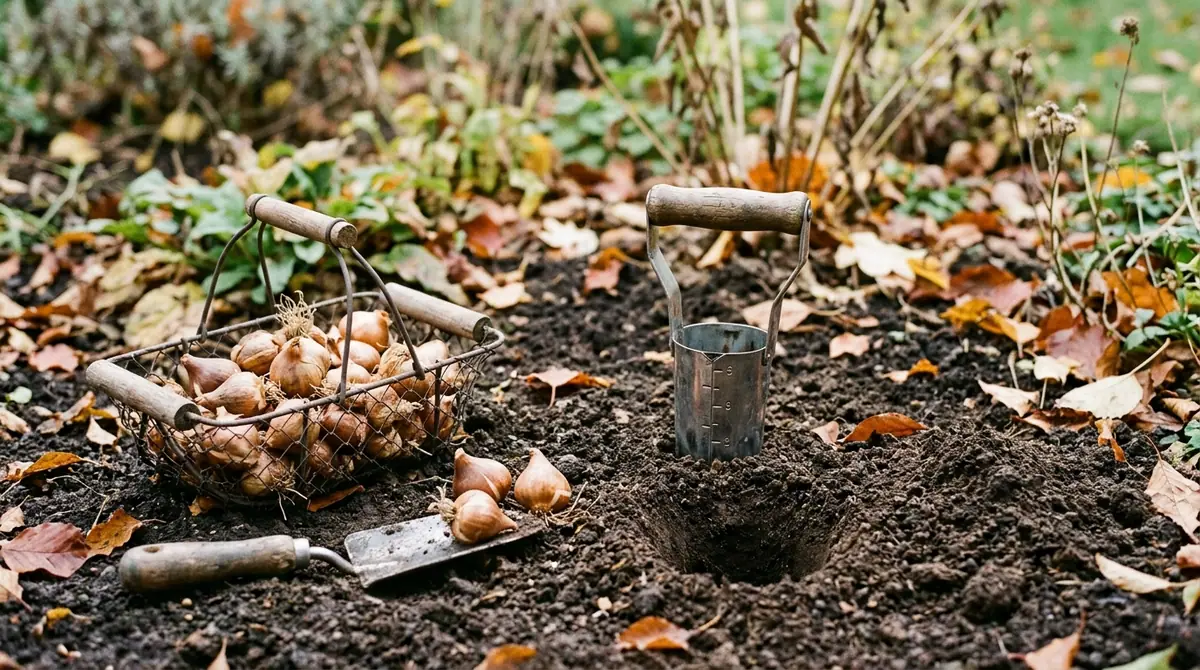
The soil beneath my fingernails was frozen solid to a depth of 2 inches (5 cm) back in November 2014 when I realized I had missed my autumn window for dropping my tulip and daffodil bulbs into the earth. Standing in my historic Boston landscape design studio with a crate of pre-chilled cultivars shivering on the workbench, I faced a choice: force them indoors or break the frost crust with a mattock and gamble on late establishment. I chose the latter, sinking those bulbs into 40°F (4.4°C) mud just before a nor'easter slammed the coast. That mistake taught me more about the brutal resilience of geophytes than any textbook ever could.

1. Botanical Overview & Natural Habitat
Tulips (Tulipa spp.) and daffodils (Narcissus spp.) are classic perennial geophytes native to distinctly harsh environments, which explains their evolutionary reliance on underground storage organs. Tulips evolved across the arid, wind-swept steppes, rocky mountain slopes, and semi-deserts of Central Asia—places like the Tian Shan mountains. In these regions, they endure scorching, bone-dry summers and freezing winters. Consequently, tulips demand exceptional drainage and a distinct chilling period to break dormancy. Their bulbs are true bulbs, composed of fleshy, modified leaf scales wrapped around a central embryonic shoot and basal plate.
Daffodils, by contrast, hail primarily from the meadows, rocky woods, and scrublands of Western Europe and the Mediterranean basin, with notable epicenters of diversity in the Iberian Peninsula. They are equally rugged but possess a slightly different physiological strategy. Daffodil bulbs feature a tunicated structure protected by a papery tunic, and they produce calcium oxalate crystals in their sap that make them unpalatable to voles, mice, and deer.
Both genera require a mandatory period of vernalization—sustained cold temperatures—to trigger floral bud development and stem elongation. If you plant them too early in the late summer while soil temperatures hover above 60°F (15.5°C), the bulbs will expend critical energy reserves trying to push premature foliage out of the warm soil instead of developing robust root systems. Conversely, planting them after the ground freezes solid prevents root initiation entirely, resulting in stunted, blind bulbs come spring. If you are comparing this structural root development to other garden crops, you might find structural parallels in root behavior seen in guides like our How Deep Do Pepper Plant Roots Go? Pot Size & Substrate Depth Guide.
2. Essential Environmental & Care Requirements
To successfully cultivate tulips and daffodils, you must replicate the ecological conditions of their native habitats. Soil temperature is your primary diagnostic metric. You want to install your bulbs when nighttime ambient temperatures consistently drop into the 40°F to 50°F (4.4°C to 10°C) range, which typically translates to soil temperatures cooling down to 55°F (13°柏C) or lower at a depth of 4 inches (10 cm). This usually occurs 4 to 6 weeks before your local ground freezes solid.
Drainage is non-negotiable. Both tulip and daffodil bulbs will rot within days if left sitting in water-logged clay or compacted earth. Soil should ideally be a well-amended sandy loam with a neutral pH between 6.0 and 7.0. While daffodils possess remarkable adaptability and tolerate partial shade remarkably well—often naturalizing beneath deciduous tree canopies—tulips are uncompromising sun worshippers. Tulips require at least 6 hours of direct, uninhibited sunlight daily to fuel the bulb for the following year's bloom cycle.
When planning your landscape layout alongside these bulbs, pay close attention to companion spacing. For a dramatic pop of color that bridges seasons, you can interplant early spring bulbs with warm-season foliage staples such as those detailed in The Complete Guide to Coleus Plants: 50+ Varieties, Care, Propagation & Landscaping. Just ensure your irrigation zones do not keep the bulb bed excessively wet during their summer dormancy phase.
| Parameter | Optimal Condition | Common Mistake | Why It Matters |
|---|---|---|---|
| Soil Temperature | 50°F – 55°F (10°C – 12.8°C) | Planting when soil is >65°F (18.3°C) | Warm soil triggers premature leaf emergence and fungal attack. |
| Planting Depth | 6 to 8 inches (15 to 20 cm) deep | Planting too shallow (2–3 inches) | Shallow bulbs heave out during freeze-thaw cycles and face pest damage. |
| Soil pH | 6.0 to 7.0 | Highly acidic (<5.5) or alkaline (>7.5) soil | Extreme pH locks out essential micronutrients like phosphorus. |
| Drainage | Rapid percolation; loose loam | Heavy clay retaining standing water | Waterlogged scales quickly succumb to Fusarium and Pythium rot. |
3. Step-by-Step Cultivation, Feeding & Propagation
Achieving professional landscape results requires precision. Whether you are working on a commercial installation or a residential border, follow this exact botanical protocol for planting your tulip and daffodil bulbs.
- Site Selection and Soil Preparation: Select a bed receiving full sun (for tulips) or partial sun (for daffodils) with verified drainage. Clear all perennial weeds. Work organic matter, such as well-rotted compost or leaf mold, into the top 10 inches (25 cm) of soil to improve texture. Avoid fresh manure, which burns basal plates and introduces pathogens.
- Amendment Application: Mix a low-nitrogen, high-phosphorus organic fertilizer—such as bone meal or a targeted bulb booster—into the bottom of the planting trench at a rate of 2 tablespoons per square foot. Phosphorus is essential for root development and future floral initiation.
- Excavation of Planting Holes: Dig individual holes or a communal trench. The golden rule of thumb for bulb depth is to bury them at a depth equal to 3 times the vertical height of the bulb itself. For a standard 2-inch (5 cm) tulip bulb, this means digging down 6 inches (15 cm). For a larger 3-inch (7.6 cm) daffodil bulb, dig down 9 inches (23 cm).
- Orientation and Spacing: Place each bulb into the excavation with the pointed end (the plumule) facing strictly upward and the flat, root-bearing basal plate facing downward. Space tulips 4 to 6 inches (10 to 15 cm) apart, and daffodils 6 to 8 inches (15 to 20 cm) apart to prevent inter-root competition.
- Backfilling and Initial Watering: Fill the trench with your native soil-compost blend, tamping it down firmly with your hands to eliminate air pockets that could harbor moisture or invite frost heaving. Water the bed thoroughly immediately after planting—delivering roughly 1 inch (2.5 cm) of water—to settle the soil around the basal plates and initiate root growth.
- Mulching: Apply a 2-inch (5 cm) layer of shredded hardwood bark or straw over the bed. This acts as a thermal blanket, stabilizing soil temperature fluctuations throughout the winter months.
If you are expanding your botanical repertoire into edible perennial crops later in the season, you can apply similar disciplined trenching and soil-prep logic found in resources like our When to Plant Onions in Southern California (Zone 9 & 10 Planting Calendar).
💡 Pro-Tip: If you live in a warmer USDA Hardiness Zone (Zones 8 through 10) where winter chill hours are insufficient for tulips, you must artificially vernalize them. Place your tulip bulbs in a paper bag inside your refrigerator crisper drawer (away from ethylene-producing apples and pears) for 10 to 12 weeks at 35°F to 45°F (1.7°C to 7.2°C) before planting them out in late winter. Daffodils are generally more forgiving, but select heat-tolerant varieties like 'Ice Follies' or 'Erlicheer' for southern latitudes.
4. Common Problems, Pests & Troubleshooting
Even with pristine timing, environmental stressors and opportunistic pests can compromise your bulb display. Understanding the pathology helps you intervene before permanent damage occurs.
- Bulb Rot (Fusarium oxysporum / Penicillium): Soft, spongy bulbs leaking a foul-smelling brown liquid indicate fungal rot, almost always caused by poor soil drainage or overwatering during dormancy. Discard infected bulbs immediately. Never plant soft or bruised specimens. For deeper scientific reading on soilborne fungal management, consult the Royal Horticultural Society Bulb Pest Guidance.
- Voles and Mice: Tulips are candy for rodents. If your spring shoots fail to emerge or foliage topples over with a clean chew-mark at the base, dig down to inspect. To deter subterranean mammals, line your planting trenches with galvanized hardware cloth or cage individual groups of bulbs during installation. Daffodils are naturally immune to this due to their toxic alkaloids.
- Blind Shoots (No Flowers): If your plants produce lush, green strap-like leaves in spring but zero blooms, you are likely facing one of three issues: insufficient sunlight during the previous spring's foliage phase, premature foliage removal by an overzealous mower, or nutrient deficiency (specifically a lack of phosphorus). Always allow tulip and daffodil foliage to yellow and wither naturally for at least 6 weeks post-bloom so the leaves can photosynthesize and recharge the bulb for next year. For localized horticultural advice tailored to regional soil anomalies, check out the University of Illinois Extension Bulb Directory.
- Fire Blight (Botrytis tulipae): This fungal disease manifests as distorted, grayish-brown spots on tulip leaves and distorted flower buds during damp, cool spring weather. Prevent it by ensuring adequate spacing between plants for air circulation, and clear away all dead debris at the end of the season.
⚠️ Important Caution: Daffodil sap contains toxic calcium oxalate crystals and alkaloids (such as lycorine) which cause severe vomiting, abdominal pain, and diarrhea if ingested by dogs, cats, or humans. Keep bulbs stored safely out of reach of pets, and always wear heavy-duty gardening gloves when dividing or pruning large quantities of daffodil foliage.

5. Frequently Asked Questions
Can I plant tulip and daffodil bulbs in the spring?
No. Tulips and daffodils require a mandatory cold vernalization period lasting 10 to 14 weeks at temperatures below 50°F (10°C) to stimulate the biochemical pathways necessary for stem elongation and flowering. If you plant them in spring, the warm soil will merely trigger weak, leggy foliage growth without forming a floral bud or a functional root system.
What happens if I plant my bulbs too late in the winter?
If the ground is frozen solid and you cannot physically dig a hole, root initiation is impossible. However, if the soil is still workable—even if ambient temperatures are freezing—you can still plant them. Late-planted bulbs may bloom a few weeks later than usual in spring, and their stems may be slightly shorter as root development races against rising spring temperatures.
Should I soak my bulbs in water before planting them?
Generally, no. Soaking dry tulip or daffodil bulbs prior to planting does not significantly accelerate root growth and drastically increases their susceptibility to fungal pathogens and basal rot by saturating the protective outer tunics. Simply plant them in adequately moist soil and water them once thoroughly right after backfilling.
How do I know which side of the bulb is up?
Look for the distinct physical features of the bulb. The tapered, pointed end—known as the nose or plumule—must always point upward toward the sky. The broader, flatter end featuring a hardened, slightly concave scar is the basal plate from which roots emerge, and this must always face downward toward the bottom of the planting hole. If you encounter a bulb that is truly asymmetrical or ambiguous, lay it on its side; geophytes possess an innate gravitropic response and will naturally curve their shoots upward and roots downward as they grow.
Related Guides
📋 Table of Contents ▼ Click to expand
Tags:
🌿 Related Plants You Might Like






PlantSavvyWorld
Editorial team
PlantSavvyWorld is an independent botanical education project. Articles are drafted with AI assistance, then edited and checked against university extension services, botanical garden collections and other published horticultural sources.