

When to Plant Tulip Bulbs Zone 5
Written with AI assistance, edited and checked against horticultural sources.
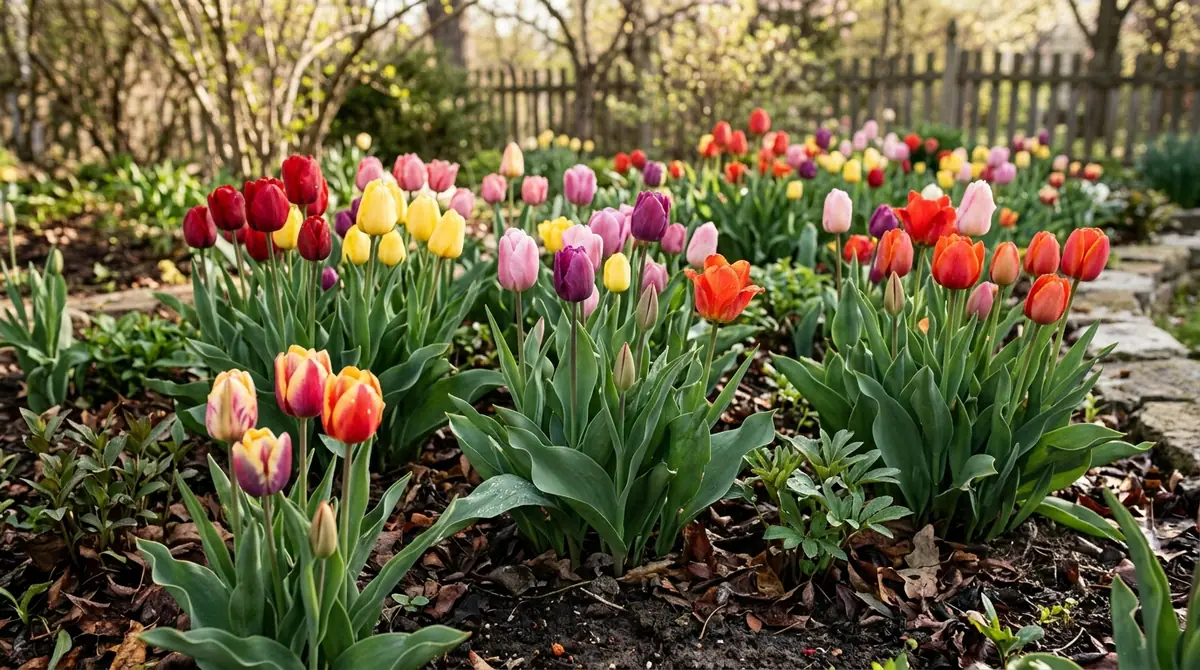
The crisp October wind whipped across my northern perennial beds last season, carrying the unmistakable scent of damp soil and approaching frost, as I knelt with my dibber to tuck sixty 'Design Impression' tulip bulbs into the earth. It is a ritual I have performed for over two decades in USDA Hardiness Zone 5. Timing this drop precisely is the single most critical factor determining whether your spring will feature a breathtaking sea of saturated color or a sparse, disappointing patchwork of blind foliage. In Zone 5—where winter temperatures regularly plummet between -10°F and -20°F (-23°C to -29°C)—getting the calendar right means planting after the soil cools down significantly, but well before the hard freeze locks the ground solid.
1. Botanical Overview & Natural Habitat

Botanically, a tulip bulb is a specialized underground storage organ consisting of a modified stem (the basal plate) surrounded by fleshy scale leaves that store carbohydrates and water. When you plant a tulip bulb in Zone 5, you are mimicking its native mountain habitat. The bulb requires an uninterrupted cold period to break physiological dormancy and initiate flower development within the embryonic bud.
Understanding this natural cycle helps explain why timing is so rigid. If you plant too early when the soil is warm, the bulb may prematurely expend its stored energy pushing green shoots above ground before root systems are established, leaving it vulnerable to the crushing blows of deep winter. If you plant too late, the ground freezes solid at 32°F (0°C), making excavation impossible and preventing the root system from forming before spring thaw. For those managing diverse plant collections, understanding natural cycles is just as vital as managing indoor specimens like the Lipstick Plant (Aeschynanthus Radicans) Complete Care & Bloom Guide, which has entirely different tropical resting rhythms.
2. Essential Environmental & Care Requirements
To achieve maximum floral impact in USDA Zone 5, you must provide environmental conditions that mirror the well-drained, sunny slopes of Central Asia. Tulips are unforgiving of soggy feet; winter wetness is their primary enemy, often resulting in fungal rot before spring even arrives.
- Sunlight: Full sun is non-negotiable. Select a location that receives a minimum of 6 to 8 hours of direct, unfiltered sunlight daily. Planting them beneath deciduous trees works wonderfully because the tulips complete their bloom cycle before the tree canopy leafs out.
- Soil Composition: Sandy loam or loamy soil enriched with organic matter is ideal. The soil must drain exceptionally well. If your Zone 5 garden features heavy clay—common across the American Midwest and Northeast—you must amend the bed with coarse sand, compost, or aged bark to prevent water pooling around the basal plate.
- Soil Temperature: The golden rule for Zone 5 is to plant when sustained nighttime soil temperatures drop into the 40°F to 50°F (4°C to 10°C) range. Practically speaking, this corresponds to mid-October through early November, roughly 4 to 6 weeks before the ground freezes solid.
- Moisture Management: During the active autumn root-growth phase, natural fall precipitation is usually sufficient. However, if autumn is unseasonably dry, provide a deep soaking once a week until the ground freezes. In spring, keep beds moderately moist as shoots emerge, but allow the soil to dry out somewhat after flowering concludes.
| Parameter | Optimal Condition | Common Mistake | Why It Matters |
|---|---|---|---|
| Soil Temperature | 40°F – 50°F (4°C – 10°C) | Planting in late August or September while soil is still warm | Warm soil triggers premature top growth and exposes bulbs to fungal pathogens. |
| Planting Depth | 6 to 8 inches (15 to 20 cm) to the base | Planting too shallow (2–3 inches) | Shallow bulbs split into non-blooming offsets and are easily heaved by freeze-thaw cycles. |
| Soil Drainage | Highly porous, loose loam | Heavy, compacted clay holding standing water | Waterlogged soil suffocates roots and invites Fusarium and Pythium rot. |
| Sun Exposure | Full sun (6–8+ hours daily) | Deep shade beneath dense evergreens | Insufficient light prevents carbohydrate storage, leading to blind bulbs the following year. |
3. Step-by-Step Cultivation, Feeding & Propagation
Planting tulip bulbs correctly is a precise physical science. Follow this sequential protocol in your Zone 5 garden to establish deep, robust root systems capable of powering magnificent spring blooms.
- Site Selection and Soil Preparation: Choose a well-drained spot in full sun. Clear away all weeds, debris, and old mulch. Turn the soil to a depth of 10 to 12 inches (25 to 30 cm) using a garden fork, working in a 2-inch (5 cm) layer of compost and a dusting of bone meal or low-nitrogen, high-phosphorus organic bulb fertilizer to encourage strong root development.
- Calculate Planting Depth: Measure your tulip bulbs from the basal plate to the tip. In Zone 5, plant large tulip bulbs so that there is 6 to 8 inches (15 to 20 cm) of soil sitting directly above the tip of the bulb. This translates to an overall excavation depth of 8 to 10 inches (20 to 25 cm).
- Excavate Individual Holes or Trench: You can dig individual holes with a sturdy bulb planter or dig out an entire bed to a uniform depth. Trench planting is faster for mass displays and ensures every bulb sits at the exact same depth, resulting in a synchronized bloom.
- Position the Bulbs: Place each bulb pointy-side up into the soil. Never press bulbs forcefully into hard soil, as this compacts the earth beneath the basal plate and impedes root emergence. Space large varieties approximately 4 to 6 inches (10 to 15 cm) apart.
- Backfill and Tamp Gently: Fill the hole or trench with your amended soil blend. Firm the soil gently with your hands or the back of a rake to eliminate large air pockets, but do not compress it so hard that drainage is compromised.
- Water Deeply: Immediately after planting, give the entire bed a thorough, deep watering to settle the soil around the scales and initiate the chemical signaling required for root growth.
- Apply Seasonal Mulch: Once nighttime temperatures consistently drop below freezing and the top crust of soil hardens—typically in late November—apply a 2 to 3-inch (5 to 7.5 cm) layer of shredded hardwood bark, leaf mold, or straw. This insulation prevents the catastrophic frost heaving that pushes poorly anchored bulbs completely out of the ground.
💡 Pro-Tip: When designing mixed perennial borders in Zone 5, plant your tulip bulbs in irregular, organic drifts of 7 to 9 bulbs rather than rigid straight lines. Pair them with emerging hostas, daylilies, or groundcovers like those featured in The Complete Guide to Coleus Plants: 50+ Varieties, Care, Propagation & Landscaping, whose expanding foliage will gracefully conceal the unsightly yellowing leaves of the tulips as they enter their summer dormancy.
4. Common Problems, Pests & Troubleshooting
Even experienced designers encounter hiccups when growing tulips in northern climates. Diagnosing issues early saves your display from total failure.
- Frost Heaving: In Zone 5, alternating freeze-thaw cycles throughout late winter can lift shallow bulbs right out of the soil. The solution is strictly preventive: ensure your planting depth meets the 6-to-8-inch standard and apply a generous winter mulch layer after the ground freezes.
- Rodent Predation (Voles, Mice, and Squirrels): Tulips are candy to local wildlife. If you wake up to hollowed-out holes and missing bulbs, switch to planting techniques that deter pests. Line the bottom and sides of your planting trench with heavy-duty hardware cloth (1/4-inch mesh), or interplant your tulips with daffodils (Narcissus), which rodents actively avoid due to toxic alkaloids.
- Tulip Fire (Botrytis tulipae): This fungal pathogen causes distorted, spotted leaves, twisted stems, and brown lesions on petals during damp spring weather. Prevent it by removing all plant debris at the end of the season, avoiding overhead irrigation, and spacing bulbs adequately to promote rapid air circulation.
- Blind Shoots (Leaves, No Flowers): If your tulips produce lush green foliage but zero blooms, the bulb likely lacked sufficient energy storage last season, suffered from inadequate sunlight, or was subjected to unseasonably warm winter temperatures that failed to satisfy its vernalization threshold.
For additional guidance on managing outdoor and indoor vegetable crops when seasonal shifts occur, consult authoritative references such as the University of Illinois Extension Bulb Directory or the Royal Horticultural Society Bulb Cultivation Guide.
⚠️ Important Caution: Every single part of a tulip plant—especially the bulb—contains toxic glycosides (tulipanoside A and B) which can cause severe vomiting, drooling, and cardiac distress if ingested by dogs, cats, or horses. Exercise extreme caution when working with pets nearby, and store leftover bulbs securely out of reach.

5. Frequently Asked Questions
What happens if I plant my tulip bulbs too early in Zone 5?
Planting in late August or September while the soil is still warm (above 60°F or 15°C) tricks the bulb into breaking dormancy prematurely. The bulb sends up green shoots before winter sets in. These tender shoots are invariably killed by hard frosts, depleting the bulb's stored energy reserves and resulting in stunted growth or complete bloom failure the following spring.
Can I keep tulip bulbs in the refrigerator before planting them?
If you live in Zone 5, artificial refrigeration is entirely unnecessary because natural winter chill satisfies the vernalization requirement. However, if you purchased bulbs late and spring is approaching, you can artificially chill them for 10 to 12 weeks at temperatures between 35°F and 45°F (1.5°C to 7°C) in a paper bag away from ripening fruit (which emits ethylene gas) before planting them out.
Do I need to dig up my tulip bulbs every year in Zone 5?
Most modern hybrid tulips (such as Darwins and Triumphs) are bred to perform best as annuals and will naturally decline in vigor and flower size after their first year. For these, digging them up is unnecessary because you will likely replant new stock next autumn. However, botanical (species) tulips and certain Darwin hybrids can naturalize and return reliably for years if left undisturbed in perfect, well-drained soil.
How do I protect tulip bulbs from squirrels in the garden?
Rodents are the bane of Zone 5 bulb gardeners. Beyond laying down hardware cloth beneath the planting bed, you can dust the bulbs with organic deterrents like granulated predator urine, blood meal, or cayenne pepper powder before backfilling. Additionally, planting bulbs at the deeper end of the 8-inch range makes them significantly harder for foraging squirrels to detect and dig up.
Related Guides
- What Hardiness Zone is Sacramento
- What Planting Zone is Sacramento Ca
- What Zone is Columbus Ohio
- What Planting Zone is Virginia in
- Zone 9 Plants Full Sun
📋 Table of Contents ▼ Click to expand
Tags:
🌿 Related Plants You Might Like






PlantSavvyWorld
Editorial team
PlantSavvyWorld is an independent botanical education project. Articles are drafted with AI assistance, then edited and checked against university extension services, botanical garden collections and other published horticultural sources.