
When Are Leeks in Season
Written with AI assistance, edited and checked against horticultural sources.
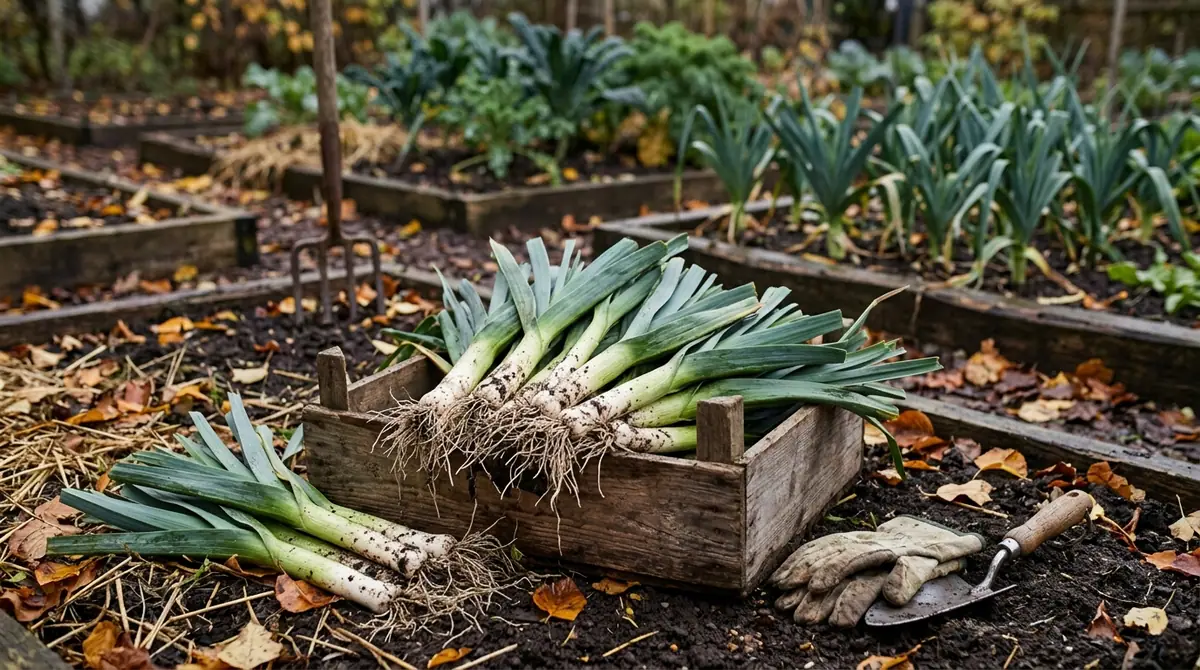
Frost was clinging stubbornly to the cold frames at the edge of my trial plot when I pulled my first overwintered 'Bandit' leek three years ago, its thick, pearlescent white shank resisting the frozen earth until a garden fork popped it free with a satisfying, subterranean sigh. Most home gardeners assume leeks are strictly an autumn crop, but I look at the calendar through the lens of thermal accumulation and day-length triggers rather than supermarket availability. Understanding when leeks are in season requires looking past the grocery store's constant inventory and syncing your fork with the natural physiology of Allium ampeloprasum. Whether you are mapping out your cold-weather layout after clearing out your late summer beds or timing your spring crops alongside your When to Plant Bok Choy Zone 7 schedule, mastering the seasonality of leeks transforms your kitchen garden from a seasonal novelty into a year-round culinary engine.
1. Botanical Overview & Natural Habitat

Wild ancestors of the leek are native to the Mediterranean basin and Western Asia, where they evolved to thrive in mild, damp winters and dry, warm summers. This evolutionary heritage dictates their phenomenal frost hardiness. While typical garden onions stall out and rot in prolonged cold, many modern leek cultivars can withstand sustained freezing temperatures down to 5°F (-15°C) without losing their structural integrity.
Understanding this natural habitat helps explain their growth phases. Leeks are biennial plants, meaning they complete their vegetative growth in year one, undergo vernalization (a prolonged period of cold temperatures) during winter, and bolt to produce flowers, seeds, and die back in year two. When we harvest leeks "in season," we are interrupting this biennial lifecycle at the end of their first year of growth, just as the plant has maximized its biomass, stored dense reserves of sugars and fructans, and before the inner core turns woody to support a flower scape.
If you have ever timed your root crops using resources like When to Plant Carrots in Zone 8a, you will recognize a parallel: cool-season alliums and umbellifers demand patience, benefiting immensely from slow accumulation of degree-days in autumn rather than explosive mid-summer heat. For a deeper academic dive into allium taxonomy and climate adaptations, you can consult the Royal Botanic Gardens, Kew Science Database.
2. Essential Environmental & Care Requirements
To produce thick, succulent leek shanks that define a true peak-season harvest, you must replicate the rich, moisture-retentive, and cool conditions of their native Mediterranean-to-temperate origins. Leeks are heavy feeders and demanding drinkers; skimping on their environmental needs results in thin, stringy stalks with minimal culinary value.
The table below outlines the precise environmental parameters required for premium leek production, alongside the common mistakes that derail harvests.
| Parameter | Optimal Condition | Common Mistake | Why It Matters |
|---|---|---|---|
| Soil pH | 6.0 to 6.8 | Planting in acidic soil below 5.5 | Acidic soils inhibit micronutrient uptake and dramatically increase susceptibility to white rot. |
| Soil Texture | Loamy, rich in organic matter | Heavy, unamended clay | Compacted clay restricts the downward root expansion and prevents proper blanching techniques. |
| Temperature | 55°F to 75°F (13°C to 24°C) | Exposing seedlings to prolonged freezes below 20°F (-6°C) too early | Sudden deep freezes can shock young, unhardened tissues, causing premature bolting in spring. |
| Water Supply | 1 inch (2.5 cm) per week consistently | Erratic wet-dry cycles | Fluctuating moisture causes the outer sheaths to split and invites pest penetration. |
| Sunlight | Full sun (6 to 8 hours daily) | Deep shade under taller canopy crops | Insufficient light reduces photosynthetic output, leading to thin, chlorotic stems. |
Soil preparation is arguably the most critical step. According to guidelines published by the Oregon State University Extension Service, alliums demand high organic matter content to retain moisture while maintaining structural aeration. Work 2 to 3 inches (5 to 7.5 cm) of aged compost into the top 8 inches (20 cm) of soil several weeks before planting.
💡 Pro-Tip: When planning your garden layout, pair your leek rows alongside brassicas that you manage using insights from guides like When to Plant Brussel Sprouts in Zone 7. Both crops share heavy sulfur and nitrogen requirements, allowing you to amend dedicated beds uniformly and maximize your soil management efficiency.
3. Step-by-Step Cultivation, Feeding & Propagation
Growing exhibition-grade leeks requires a deliberate sequence of actions from seed to harvest. Because leeks have a long maturation window—typically 100 to 130 days from transplanting—timing your initial sowing is just as vital as timing your harvest.
- Sow Seeds Indoors: Start seeds indoors 8 to 10 weeks before your final spring frost date. Sow seeds 0.25 inches (0.6 cm) deep in flat containers filled with a sterile, peat-free seed-starting mix. Maintain soil temperatures between 65°F and 70°F (18°C to 21°C).
- Trim the Foliage: Once the seedlings reach 6 inches (15 cm) tall, use clean shears to trim the grass-like blades back to 3 inches (7.5 cm). Repeat this trimming every few weeks to encourage sturdier stem development and prevent the seedlings from tangling.
- Harden Off and Transplant: In early spring, when daytime temperatures stabilize consistently above 45°F (7°C), harden off your seedlings over 10 days. Transplant them outdoors when they are about the thickness of a pencil (roughly 0.25 inches or 0.6 cm in diameter).
- Dig the Trench: Dig a trench 6 inches (15 cm) deep and 6 inches (15 cm) wide. Place the seedlings at the bottom of the trench, spacing them 6 inches (15 cm) apart within the row, and firm the soil gently around their roots.
- Initial Watering: Water the newly planted trench thoroughly, providing at least 1 inch (2.5 cm) of water to settle the root zone and eliminate air pockets.
- Blanching via Earth Mounding: As the leeks grow throughout the summer, gradually fill in the trench with surrounding soil every two to three weeks. By late summer, transition to mounding soil up around the stems (hilling) to ensure the lower shanks remain shielded from light, which yields that coveted long, white, tender section.
- Manage Fertility: Side-dress the plants mid-season with a balanced, slow-release organic fertilizer or rich compost tea, supplying an extra boost of nitrogen to support rapid vegetative expansion.
- Harvesting: Begin harvesting early varieties in late summer and autumn. Leave hardier winter cultivars in the ground, harvesting them progressively from late autumn through early spring as needed for the kitchen.
4. Common Problems, Pests & Troubleshooting
Even with meticulous care, leeks face several persistent adversaries that can ruin an otherwise promising harvest.
Allium leaf miner (Phytomyza gymnostoma) has become a devastating pest across many regions. The adult flies lay eggs near the base of the leaves, and the emerging larvae tunnel down into the stem, creating unsightly brown scars and opening the plant up to secondary bacterial rots. To combat this, use floating row covers immediately after transplanting in spring, removing them only when the plants are mature and their stems are too tough for comfortable oviposition.
Allium white rot (Stromatinema cepivora), a persistent soil-borne fungal pathogen, is another major threat. It attacks the roots, causing the foliage to turn yellow, wilt, and collapse, while a white, fluffy fungal growth peppered with tiny black sclerotia coats the basal plate. Because these sclerotia can remain viable in the soil for over a decade, crop rotation is mandatory. Never plant leeks, onions, or garlic in the same plot more than once every four years.
⚠️ Important Caution: Never harvest or store leeks showing signs of basal mushiness or a foul, sulfurous odor at the soil line. This indicates advanced bacterial soft rot. Discard these plants immediately in the municipal waste or high-heat compost; tossing them into a cold compost pile will contaminate your entire organic amendment supply.

5. Frequently Asked Questions
Can I leave leeks in the ground all winter?
Yes, provided you live in USDA Hardiness Zones 6 through 9 and have selected a frost-tolerant winter cultivar such as 'Blue Solaise' or 'Bandit'. These varieties actually improve in flavor after exposure to freezing temperatures, as the plant converts starches into protective sugars to prevent cellular ice crystal formation. In colder regions (Zones 4 and 5), apply a thick 6-inch (15 cm) layer of straw mulch over the beds to prevent the soil from freezing solid, allowing you to harvest throughout the winter months.
How do I know when leeks are ready to harvest?
Leeks are technically ready to harvest whenever they reach a usable thickness—typically ranging from the diameter of a pencil up to 1.5 inches (3.8 cm)—which usually occurs 100 to 130 days after transplanting. Do not wait for them to form a round bulb like a standard onion; a mature leek should maintain its cylindrical pseudostem shape. If the center of the stem begins to feel hard or woody, or if you notice the base swelling and a central flower stalk starting to form, harvest immediately to salvage the tender outer layers.
Why are my leeks tough and stringy instead of tender?
Tough and stringy leeks are almost always the result of harvesting too late in their lifecycle, inadequate blanching, or growing the plants through stressful, drought-heavy conditions. When leeks experience severe water stress or are left in the ground past their prime harvest window into their second year, they redirect their energy toward reproductive growth, turning the inner structural fibers tough and woody. Ensure regular weekly irrigation of at least 1 inch (2.5 cm) and maintain continuous hilling of soil around the stems throughout the summer.
Can I store harvested leeks in the refrigerator?
Freshly harvested leeks can be stored unwashed and un-trimmed in the crisper drawer of your refrigerator for up to two weeks. Trim the root tips to about 0.5 inches (1.3 cm) and cut away the dark green tops, leaving just the white and light green shaft wrapped loosely in a perforated plastic bag to maintain humidity without trapping excess moisture. For longer preservation, leeks can be blanched in boiling water for 30 seconds, plunged into an ice bath, patted dry, and frozen in airtight bags for up to eight months.
Related Guides
📋 Table of Contents ▼ Click to expand
Tags:
🌿 Related Plants You Might Like



PlantSavvyWorld
Editorial team
PlantSavvyWorld is an independent botanical education project. Articles are drafted with AI assistance, then edited and checked against university extension services, botanical garden collections and other published horticultural sources.