

Peppermint Oil on Plants
Written with AI assistance, edited and checked against horticultural sources.
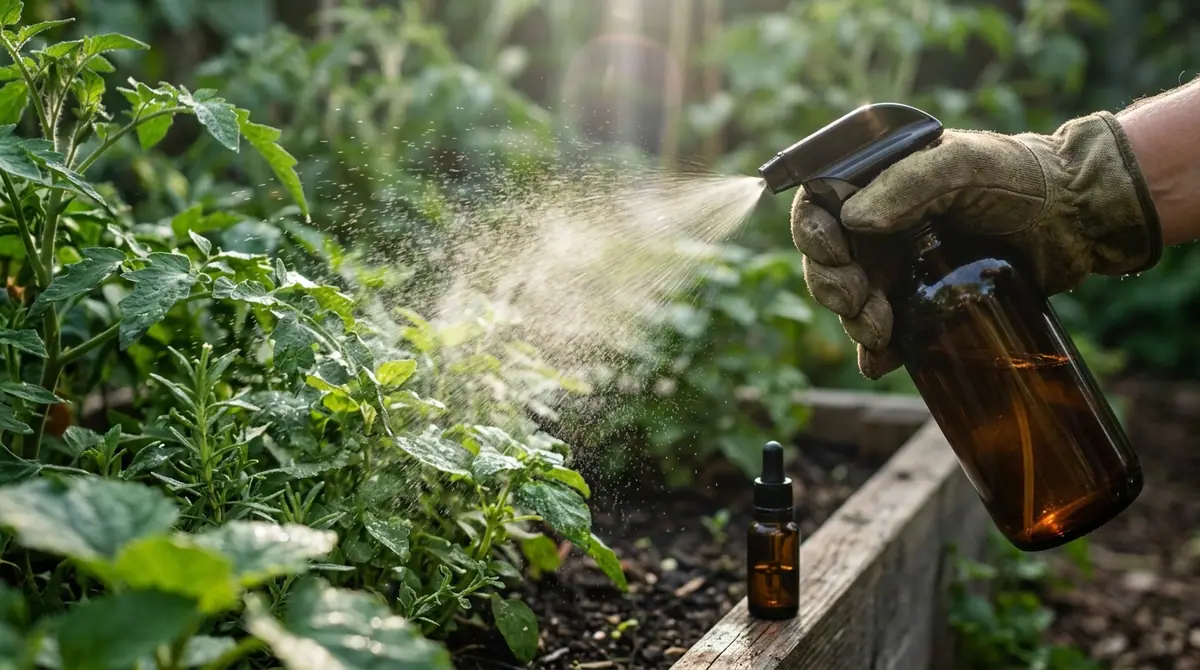
While peppermint oil is a phenomenal botanical tool, it is a chemical sledgehammer in the garden. When used correctly, it keeps chewing insects, mice, and deer at bay. When misused, it strips foliage and murders beneficial insects. Within forty-eight hours of application, the volatile monoterpenes in DIY peppermint oil emulsions can turn foliage translucent brown and scorch test plants. Here is the exact science and application protocol for using peppermint oil safely and effectively on your plants.
1. Botanical Overview & Natural Habitat

The active engine behind peppermint's utility in the garden is its essential oil, which is synthesized in glandular trichomes—specialized microscopic hairs studding the epidermal layer of the leaves and stems. These trichomes rupture under physical pressure or high heat, releasing a potent chemical defense cocktail dominated by menthol (typically 35% to 55%), menthone (10% to 30%), and minor constituents like 1.8-cineole and limonene.
In nature, this volatile organic compound profile serves as a multi-pronged evolutionary deterrent. The sharp, cooling neurotoxin disrupts the octopamine receptors in the nervous systems of insects, causing disorientation, paralysis, and death in soft-bodied pests like aphids, spider mites, thrips, and fungus gnats. Simultaneously, the intense aromatic profile masks the host plant's volatile organic signatures, blinding herbivores like deer, rabbits, and rodents to the food source. However, because peppermint oil is hydrophobic and highly concentrated, applying it directly to plant tissue without proper emulsification strips the cuticle layer of leaves, destroying cellular integrity and causing rapid dehydration and necrosis.
2. Essential Environmental & Care Requirements
If you are cultivating Mentha x piperita to harvest your own plant material for homemade deterrents, or if you are managing plants exposed to commercial peppermint oil treatments, you must understand their baseline environmental tolerances. Peppermint is notoriously resilient, but its secondary metabolite production (the concentration of menthol) spikes when the plant experiences mild, controlled stress.
| Parameter | Optimal Condition | Common Mistake | Why It Matters |
|---|---|---|---|
| Temperature | 65°F to 75°F (18°C to 24°C) | Spraying oil when temp exceeds 85°F (29°C) | High heat accelerates oil volatilization and magnifies solar burn on foliage. |
| Soil pH | 6.0 to 7.0 | Planting in heavily acidic soil (< 5.5) | Limits nutrient uptake, stunting essential oil gland development. |
| Soil Depth | Rhizomes buried 2 to 3 inches (5 to 7.5 cm) | Leaving stolons exposed on the surface | Prevents proper root anchoring and exposes growth nodes to desiccation. |
| Watering | 1 inch (2.5 cm) of water weekly | Allowing soil to dry past 2 inches (5 cm) deep | Severe drought triggers premature leaf drop and lowers menthol yield. |
💡 Pro-Tip: Never apply peppermint oil sprays under direct midday sun. The oil droplets act as microscopic magnifying glasses while simultaneously stripping the leaf's protective wax cuticle, resulting in instant thermal burn. Always spray at dusk when stomata are open and temperatures drop below 75°F (24°C).
When utilizing peppermint oil as a pest deterrent, environmental humidity plays a massive role. High humidity slows evaporation, prolonging the contact time between the concentrated terpenes and the plant's epidermis. If you live in humid coastal regions—much like growers navigating microclimates similar to What Zone is San Diego for Plants—you must dilute your oil concentrations by an extra 50% compared to arid inland climates.
3. Step-by-Step Cultivation, Feeding & Propagation
Creating a safe, highly effective horticultural peppermint oil spray requires strict adherence to emulsification chemistry. Oil and water do not mix; if you spray raw peppermint oil into your garden, the undiluted droplets will pool on foliage and burn holes through the cell walls.
Here is my exact, field-tested protocol for formulating and applying a safe peppermint oil pest deterrent:
- Gather Equipment and Safety Gear: Acquire 100% pure therapeutic-grade peppermint essential oil, liquid castile soap (used as an agricultural surfactant and emulsifier), distilled water, a glass measuring beaker, and a clean 32-ounce (946 ml) trigger spray bottle. Put on nitrile gloves and safety glasses, as concentrated menthol irritates mucous membranes.
- Calculate the Dilution Ratio: For standard soft-bodied pest management (aphids, spider mites), use a 0.5% solution. Measure exactly 1 teaspoon (5 ml) of liquid castile soap into your glass beaker. Add 15 to 20 drops (approximately 1 ml) of pure peppermint oil to the soap.
- Bind the Oil and Surfactant: Stir the oil and castile soap mixture thoroughly for 30 seconds until it turns into a uniform, milky paste. The surfactant molecules bind to the hydrophobic oil molecules, allowing them to disperse safely in water without separating.
- Dilute with Water: Pour the soap-oil mixture into the 32-ounce spray bottle. Fill the remainder of the bottle with lukewarm distilled water (approx. 70°F / 21°C). Secure the nozzle and shake vigorously for 45 seconds.
- Conduct a Foliar Patch Test: Before spraying your entire crop—whether you are protecting delicate nightshades or managing companion configurations like those found in Zucchini Companion Plants Good Bad—spray a single lower leaf on one plant. Wait 48 hours. If no yellowing, wilting, or necrotic spots appear, the batch is safe to use.
- Apply to the Target Plants: Mist the top and underside of all leaves thoroughly, ensuring coverage of the stems where pests congregate. For preventative pest control, repeat this application every 7 to 10 days, or immediately following any heavy rainfall event exceeding 0.5 inches (1.3 cm).
If you are growing the Mentha x piperita plants themselves to harvest for DIY extractions, treat them as heavy feeders. Apply a balanced organic compost top-dressing every spring, incorporating it into the top 1 inch (2.5 cm) of soil. Prune the stems back by one-third every 30 days during the peak growing season to encourage dense, bushy branching and maximize the surface area of oil-producing glandular trichomes. If you are managing your garden beds based on regional freeze dates—similar to growers asking What Zone is Virginia for Plants—ensure your harvest concludes at least 4 weeks before the first autumn frost to let the root system harden off.
4. Common Problems, Pests & Troubleshooting
Even when utilizing organic deterrents like peppermint oil, things can go sideways fast if biological parameters slip out of balance. Here is how to diagnose and correct the most frequent issues encountered when introducing concentrated botanical oils into a garden ecosystem.
- Foliage Necrosis and Leaf Margin Burn: If leaves develop crisp, brown edges or translucent spots within 24 hours of application, your dilution ratio was too high, or you sprayed during peak sunlight hours. Immediately rinse the affected foliage with a gentle stream of clean water to wash away residual terpenes. Prune away severely damaged leaves if more than 50% of the blade is compromised, and drop your essential oil concentration by half for future batches.
- Sudden Spikes in Secondary Pests (Spider Mites): Paradoxically, applying harsh sprays can sometimes trigger a secondary pest outbreak. Peppermint oil is non-discriminatory; it often annihilates beneficial predatory insects like lacewing larvae, minute pirate bugs, and lady beetles while missing deeply burrowed spider mite eggs. If you notice a population explosion of pests 10 days post-application, cease oil treatments immediately. Introduce predatory mites (Phytoseiulus persimilis) to rebalance the micro-ecosystem naturally, referencing regional agricultural guides such as What Zone is South Carolina for Plants to select climate-appropriate beneficial organisms.
- Resistance and Behavioral Adaptation: Insects are remarkably adaptable. If you spray the exact same peppermint concentration every single week for an entire season, local pest populations can exhibit behavioral avoidance, migrating to the soil line or underside of containers where the spray doesn't reach. Rotate your deterrents: alternate peppermint oil with horticultural neem oil or insecticidal potassium salts of fatty acids every 14 days.
⚠️ Important Caution: Never use essential oil sprays on young seedlings, newly rooted cuttings, or plants undergoing physiological drought stress. Their underdeveloped cuticles and closed stomata make them infinitely more susceptible to chemical shock and mortality. Furthermore, keep pure peppermint oil completely away from domestic pets, particularly cats and dogs, as feline livers cannot metabolize phenolic compounds and menthol toxicity can lead to acute hepatic failure.

5. Frequently Asked Questions
Does peppermint oil kill plant roots?
Direct soil drenches of concentrated peppermint oil will damage or kill fine feeder roots and disrupt beneficial mycorrhizal fungi networks in the soil microbiome. However, standard foliar sprays that occasionally drip onto the soil surface in trace amounts rarely cause root damage, provided the soil is adequately moist. Never pour raw essential oils directly into the root zone of any plant, including heavy-feeding crops you might prune using techniques outlined in When to Top Pepper Plants.
Will peppermint oil get rid of powdery mildew?
No. While peppermint oil possesses mild antifungal properties against certain post-harvest rots, it is largely ineffective as a curative treatment for established powdery mildew (Erysiphe spp.) infections on living garden plants. For fungal pathogens, you are far better off utilizing potassium bicarbonate, liquid copper fungicides, or a preventative milk-and-water spray.
Can I spray peppermint oil on indoor houseplants?
Yes, but with extreme caution. Indoor environments lack natural wind currents and high UV degradation, meaning the volatile aroma of peppermint oil will linger for weeks, potentially driving you out of your own living room. If you use it on indoor tropicals to combat fungus gnats or spider mites, reduce the concentration to 10 drops of oil per 32 ounces of water, and test a single leaf beforehand.
How long does peppermint oil last on plants outside?
The residual deterrent efficacy of a peppermint oil spray typically lasts between 3 to 7 days outdoors. The volatile monoterpenes evaporate rapidly when exposed to ambient heat, direct sunlight, and wind. Furthermore, any rainfall exceeding 0.2 inches (5 mm) will completely wash the surfactant and oil barrier off the leaf surface, requiring a complete reapplication to maintain protection against chewing pests and mammalian herbivores.
Related Guides
📋 Table of Contents ▼ Click to expand
Tags:
🌿 Related Plants You Might Like


PlantSavvyWorld
Editorial team
PlantSavvyWorld is an independent botanical education project. Articles are drafted with AI assistance, then edited and checked against university extension services, botanical garden collections and other published horticultural sources.