

How Long Do Lilies Last
Written with AI assistance, edited and checked against horticultural sources.
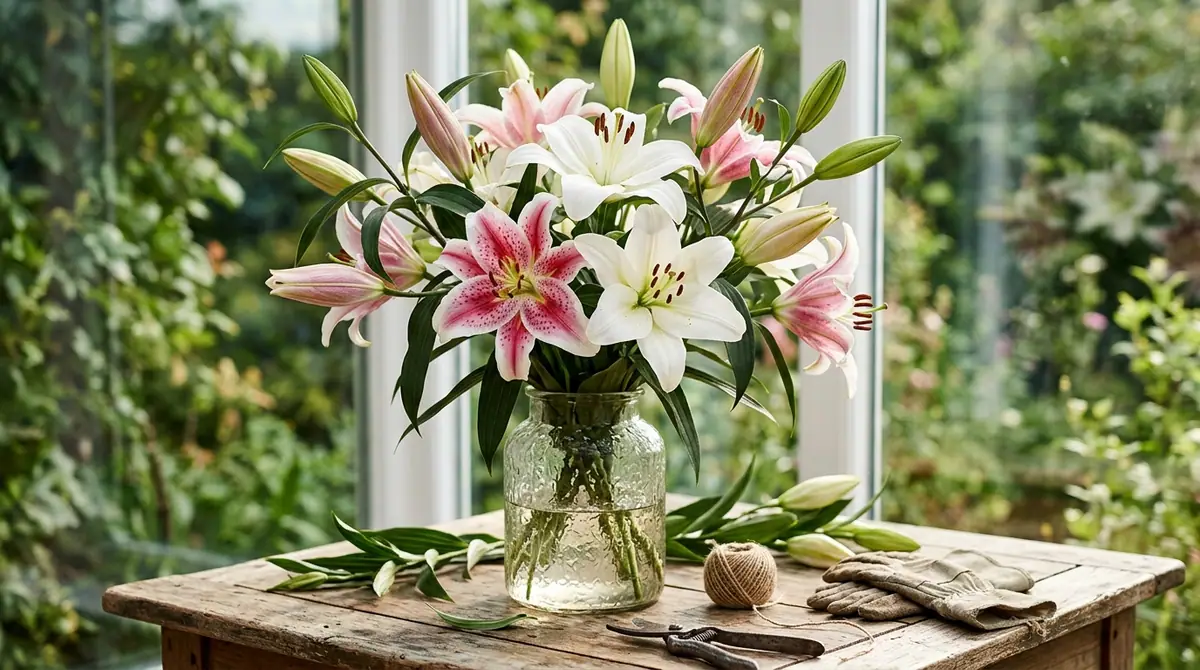
I stood in trial gardens two summers ago, staring at a breathtaking cluster of 'Stargazer' Oriental lilies that had peaked just four days after opening. A sudden 92°F (33°C) heatwave had scorched their vibrant crimson petals, cutting their garden display short and leaving me with drooping, pollen-stained stems. That frustrating afternoon drove me to research, test, and refine how I manage lily longevity—both in the soil and in the vase. Whether you are planting bulbs along a perennial border or arranging cut stems on your dining table, understanding the exact lifespan of lilies transforms fleeting blooms into long-lasting botanical displays.
1. Botanical Overview & Natural Habitat

In their natural woodland and mountainous habitats, lilies endure cold winters by going dormant underground. The bulb acts as an energy storage organ composed of fleshy scales. When spring temperatures consistently reach 50°F to 55°F (10°C to 13°C), the bulb initiates growth, pushing a single, unbranched stem upward. This stem carries lance-shaped leaves and terminates in a cluster of buds called an inflorescence.
The lifespan of a lily must be evaluated on three distinct timelines:
- The Cut Flower: 7 to 14 days in a vase, depending on species and water hygiene.
- The Garden Bloom: Individual flowers last 3 to 7 days, but a well-established plant or cluster provides continuous blooms for 2 to 4 weeks as sequential buds open.
- The Perennial Lifespan: A single bulb can thrive and return reliably for 5 to 10 years or more, frequently multiplying through underground bulblets and offsets.
Understanding the native conditions of Lilium species helps us replicate their preferred environments, directly maximizing how long their blossoms and bulbs survive. For gardeners looking to balance their seasonal landscape while waiting for perennials to mature, pairing your landscape design with fast-producing annuals—much like calculating How Long Does It Take for Tomatoes to Grow Tomato Growing and Harvesting Guide—ensures continuous color throughout the growing season.
2. Essential Environmental & Care Requirements
To maximize the longevity of your lilies, you must tightly control their environmental inputs. Whether grown in heavy clay garden soil or high-porosity potting mixes, lilies have strict parameters for light, moisture, and nutrition.
| Parameter | Optimal Condition | Common Mistake | Why It Matters |
|---|---|---|---|
| Light | 6 to 8 hours of direct morning sun; shaded roots ("head in the sun, feet in the shade") | Placing in deep shade or scorching afternoon-only sunlight | Insufficient light halts bud development; excessive heat degrades petal pigments rapidly. |
| Soil Drainage | Loamy, highly organic, well-draining soil with a pH of 6.0 to 6.5 | Heavy clay that pools water or dense, unamended sand | Waterlogged bulbs succumb to Fusarium and Phytophthora fungal rots within days. |
| Watering | 1 inch (2.5 cm) of water weekly via rainfall or deep ground soaking | Frequent, shallow surface watering that wets the stems and leaves | Shallow watering starves deep bulb roots; wet foliage triggers Botrytis blight. |
| Temperature | 60°F to 75°F (15°C to 24°C) during active growth | Exposing blooms to sustained temperatures above 85°F (29°C) | High heat accelerates flower respiration, causing premature petal drop and fading. |
For deeper botanical insights on bulbous perennials, consult the Royal Horticultural Society Lily Guide, which outlines regional climate adaptations.
💡 Pro-Tip: To keep a lily's roots cool in scorching summer climates, plant low-growing ground covers like sweet alyssum or shallow-rooted perennials over the bulb zone. This shields the soil from radiant heat without competing for deeper nutrients.
3. Step-by-Step Cultivation, Feeding & Propagation
Planting lilies correctly at the proper depth directly impacts whether they survive their first winter and how long their stems remain upright and productive. Follow this rigorous step-by-step protocol for planting lily bulbs in spring or early autumn.
- Select and Inspect Bulbs: Choose firm, heavy bulbs with no visible bruising, mold, or shriveled scales. Discard any bulbs that feel spongy or soft.
- Prepare the Planting Bed: Dig a trench or individual holes to a depth of 6 to 8 inches (15 to 20 cm) for standard bulbs, or 4 inches (10 cm) for smaller varieties. Ensure the base soil is loose and drains freely.
- Incorporate Drainage Amendments: If your native soil is heavy clay, mix in a 2-inch (5 cm) layer of coarse horticultural sand and well-rotted leaf mold at the base of the planting hole.
- Position the Bulb: Place the bulb root-side down. Spread the fleshy roots outward naturally across the soil base, ensuring the pointed or hollow top tip faces upward.
- Backfill and Tamp Gently: Fill the hole with a 50/50 blend of garden soil and compost. Tamp down lightly with your hands to eliminate large air pockets, but avoid compacting the soil heavily.
- Water Thoroughly: Deliver a deep, slow saturation of 1 inch (2.5 cm) of water to settle the soil around the scales and trigger root hormone activation.
- Apply Organic Mulch: Spread a 2-to-3-inch (5 to 7.5 cm) layer of shredded hardwood bark or clean straw over the bed to retain moisture and insulate against extreme temperature swings.
- Feed Seasonally: Apply a balanced, low-nitrogen, high-phosphorus organic bulb fertilizer (such as a 5-10-10 blend) in early spring just as shoots emerge, and a second application immediately after flowering finishes.
To expand your collection without purchasing new stock, lift and divide overcrowded clumps every 3 to 4 years in late autumn after the foliage dies back naturally. Gently pry apart the interlocking bulb clusters and replant them immediately at the standard 6-to-8-inch (15-to-20-cm) depth.
4. Common Problems, Pests & Troubleshooting
Even with ideal care, environmental stress and opportunistic pathogens can shorten a lily's lifespan. Identifying symptoms quickly is essential for saving the plant.
- Lily Leaf Beetles (Lilioceris lilii): These bright scarlet beetles feed aggressively on foliage, stems, and buds, skeletonizing the plant in days. Handpick adults immediately at dawn when they are sluggish, and apply neem oil or spinosad to destroy orange-red larvae hidden under leaves.
- Botrytis Blight (Botrytis elliptica): Appearing as small, circular brown spots with reddish borders on leaves and petals, this fungus thrives in humid, wet conditions. Prune infected tissue immediately, dispose of it in the trash (never compost it), and improve air circulation by spacing companion plants further apart.
- Bulb Rot (Fusarium oxysporum): Yellowing lower leaves, stunted stems, and a foul-smelling, decaying bulb base indicate fungal rot caused by poor soil drainage. Discard infected plants entirely; do not replant lilies in that specific pocket of soil for at least three years.
- Bud Blast: When developing buds turn yellow, shrivel, and drop off before opening, the cause is usually erratic watering, sudden frost, or severe aphid infestations. Maintain consistent soil moisture and inspect stems for sap-sucking pests.
⚠️ Important Caution: All parts of true lilies (Lilium species) are profoundly toxic to domestic cats. Ingestion of even a tiny fraction of a leaf, petal, pollen, or the vase water can trigger acute, irreversible kidney failure within 36 to 72 hours. Keep all cut lilies and potted plants completely out of feline households.

5. Frequently Asked Questions
How long do cut lilies last in a vase?
Cut lilies typically last between 7 and 14 days in a clean vase when provided with fresh, cool water changed every 48 hours. To maximize their vase life, cut 1 inch (2.5 cm) off the bottom of the stems at a 45-degree angle under running water, strip off any foliage that falls below the waterline, and snip off the dark orange anthers (pollen-bearing tips) as soon as the petals open to prevent staining and extend blossom longevity.
Do lilies come back every year?
Yes, true lilies are hardy herbaceous perennials that return year after year in USDA Hardiness Zones 3 through 9, depending on the specific species and hybrid group. After the flowering season concludes, allow the green foliage to remain on the plant for at least 6 weeks so it can photosynthesize and store vital carbohydrate energy in the subterranean bulb for the following year's growth cycle.
How long do lily bulbs take to sprout after planting?
Lily bulbs typically sprout within 2 to 4 weeks after planting in the spring, provided soil temperatures have warmed to 50°F to 55°F (10°C to 13°C). Fall-planted bulbs remain dormant underground through the winter months, initiating root growth first and sending their green vegetative shoots above the soil surface simultaneously with the arrival of warm spring weather.
Why are my lily flowers lasting only a few days?
Individual lily blossoms naturally fade quickly when exposed to environmental stress factors, typically lasting only 3 to 5 days under harsh conditions. Sustained temperatures exceeding 85°F (29°C), intense direct afternoon sun, low humidity, or erratic watering patterns cause the flowers to transpire rapidly, accelerating petal drop and shortening their total display window.
Related Guides
📋 Table of Contents ▼ Click to expand
Tags:
Keep reading
🌿 Related Plants You Might Like



PlantSavvyWorld
Editorial team
PlantSavvyWorld is an independent botanical education project. Articles are drafted with AI assistance, then edited and checked against university extension services, botanical garden collections and other published horticultural sources.