

What Zone is Phoenix for Planting
Written with AI assistance, edited and checked against horticultural sources.
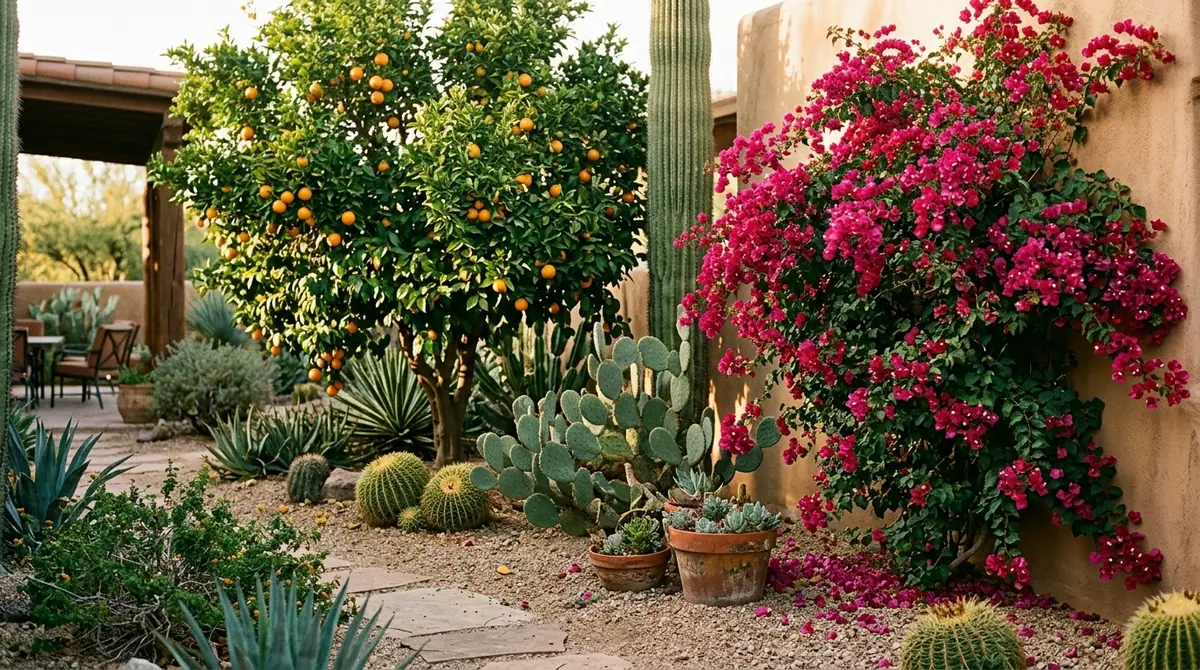
Sweat was already dripping onto my clipboard by 8:15 AM during my third summer redesign in the Arcadia neighborhood, watching a freshly installed clump of Muhlenbergia capillaris crisp up at the edges like cheap bacon. I had planted it with the exact root-flare depth and amendments I used back in coastal California, entirely ignoring the brutal acoustic of the Sonoran Desert sun. Phoenix is not merely a warm climate; it is an unforgiving, high-irradiance environment where standard horticultural rules actively kill plants if you do not respect the hardiness boundaries.

1. Botanical Overview & Natural Habitat
Phoenix sits in the Sonoran Desert, one of the most structurally diverse arid regions on Earth. Botanically classified as a subtropical desert, the native ecosystem relies on two rainy seasons—winter storms and the summer North American Monsoon—interspersed by prolonged droughts.
When you establish a planting plan in Zone 9b/10a, you are working with plants that have evolved specialized adaptations to survive extreme solar radiation and water scarcity:
- Cranium Protection: Many native and adapted species utilize vertical leaf orientations, heavy waxes (cuticles), or dense indumentum (hairs) to reflect light and reduce transpiration.
- Root Architecture: Taproots plunging down 10 to 20 feet (3 to 6 meters) to access deep water tables contrast sharply with wide, shallow lateral networks designed to catch every drop of a sudden 0.5-inch (1.2 cm) summer cloudburst.
- Photosynthetic Pathways: CAM (Crassulacean Acid Metabolism) plants like agaves and cacti open their stomata exclusively at night to capture carbon dioxide, minimizing moisture loss during the scorching 115°F (46°C) afternoons.
Understanding this native habitat changes how you select material. You cannot treat a Phoenix garden like a temperate English border; it is an exercise in ecological mimicry. To dive deeper into regional horticulture guidelines, consult the University of Arizona Cooperative Extension, which provides invaluable localized research for desert growers.
2. Essential Environmental & Care Requirements
Gardening in Phoenix requires managing three non-negotiable environmental constraints: intense thermal loads, high soil pH, and high-evapotranspiration rates.
| Parameter | Optimal Condition | Common Mistake | Why It Matters |
|---|---|---|---|
| Soil pH | 7.5 to 8.5 (Alkaline) | Adding acidic peat moss or heavy sulfur | Alkaline soils lock up iron; fighting the natural pH causes severe chlorosis. |
| Watering Depth | 18 to 24 inches (45 to 60 cm) | Frequent, shallow 5-minute watering cycles | Shallow water trains roots to stay near the surface, where soil heat fries them. |
| Sun Exposure | Morning sun, afternoon shade for non-natives | Unshaded west-facing exposures for tender species | Afternoon radiant heat in June–August causes irreversible leaf scorch. |
| Mulching | 3 inches (7.5 cm) of mineral/gravel mulch | Piling organic mulch against the trunk | Organic mulch traps heat and moisture around the root crown, inviting fungal rot. |
Irrigation is your primary maintenance tool. In Phoenix, drip systems must be calibrated seasonally. During the peak summer months of July and August, when ambient temperatures regularly exceed 105°F (40°C), established desert trees require deep soaking every 7 to 10 days, while turf and non-natives need much more frequent, tailored application. In contrast, winter watering schedules drop dramatically to once every 21 to 30 days for established desert-adapted flora.
💡 Pro-Tip: Never use black plastic weed barrier under your decorative rock mulch in Phoenix. It bakes the soil, suffocates the micro-biome, and forces plant roots into a shallow, heat-stressed layer right beneath the plastic sheet. Use a permeable woven geotextile fabric if you must, or better yet, rely on a thick 3-inch (7.5 cm) layer of mineral aggregate alone and pull weeds by hand while they are young.
3. Step-by-Step Cultivation, Feeding & Propagation
Planting in Phoenix demands strict adherence to timing. The absolute best planting window is October through February, when daytime temperatures hover between 65°F and 75°F (18°C to 24°C). This allows root systems to establish undisturbed for 3 to 4 months before the brutal summer heat stress hits.
Follow this rigorous step-by-step protocol for installing new landscape plants in the Valley of the Sun:
- Dig the Hole Correctly: Excavate a hole that is 2 to 3 times wider than the nursery container, but no deeper than the root ball itself. The top of the root flare must sit 1 inch (2.5 cm) above the surrounding grade to account for settling.
- Leave Amendments Out: Do not amend the backfill soil with rich compost or peat. Backfill with the native Phoenix caliche-laced soil so the plant adapts immediately to the surrounding physical and chemical reality.
- Build a Basin: Construct a temporary earthen watering basin twice the diameter of the root ball, with a berm height of 4 inches (10 cm), to hold irrigation water directly over the root zone.
- Initial Sinking Flood: Place the plant, fill the hole halfway with native soil, and water thoroughly to collapse air pockets. Fill the rest of the way and soak again.
- Apply Mineral Mulch: Spread 3 inches (7.5 cm) of decomposed granite or crushed rock across the planting bed, keeping the aggregate 2 inches (5 cm) away from direct contact with the trunk or stem.
- Establish an Irrigation Schedule: Install dedicated low-flow drip emitters spaced 12 inches (30 cm) apart in a ring around the drip line, rather than placing a single emitter directly against the trunk.
For propagation, many desert natives like Palo Verde (Parkinsonia species) and Desert Willow (Chilopsis linearis) respond exceptionally well to seed scarification in the spring, while columnar cacti easily yield viable pads and pups cleanly sliced and calloused for 14 days before soil insertion. For comprehensive regional plant selection guides, check the resources provided by the Desert Botanical Garden.
⚠️ Important Caution: Never prune frost-damaged tissue on bougainvilleas, citrus, or lantana in December or January. While the brown, burned leaves look unsightly, they act as an insulating blanket protecting the inner cambium layer from subsequent cold snaps. Wait until all danger of frost has passed, usually by mid-March, before making pruning cuts.
4. Common Problems, Pests & Troubleshooting
Desert landscapes present unique pathologies. When plants fail in Phoenix, the diagnostic process differs significantly from temperate zones.
- Caliche Interference: A natural layer of calcium carbonate cement hardens beneath the topsoil in many parts of the Valley. If your shovel hits concrete-like rock 12 inches (30 cm) down, roots will deflect horizontally. Break through this layer with a pickaxe or mechanical auger during planting to ensure vertical drainage, or plant on raised mounds.
- Iron Chlorosis: Characterized by bright yellow leaves with stark green veins, this deficiency happens because alkaline Phoenix soils lock up available iron. Do not apply granular fertilizers blindly; instead, use chelated iron (Fe-EDDHA) applied as a soil drench when soil temperatures are warm.
- Sunburn (Southwest Injury): Intense solar radiation on unprotected tree trunks—especially young citrus or thin-barked species like mesquites—destroys the cambium on the south and west exposures. Paint vulnerable trunks with interior white latex paint diluted 50% with water to reflect harmful rays until the canopy grows wide enough to shade the bark.
- Pest Pressures: Scale insects, spider mites, and palo verde borers thrive in dry, dusty urban conditions. Wash foliage down with a hard jet of water at dawn to disrupt spider mite webs, and avoid high-nitrogen synthetic fertilizers that trigger a flush of succulent growth, which acts as a beacon for chewing insects.

5. Frequently Asked Questions
What planting zone is Phoenix Arizona?
Phoenix spans USDA Hardiness Zones 9b and 10a. Average annual extreme minimum temperatures range from 25°F to 35°F (-4°C to 2°C). However, urban heat island effects mean many inner-city neighborhoods rarely drop below freezing, while outlying desert fringes experience colder winter microclimates.
When is the best time to plant trees and shrubs in Phoenix?
The ideal planting window is late fall through early spring (October through February). Planting during this cool-season window allows root systems to grow uninterrupted for several months before the intense summer heat forces the plant into dormancy or high-stress survival mode.
Can I grow citrus successfully in Phoenix?
Yes, Phoenix has a rich history of citrus production, particularly navel oranges, grapefruit, lemons, and mandarins. Success requires deep monthly summer irrigations, full sun exposure, well-draining soil, and applying whitewash or maintaining low canopies to protect thin-barked trunks from severe sunburn.
How often should I water newly installed desert plants?
For the first 2 to 4 weeks after planting in cooler weather, water new shrubs and trees every 2 to 3 days by filling the root basin deeply. Gradually taper down frequency while increasing duration, ensuring water penetrates 18 to 24 inches (45 to 60 cm) deep to encourage deep root development. Never rely on daily 5-minute sprinkler bursts.
Related Guides
- What Hardiness Zone is Sacramento
- What Planting Zone is Sacramento Ca
- What Zone is Columbus Ohio
- What Planting Zone is Virginia in
- Zone 9 Plants Full Sun
📋 Table of Contents ▼ Click to expand
Tags:
🌿 Related Plants You Might Like
PlantSavvyWorld
Editorial team
PlantSavvyWorld is an independent botanical education project. Articles are drafted with AI assistance, then edited and checked against university extension services, botanical garden collections and other published horticultural sources.