

What Zone is Oregon for Planting
Written with AI assistance, edited and checked against horticultural sources.
1. Botanical Overview & Natural Habitat

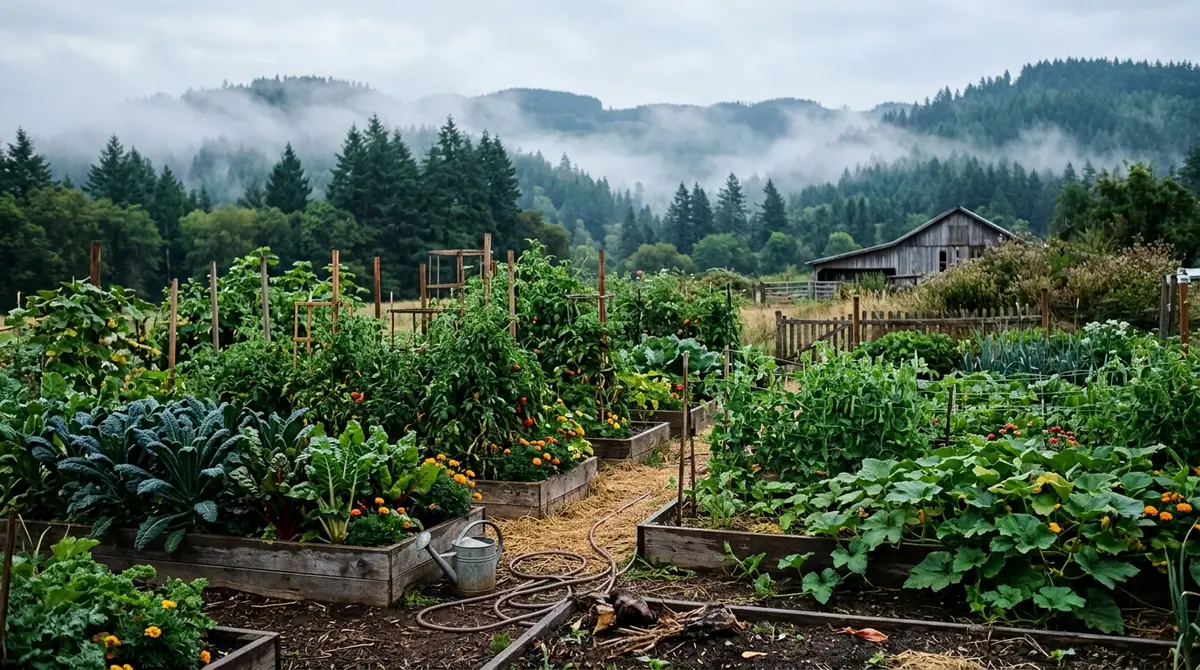
Along the narrow coastal strip from Brookings to Astoria, the maritime influence locks the region into USDA Zones 8b through 9a. Here, winter extreme minimum temperatures rarely dip below 15°F to 25°F (-9.4°C to -3.8°C), and summer highs hover around a comfortable 65°F to 72°F (18.3°C to 22.2°C). Move inland into the Willamette Valley—stretching from Eugene up to Portland—and you enter USDA Zone 8a to 8b, characterized by winter lows plunging to 10°F (-12.2°C) and hot, dry summers peaking above 90°F (32.2°C) for consecutive weeks.
As you climb the western slopes of the Cascades, the zones drop rapidly. High-elevation planting sites in zones 5b through 7b experience winter lows reaching -15°F to 5°F (-26.1°C to -15°C). Cross over the mountains into Central and Eastern Oregon (Bend, Pendleton, and Ontario), and you enter the high desert and interior plateaus of USDA Zones 4a through 6b. In these regions, winter low temperatures frequently bottom out at -25°F to -5°F (-31.6°C to -20.6°C), compounded by intense solar radiation and severe freeze-thaw cycles that can heave newly established perennial roots right out of the soil profile.
To understand how regional differences dictate success, consult the Oregon State University Extension Service for hyper-local microclimate data.
2. Essential Environmental & Care Requirements
Planting successfully in Oregon requires matching your specific zone's thermal profile with precise soil and moisture management. In the western valleys and coastal zones, annual precipitation ranges from 40 to 60 inches (101 to 152 cm), concentrated primarily between October and May. Summers are exceptionally dry, often receiving less than 2 inches (5 cm) of total rainfall across July and August.
Conversely, Eastern Oregon is a rain shadow desert, receiving a mere 9 to 15 inches (23 to 38 cm) of annual precipitation, much of it falling as snow between November and March. Soil pH varies wildly across the state as well. The Willamette Valley features naturally acidic soils ranging from pH 5.5 to 6.5 due to ancient marine sediments and basaltic parent materials. As you move east of the Cascades, soils shift dramatically toward neutrality or high alkalinity, often testing at pH 7.5 to 8.5 with high free lime content.
| Parameter | Optimal Condition | Common Mistake | Why It Matters |
|---|---|---|---|
| Soil pH (Western OR) | 5.5 – 6.5 (slightly acidic) | Forcing alkaline-loving plants without amendment | Nutrient lockout of phosphorus, iron, and manganese occurs below pH 5.0. |
| Soil pH (Eastern OR) | 7.0 – 8.0 (neutral to alkaline) | Applying heavy sulfur dressings blindly | Drastic pH swings destroy beneficial soil microbiology and stunt root growth. |
| Winter Mulching Depth | 3.0 to 4.0 inches (7.6 to 10.2 cm) | Piling mulch directly against plant stems ("volcano mulching") | Trapped moisture invites fungal pathogens, crown rot, and rodent nesting. |
| Irrigation Volume (Summer) | 1.0 inch (2.5 cm) per week total | Frequent, shallow surface watering (0.25 inches daily) | Deep watering encourages downward root development, ensuring drought resilience. |
💡 Pro-Tip: When planting in Western Oregon's heavy clay loam during autumn, dig your planting holes twice as wide as the root ball but no deeper than the root flare. Glazed sides on clay holes act like bathtubs; scoring the edges with a spade ensures lateral root escape.
3. Step-by-Step Cultivation, Feeding & Propagation
Establishing a resilient garden in Oregon means working with your specific frost dates and soil composition, rather than fighting them. Here is the field-tested cultivation protocol I use for perennial and woody plant installation across the state:
- Site Assessment and Zone Verification: Identify your precise USDA zone using the latest maps, and record your local average last spring frost date (ranging from mid-April in coastal Zone 9a to early June in high-elevation Zone 4b).
- Soil Preparation and Amendment: Perform a core soil test at a depth of 6 inches (15 cm). In Western Oregon, incorporate coarse organic compost to improve drainage in clay-dominant sites. In Eastern Oregon, amend calcareous soils with elemental sulfur or organic peat only if planting acid-loving species like blueberries (Vaccinium corymbosum).
- Excavation and Root Conditioning: Dig a basin three times the diameter of the container width and equal to the depth of the root ball. Gently tease circling roots outward by hand or with a hori-hori knife to prevent girdling roots from strangling the plant as it matures.
- Initial Hydration: Place the plant in the unamended native soil hole, ensuring the root crown sits 0.5 to 1.0 inch (1.3 to 2.5 cm) above the surrounding grade to account for settling. Fill the hole halfway, tamp gently to remove air pockets, and soak with water until saturated.
- Finishing and Mulching: Finish filling the hole, build a 3-inch (7.6 cm) water-retention basin berm around the perimeter, and apply a 3.0-inch (7.6 cm) layer of arborists' wood chips, leaving a 2.0-inch (5.1 cm) breathing gap around the stem.
- Supplemental Irrigation Scheduling: Provide 1.0 inch (2.5 cm) of water weekly through the first dry summer season (June through September). For plants sourced from the Royal Horticultural Society plant finder, verify drought tolerance ratings before dialing back irrigation inputs in subsequent years.
4. Common Problems, Pests & Troubleshooting
Oregon’s distinct climate zones present unique pathology and pest pressures. In the damp, moderate conditions of Western Oregon (Zones 8-9), fungal pathogens thrive. Powdery mildew (Erysiphe species) and shot hole disease (Stigmina carpophila) frequently attack stone fruits and ornamentals during wet spring springs. The solution is aggressive air circulation management through selective pruning and copper-based dormant sprays applied in late November.
Slugs (Deroceras reticulatum and Arion species) are the bane of Willamette Valley and coastal gardeners. They decimate herbaceous perennials in early spring when nighttime temperatures remain above 40°F (4.4°C) and relative humidity is high. Apply iron phosphate baits around susceptible hostas and delphiniums at the first sign of emerging foliage.
In Eastern Oregon's high desert zones (Zones 4-6), the primary threats shift to abiotic stress: winter desiccation and windburn. Frigid, dry winds sweep across the plateaus, stripping moisture from evergreen conifers faster than frozen root systems can replace it. Furthermore, late spring frosts frequently damage tender flower buds on fruit trees like peaches and apples. Protect vulnerable specimens with burlap windbreaks erected by November 1st, and utilize floating row covers when late freezes threaten blooms in May.
⚠️ Important Caution: Never apply high-nitrogen synthetic fertilizers to perennial plants or shrubs in Oregon after August 1st. Late-season nitrogen flushes soft, succulent new growth that cannot harden off before the first autumn freeze, leaving the plant catastrophically vulnerable to frost crack and winter dieback.

5. Frequently Asked Questions
What is the most common planting zone in Oregon?
The most widely populated agricultural and residential regions of Oregon—specifically the Willamette Valley, including Portland, Salem, and Eugene—fall squarely into USDA Hardiness Zone 8a and 8b. Minimum winter temperatures in these zones typically range from 10°F to 20°F (-12.2°C to -6.7°C).
When should I plant cool-season vegetables in Western Oregon?
In USDA Zone 8, you can direct-sow cool-season crops like kale, spinach, and peas as early as mid-February to early March, once soil temperatures consistently exceed 45°F (7.2°C) at a 4-inch (10 cm) depth. A second planting window opens in late August for a reliable fall and winter harvest.
Can I grow Mediterranean herbs in Central Oregon?
Growing true Mediterranean herbs like lavender (Lavandula angustifolia) or rosemary (Rosmarinus officinalis) is challenging in Central Oregon's high desert Zones 4 and 5 without winter protection. While cold-hardy lavender cultivars like 'Munstead' can survive winters down to -20°F (-28.9°C) if planted in sharply draining, gravelly soil, standard rosemary will succumb to root-zone freezing unless container-grown and brought indoors.
How do I protect tender perennials from Oregon's winter rains?
Western Oregon winters feature excessive moisture rather than extreme cold, which causes crown rot in Mediterranean and alpine plants. To prevent loss, plant these species on sloped beds or raised mounds amended with 50% horticultural pumice or coarse sand, and shield sensitive crowns with transparent cloches or cold frame glass from November through March.
Related Guides
- What Zone is Oregon in for Planting
- What Hardiness Zone is Sacramento
- What Planting Zone is Sacramento Ca
- What Zone is Columbus Ohio
- What Planting Zone is Virginia in
📋 Table of Contents ▼ Click to expand
Tags:
🌿 Related Plants You Might Like




PlantSavvyWorld
Editorial team
PlantSavvyWorld is an independent botanical education project. Articles are drafted with AI assistance, then edited and checked against university extension services, botanical garden collections and other published horticultural sources.