

What Zone is Nh
Written with AI assistance, edited and checked against horticultural sources.
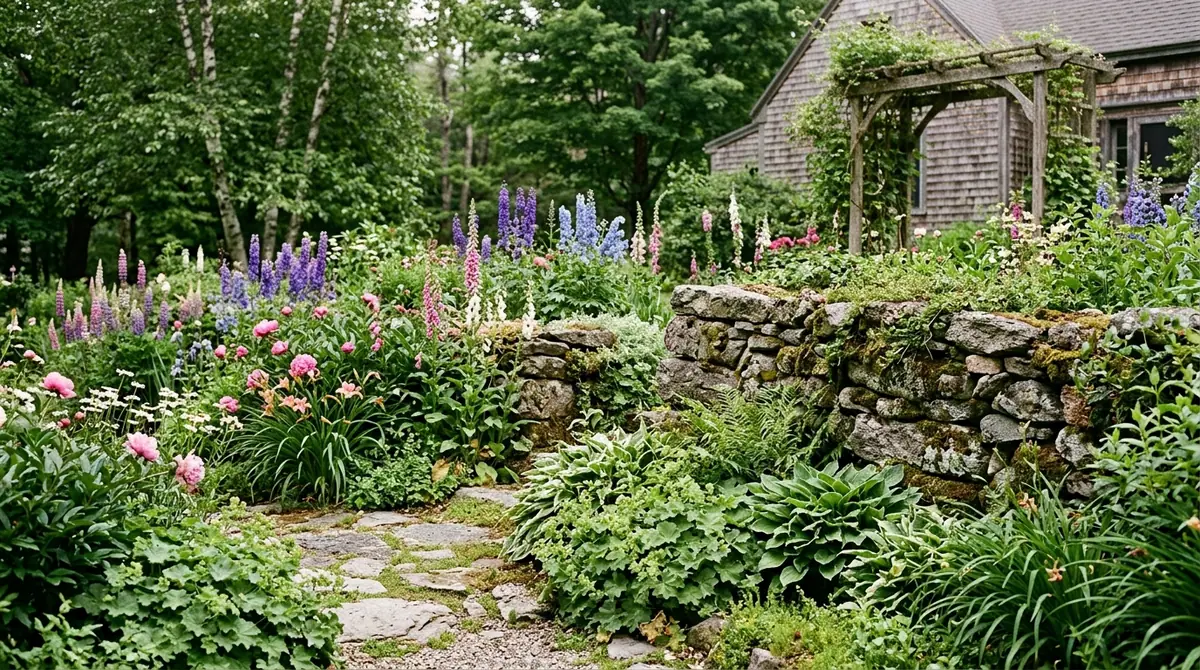
Standing knee-deep in a drafty propagation hoop house in Canterbury, New Hampshire, during a biting late-March nor'easter, I watched heavy, wet snow bend the heavy-duty tubular steel framing while my overwintered Echinacea purpurea dormant root crowns sat frozen at 18°F (-7.8°C) beneath four inches of crusty, insulating snowpack. Every year, new transplants and lifelong Granite State residents alike panic over the exact same existential question when planning their perennial borders or vegetable patches: what zone is nh?

Let's dive deep into the microclimates, thermal belts, and soil mechanics that dictate successful gardening across the Granite State.
1. Botanical Overview & Natural Habitat
New Hampshire’s diverse topography creates dramatic transitions in plant hardiness over remarkably short geographical distances. The state ranges from extreme low winter temperatures of -25°F to -30°F (-31.7°C to -34.4°C) in the northern interior (Zone 4b) up to mild coastal lows of 0°F to -5°F (-17.8°C to -20.6°C) in towns like Portsmouth and Hampton (Zone 6b). The vast interior of the state—including the Lakes Region and Merrimack Valley—sits comfortably in Zone 5a through 5b, where average annual extreme minimum temperatures hover between -15°F and -20°F (-26.1°C to -28.9°C).
Understanding these zones requires looking closely at how natural habitats form across our glacial till soils. Native understory plants like the bunchberry (Cornus canadensis) and wild bleeding heart (Dicentra eximia) thrive in the acidic, forest-floor leaf mold of Zones 4 and 5, where summer soil temperatures rarely spike above 65°F (18.3°C) at a depth of 6 inches (15 cm). Conversely, southern New Hampshire’s transition into Zone 6b supports a broader range of borderline-hardy broadleaf evergreens, such as specific Rhododendron cultivars and American hollies (Ilex opaca), which would desiccate and perish during an open, windy winter freeze in Coos County.
When designing landscapes in New Hampshire, you are working with native ecosystems shaped by glaciation. Our soils are predominantly Spodosols and Inceptisols—rocky, acidic, and heavily leached of nutrients. Native perennial taxa have evolved deep taproots or extensive rhizomatous networks to survive the freeze-thaw cycles that occur when winter daytime temperatures swing from 35°F (1.7°C) to 5°F (-15°C) within a 24-hour period.
2. Essential Environmental & Care Requirements
Gardeners navigating New Hampshire's distinct plant zones must design their maintenance schedules around a compressed, high-intensity growing season. The frost-free window ranges from a mere 90 to 110 days in the northern highlands (Zones 4b-5a) to roughly 140 to 160 days in the southeastern coastal plain (Zone 6b).
Soil temperature dictates planting times far more reliably than the calendar. For warm-season crops like tomatoes (Solanum lycopersicum) and peppers (Capsicum annuum), soil must consistently read 60°F (15.6°C) at a 4-inch (10-cm) depth before direct sowing or hardening off. Because our native glacial soils are naturally heavy in granite gravel and mica schist, amending with organic matter is mandatory for water retention and nutrient exchange.
| Parameter | Optimal Condition | Common Mistake | Why It Matters |
|---|---|---|---|
| Soil pH | 6.0 – 6.8 for general vegetables; 4.5 – 5.5 for ericaceous plants | Neglecting to test and lime acidic NH granite soils | Highly acidic soil locks up essential phosphorus and calcium, stunting root development. |
| Frost Protection | Floating row covers with 1.5 oz/sq yd density | Relying on unreinforced sheets during late freezes | Sudden May drops to 28°F (-2.2°C) will rupture cellular walls in tender spring shoots. |
| Mulch Depth | 2 to 3 inches (5 to 7.5 cm) of shredded bark or pine straw | Piling mulch directly against tree trunks ("volcano mulching") | Excess moisture against the bark invites fungal pathogens and tunneling rodents. |
| Irrigation | 1 inch (2.5 cm) of water weekly via drip lines | Frequent, shallow hand-watering | Shallow watering encourages weak, surface-level root systems vulnerable to mid-summer drought. |
💡 Pro-Tip: When calculating your planting dates in New Hampshire, always cross-reference the updated USDA Plant Hardiness Zone Map with local topographical observations. A south-facing slope in Zone 5b can easily behave like Zone 6a due to thermal radiation bouncing off nearby stone walls, allowing you to push the envelope with tender perennials.
3. Step-by-Step Cultivation, Feeding & Propagation
Establishing a resilient garden in New Hampshire’s variable climate requires precise timing. Follow this step-by-step protocol for installing hardy perennials and warm-season annuals in the Granite State:
- Site Assessment & Soil Testing: Collect core samples from your garden beds at a depth of 6 inches (15 cm). Send them to the UNH Cooperative Extension soil testing lab to determine exact pH and macronutrient deficits before buying amendments.
- Bed Preparation & Amendment: Clear all perennial weeds like quackgrass. Incorporate 2 inches (5 cm) of well-aged compost and, if necessary, agricultural limestone to raise the pH closer to the neutral 6.5 sweet spot for mixed borders.
- Seed Starting Under Glass: Sow cool-season crops (kale, broccoli, pansies) indoors 6 to 8 weeks before your region's average last spring frost date. Maintain a soil temperature of 65°F to 70°F (18.3°C to 21.1°C) using propagation heating mats.
- Hardening Off: Move indoor-started seedlings to a sheltered, shaded outdoor spot for 1 hour on day one, gradually increasing exposure to direct sun and wind over a 14-day period to toughen up cuticular leaf waxes.
- Transplanting & Root Establishment: Dig planting holes twice as wide as the root ball but no deeper than the container's original soil line. Water thoroughly with a diluted kelp or seaweed extract to minimize transplant shock.
- Winterizing the Landscape: After the ground freezes solid in late November (typically when soil stays below 32°F / 0°C for three consecutive days), apply a 3-inch (7.5-cm) layer of evergreen boughs or straw over sensitive perennials to prevent cyclical frost-heaving.
⚠️ Important Caution: Never fertilize woody ornamentals or perennial shrubs past mid-July in New Hampshire zones. Late-season nitrogen applications stimulate succulent, rapid growth that cannot harden off before the first autumn freeze, resulting in severe winter dieback and structural vulnerability.
4. Common Problems, Pests & Troubleshooting
New Hampshire gardeners frequently battle environmental stressors and opportunistic pests uniquely adapted to our regional climate.
- Frost Heaving: Caused by alternating freezing and thawing cycles in early spring, this phenomenon pushes newly planted perennials entirely out of the soil, exposing their root crowns to lethal desiccation. Mitigate this by pressing heaved plants gently back into the earth after a thaw and adding a fresh layer of protective winter mulch.
- Winter Burn on Evergreens: Arctic winds combined with frozen root zones prevent broadleaf evergreens from replacing moisture lost through transpiration on bright, sunny winter days. Shield vulnerable specimens like boxwoods (Buxus) and dwarf conifers with burlap screens erected before December.
- Slug and Snail Infestations: Driven by damp spring conditions across the Lakes Region and river valleys, slugs decimate young hosta and dahlia shoots. Use physical barriers like copper tape or apply iron phosphate bait around the perimeter of susceptible beds.
- White Pine Weevil (Pissodes strobi): A major native pest that attacks the terminal leaders of white pines and spruces, causing a characteristic "shepherd's crook" deformation. Prune and destroy infested leaders in early summer before emerging adults bore out of the stem.

5. Frequently Asked Questions
What exact USDA zone is Concord, New Hampshire?
Concord, New Hampshire, sits firmly in USDA Hardiness Zone 5b, where average annual extreme minimum temperatures drop to -15°F to -10°F (-26.1°C to -23.3°C). However, urban heat-island effects in the downtown core can occasionally push microclimates into a mild Zone 6a.
Can I grow palm trees or citrus outdoors in New Hampshire?
No standard citrus or true palm species will survive New Hampshire's winters unprotected, as they cannot tolerate extended freezes below 25°F (-3.9°C). If you want a tropical look on your patio during the summer months, grow hardy palms like the needle palm (Rhapidophyllum hystrix) in containers and move them into a frost-free basement or greenhouse by October.
When is the safe last frost date for planting vegetables in NH?
The average last spring frost date varies wildly across the state. In northern zones (Zone 4b/5a like Berlin), gardeners must wait until early to mid-June. In southern and coastal zones (Zone 6b like Portsmouth), planting can safely commence around mid-May once nighttime lows consistently remain above 45°F (7.2°C).
Why are my perennial plants dying in the winter even though they are rated for my zone?
Winter mortality in New Hampshire is frequently caused by poor soil drainage rather than absolute cold temperatures. If heavy clay soils stay waterlogged during autumn rains and subsequently freeze, root systems suffocate and rot. Always ensure your perennial beds feature loose, well-draining loam.
Related Guides
- What Hardiness Zone is Sacramento
- What Planting Zone is Sacramento Ca
- What Zone is Columbus Ohio
- What Planting Zone is Virginia in
- Zone 9 Plants Full Sun
📋 Table of Contents ▼ Click to expand
Tags:
🌿 Related Plants You Might Like


PlantSavvyWorld
Editorial team
PlantSavvyWorld is an independent botanical education project. Articles are drafted with AI assistance, then edited and checked against university extension services, botanical garden collections and other published horticultural sources.