

What Zone is Nebraska for Planting
Written with AI assistance, edited and checked against horticultural sources.
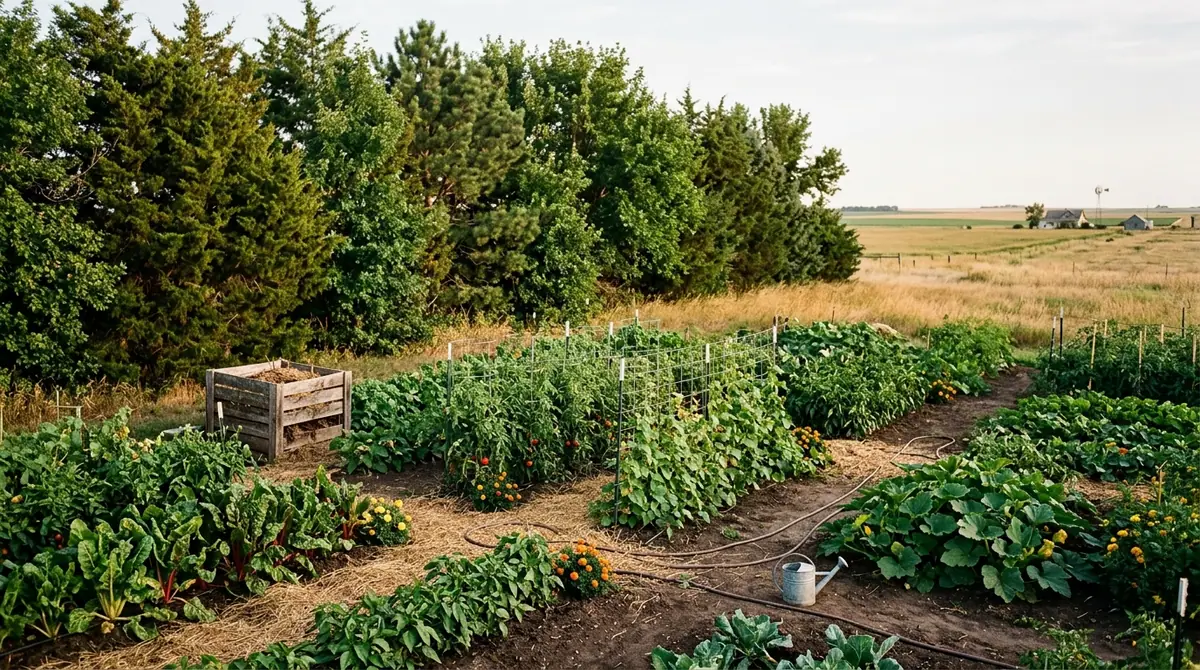
A rogue late-May drop to 26°F (-3.3°C) can completely defoliate 'Endless Summer' hydrangeas, while nearby prairie dropseed pushes up electric-green blades unaffected. That is Nebraska horticulture in a nutshell: a high-stakes masterclass in continental temperature swings, wind-scoured plains, and shifting boundaries. When growers regularly ask, the short answer—Zones 4 through 6—doesn't begin to capture the nuance of gardening between the Missouri River and the panhandle.
1. Botanical Overview & Natural Habitat

This geographic positioning places Nebraska squarely in the temperate continental climate zone, characterized by extreme seasonal divergence. Summers are hot and humid in the east, turning arid and breezy in the west, with peak July temperatures routinely exceeding 95°F (35°C). Precipitation drops off precipitously from east to west: Omaha averages roughly 32 inches (81 cm) of annual precipitation, while Scottsbluff receives a mere 15 inches (38 cm).
The native vegetation transitions just as dramatically. Historically, eastern Nebraska supported rich tallgrass prairies dominated by big bluestem (Andropogon gerardii) and switchgrass (Panicum virgatum), interspersed with bur oak (Quercus macrocarpa) ravines. Moving westward into the rain shadow of the Rocky Mountains, the landscape shifts to mixed-grass and shortgrass prairie, featuring blue grama (Bouteloua gracilis) and western wheatgrass (Pascopyrum smithii), alongside sandy blowout penstemon (Penstemon haydenii) specialized for the shifting dunes of the Sandhills.
Understanding these native habitats is the foundation of successful landscape design in the Cornhusker State. Plants adapted to deep, moisture-retentive mollisols in the east will struggle in the calcareous, fast-draining sandy soils of the west without significant amendment or targeted irrigation management.
2. Essential Environmental & Care Requirements
Gardening in Nebraska requires designing for the wind, the freeze-thaw cycles, and the extremes. The state’s soils are famously fertile—particularly the Marshall and Judson series in the east—boasting high organic matter and deep profiles. However, compaction from intensive historical agriculture and construction can turn these rich loams into concrete-like monoliths if managed poorly. Soil pH generally hovers between 6.0 and 7.5, though pockets of high alkalinity exist in western counties where free calcium carbonate accumulates.
💡 Pro-Tip: Never rely solely on your USDA hardiness zone when selecting perennials or woody plants in Nebraska; always check your county's average first and last frost dates, which can vary by up to three weeks between the Platte River valley and the elevated tablelands. Consult the [University of Nebraska-Lincoln Extension Horticulture](https://extension.unr.edu or https://cropwatch.unl.edu) for hyper-local frost data that accounts for urban heat islands and cold-air drainage basins.
Sunlight is abundant, with the state receiving between 2,500 and 3,000 hours of sunshine annually. This high solar radiation, combined with persistent winds out of the south and northwest, accelerates evapotranspiration rates. Plants that look drought-hardy on paper can scorch or dry out rapidly when exposed to 25 mph (40 km/h) July winds on an open acreage.
| Parameter | Optimal Condition | Common Mistake | Why It Matters |
|---|---|---|---|
| Soil pH | 6.2 – 7.0 for general perennials; 5.5 – 6.0 for ericaceous plants | Planting acid-loving ericaceous plants (like blueberries) in native alkaline soils without acidification | Alkaline soils lock up iron, causing severe chlorosis and eventual plant decline. |
| Irrigation Depth | 1 to 1.5 inches (2.5 to 3.8 cm) of water per week via rain or deep soaking | Frequent, shallow watering that encourages surface root development | Deep watering forces roots down past the freeze line, protecting them from winter heaving. |
| Wind Protection | Strategic placement of windbreaks or multi-tiered shrub borders | Planting wind-sensitive broadleaf evergreens on exposed western or northern exposures | Winter desiccation kills foliage faster than sub-zero temperatures by pulling moisture out of leaves faster than roots can replace it. |
| Mulch Application | 2 to 3 inches (5 to 7.6 cm) of organic shredded bark, kept 2 inches away from stems | Poking mulch directly against tree trunks (volcano mulching) | Trapped moisture invites fungal pathogens, crown rot, and destructive rodents during winter. |
3. Step-by-Step Cultivation, Feeding & Propagation
Establishing a resilient garden in Nebraska’s variable zones requires strict adherence to seasonal timing. Follow this sequential protocol for installing new perennial beds or shrub borders:
- Site Assessment and Soil Testing: Core-sample your garden soil down to 8 inches (20 cm) in early spring. Send the sample to a lab to determine exact nutrient levels, organic matter percentage, and pH.
- Bed Preparation and Amendment: Clear all perennial weeds like Canada thistle (Cirsium arvense). Spread 2 inches (5 cm) of well-rotted compost or leaf mold over the bed and incorporate it into the top 6 inches (15 cm) using a garden fork, avoiding deep tilling that disrupts beneficial soil microbiology.
- Planting Timing: Install container-grown woody plants and herbaceous perennials between April 15 and May 30, or in autumn between September 1 and October 15. Avoid planting during July and August heatwaves.
- Excavation Geometry: Dig planting holes twice as wide as the root ball but no deeper than the root flare. The top of the root ball must sit 0.5 inches (1.2 cm) above the surrounding grade to account for settling.
- Initial Watering and Settling: Fill the planting hole halfway with native soil, tamp gently by hand to remove large air pockets, and saturate with water. Finish filling, create a 3-inch (7.6-cm) soil berm at the outer edge of the root zone to act as a catchment basin, and water deeply again.
- Mulching and Wind Staking: Apply a 3-inch (7.6-cm) layer of shredded hardwood mulch across the bed, leaving a clear zone around stems. Install temporary green stakes and flexible ties for trees with trunk diameters under 2 inches (5 cm) to prevent root-rocking from high winds.
⚠️ Important Caution: Do not apply high-nitrogen synthetic fertilizers to perennial plantings or woody ornamentals after August 1. Late-season nitrogen flushes soft, succulent growth that cannot harden off before the first hard freeze, leading to catastrophic winter kill.
4. Common Problems, Pests & Troubleshooting
Nebraska gardeners face a unique confluence of environmental stressors and opportunistic pests.
Winter injury is the most frequent diagnosis I encounter. Because winter temperatures can plummet from 50°F (10°C) down to -5°F (-20.5°C) within 24 hours during a dramatic Arctic front passage, plant tissues rupture if they haven't achieved deep dormancy. To mitigate this, apply a heavy 4-inch (10-cm) layer of straw or wood mulch around marginally hardy perennials (such as hybrid tea roses or certain lavender cultivars) after the ground freezes solid in December, preventing the freeze-thaw cycle from heaving plants out of the soil.
Insect pests thrive in the warm, dry summers. Japanese beetles (Popillia japonica) have marched westward across Nebraska, decimating linden trees, roses, and raspberries. Hand-picking them into soapy water at dawn or utilizing targeted biological controls like entomopathogenic nematodes (Heterorhabditis bacteriophora) applied to lawns in late summer helps break their life cycle.
5. Frequently Asked Questions
What planting zone is Omaha, Nebraska?
Omaha is classified as USDA Hardiness Zone 5b, where average annual minimum winter temperatures drop to -15°F to -10°F (-26.1°C to -23.3°C). However, urban heat island effects in the city center often allow protected microclimates to behave like Zone 6a.
When is the safe date to plant tomatoes outside in Nebraska?
The safe frost-free planting window ranges from May 10 in the extreme southeast (Falls City) to May 25 or even early June in the panhandle (Alliance and Scottsbluff). Always monitor local 10-day forecasts for unexpected late spring cold snaps before putting tender solanaceous crops in the ground.
Can I grow cold-hardy cacti in Nebraska?
Yes, absolutely. Several cacti species are native to Nebraska and thrive in Zones 4 and 5, provided they have sharp drainage. The brittle prickly pear (Opuntia fragilis) and plains prickly pear (Opuntia macrorhiza) handle freezing winter temperatures effortlessly as long as winter moisture does not pool around their root crowns.
What are the best drought-tolerant trees for western Nebraska?
For western Nebraska's dry, windy climate (Zone 4b/5a), prioritize rugged trees such as the bur oak (Quercus macrocarpa), hackberry (Celtis occidentalis), Rocky Mountain juniper (Juniperus scopulorum), and honeylocust (Gleditsia triacanthos var. inermis). These species possess deep taproots or compartmentalized vascular systems built to withstand prolonged soil moisture deficits and drying winds.
Related Guides
- What Zone is Nebraska in for Planting
- What Planting Zone is Sacramento Ca
- What Zone is Columbus Ohio
- What Planting Zone is Virginia in
- Zone 9 Plants Full Sun
📋 Table of Contents ▼ Click to expand
Tags:
🌿 Related Plants You Might Like


PlantSavvyWorld
Editorial team
PlantSavvyWorld is an independent botanical education project. Articles are drafted with AI assistance, then edited and checked against university extension services, botanical garden collections and other published horticultural sources.