

What Zone is Missouri for Plants
Written with AI assistance, edited and checked against horticultural sources.
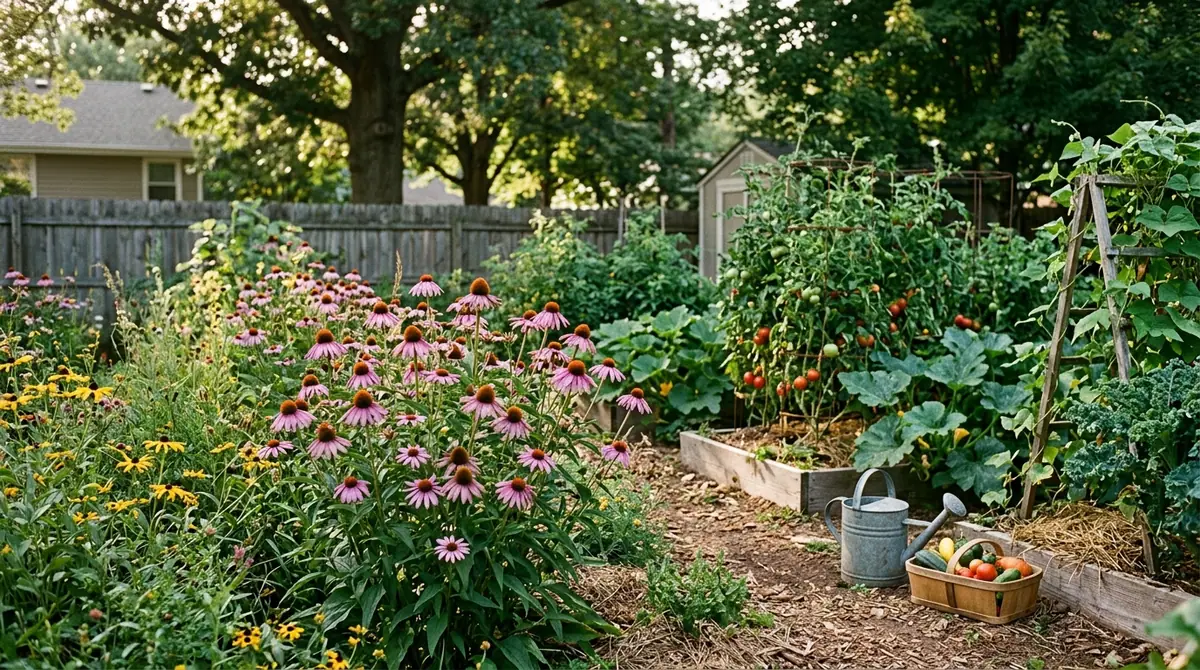
A patch of frost-heaved soil on a biting 18°F (-7.8°C) morning in late March highlights the difficulty of getting a Mediterranean lavender hedge to survive the winter in Columbia, Missouri. Missouri is a botanical tightrope walk. Straddling the transition zone between the humid continental climate of the upper Midwest and the humid subtropical climate of the American South, the Show-Me State is a masterclass in dynamic weather extremes. If you are asking "what zone is missouri for plants," the short answer is that Missouri spans USDA hardiness zones 5a through 7b. But that single statistic hides a complex web of microclimates, river valleys, urban heat islands, and drastic temperature swings that dictate whether a garden thrives or fails.
1. Botanical Overview & Natural Habitat

When translated into average annual minimum winter temperatures, this means northern Missouri (Zone 5a, dropping to -20°F to -15°F / -28.9°C to -26.1°C) experiences significantly harsher winters than the Bootheel region in the extreme southeast (Zone 7b, bottoming out at 5°F to 10°F / -15.0°C to -12.2°C). St. Louis and Kansas City generally hover in Zone 6b (-5°F to 0°F / -20.6°C to -17.8°C), though urban density often creates microclimates that effectively bump a yard up half a zone.
Native habitats mirror this climatic diversity. Northern Missouri and the dissected till plains were historically tallgrass prairie, interspersed with oak-hickory forests along river corridors. These soils are deep, fertile mollisols rich in organic matter. Southern Missouri features the Ozark Highlands, characterized by cherty, well-drained limestone soils that support glades, pine-oak woodlands, and rich understories where acid-loving and drought-tolerant species alike find purchase.
Understanding your specific local conditions requires looking beyond statewide generalizations. For official, highly localized zone lookups based on recent meteorological tracking, I always direct growers to the USDA Plant Hardiness Zone Map. When designing landscapes, I treat these zones not as rigid walls, but as baseline guidelines that must be adjusted for wind exposure, moisture retention, and slope orientation.
2. Essential Environmental & Care Requirements
Gardeners in Missouri face a unique set of environmental parameters. Summer temperatures routinely exceed 95°F (35°C) with relative humidity climbing above 80%, while winter freezes can plunge overnight by 40 Fahrenheit degrees (22 Celsius degrees) during an Alberta clipper cold front.
Soil composition varies wildly across the state. In the River Hills, you will encounter wind-blown loess that is deeply fertile yet prone to erosion. In the Ozarks, your spade will frequently strike chert gravel and heavy clay subsoils that impede drainage. In the northern and western prairies, heavy clay-loam dominates, holding onto moisture in spring but baking into concrete bricks by August.
| Parameter | Optimal Condition | Common Mistake | Why It Matters |
|---|---|---|---|
| Soil pH | 6.0 to 6.8 for general gardens; 4.5 to 5.5 for ericaceous plants | Assuming uniform native soil pH across the entire state | Incorrect pH locks out essential micronutrients like iron and phosphorus, causing chlorosis. |
| Drainage | Percolation rate of 1 to 2 inches (2.5 to 5 cm) per hour | Planting directly into unamended dense native clay | Waterlogged roots suffocate and rot during Missouri's notoriously wet spring rainy seasons. |
| Mulch Depth | 2 to 3 inches (5 to 7.5 cm) of organic shredded hardwood | Piling mulch 6+ inches deep against tree trunks ("volcano mulching") | Excess mulch traps moisture against bark, inviting fungal pathogens, collar rot, and voles. |
| Irrigation | 1 inch (2.5 cm) of water per week via rainfall or deep soaking | Frequent, shallow surface watering that encourages weak root systems | Deep soaking trains roots to grow downward into cooler, more stable soil profiles. |
💡 Pro-Tip: In Missouri’s transition climate, sudden spring frosts can decimate tender growth pushed out by an unseasonably warm February. Always keep lightweight frost blankets (rated for 4°F to 8°F / -15.6°C to -13.3°C protection) on hand, and hold off on heavy perennial pruning until night temperatures consistently stay above 40°F (4.4°C).
3. Step-by-Step Cultivation, Feeding & Propagation
Mastering Missouri horticulture requires timing your interventions with the state's erratic seasonal shifts. Whether you are laying out a new perennial border or establishing a vegetable patch, follow this proven sequential protocol:
- Site Assessment and Soil Testing: Dig a 6-inch (15 cm) deep core sample in early spring. Send it to your local university extension service—the University of Missouri Extension offers exceptional, low-cost soil testing—to determine exact nutrient deficiencies and organic matter percentages.
- Bed Preparation and Tillage Mitigation: Clear existing weeds. If working with heavy Missouri clay, avoid tilling when wet; instead, broadfork the soil and incorporate 2 to 3 inches (5 to 7.5 cm) of well-aged leaf mold or compost to improve aggregate structure without destroying soil microbiology.
- Hardening Off Transplants: If you are starting warm-season crops like tomatoes or peppers indoors, begin hardening them off in mid-April to early May. Set them in a sheltered, shaded outdoor spot for 2 hours on day one, gradually increasing sun exposure and wind duration over 10 to 14 days. If you are looking to maximize your harvest, review my guide on How to Grow Huge Tomato Plants: Pruning, Trenching & Heavy Yields.
- Strategic Planting Depth: Dig planting holes twice as wide as the root ball but no deeper than the root flare. For companion plantings in summer, integrate cultural pairings that handle mid-season humidity; for ideas on balancing space and pest deterrence, check out Sweet Potato Companion Plants: 8 Best Garden Friends & 3 Foes to Avoid.
- Initial Watering and Mulching: Water the root zone thoroughly with at least 1 gallon (3.8 liters) of water per square foot of planting area. Apply a 2-inch (5 cm) layer of shredded hardwood mulch, leaving a 2-inch (5 cm) breathing ring clear around stems and trunks.
- Seasonal Maintenance and Propagation: Feed perennials in early spring with a balanced, slow-release organic fertilizer (such as a 5-5-5 NPK blend). Propagate woody shrubs via softwood cuttings taken in June, dipping 4-inch (10 cm) stems in rooting hormone before sticking them in a 50/50 perlite-and-peat medium.
4. Common Problems, Pests & Troubleshooting
Missouri's high humidity and fluctuating spring temperatures create a breeding ground for environmental stress and opportunistic pathogens.
- Powdery Mildew (Erysiphe species): Thrives in humid summer conditions with warm days and cool nights, coating leaves in a white, talcum-powder-like substance. Solution: Thin out dense branch structures to improve airflow, water at the base of plants in the morning, and apply bio-fungicides containing Bacillus subtilis at the first sign of spores.
- Tomato Hornworms (Manduca quinquemaculata): These massive green caterpillars can strip a tomato plant of its foliage and fruit overnight. Solution: Hand-pick them at dusk using a blacklight flashlight (they glow fluorescent green). If you spot white cottony cocoons on their backs, leave them be—those are parasitic braconid wasp larvae doing the pest control work for you.
- Root Rot (Phytophthora and Pythium): Common in poorly draining Missouri clay soils following heavy spring downpours. Solution: Improve sub-surface drainage with raised beds or swales, amend with coarse organic matter, and avoid over-watering.
- Japanese Beetles (Popillia japonica): Arrive in mid-summer to skeletonize the leaves of roses, fruit trees, and birch. Solution: Hand-drop beetles into a bucket of soapy water during the cool morning hours when they are sluggish. Avoid pheromone traps, as they frequently lure more beetles into your yard than they catch.
⚠️ Important Caution: Never use broad-spectrum systemic insecticides (like neonicotinoids) on flowering plants in Missouri. They persist in pollen and nectar, posing a severe, documented threat to native pollinators, honeybees, and beneficial predatory insects that keep your garden ecosystem in balance.

5. Frequently Asked Questions
What planting zone is St. Louis Missouri?
St. Louis is officially classified in USDA Hardiness Zone 6b, where average annual minimum winter temperatures fall between -5°F and 0°F (-20.6°C to -17.8°C). However, the urban heat island effect within the city center frequently behaves more like a warm Zone 7a, allowing certain marginally hardy broadleaf evergreens and tropicals to overwinter if sheltered from north winds.
When is the last frost date in Missouri?
Average last spring frost dates vary significantly by region across the state. In southern Missouri (Zone 7), the last frost typically occurs between late March and early April. In central Missouri (Zone 6), expect the last frost around mid-to-late April. In northern Missouri (Zone 5), freezing temperatures can occur as late as mid-May. Always track your local 10-day forecast rather than relying strictly on calendar dates.
Can I grow figs and palm trees in Missouri?
Yes, with caveats. Cold-hardy fig varieties like 'Chicago Hardy' can be successfully grown in zones 6 and 7 if planted in a protected microclimate (such as against a south-facing brick wall) or heavily mulched and wrapped for winter. Certain cold-hardy palms, such as the Needle Palm (Rapidophyllum hystrix), can survive southern Missouri winters if given immaculate winter drainage. For indoor tropicals and specialized winter-flowering specimens, consult my Holiday Plants Care Guide: How to Force Poinsettias to Rebloom & Holiday Cacti ID.
What are the best drought-tolerant native plants for Missouri clay?
Native Missouri species have evolved deep root systems specifically adapted to handle heavy clay alternating with summer dry spells. Excellent landscape choices include Purple Coneflower (Echinacea purpurea), Butterfly Milkweed (Asclepias tuberosa), Black-Eyed Susan (Rudbeckia hirta), and aromatic asters. These plants establish deep channels that slowly break up dense clay over time while requiring virtually no supplemental irrigation once established.
Related Guides
- What Zone is Missouri in for Plants
- What Zone is Missouri in for Planting
- What Zone is Missouri for Planting
- What Planting Zone is Sacramento Ca
- What Zone is Columbus Ohio
📋 Table of Contents ▼ Click to expand
Tags:
🌿 Related Plants You Might Like




PlantSavvyWorld
Editorial team
PlantSavvyWorld is an independent botanical education project. Articles are drafted with AI assistance, then edited and checked against university extension services, botanical garden collections and other published horticultural sources.