

Heat Tolerant Dahlias
Written with AI assistance, edited and checked against horticultural sources.
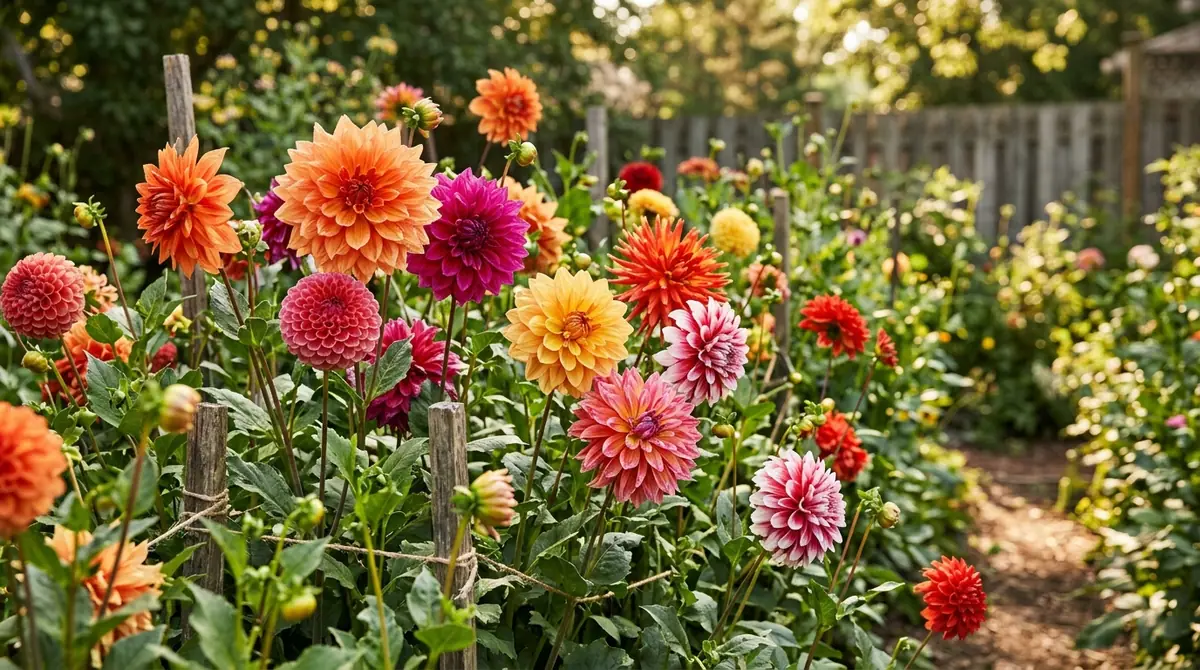
I stood in trial gardens in late July, wiping sweat from my forehead as the afternoon thermometer hit 98°F (37°C). While the heritage dinnerplate dahlias across the bed had collapsed into scorched, crispy brown stalks—completely exhausted by weeks of relentless sun—a single block of compact, single-flowered cultivars was humming with pollinators, throwing electric orange and magenta blooms without a single burnt petal. That trial season changed everything I thought I knew about Dahlia breeding limitations, proving that heat tolerant dahlias are not an urban legend; they are a horticultural reality, provided you choose the right genetics.
1. Botanical Overview & Natural Habitat

Traditional modern hybrids, bred extensively in cool, overcast maritime climates like the Pacific Northwest or the United Kingdom, have been selected for massive blooms and lush, succulent foliage. When placed in modern suburban landscapes experiencing prolonged summer heatwaves exceeding 85°F (29°C) day after day, these cold-climate cultivars stall, drop their buds, and invite pests.
Heat tolerant dahlias differ physiologically. They typically feature smaller, deeply cut foliage with a thicker waxy cuticle (reducing transpirational water loss), shorter internodes, and single or semi-double blossom forms that do not trap heat and moisture within heavy petal mazes. Species such as Dahlia merckii and Dahlia tenuifolia (with its finely divided, fern-like leaves) are naturally adapted to arid, high-radiation environments and serve as key breeding lines for modern heat-resistant cultivars.
2. Essential Environmental & Care Requirements
Growing dahlias successfully in hot climates requires striking a delicate balance between providing the intense light they crave and buffering them against extreme thermal stress.
| Parameter | Optimal Condition | Common Mistake | Why It Matters |
|---|---|---|---|
| Light Exposure | 6 to 8 hours of morning sun; afternoon shade (12 PM – 4 PM) | Full, unfiltered blast of all-day desert or deep-South sun | Afternoon UV intensity scorches leaves and cooks developing flower buds. |
| Soil Temperature | 60°F to 75°F (15°C to 24°C) at planting depth | Planting into cold, soggy spring soil below 50°F (10°C) | Tubers rot before roots can form; cold soil halts metabolic awakening. |
| Watering Depth | 1 to 1.5 inches (2.5 to 3.8 cm) of water per week, deeply applied | Frequent, shallow daily sprinklings | Shallow watering encourages surface root mats that dry out instantly in heat. |
| Soil pH | 6.5 to 7.0 (slightly acidic to neutral) | Planting in alkaline soils above 7.8 | High pH locks out essential micronutrients like iron and manganese, causing chlorosis. |
| Mulch Layer | 2 to 3 inches (5 to 7.5 cm) of shredded hardwood or straw | Piling mulch directly against the tuber stem | Direct stem contact traps moisture, inviting stem rot and fungal pathogens. |
When planning your landscape layout, consider pairing these vibrant summer bloomers with architectural shrubs and drought-adapted companion plants as detailed in our guide on How to Design a Drought Tolerant Mediterranean Garden, which provides excellent strategies for managing high-glare planting beds.
💡 Pro-Tip: In USDA Zones 8 through 10, position your heat tolerant dahlias to receive direct eastern exposure while shielding them behind taller, air-permeable ornamental grasses like Stipa tenuissima. This filters the brutal 3 PM rays by roughly 30% without plunging the plants into light starvation.
3. Step-by-Step Cultivation, Feeding & Propagation
Establishing heat tolerant dahlias demands precision timing. If you plant too early in cold spring soil, the tubers rot; if you plant too late, the plants hit peak bloom precisely as mid-summer heatwaves peak.
- Site Selection & Soil Preparation: Select a bed with morning sun and well-draining soil. Dig a trench or hole 6 to 8 inches (15 to 20 cm) deep. Amend heavy clay or sandy loam with 3 inches (7.5 cm) of well-rotted compost to improve both drainage and moisture retention.
- Tuber Placement: Lay the dahlia tuber horizontally with the "eye" (the growing bud zone on the crown) pointing upward. Ensure the tuber sits 4 to 6 inches (10 to 15 cm) below the final soil grade so the roots stay insulated from surface heat spikes.
- Initial Watering Protocol: Fill the hole halfway with soil, water thoroughly to settle the dirt around the tuber, then backfill completely. Do not water again until green shoots emerge from the soil surface, typically within 14 to 21 days, preventing rot in unrooted tubers.
- Pinching for Branching: When the main stem reaches 12 inches (30 cm) tall and displays at least 4 sets of true leaves, use sterile shears to cut out the central growing tip just above the top leaf node. This forces lateral branching, creating a bushier, more wind- and heat-resistant plant canopy.
- Targeted Fertilization: Feed every 21 days from active growth until late summer using a low-nitrogen, high-phosphorus organic fertilizer (such as a 5-10-10 or 4-10-7 formulation). Avoid heavy nitrogen fertilizers, which spur soft, succulent green growth that attracts sap-sucking insects during heatwaves.
- Division & Propagation: In late winter or early spring before shoots break dormancy, lift established clumps. Using a sharp, sterilized utility knife, divide the tuber cluster so each section contains at least one viable eye and a portion of the central neck. For academic insights into tuber biology, consult the Royal Horticultural Society Dahlia Propagation Guide.
⚠️ Important Caution: Never use high-nitrogen lawn fertilizers near your dahlias. Excessive nitrogen forces rapid, weak cell expansion that drastically lowers the plant's natural heat tolerance and leaves it defenseless against aphids and spider mites.
4. Common Problems, Pests & Troubleshooting
Extreme summer heat stresses plants and creates ideal microclimates for opportunistic pests and physiological disorders.
- Spider Mites (Tetranychus urticae): These microscopic arachnids thrive in hot, dusty, dry conditions. You will notice fine stippling on the upper leaf surface and webbing underneath. Blast the undersides of leaves daily with a strong jet of cold water, or apply horticultural insecticidal soap in the early morning before temperatures exceed 80°F (26°C).
- Tarnished Plant Bugs & Thrips: High heat accelerates insect life cycles. Nymphs feed on developing flower buds, causing distorted, deformed, or aborted blooms. Control populations using targeted applications of neem oil or spinosad applied strictly at dusk to protect foraging bees.
- Powdery Mildew: Paradoxically, humid heat alternating with dry soil triggers white, powdery fungal patches on older foliage. Space plants at least 3 feet (0.9 m) apart to maximize airflow, water at the soil line using drip irrigation, and remove infected basal leaves immediately. For regional diagnostic support, check the University of California Statewide Integrated Pest Management Program.
- Flower Scorch & Bud Blast: When temperatures persistently exceed 95°F (35°C), transpiration outpaces root uptake, causing petal margins to brown and crisp. Implement 30% shade cloth structures during peak afternoon hours and maintain consistent, deep soil moisture.

5. Frequently Asked Questions
Which dahlia varieties handle extreme heat best?
Single-flowered, anemone-flowered, and collarette types generally outperform massive dinnerplate cultivars in hot climates. Look for specific heat-adapted series such as the 'Bishop' series (e.g., 'Bishop of Llandaff'), the Gallery series, and species hybrids like Dahlia merckii. These cultivars possess smaller leaf surface areas, open centers that resist heat trapping, and robust root systems.
How often should I water heat-stressed dahlias?
In peak summer temperatures above 90°F (32°C), dahlias require deep irrigation 2 to 3 times per week, delivering a total of 1.5 to 2 inches (3.8 to 5 cm) of water weekly. Always water deeply at the base in the early morning hours. This allows foliage to dry completely before the sun hits, minimizing fungal issues while ensuring root zones are fully saturated before midday heat sets in.
Should I cut back my dahlias in mid-summer heat?
Yes. If your plants stall, drop their buds, and look fried by mid-August, use sharp pruners to shear back the top third of the plant to a strong, outward-facing leaf node. Apply a fresh 2-inch (5 cm) layer of mulch, water deeply, and feed with a balanced organic fertilizer. Within 14 to 21 days, the plant will flush out a brand-new, robust canopy that will provide pristine autumn blooms when temperatures begin to drop.
Can I grow heat tolerant dahlias in containers in hot climates?
You certainly can, but containers present unique thermal challenges because potting soil heats up much faster than garden earth. Use light-colored, breathable containers (like large fabric grow bags or thick-walled resin pots) measuring at least 18 inches (45 cm) across. Use a premium, moisture-retaining potting mix blended with perlite, and position the pots where they receive morning sun and complete shade from 1 PM onward.
Related Guides
- How to Design a Drought Tolerant Mediterranean Garden
- How to Heat Greenhouse in Winter
- Monstera Sheath
📋 Table of Contents ▼ Click to expand
Tags:
Keep reading
🌿 Related Plants You Might Like



PlantSavvyWorld
Editorial team
PlantSavvyWorld is an independent botanical education project. Articles are drafted with AI assistance, then edited and checked against university extension services, botanical garden collections and other published horticultural sources.