
Dying Cactus
Written with AI assistance, edited and checked against horticultural sources.
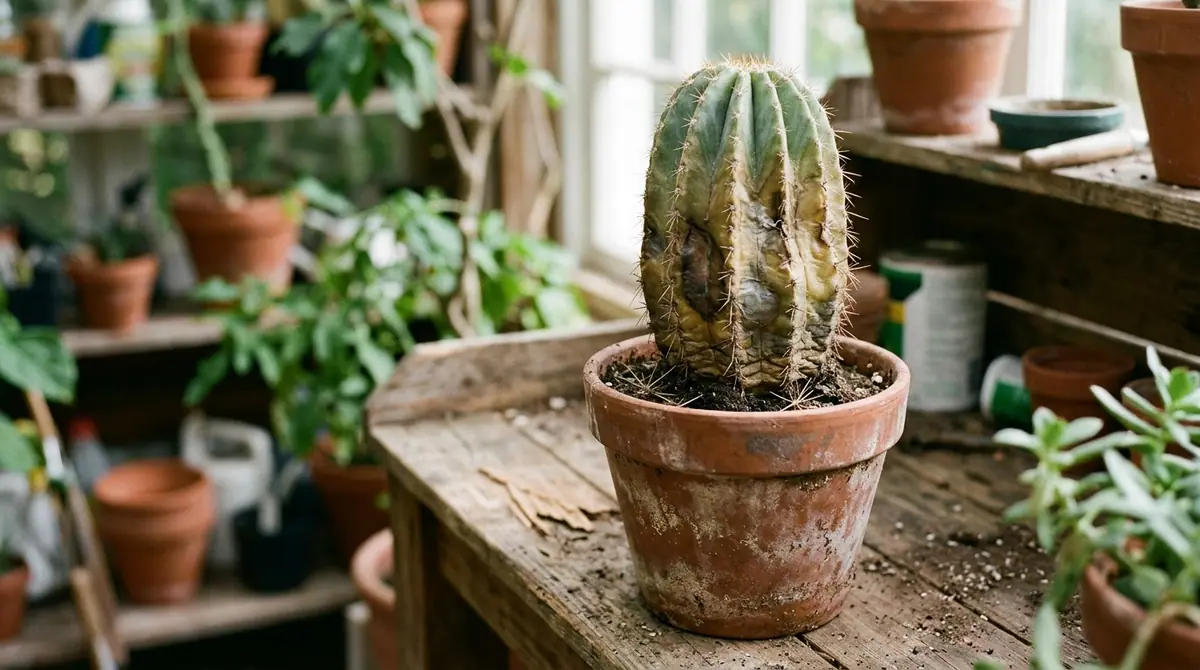
When a specimen Echinocactus grusonii develops a translucent, yellowish collar at the soil line that yields with a squish when pressed, it is the unmistakable signature of internal rot working its way upward from a forgotten cold draft and a waterlogged winter resting period. A rescue operation involving a sterile razor blade, sulfur powder, and a race to excise rotting cortex before it reaches the apical meristem teaches what every struggling plant parent eventually learns: a dying cactus gives plenty of warnings long before it collapses, provided you know how to read its anatomy.
1. Botanical Overview & Natural Habitat
To understand why a cactus is dying in your living room, you must first understand the evolutionary pressures that shaped its architecture. Cactaceae are native primarily to the arid and semi-arid regions of the Americas, stretching from the rolling deserts of the American Southwest down to the high-altitude puna of the Andes and the dry tropical forests of Argentina.
Unlike leafy tropical foliage, cacti are masterclass adaptations in water conservation and thermal regulation. Their stems—fleshy, succulent structures known as phylloclades or modified stems—have assumed the burden of photosynthesis, a duty normally reserved for leaves. True leaves have been ruthlessly eliminated by evolution, reduced instead to spines, glochids, or tiny scales that minimize surface area exposure to desiccating winds and intense solar radiation.
At the cellular level, these stems are packed with mucilaginous parenchyma tissue capable of storing vast quantities of water during infrequent rainfall events. To protect this internal water reservoir from thirsty herbivores and extreme thermal shifts, the epidermis is heavily cutinized and studded with sunken stomata that remain tightly sealed during the heat of the day. Gas exchange occurs almost exclusively at night via Crassulacean Acid Metabolism (CAM) photosynthesis, a specialized biochemical pathway where carbon dioxide is fixed into malic acid under the cover of darkness to prevent transpirational water loss.
In their natural habitats, these plants experience blistering daytime summer temperatures often exceeding 100°F (38°C), followed by nocturnal radiational cooling that drops temperatures down to 60°F (15°C) or lower. Winter regimens involve prolonged dry periods where temperatures can dip near freezing—32°F to 40°F (0°C to 4°C)—triggering a metabolic slowdown or dormancy. When we drop a desert native into a climate-controlled apartment with stagnant air, ambient humidity of 60%, and organic potting soil that stays damp for 14 days, we are short-circuiting millions of years of fine-tuned evolutionary biology.
2. Essential Environmental & Care Requirements
Rescuing a dying cactus begins with correcting the environmental mismatches that caused its decline. Let us examine the specific parameters required to restore physiological equilibrium.
| Parameter | Optimal Condition | Common Mistake | Why It Matters |
|---|---|---|---|
| Light | 6+ hours of direct, unfiltered sunlight (south- or west-facing exposure) | Placing in interior rooms or behind heavy UV-blocking window glass | Insufficient light causes etiolation, weakening structural integrity and inviting rot. |
| Substrate | Mineral-heavy mix: 40% coarse sand/pumice, 40% perlite, 20% low-organic compost | Using straight "potting soil" or heavy garden loam | High organic matter retains moisture too long, suffocating roots and fostering fungal pathogens. |
| Watering | Soak-and-dry method: water thoroughly until it drains, allow to dry completely for 14 to 30 days | Sipping water weekly or keeping soil constantly damp | Constant moisture destroys root hairs, preventing water uptake and inducing root rot. |
| Temperature | Summer: 75°F–90°F (24°C–32°C); Winter dormancy: 50°F–60°F (10°C–15°C) | Exposing to freezing drafts below 32°F (0°C) while soil is wet | Wet tissues freeze and rupture cell walls, leading to instant systemic collapse. |
| Airflow | Gentle, continuous air movement (open windows or oscillating fans) | Stagnant, humid indoor environments | Stagnant air promotes fungal spores and attracts sap-sucking insect colonies. |
Lighting is frequently the primary culprit behind a failing specimen. If your cactus is stretching into a pale, tapered, pencil-like point at its apex—a phenomenon known as etiolation—it is desperately seeking photons. Conversely, moving a dark-store cactus straight into intense afternoon desert sun will scorch the epidermis, leaving permanent, bleached, necrotic scars. Acclimate plants to brighter exposures over a 21-day period by increasing direct sun exposure by 45 minutes every few days.
Substrate composition is equally non-negotiable. Desert soils are lean, rocky, and drain instantly. When planting or repotting, use containers featuring a drainage hole with a diameter of at least 0.5 inches (1.2 cm). For deep guidance on regional soil amendments, consult the University of Arizona Cooperative Extension publication database on desert horticulture.
💡 Pro-Tip: When evaluating your cactus's thirst, never rely solely on the surface appearance of the soil. Insert a clean, untreated wooden dowel vertically down into the pot until it hits the bottom. Leave it for 30 seconds. If the wood emerges damp, dark, or carrying clinging soil particles at a depth of 3 inches (7.5 cm) or more, hold off on watering for another 10 days, regardless of how dry the topsoil looks.
3. Step-by-Step Cultivation, Feeding & Propagation
When a cactus is in active decline due to root rot or severe physical damage, passive observation will only lead to its demise. You must intervene with surgical precision. Here is the clinical protocol for rescuing and propagating a compromised specimen.
- Assess and Unpot: Gently tip the container on its side, tap the rim to loosen the root ball, and slide the plant out. Shake and tease away all old, degraded organic soil from the root system using your fingers or a soft brush.
- Inspect and Excise: Examine the root system and stem base under bright light. Healthy roots are firm, pale, and fibrous or tuberous; rotting roots are black, hollow, mushy, and slough off their outer sheaths when touched. Using a sharp utility blade sterilized in 70% isopropyl alcohol, slice away every trace of infected, discolored, or soft tissue. Cut back into clean, firm, lime-green or white flesh.
- Apply Antiseptic and Callus: Dust all fresh cuts liberally with agricultural sulfur powder or powdered rooting hormone containing a fungicide. Place the cutting or uprooted plant in a warm, dry, shaded location with high airflow for 7 to 14 days. This allows a protective, corky callus layer to form, sealing off the vascular bundles against pathogen entry.
- Prepare Specialized Media: Mix a fresh, highly porous propagation medium consisting of 50% inorganic grit (such as poultry grit, pumice, or expanded shale) and 50% coarse horticultural perlite or standard cactus mix. Avoid any media containing peat moss that has broken down into fine dust.
- Reset and Anchor: Position the callused base or root system into the dry medium, burying the stem no deeper than 0.5 to 1 inch (1.2 to 2.5 cm) to provide stability. Prop up top-heavy specimens with small stones rather than burying them deeper, which invites stem rot.
- Withhold Water: Keep the newly potted cactus completely dry for the first 21 to 30 days. Without roots, the plant cannot take up water; moisture in the soil will only trigger new fungal attacks on the unrooted callus.
- Initiate Gradual Hydration: After 30 days, or once minor root resistance is felt when gently tugging the base, administer a light perimeter watering. Return the plant to bright, indirect light for two weeks before transitioning it back to full, direct solar exposure.
⚠️ Important Caution: Never use household dish soap, petroleum-based horticultural oils, or unrefined cooking oils to treat pests on stressed or dying cacti. The waxy cuticles of stressed desert plants are exceptionally thin; heavy oils will clog their stomata and dissolve the epidermal defenses, causing chemical burns that accelerate tissue death within 48 hours.
For advanced collection management and international taxonomic standards, reference the resources provided by the Royal Botanic Gardens, Kew.
4. Common Problems, Pests & Troubleshooting
Diagnosing a dying cactus requires decoding the specific visual cues the plant exhibits under stress.
Root Rot (Phytophthora & Pythium fungi):
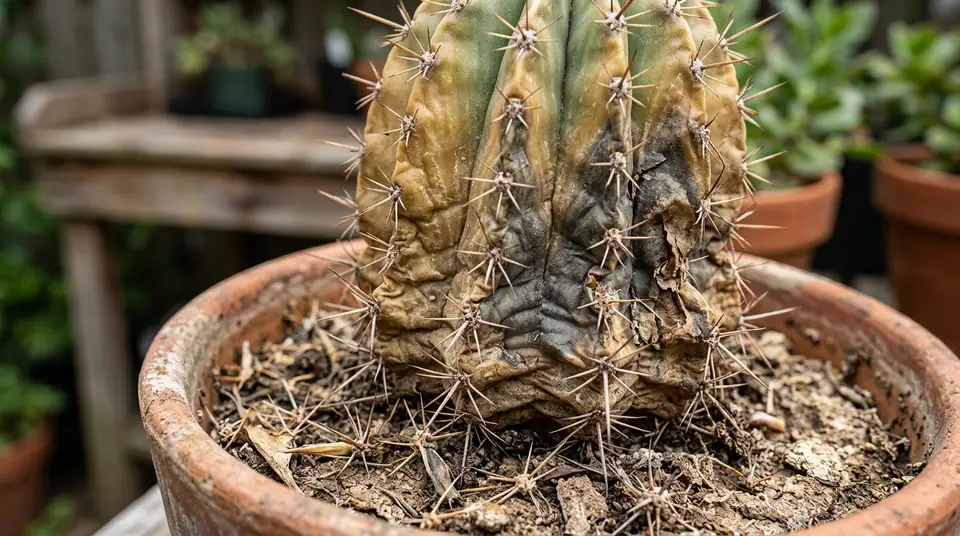
- Symptoms: The base of the stem turns translucent yellow, brown, or black and feels squishy. The upper pads or column may shrivel despite wet soil.
- Correction: Unpot immediately, excise all rot back to healthy tissue, dust with sulfur, callus for 14 days, and replant in dry, inorganic grit. Reduce watering frequency by half moving forward.
Sunburn and Heat Stress:
- Symptoms: Large, stark white, papery, or bronze patches appear on the side facing the window or light source. The tissue becomes permanently bleached and necrotic.
- Correction: Move the plant away from intense midday exposure or filter light with a 30% shade cloth for two weeks. Note that sunburn scars will never heal or turn green again; they remain as badges of past trauma.
Mealybugs and Scale Insects:
- Symptoms: White, cottony masses tucked into areoles and spine clusters (mealybugs) or hard, brown, immovable shell bumps along the ribs (scale). Plants become stunted and sticky with honeydew.
- Correction: Dip a cotton swab in 70% isopropyl alcohol and dab every visible insect to dissolve their protective waxy coatings instantly. Follow up with a targeted spray of potassium salts of fatty acids (insecticidal soap) applied strictly after sunset to prevent solar burning.
Underwatering and Desiccation:
- Symptoms: The cactus appears heavily wrinkled, accordion-pleated, or puckered at the base, leaning sideways as internal water stores deplete.
- Correction: Submerge the entire pot in a basin of room-temperature water up to the rim for 30 minutes, allowing the root ball to rehydrate fully. Drain thoroughly and resume normal watering intervals once every 14 to 21 days during the growing season.
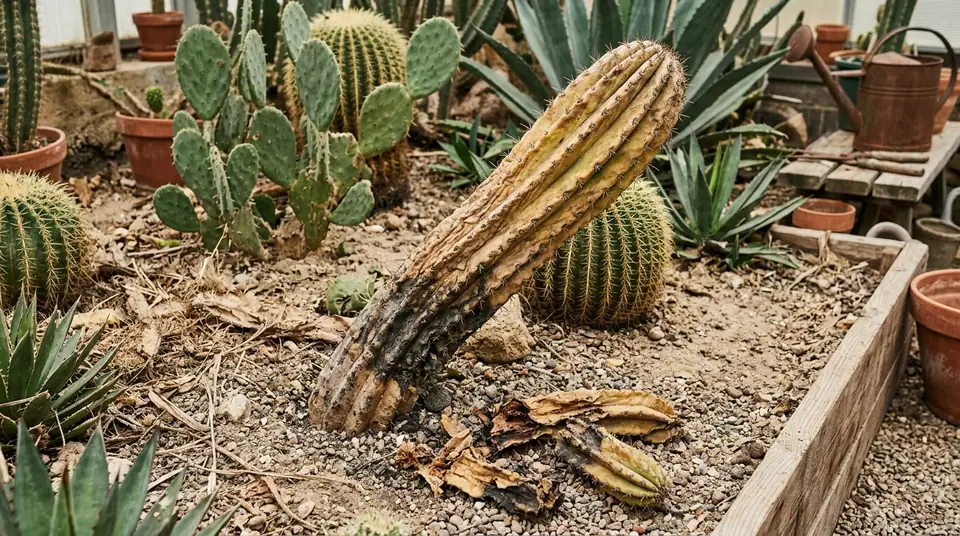
Shriveled and rotting cactus leaning in a greenhouse bed
5. Frequently Asked Questions
Can a squishy, rotting cactus be saved if only the top is healthy?
Yes. If the base and root system have completely rotted, you can perform a rescue cutting. Use a sterile razor blade to slice off the entire top section of the cactus well above the line of infection. The exposed cross-section of the stem must show clean, bright green tissue with no dark rings or brown spots in the vascular ring. Dust the cut with sulfur, let it dry and callus in bright shade for 14 to 21 days until a hard, greyish seal forms, and then root it upright in dry pumice.
Why is my indoor cactus turning yellow at the bottom?
Basal yellowing is almost universally caused by overwatering, compacted soil that holds moisture for too long, or a combination of both. When roots remain waterlogged, they suffocate and die, allowing soil-borne pathogens to enter the stem cortex. Check the firmness of the yellow tissue: if it is soft and yielding, you are dealing with rot that requires immediate surgical excision and repotting in gritty, fast-draining substrate.
How often should I water a potted cactus indoors?
There is no universal calendar schedule for watering cacti because drying rates depend entirely on your indoor humidity, ambient temperature, pot material, and soil composition. As a baseline rule during the active spring and summer growing season, water thoroughly until it streams out the drainage hole, then allow the soil to dry out completely for 14 to 28 days before watering again. During the winter rest period, reduce watering to once every 4 to 6 weeks, or suspend it entirely if indoor temperatures drop below 55°F (13°C).
Should I cut off the dry, brown spots on my cactus?
No. Unlike human skin or deciduous leaves, cacti cannot regenerate or heal scarred epidermal tissue. If a spot has turned brown, corky, or scabby due to past physical damage, sunburn, or healed pest injury, cutting it out will only create a fresh, open wound vulnerable to secondary fungal infections. Leave healed scars alone; the plant will naturally push them downward and outward as it grows over the coming seasons.
Related Guides
- Dog Tail Cactus Aerial Roots
- Variegated Cactus Plants
- How to Know When a Verruca is Dying
- Is My Bonsai Tree Dying
- What Does a Verruca Look Like When It is Dying
📋 Table of Contents ▼ Click to expand
Tags:
Keep reading
🌿 Related Plants You Might Like
PlantSavvyWorld
Editorial team
PlantSavvyWorld is an independent botanical education project. Articles are drafted with AI assistance, then edited and checked against university extension services, botanical garden collections and other published horticultural sources.