

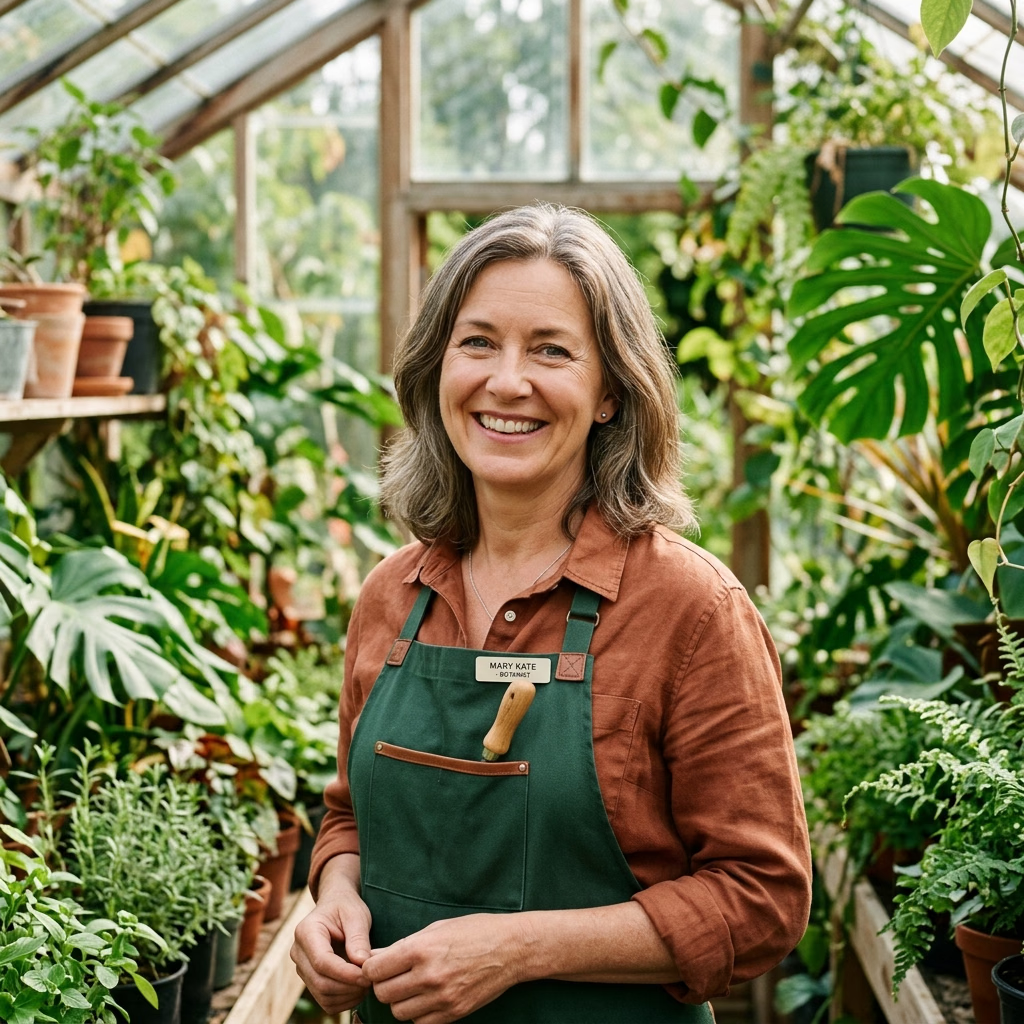
 Mary Kate
Standing on a hillside in La Jolla last February, checking the soil moisture of a struggling Protea cynaroides while a cool marine layer rolled in off the Pacific, I was reminded of why I fell in love with this region. San Diego is not a single garden; it is a tapestry of microclimates where you can grow subtropical mangoes (Mangifera indica) in the inland valleys and frost-tender succulents along the coastal cliffs, all within a thirty-minute drive.
When people ask me, "What zone is San Diego for gardening?" my answer is rarely a simple number. While the United States Department of Agriculture (USDA) officially classifies most of San Diego County into zones 10a through 11a—where average annual minimum temperatures range from 30°F to 40°F (-1.1°C to 4.4°C)—the reality on the ground is far more nuanced. Sunset Magazine's climate zones, which account for ocean influence, elevation, and winter radiation, carve the county into at least six distinct growing zones ranging from the mild coastal Zone 24 to the scorching interior desert Zone 13. Understanding these layers is the key to moving from keeping plants alive to watching them thrive.

1. Botanical Overview & Natural Habitat
San Diego’s native landscape is primarily characterized by coastal sage scrub and chaparral, environments shaped by Mediterranean-type weather patterns. This means long, dry summers with zero rainfall and mild, wet winters where precipitation falls predominantly between November and April, averaging 10 to 13 inches (25 to 33 cm) annually near the coast and up to 35 to 45 inches (89 to 114 cm) in the higher interior mountains like Palomar.
The botanical classification of San Diego's common garden palette spans several plant families, most notably Apocynaceae (oleanders, plumeria), Cactaceae, Arecaceae (palms), and Proteaceae. Because native soils are predominantly neutral to slightly alkaline (pH 6.5 to 7.5), highly weathered, and low in organic matter due to rapid mineralization, plants evolved specialized root systems. Many native shrubs, such as California lilac (Ceanothus spp.) and lemonade berry (Rhus integrifolia), rely on symbiotic mycorrhizal fungi to forage for sparse soil nutrients.
Temperature fluctuations define the limits of what you can plant. While coastal areas rarely dip below 40°F (4.4°C) in winter or exceed 75°F (23.9°C) in summer thanks to the moderating influence of the Pacific Ocean, inland valleys like El Cajon or Ramona experience scorching summer highs exceeding 100°F (37.8°C) and winter lows dropping to 32°F (0°C) or slightly below. Soil temperatures mirror this shift, staying warm enough to support year-round root activity for Mediterranean and subtropical species, provided they receive adequate moisture during the establishment phase.
2. Essential Environmental & Care Requirements
Mastering San Diego gardening requires managing three critical environmental factors: water salinity, sun exposure, and airflow.
Water quality in the region is notoriously hard, carrying high total dissolved solids (TDS) and sodium, which can accumulate in container soils and heavy clay beds. To prevent marginal leaf burn on sensitive plants like citrus and ferns, you must periodically leach your soil with deep, thorough irrigation cycles that push salts past the root zone, which typically extends to a depth of 18 to 24 inches (45 to 60 cm) for established shrubs.
| Parameter | Optimal Condition | Common Mistake | Why It Matters |
|---|---|---|---|
| Soil Drainage | Rapid percolation (1–2 inches per hour) | Planting in compacted, unamended native clay | Standing water leads directly to Phytophthora root rot. |
| Irrigation Depth | 12 to 18 inches (30 to 45 cm) deep soak | Frequent, shallow surface watering | Shallow watering encourages weak, surface-level root systems. |
| Sun Exposure | 6–8 hours of morning sun, afternoon shade | Exposing shade-lovers to 12 hours of intense inland heat | Intense ultraviolet rays cause severe leaf scorch and sun-scalding. |
| Fertilizer Timing | Early spring (March) and late summer (August) | Heavy nitrogen feeding during Santa Ana wind events | Forces tender new growth that dehydrates and burns instantly. |
Sun exposure changes drastically based on your distance from the coast. In coastal zones (USDA 10b), plants thrive in full, all-day sun. Move just 15 miles inland to USDA Zone 10a, and that same full sun exposure will bake a Japanese maple (Acer palmatum) or a delicate hydrangea into crisp parchment by 2:00 PM.
Air movement is another hidden variable. San Diego's periodic Santa Ana winds bring hot, dry air masses from the Great Basin desert, dropping relative humidity below 15% and pushing wind speeds past 40 mph (64 km/h). This combination strips moisture from plant leaves faster than the roots can replace it, causing rapid desiccation and structural limb breakage.
💡 Dr. Mary Kate's Pro-Tip: When planning your landscape layout, use boulders and existing hardscape to create micro-windbreaks. Planting tender specimens on the eastern or northern side of a structural wall shields them from the desiccating punch of autumn Santa Ana winds.
3. Step-by-Step Cultivation, Feeding & Propagation
Planting in San Diego's diverse zones requires a disciplined approach to site preparation, especially given the density of regional clay soils and the prevalence of alkaline conditions. Whether you are installing drought-tolerant California natives or heavy-feeding Mediterranean edibles, follow this proven establishment protocol.
- Site Assessment and Percolation Testing: Dig a hole 12 inches (30 cm) wide and 12 inches (30 cm) deep. Fill it with water and let it drain completely. Refill it and measure the drop in water level over one hour. If the water drops less than 1 inch (2.5 cm) per hour, you must amend the surrounding soil or build raised beds to prevent root rot.
- Hole Excavation: Dig your planting hole two to three times wider than the root ball, but keep the depth slightly shallow—the top of the root ball should sit 1 to 2 inches (2.5 to 5 cm) above the surrounding grade to account for settling.
- Root Pruning and Conditioning: Gently tease apart root-bound container plants, especially nursery-grown citrus and olives, to break any circling roots. Make four vertical cuts down the sides of the root mass with a clean knife if the roots are severely matted.
- Backfilling and Mulching: Backfill with native soil mixed with no more than 10% compost (do not heavily amend planting holes, as this creates a "bathtub effect" that traps water). Apply a 3-inch (7.6 cm) layer of coarse arborist wood chip mulch over the root zone, keeping the mulch 4 inches (10 cm) away from the main trunk.
- Initial Deep Irrigation: Water the newly installed plant immediately with 5 gallons (19 liters) of water to settle soil air pockets. Apply a specialized rooting hormone or seaweed extract to minimize transplant shock.
- Establishment Watering Schedule: For the first 30 days, water Mediterranean and native plants every 3 to 4 days, increasing to every 7 to 10 days by month two, and tapering off to seasonal maintenance as the root system anchors into the subsoil.
For further reading on regional agricultural timing and soil science, consult the resources provided by the University of California Agriculture and Natural Resources and the expert horticultural guides at the San Diego Botanic Garden.
4. Common Problems, Pests & Troubleshooting
San Diego's unique climate creates specific vulnerabilities for gardeners. The most common pathology we face is root rot caused by Phytophthora cinnamomi, a water mold that thrives when native clay soils are over-watered during warm periods. Symptoms include yellowing leaves, premature defoliation, and dieback starting at the branch tips. Once Phytophthora infects a woody perennial, systemic recovery is rare; prevention through well-draining soil and strict irrigation management is your only defense.
⚠️ Important Caution: Never apply systemic insecticides containing neonicotinoids to blooming plants in your San Diego garden. These chemicals translocate into the nectar and pollen, posing a severe, documented threat to local populations of native bees, butterflies, and beneficial predatory insects.
Pest pressures shift dramatically depending on the month and microclimate. Aphids and thrips arrive in massive waves during the spring flush of tender new growth, while Asian Citrus Psyllids (ACP)—vectors for the devastating Huanglongbing (HLB) greening disease—are a continuous biosecurity threat across all San Diego zones. Inspect the tender flush of your citrus trees weekly, and immediately crush or treat any psyllids exhibiting the characteristic "figure-eight" feeding posture.
Powdery mildew is another constant companion, thriving during the humid, overcast mornings of "May Gray" and "June Gloom." Space your plantings to maintain continuous, unimpeded airflow, prune congested interior branches, and apply preventative sprays of potassium bicarbonate or copper fungicide at the very first sign of white fungal dusting on rose or squash leaves.

5. Frequently Asked Questions
What exact USDA hardiness zone is coastal San Diego?
Coastal San Diego sits firmly in USDA Zone 10b, where average annual extreme minimum temperatures stay between 35°F and 40°F (1.6°C to 4.4°C). This allows frost-sensitive tropicals like bougainvillea, birds of paradise (Strelitzia reginae), and certain palms to flourish outdoors year-round without winter protection.
When should I plant vegetables in San Diego?
Because San Diego enjoys two distinct growing windows, you can plant warm-season crops (tomatoes, peppers, squash) in March through April as soil temperatures exceed 60°F (15.6°C). Cool-season crops (lettuce, brassicas, root vegetables) are best sown from September through November to mature comfortably through the mild winter months.
How do I deal with heavy clay soil in inland San Diego?
Do not try to fix heavy clay by amending individual planting holes with sand or organic matter, as this creates textural interfaces that impede drainage. Instead, apply a continuous 3-inch (7.6 cm) blanket of organic compost and wood mulch directly to the soil surface each year. Let natural soil fauna, earthworms, and plant roots incorporate the organic matter gradually over time while maintaining zero-tillage practices.
Can I grow tropical fruit trees in San Diego?
Yes, particularly in frost-free coastal and foothill microclimates (USDA 10b and 11a). Avocados, cherimoyas, passion fruit, and specific varieties of mangoes and macadamia nuts thrive here, provided they receive wind protection, well-draining soil mounds, and consistent irrigation adjusted for seasonal rainfall.
Related Guides
- What Planting Zone is San Diego
- What Zone is San Diego for Plants
- What Zone is San Diego for Planting
- When to Plant Tomatoes San Diego
- What Hardiness Zone is Sacramento
📋 Table of Contents ▼ Click to expand
Tags:
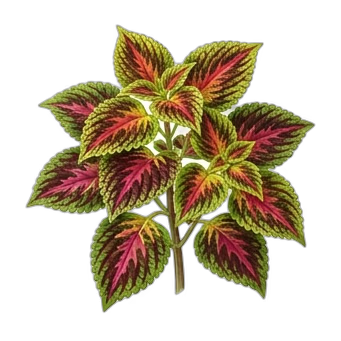
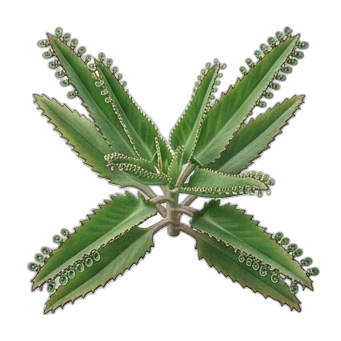
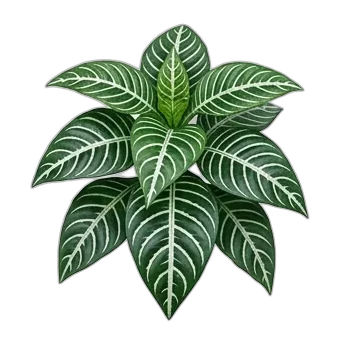
🌿 Related Plants You Might Like



Mary Kate
Botanist & Founder
With over 10 years of experience researching sustainable horticulture and landscape architecture, I am on a mission to strengthen the bond between humans and nature.