

Trellis for Trumpet Vine
Written with AI assistance, edited and checked against horticultural sources.
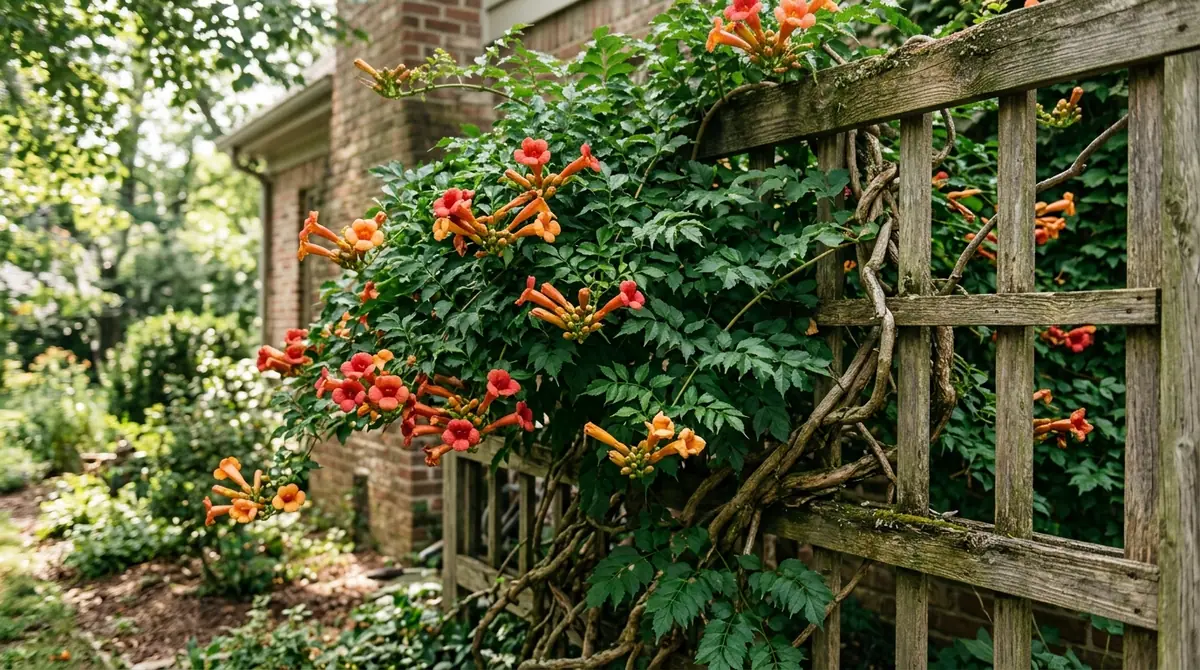
Last July, standing beneath a sun-baked cedar pergola that was actively groaning under the sheer weight of a mature Campsis radicans, I reached for my pruning shears with a familiar mix of awe and dread. The woody stems—some as thick as a grown man's wrist—had bypassed the decorative woodwork entirely, wrapping themselves around a galvanized downspout and threatening to tear the gutter clean off the house. That is the duality of the trumpet vine: a breathtaking magnet for hummingbirds and a botanical juggernaut that treats ordinary garden structures like appetizers. If you want to harness this native powerhouse without sacrificing your property, choosing and building the right trellis for your trumpet vine isn't just a design choice; it's structural survival.
1. Botanical Overview & Natural Habitat

Botanically, trumpet vines are woody perennial lianas. They do not climb via tendrils like grapes or twine delicately like clematis. Instead, they scale vertical surfaces using modified aerial rootlets—tiny, structural claws that secrete a natural adhesive compound, allowing them to cement themselves to brick, stone, wood, and yes, painted siding.
| Parameter | Optimal Condition | Common Mistake | Why It Matters |
|---|---|---|---|
| Hardiness Zone | USDA 4–9 (-30°F to 20°F / -34°C to -6°C) | Planting in USDA Zone 3 or lower without microclimate protection | Severe winter kill will destroy established woody framework |
| Sun Exposure | Full sun (6 to 8+ hours daily) | Siting in heavy partial shade | Results in lush vegetative growth with zero tubular blooms |
| Soil pH | 6.0 to 7.0 (Slightly acidic to neutral) | Planting in alkaline soils above 7.5 | Induces iron chlorosis, turning foliage yellow |
| Moisture | Well-draining, moderately fertile loam | Keeping soil waterlogged or bone-dry for extended periods | Causes root rot or premature blossom drop |
2. Essential Environmental & Care Requirements
To keep your trumpet vine flourishing on its dedicated trellis, you must match its native woodland-edge preferences while accounting for its aggressive growth rate.
Temperature and Climate: Trumpet vines thrive in summer temperatures consistently hovering between 85°F and 95°F (29°C to 35°C), but they handle winter freezes down to -30°F (-34°C) by dropping their foliage and going completely dormant.
Light Requirements: Do not tuck a trumpet vine into a shady garden corner. It demands full sun—at least 6 to 8 hours of direct, unfiltered sunlight daily. Anything less shifts the plant's energy entirely into producing massive cascades of dark green compound leaves at the expense of those iconic, trumpet-shaped orange and red flowers.
Soil and Water: While Campsis radicans is remarkably drought-tolerant once established due to a deep, exploratory taproot system, young vines need consistent moisture. Provide roughly 1 inch (2.5 cm) of water per week during its first two growing seasons. Amend heavy clay or sandy soils with organic compost to achieve a loamy texture that retains moisture without holding standing water. For a deeper dive into soil amendments and regional planting guidelines, consult the Clemson Cooperative Extension Home & Garden Information Center.
3. Step-by-Step Cultivation, Feeding & Propagation
Designing and planting a trumpet vine installation requires a forward-thinking approach. Because these vines easily reach mature lengths of 30 to 40 feet (9 to 12 meters) with a spread of 5 to 10 feet (1.5 to 3 meters), you cannot rely on flimsy plastic or thin wire garden trellises.
💡 Pro-Tip: Always install your trellis at least 4 inches (10 cm) away from any exterior house wall. This gap permits essential airflow behind the vine, prevents moisture buildup against your siding, and gives you physical clearance to run pruning shears behind the main trunks when it's time for annual maintenance.
Step-by-Step Planting and Trellis Integration
- Select and Anchor the Structure: Choose a freestanding, heavy-duty metal obelisk, a galvanized steel cable system, or a thick structural timber pergola set into concrete footings buried at least 24 inches (60 cm) deep to withstand the massive wind-load of a mature vine.
- Amend the Planting Pit: Dig a hole twice as wide as the nursery container and equal in depth—typically 12 to 18 inches (30 to 45 cm). Mix a 2-inch (5-cm) layer of well-rotted compost into the native soil.
- Position the Vine: Place your trumpet vine container 12 inches (30 cm) away from the base of the trellis, tilting the root ball slightly toward the structure so the primary stems lean naturally against the support framework.
- Backfill and Tamp: Fill the hole with the amended soil blend, tamping down gently every 4 inches (10 cm) to eliminate air pockets around the roots.
- Initial Watering and Mulching: Saturate the root zone thoroughly with 2 gallons (7.5 liters) of water. Apply a 3-inch (7.5-cm) layer of hardwood bark mulch across a 3-foot (1-m) radius, keeping the mulch 2 inches (5 cm) away from the actual woody stem to prevent rot.
- Train and Tie: Use soft jute twine or green garden tape to loosely secure the primary whip-like shoots to the trellis uprights. Do not tie them too tightly, as the woody stems will expand rapidly in diameter.
- Fertilization Strategy: Apply a balanced, slow-release granular fertilizer with an N-P-K ratio of 10-10-10 in early spring just as new green shoots emerge. Avoid high-nitrogen fertilizers (such as lawn foods), which trigger uncontrollable green growth and suppress flower bud formation.
⚠️ Important Caution: Never plant a trumpet vine directly against a wooden fence, vinyl siding, or brick mortar without a heavy-duty physical trellis barrier. The aerial rootlets secrete a lignified adhesive that permanently stains masonry, wedges deep into wood grain, and can lift siding panels right off their fasteners as the stems thicken over the years.
4. Common Problems, Pests & Troubleshooting
Even a tough-as-nails plant like the trumpet vine encounters occasional setbacks. Monitoring your vine on a weekly basis prevents minor issues from escalating into structural or aesthetic failures.
Foliage and Flower Drop: If your established trumpet vine drops its flower buds before they open, inspect your watering schedule and light levels. Inconsistent watering combined with sudden heat waves exceeding 100°F (38°C) triggers physiological stress, causing the plant to abort buds to conserve energy.
Pest Pressures: Aphids occasionally swarm the tender, fast-growing spring shoot tips, distorting new leaves. Blast them off with a sharp stream of water from a garden hose, or introduce beneficial lady beetles. Scale insects can occasionally plague older, woody stems; treat these with horticultural dormant oil applied in late winter before bud break.

5. Frequently Asked Questions
Will a trumpet vine ruin my brick wall?
Yes, given enough time. While the aerial rootlets do not extract nutrients from bricks like true parasites, they secrete a powerful natural glue that leaves dark, fuzzy stains on masonry when pulled away. Furthermore, as the stems expand into heavy woody trunks over the years, they wedge into mortar cracks, widening them and causing structural degradation. Always use a freestanding metal or heavy timber trellis spaced away from the wall to protect your masonry.
How do I prune a trumpet vine on a trellis?
Prune your trumpet vine annually in late winter or very early spring before new buds swell. Cut back all side shoots (lateral branches) from the main structural framework, leaving just 2 to 3 buds (roughly 2 to 4 inches / 5 to 10 cm) on each side branch. Trumpet vines produce their vibrant tubular flowers on new growth of the current season, so hard pruning actually maximizes your summer blossom display rather than hindering it.
Why is my trumpet vine growing lots of leaves but no flowers?
This is almost always caused by one of two factors: insufficient sunlight or excessive nitrogen fertilizer. If your vine receives less than 6 hours of direct sun daily, it cannot manufacture the sugars required to initiate floral buds. Similarly, if it sits in lawn turf that receives high-nitrogen fertilizer, the plant prioritizes massive vegetative leaf production over blooming. Move the vine to a sunnier exposure or stop fertilizing entirely.
How fast does a trumpet vine grow on a trellis?
Once established after its first growing year, a trumpet vine is an explosive grower, easily adding 10 to 15 feet (3 to 4.5 meters) of linear vine length per single growing season. Within 3 years, a healthy plant in full sun will completely cover a standard 8-foot (2.4-meter) garden trellis or pergola, demanding aggressive mid-summer pruning to keep it from taking over neighboring plants.
Related Guides
📋 Table of Contents ▼ Click to expand
Tags:
Keep reading
🌿 Related Plants You Might Like



PlantSavvyWorld
Editorial team
PlantSavvyWorld is an independent botanical education project. Articles are drafted with AI assistance, then edited and checked against university extension services, botanical garden collections and other published horticultural sources.