

Scale on Cacti
Written with AI assistance, edited and checked against horticultural sources.
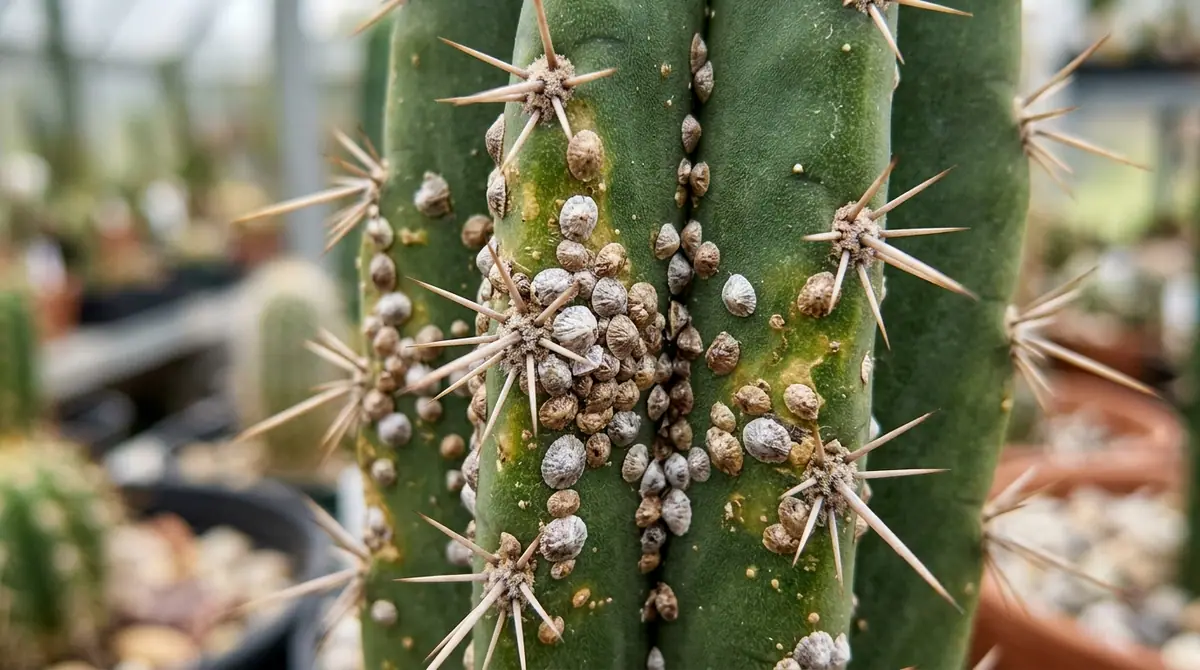
When inspecting a twenty-year-old Echinocactus grusonii (Golden Barrel) during its pre-winter move indoors, a series of subtle, rust-colored crusts can appear, clinging tightly to the shaded crevices near its base. This is neither rot nor mechanical scarring from a dropped pot, but a severe infestation of scale insects—specifically cactus scale (Diaspis echinocacti)—wreaking havoc under the guise of an innocuous scab. Left unchecked for even two more weeks in the warm, stagnant indoor air, these sap-sucking pests can ruin the epidermis of a specimen that took decades to grow. This section dissects exactly what scale is, why cacti are uniquely vulnerable, and how to permanently eradicate it without harming botanical investments.
1. Botanical Overview & Natural Habitat

In their native habitats of arid and semi-arid regions spanning the Americas, cacti evolved specialized anatomical features to survive drought and intense ultraviolet radiation. Their stems (cladodes or columnar bodies) are heavily cutinized, featuring a thick, waxy outer layer designed to minimize transpirational water loss. Paradoxically, this exact waxy armor provides the ideal structural substrate for armored and soft scale species to anchor themselves.
Cactus scale (Diaspis echinocacti) is the most notorious offender in indoor and greenhouse collections. Native to tropical and subtropical America, this species forms circular, whitish-gray shields measuring approximately 0.08 to 0.12 inches (2 to 3 mm) in diameter. When populations surge, they overlap entirely, making the cactus look as though it has been splashed with white latex paint. They insert their stylets—needle-like mouthparts—deep into the plant’s photosynthetic tissue, siphoning away phloem sap. This continuous depletion not only starves the plant of sugars and amino acids but also introduces phytotoxic saliva that chloroses the tissue, creates sunken necrotic lesions, and opens up entry points for opportunistic fungal pathogens like Fusarium and Botrytis.
2. Essential Environmental & Care Requirements
Preventing scale explosions begins with mimicking the rigorous, unyielding environmental pressures of native cactus habitats. Scale insects thrive in stagnant air, high humidity micro-climates, and weak, light-starved plants. When you alter these variables, you drastically reduce the reproductive capacity of the pests.
| Parameter | Optimal Condition | Common Mistake | Why It Matters |
|---|---|---|---|
| Light Exposure | Full sun, minimum 6 to 8 hours of direct, unfiltered light daily (approx. 5,000 to 10,000 foot-candles). | Keeping cacti in dim indoor corners or underpowered LED grow lights. | Low light produces soft, etiolated growth with thin cuticles, giving scale mouthparts easy access to inner fluids. |
| Ambient Temperature | Daytime 75°F to 90°F (24°C to 32°C); Nighttime 50°F to 60°F (10°C to 15°C). | Sustained indoor temperatures above 75°F (24°C) with zero seasonal temperature drop. | Constant warmth accelerates scale reproductive cycles, cutting generation times in half. |
| Air Circulation | Constant, gentle movement via oscillating fans or open windows (0.5 to 1.0 m/s airflow). | Stagnant air in enclosed indoor plant cabinets or crowded greenhouse benches. | Moving air disrupts the crawler stage—the only mobile phase of scale—preventing them from settling on new growth. |
| Soil Moisture | Complete dry-down between thorough waterings; inorganic-heavy mix that drains in under 10 seconds. | Frequent, shallow waterings or keeping the root zone damp. | Over-watered cacti have turgid, nutrient-diluted sap that is exceptionally high in free amino acids, acting as a super-food for sucking insects. |
⚠️ Important Caution: Never apply horticultural oils or insecticidal soaps to cacti while they are exposed to direct, midday sun or when temperatures exceed 85°F (29°C). The combination of oil-based treatments and high heat acts as a magnifying lens, instantly frying the plant's epidermis and causing permanent, disfiguring chemical burns. Always treat plants in the early evening or indoors under shaded conditions.
3. Step-by-Step Cultivation, Feeding & Propagation
When dealing with a scale infestation, standard horticultural advice often falls short because cacti cannot be pruned back hard like a leafy houseplant. You must treat the pest while preserving the architectural integrity of the specimen. For more deep dives into managing stubborn greenhouse pests, consult the guidelines provided by the Royal Horticultural Society.
Here is my clinical, step-by-step protocol for eradicating scale on established cacti:
- Quarantine Immediately: Move the infested cactus at least 6 feet (2 meters) away from all other plants. Scale crawlers are microscopic and can easily drift or crawl to neighboring specimens.
- Physical Debridement: Dip a soft-bristled toothbrush or a cotton swab into 70% isopropyl (rubbing) alcohol. Gently scrub the raised scale shields off the cactus epidermis. The alcohol dissolves the protective waxy coating and kills the insect on contact without damaging the plant's cuticle. Be cautious around delicate areoles and spines.
- Targeted Systemic Application: For heavy infestations, apply a systemic insecticide containing imidacloprid or dinotefuran to the root zone via a thorough drench. The roots absorb the chemical and transport it throughout the plant’s vascular system. When the scale feeds on the sap, they ingest the poison and die. Note: Always verify local regulations regarding systemic neonicotinoids.
- Horticultural Oil Follow-Up: Seven days after physical removal, spray the entire plant with a ready-to-use horticultural mineral oil or potassium salts of fatty acids (insecticidal soap). Ensure complete coverage of the stem, ribs, and base where scale love to hide.
- Environmental Reset: Relocate the plant to a brighter, better-ventilated spot. Drop indoor humidity levels below 40% if possible, as dry air desiccates any remaining crawlers.
- Re-Inspection Cadence: Inspect the plant every 14 days for a total of 42 days (three full life cycles) to catch any newly hatched crawlers before they mature and lay eggs.
4. Common Problems, Pests & Troubleshooting
Even with meticulous care, troubleshooting scale requires differentiating between active pests and the lingering cosmetic damage they leave behind.
- The "Ghost Scale" Phenomenon: You scrubbed off all the visible bumps with alcohol, but white or brown spots remain. Run your fingernail gently over the spot. If it is completely smooth and hard, the insect is dead; the spot you are seeing is simply the bleached scar tissue where the scale fed and the plant laid down corky periderm to seal the wound. This scar will never disappear, but it will not spread.
- Secondary Sooty Mold: If your cactus is sticky to the touch alongside the scale infestation, you are dealing with a dual attack. Scale insects excrete a sugary waste product called honeydew. Capnodium species (sooty mold) colonize this honeydew, turning the cactus black. Wipe the honeydew away with soapy water; once the scale is eliminated, the mold will starve and dry up.
- Root Scale Misdiagnosis: If your cactus is mysteriously failing to thrive despite dry soil and good light, unpot it and inspect the root ball. White, mealy-looking clusters clinging to the roots are actually root scale or root mealybugs. Wash the roots clean under a high-pressure tap, trim away dead roots, submerge the root ball in lukewarm water containing insecticidal soap for 15 minutes, let it dry for 48 hours, and repot in fresh, sterile inorganic media. For broader diagnostic frameworks, reference the resources provided by the University of California Statewide Integrated Pest Management Program.
💡 Pro-Tip: When dealing with heavily ribbed cacti like Cereus or Trichocereus, scale insects invariably choose the deepest, darkest recesses of the ribs where airflow is lowest and sunlight cannot penetrate. Instead of guessing with a spray bottle, use a dedicated needle-nose fine spray applicator or a makeup brush soaked in 70% isopropyl alcohol to paint the solution directly into the rib grooves. This targets the pests precisely while saving your beneficial soil microbiome from excess chemical runoff.

5. Frequently Asked Questions
Can rubbing alcohol kill scale on cacti permanently?
Yes, 70% isopropyl alcohol is extremely effective at killing adult scale and dissolving their waxy shields on contact. However, it only kills what it touches directly. Because scale eggs are protected beneath the female's body and hatch over a span of 7 to 10 days, you must repeat the alcohol treatment every 10 days for at least one month to break the reproductive cycle entirely.
Why do my indoor cacti keep getting scale while my outdoor ones never do?
Outdoor cacti benefit from natural predators like ladybird beetles (Cryptolaemus montrouzieri), lacewings, and parasitic wasps, which actively hunt scale insects. Furthermore, intense natural wind and driving rain physically dislodge and kill mobile scale crawlers before they can establish feeding sites. Indoor environments lack these natural checks, combined with still air and central heating that accelerates pest reproduction.
Will systemic insecticides kill cactus scale?
Yes, systemic insecticides containing active ingredients like imidacloprid or acetamiprid are highly effective against scale insects on cacti. Because cacti are slow-growing, it can take anywhere from 14 to 28 days for the active ingredient to translocate fully through the plant's tissues. Pair a root drench with a manual alcohol wipe-down for immediate knockdown of existing adult populations.
How do I know if the scale insects on my cactus are dead?
Wait 48 hours after applying an alcohol treatment or horticultural oil, then press your fingernail or the flat edge of a scalpel against the scale shield and push gently. If the insect is dead, the shield will easily slide off, and the interior will appear dry, papery, or empty. If the insect is still alive, it will be firmly anchored, and pressing it may release a yellowish or reddish fluid.
Related Guides
📋 Table of Contents ▼ Click to expand
Tags:
🌿 Related Plants You Might Like




PlantSavvyWorld
Editorial team
PlantSavvyWorld is an independent botanical education project. Articles are drafted with AI assistance, then edited and checked against university extension services, botanical garden collections and other published horticultural sources.