

Polyculture Farming What is It and Why is It Better Than Monoculture
Written with AI assistance, edited and checked against horticultural sources.
1. Botanical Overview & Natural Habitat
In a 2-acre, chemically maintained corn monoculture in central Ohio, a sudden microburst of corn rootworm can sweep through. Within 14 days, over 80% of the uniform stalks collapse, their root systems entirely chewed away. Just 50 feet away, separated only by a gravel access road, an experimental polyculture plot featuring corn, climbing beans, and winter squash growing in a dense, tangled matrix can survive the pest wave and thrive, yielding double the caloric output per square foot with zero synthetic inputs.

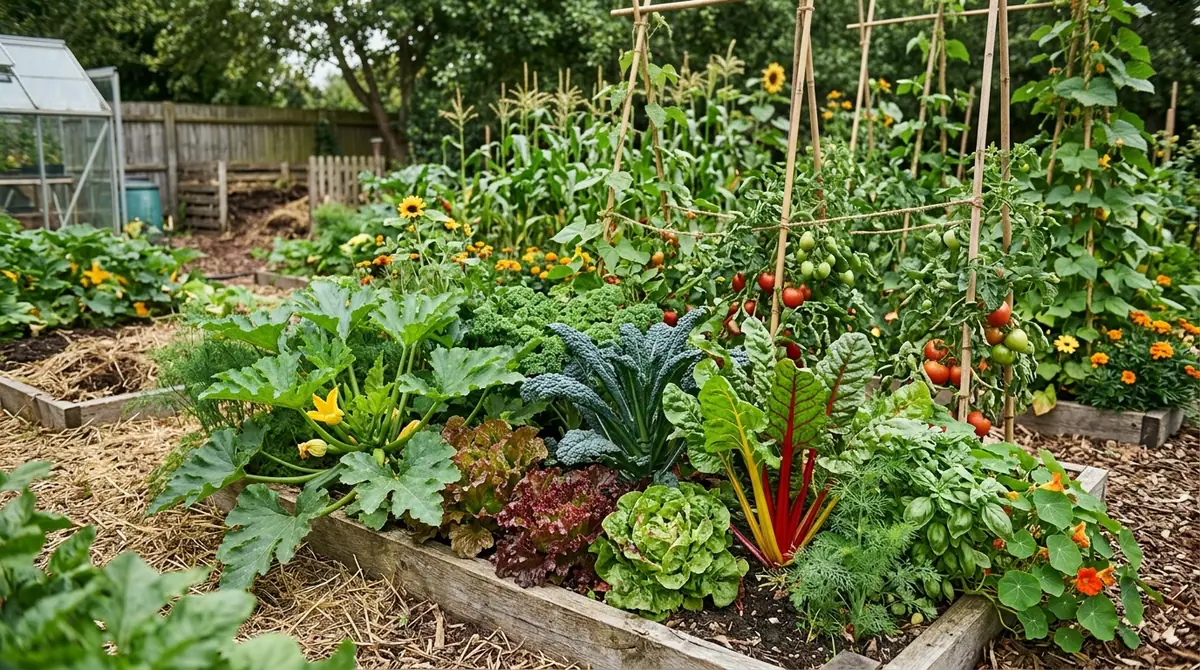
Polycultures replicate these wild ecosystems to create resilient, self-regulating farms. By planting species with complementary root architectures, light requirements, and nutritional demands, we eliminate the bare soil that invites erosion and weed colonization. Below ground, a bustling rhizosphere develops, driven by mycorrhizal fungi that trade minerals for plant exudates. Above ground, varying canopy heights, leaf textures, and floral morphologies confuse insect herbivores while providing continuous forage for beneficial predators like parasitic wasps, lady beetles, and pollinators.
To understand why this approach outperforms industrial monoculture across ecological and economic metrics, we must examine the specific mechanics that govern these diverse plant communities.
2. Essential Environmental & Care Requirements
Designing a functional polyculture requires a strict understanding of environmental parameters. You are no longer managing a single crop with uniform tolerances; you are orchestrating a living tapestry of plants with distinct physiological needs.
Light interception is your primary architectural challenge. In a successful polyculture, plants are layered vertically. Sun-loving canopy species—such as sweet corn (Zea mays) or fruit trees—capture the high-intensity light above 72°F (22°C), while shade-tolerant understory crops like lettuce (Lactuca sativa) or wild ginger (Asarum canadense) thrive in the dappled light below, where temperatures remain 5°F to 10°F (-15°C to -12°C) cooler and relative humidity is higher.
Water management must account for root stratification. Deep-taprooted species like comfrey (Symphytum officinale) pull moisture and trace minerals from depths exceeding 36 inches (91 cm), while shallow-feebled brassicas utilize the top 6 inches (15 cm) of soil. This structural stratification prevents root competition and maximizes the water-holding capacity of the soil matrix.
| Parameter | Optimal Condition | Common Mistake | Why It Matters |
|---|---|---|---|
| Soil Organic Matter | 5% to 8% by weight | Relying solely on synthetic N-P-K additions | High organic matter buffers moisture and feeds the soil microbiome necessary for nutrient cycling. |
| Root Zone Spacing | Overlapping root zones with varied depths (6 to 36 inches / 15 to 91 cm) | Planting species with identical root profiles too closely | Prevents direct competition for water and immobile soil nutrients like phosphorus. |
| Canopy Density | 80% to 90% ground coverage by mid-season | Leaving large patches of bare soil between rows | Exposed soil loses moisture rapidly, crusts over, and triggers weed seed germination. |
| Plant Guild Diversity | Minimum of 3 distinct functional groups per plot | Grouping plants with identical pest and disease vulnerabilities | Monotypic guilds invite rapid pest epidemics, defeating the purpose of polyculture. |
💡 Pro-Tip: When designing your polyculture spacing, use the "three-tier height rule." Ensure your tall structural plants are spaced at least 24 inches (61 cm) apart, with medium bush crops filling the intermediate zones, and low-growing ground covers knitting the entire floor together without exceeding a 90% total planting density.
3. Step-by-Step Cultivation, Feeding & Propagation
Transitioning land from a sterile monoculture to a vibrant polyculture requires careful planning, timing, and biological priming. Follow this exact protocol to establish a high-yielding, resilient polyculture system in your growing space.
- Site Assessment and Mapping: Map your sunlight patterns over a 12-hour period during the summer solstice. Identify low-lying frost pockets, prevailing wind directions, and existing soil compaction layers using a stainless-steel soil probe pushed to a depth of 12 inches (30 cm).
- Broadforking and Biological Inoculation: Instead of traditional moldboard plowing—which inverts soil strata and destroys fungal networks—use a broadfork to aerate the soil down to 14 inches (35 cm) without turning it. Immediately broadcast a live mycorrhizal inoculant containing Glomus intraradices spores across the loosened soil at a rate of 2 lbs per 1,000 square feet (1 kg per 93 square meters).
- Guild Selection and Sourcing: Select your plant guilds based on four functional categories: structural anchors, nitrogen fixers, dynamic accumulators, and insectary attractants. For a temperate zone, combine sweet corn (anchor), pole beans (Phaseolus vulgaris for nitrogen fixing), borage (Borago officinalis for dynamic accumulation and pollinators), and winter squash (Cucurbita moschata for living mulch).
- Staggered Direct Seeding and Transplants: Plant your structural anchors first when soil temperatures consistently reach 60°F (15°C)—typically lasting 7 to 10 days in mid-spring. Once the structural plants reach 6 inches (15 cm) in height, direct-sow your climbing vines and transplant your insectary flowers around the perimeter.
- Targeted Irrigation and Mulching: Install drip irrigation lines beneath a 3-inch (7.6 cm) layer of shredded arborist wood chips. Water deeply once every 5 days during dry spells, delivering 1 inch (2.5 cm) of water to encourage deep root penetration rather than shallow surface rooting.
- Maintenance Pruning and Biomass Drop: Every 14 days throughout the growing season, prune back aggressive dynamic accumulators like comfrey by 50%. Drop the nutrient-dense leaves right where they fall on the soil surface as an in-situ mulch, recycling potassium and calcium back to neighboring heavy feeders.
⚠️ Important Caution: Never introduce invasive spreading species—such as mint (Mentha spp.) or running bamboos—into an annual or small-scale perennial polyculture. Their aggressive rhizomes will outcompete your carefully balanced vegetable guilds within a single growing season.
For additional research-backed insights on ecological planting strategies, consult the Royal Horticultural Society planting guidelines and the University of California Agriculture and Natural Resources publications on sustainable farming systems.
4. Common Problems, Pests & Troubleshooting
Even in a well-designed polyculture, biological imbalances can occur, though they manifest differently than in a monoculture.
-
Symptom: Localized chlorosis (yellowing of lower leaves) in heavy feeder crops despite high biodiversity.
-
Cause: Temporary nitrogen tie-up caused by applying high-carbon woody mulch directly against the stems of young plants.
-
Solution: Pull all mulch back 4 inches (10 cm) from plant stems. Apply a liquid fish hydrolysate drench at a dilution rate of 2 oz per gallon of water to accelerate microbial nitrogen availability.
-
Symptom: Rapid defoliation of understory brassicas by flea beetles (Phyllotreta cruciferae).
-
Cause: Lack of physical barriers and insufficient aromatic companion plants to mask the host scent.
-
Solution: Interplant strongly scented herbs like basil (Ocimum basilicum) or thyme (Thymus vulgaris) directly adjacent to the brassicas. Dust the affected leaves with food-grade diatomaceous earth during a dry morning window.
-
Symptom: Stunted vine growth and powdery mildew (Erysiphe cichoracearum) outbreaks on squash leaves during humid mid-summer weeks.
-
Cause: Excessive canopy density blocking airflow and trapping leaf-surface moisture for more than 18 consecutive hours.
-
Solution: Thin out 30% of non-essential foliage from the interior of the squash canopy using sterilized pruning shears. Spray foliage preventatively with a solution of 1 tablespoon of potassium bicarbonate mixed with 1 gallon of water.

5. Frequently Asked Questions
Can polyculture farming be fully mechanized for large-scale commercial operations?
Yes, though it requires a shift in equipment design. While standard monoculture combines cannot harvest mixed-species fields simultaneously, modern innovations in optical sorting technology, multi-crop headers, and strip-cropping machinery allow commercial farmers to manage 20-foot wide strips of alternating polycultures with high efficiency.
How do you handle weed control in a system with so many different crops?
Weed control relies primarily on biological suppression rather than mechanical tillage or chemical herbicides. By maintaining a 90% ground cover through dense multi-tier planting, sunlight is blocked from reaching weed seeds in the top 1 inch (2.5 cm) of soil. Any emerging weeds are hand-pulled during routine 14-day maintenance cycles.
Is polyculture farming less profitable than monoculture due to lower yields of single commodities?
While the yield of a single commodity per acre may be lower, the total biological and financial yield per acre is frequently higher in a polyculture system. By diversifying crops, you hedge against market price drops for a single commodity and eliminate up to 70% of input costs associated with synthetic fertilizers and pesticides.
How do I prevent taller plants from permanently starving shorter understory crops of sunlight?
Preventing light starvation requires calculating the mature canopy spread and height of each species during the design phase. Position tall, narrow species (like corn or trellised beans) on the northern or eastern edge of your growing bed in northern latitudes, stepping down progressively toward the southern or western edge with shorter sun-loving crops.
Related Guides
- Worm Farming and Composting in a 5 Gallon Bucket Its Easy
- Peat Humus for Gardening
- Asiatic Lily vs Oriental
📋 Table of Contents ▼ Click to expand
Tags:
🌿 Related Plants You Might Like






PlantSavvyWorld
Editorial team
PlantSavvyWorld is an independent botanical education project. Articles are drafted with AI assistance, then edited and checked against university extension services, botanical garden collections and other published horticultural sources.